
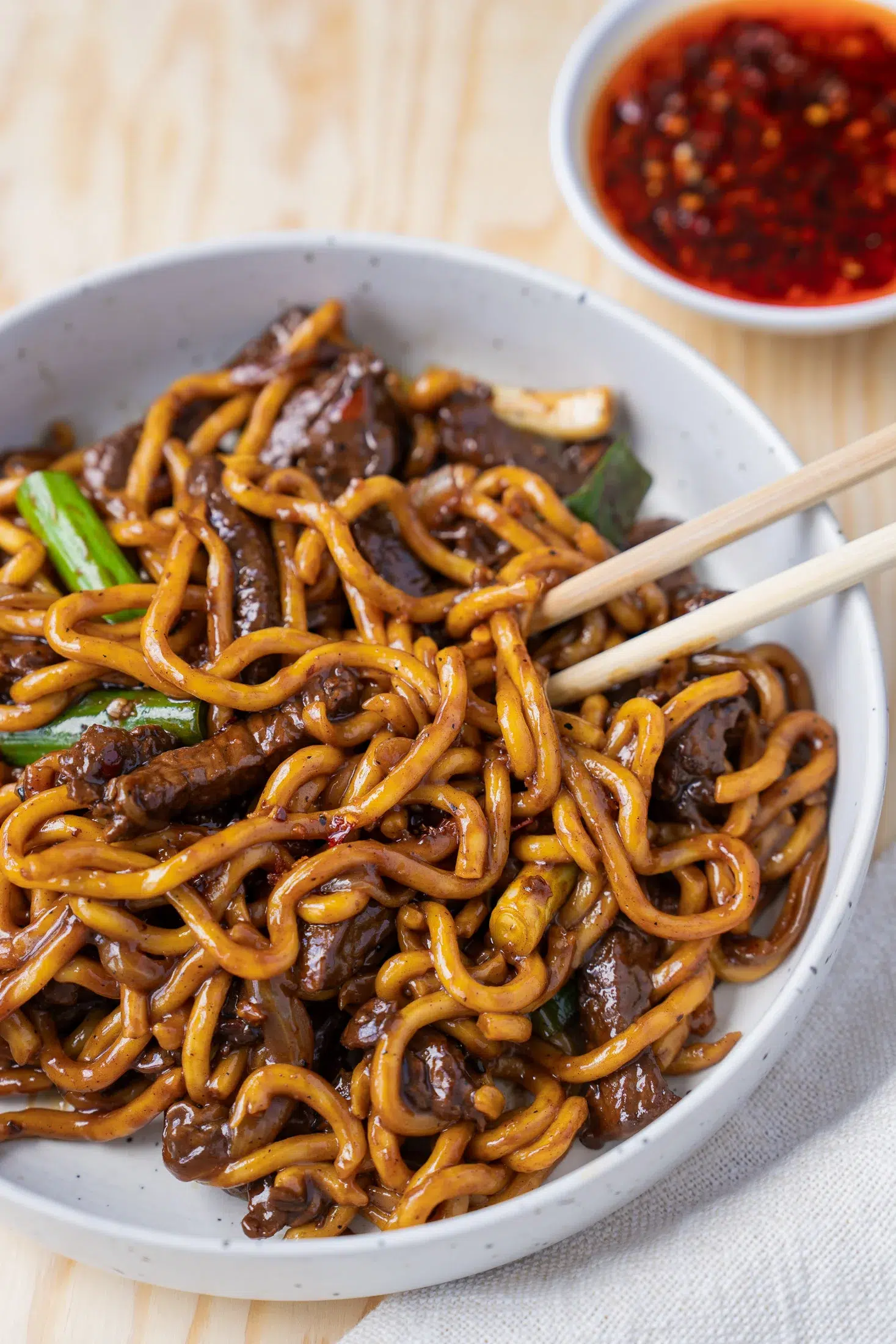
Quick Mongolian Noodles
Servings: 4 servings
Calories: 735kcal
Quick Mongolian Noodles are a 30-minute, fakeaway dinner made with tender strips of beef or lamb, egg noodles, onion and spring onion (scallion), all tossed through a rich, glossy, sweet and savoury sauce. Made with everyday supermarket ingredients, this is an easy, family-friendly dinner that tastes just like your favourite Chinese takeaway.
Ingredients
- 2 tbsp oyster sauce
- 2 tbsp light soy sauce
- 1 tbsp dark soy sauce
- 1 tbsp hoisin sauce
- 1½ tbsp brown sugar
- 1 tsp rice wine vinegar
- ½ tsp freshly ground black pepper
- 60 ml water
Slurry
- 1½ tbsp cornflour (cornstarch)
- 60 ml water
Noodles and meat
- 600 g beef rump (sirloin), trimmed and very finely sliced across the grain (can be substituted with lamb rump/chump/sirloin)
- 400 g fresh egg noodles (or 300 g/10½ oz dried egg noodles, see note 1)
- 1 tsp sesame oil
- 2 tbsp light olive oil, or neutral oil of choice
- 1 large brown onion, finely sliced
- 2 tsp freshly grated garlic
- 4 spring onions (scallions), cut into 4 cm (1½ inch) lengths
To serve
- Chilli oil (optional)
Instructions
- Make the sauce – Whisk together all the sauce ingredients in a small bowl and set aside.
- Make the slurry – Mix the cornflour with the water in a separate small bowl until smooth. Set aside.
- Marinate the meat – Place the beef or lamb in a medium bowl. Add 2 tablespoons of the prepared sauce and toss to coat.
- Cook the noodles – Cook the noodles for 1–2 minutes less than the packet instructions suggest, until just underdone. Drain, rinse under cold running water to stop the cooking process, then toss with the sesame oil to prevent sticking. Set aside.
- Cook the meat – Heat 1 tablespoon of the olive oil in a large wok or heavy-based frying pan over high heat. Add half the meat in a single layer and cook for 1–2 minutes per side until browned but still tender. Transfer to a plate and repeat with the remaining meat. Set aside.
- Cook the onion and garlic – Add the remaining tablespoon of olive oil to the same pan. Add the onion and cook for 1–2 minutes until lightly caramelised. Add the garlic and cook for a further 30 seconds until fragrant.
- Make the sauce – Return the meat and any resting juices to the pan. Pour in the remaining sauce and bring to a simmer. Give the cornflour slurry a quick stir, then pour it into the pan, stirring continuously. Cook for 60–90 seconds until the sauce thickens and becomes dark and glossy.
- Add the noodles – Add the noodles and spring onion to the pan. Toss gently until everything is evenly coated in the sauce and heated through.
- Serve – Divide among four bowls and serve immediately with chilli oil, if desired.
Notes
Note 1 – Best noodles to use Fresh egg noodles are ideal, but dried egg noodles work too. Hokkien, ramen-style or other wheat noodles would also work. Just keep an eye on the cooking time and avoid overcooking them before they go into the pan.
Make Ahead
Need an even faster dinner? You can prepare a few ingredients ahead of time to make this recipe even easier on busy weeknights. Meat – Finely slice the beef or lamb and store in an airtight container in the fridge for up to 2 days. Sauce – Whisk together all the sauce ingredients and refrigerate in an airtight container for up to 3 days. Give it a good stir before using.Leftovers
Refrigerate leftovers in an airtight container for up to 2 days. Not suitable to freeze. Reheating – Reheat in a large frying pan over medium heat with a splash of water to loosen the sauce. Toss gently until heated through. Alternatively, reheat in the microwave in 30-second bursts, stirring between each, until steaming hot throughout. Add a splash of water if needed, as the noodles will absorb some of the sauce while refrigerated.Recipe source
A Simple Home Edit original recipeNutrition Facts
Quick Mongolian Noodles
Serving Size
355 g
Amount per Serving
Calories
735
% Daily Value*
Fat
17
g
26
%
Saturated Fat
4
g
25
%
Polyunsaturated Fat
3
g
Monounsaturated Fat
9
g
Cholesterol
99
mg
33
%
Sodium
1569
mg
68
%
Potassium
827
mg
24
%
Carbohydrates
88
g
29
%
Fiber
4
g
17
%
Sugar
14
g
16
%
Protein
56
g
112
%
Calcium
63
mg
6
%
Iron
5
mg
28
%
* Percent Daily Values are based on a 2000 calorie diet.
Scan for full recipe:
