


I get asked two questions more than almost any others: What pans do you use? followed immediately by, How do you clean them? And I completely get it – cast-iron has a bit of a reputation. Heavy. Fussy. High-maintenance.
I’ll be completely upfront: it took me months to decide whether I wanted to commit. These pans aren’t cheap, and it was absolutely not an impulsive purchase. I researched. I hesitated. I talked myself in and out of it more times than I care to admit. But now, years later, I can say with full confidence – it was one of the best decisions I’ve ever made in my kitchen.
Because before cast-iron, I was that person. The one who’d walk into a big kitchen store, get seduced by a massive boxed pan set, and walk out feeling very accomplished … only to end up with a cupboard full of pans I never actually used. I’d always reach for the same one or two favourites while the rest just sat there taking up space. And no matter how “premium” the non-stick coating claimed to be, it always had an expiry date. Eventually it would peel, scratch or lose its mojo – and into the bin it would go. Rinse and repeat. Cast-iron completely changed that cycle.
If you’ve watched my videos, you’ll have noticed the same black pans popping up again and again. That’s because I don’t own many. I’m very much a fewer but better kind of person when it comes to cookware. Cast-iron gets hot – very hot – the kind of heat that gives you proper caramelisation and restaurant-quality results at home. It’s built to last, not just for years but for generations. Many pieces are designed to go straight from stovetop to oven to table, which means fewer dishes and food that actually stays warm.
Cast-iron pans (and wrought-iron, which is lighter and even more durable) can be enamel-coated on the inside or left uncoated. You’ll find them in all shapes and forms – casserole pots, woks, frying pans, skillets, ridged chargrill pans, roasting dishes, flat griddles, bakeware and more. And perhaps the biggest surprise of all? Cleaning them is nowhere near as scary as people think.
That’s exactly why I’m writing this article – to show you how I care for my cast-iron (both coated and uncoated), why it’s simpler than the internet would have you believe, and how investing in fewer, better pans can genuinely change the way you cook. And if you’d like to see exactly which pans I own and what I use them for, you can check out My Ultimate Go-to Kitchen Equipment.
My most-used piece of cookware, without question, is my beloved Staub Chistera. It’s enamelled (coated) cast-iron and I probably use it five times a day – it’s that versatile. It goes straight from stovetop to oven, which makes everyday cooking so much easier.
My other go-to coated piece is my Staub Round Cocotte. It’s deeper and perfect for batch cooking – stews, curries, soups – or even roasting a whole chicken. It’s one of those pieces that earns its keep every single week.
What I love most about these Staub pans is the scratch-resistant matte black enamel interior. It’s easy to clean and, practically speaking, the dark colour hides stains far better than lighter-coloured interiors, which tend to show marks over time. The enamel coating also makes these pans more forgiving than uncoated cast-iron – there’s no seasoning required, and day-to-day care is very straightforward.
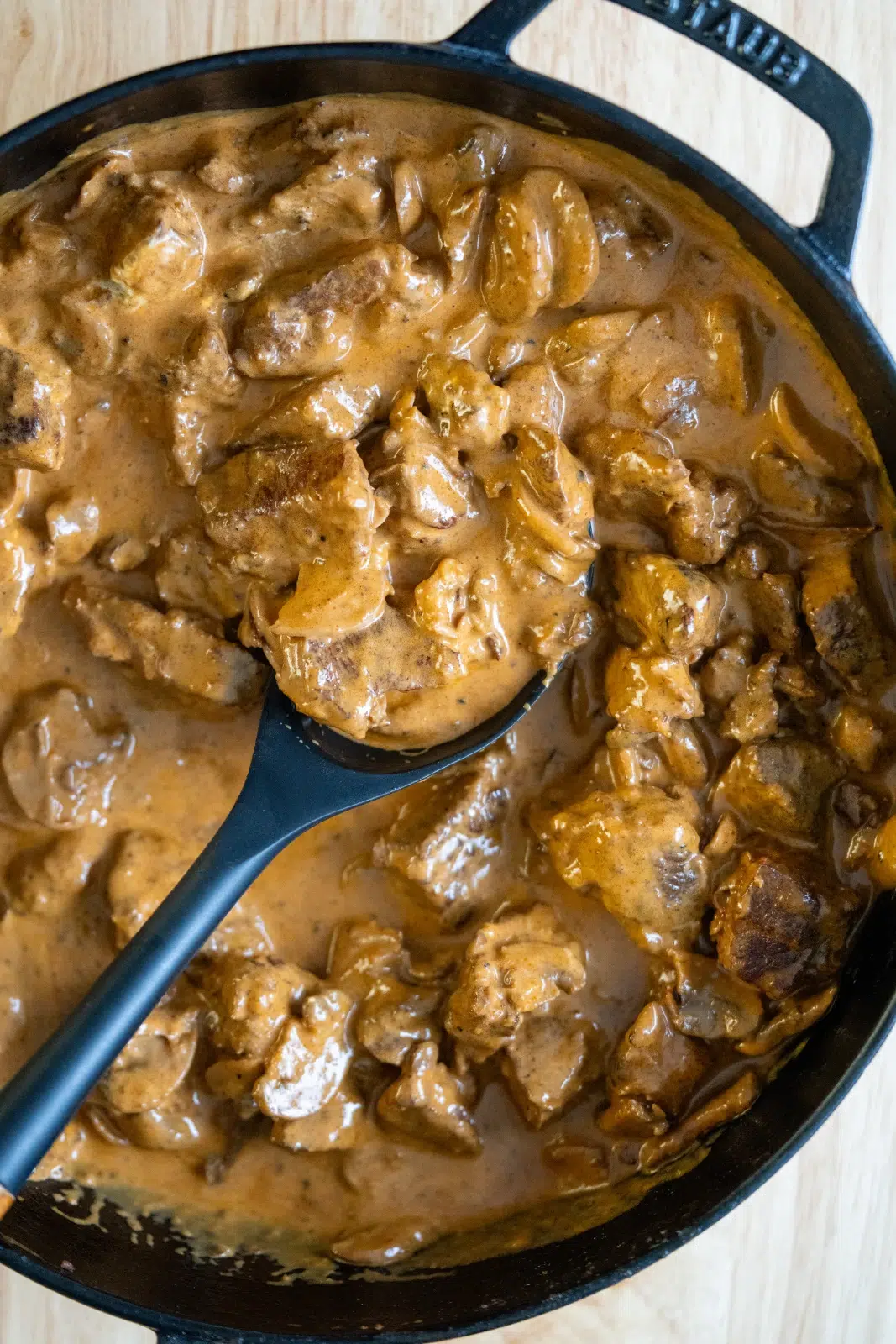
I personally prefer the matte black interior on my enamelled cast-iron pans. A lot of popular brands – like Le Creuset and Chasseur – tend to have light-coloured enamel interiors, which look beautiful when they’re brand new. But in real life, if you cook often, they stain quickly. You start seeing marks, discolouration and wear almost straight away, and while it doesn’t affect how the pan performs, it can be frustrating if you like your cookware to look as good as it functions. The dark interior on my Staub pans hides all of that, which makes them feel far more forgiving for everyday, heavy use.
Although they require a little more care, my uncoated pans are even more durable – genuinely multi-generational – and unbeatable for high-heat cooking like searing steak.
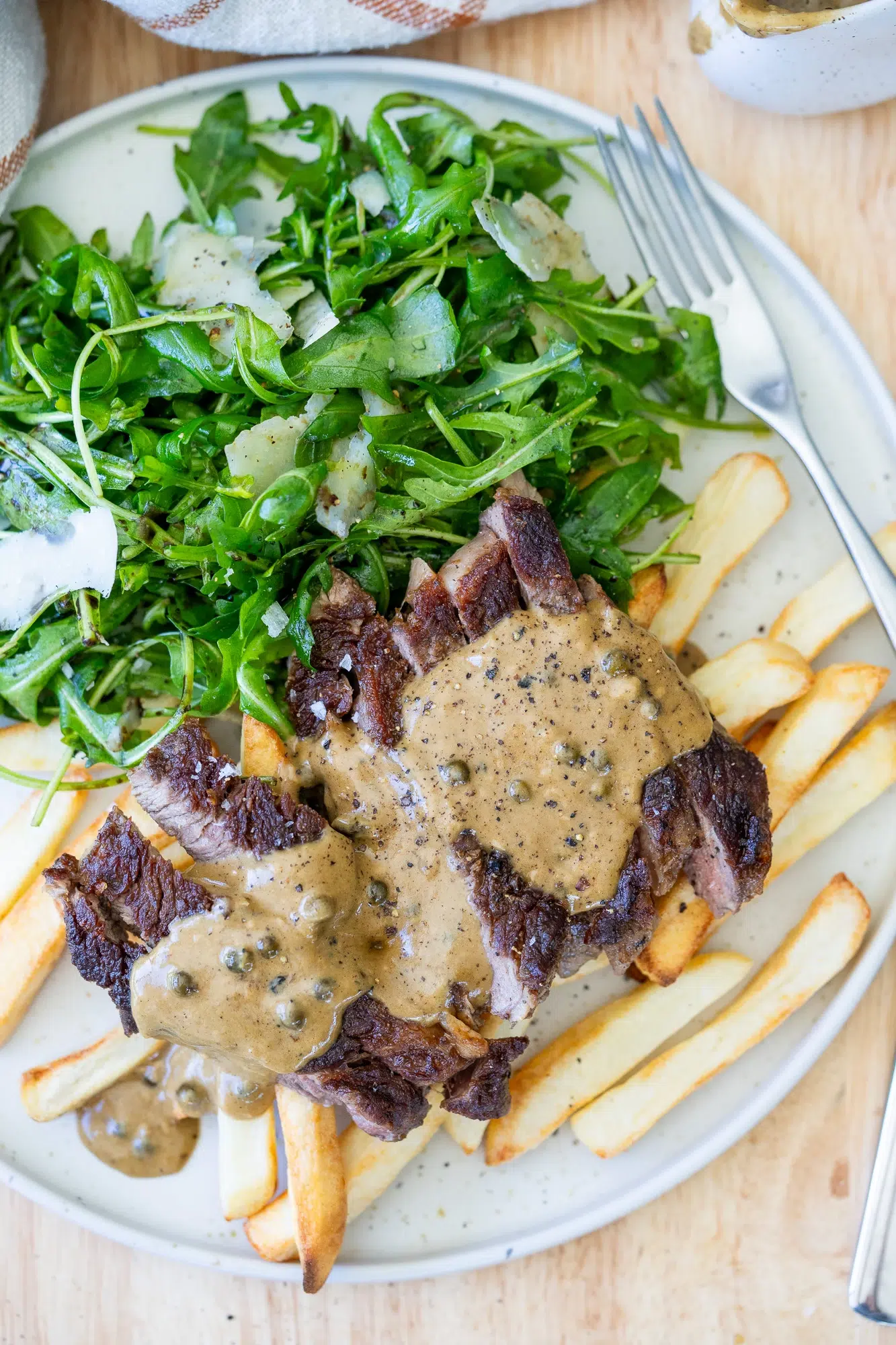
I also own three uncoated pans that I absolutely love. The first is my Solidteknics Frypan, made from wrought-iron. It’s a true workhorse and handles everything from steak to crepes beautifully. The key with uncoated pans is using enough oil – start generously or food will stick. I often cook with extra-virgin olive oil day to day.
My Lodge Cast-iron Skillet is another favourite. It comes pre-seasoned and also benefits from plenty of oil before cooking. We especially love this one for camping – it’s perfect for campfire meals.
Then there’s my Solidteknics AUS-ION Bigga Pan. This is essentially a heavy-duty baking dish and large enough to roast two chickens plus vegetables, or a single 3 kg (6 lb 10 oz) piece of meat. It’s a serious pan and one I use often.
Cleaning uncoated cast-iron is a little different, but it’s still simple once you get into the habit.

If rust appears, restoration is simple:
If cast-iron cookware has ever sounded intimidating, it’s probably because there’s a lot of noise around it. Rules, opinions, warnings. However, in real life, it’s much simpler than that. Once you’ve used it a few times, it just becomes another pan you grab without thinking – one that happens to cook really well and doesn’t need replacing every few years.
Personally, I switched to cast-iron because I was tired of replacing pans (I was wasting money!), tired of clutter, and tired of cookware that didn’t last. What I didn’t expect was just how much it would change the way I cook. Cooking feels simpler now. I reach for the same pieces again and again because I trust them. I don’t worry about scratching a coating or ruining a pan by using it the “wrong” way – my pans are incredibly durable and built for everyday use. Yes, they are a little more expensive, but if you think of them as replacing several other pans, consider they’ll last a lifetime, and hold fire and wait for a sale, it’s actually a good investment. And if you still want to be able to put your pan in the dishwasher, just opt for coated rather than uncoated.
My new book, Simple Dinners Every Day, is here! Click through to find a copy at your preferred retailer.










Some of the links throughout this website are commissionable affiliate links. Read full disclaimer here.
For recipes labelled ‘gluten-free’ or ‘dairy-free’, the ingredients included in the recipe are typically gluten- or dairy-free. However, it is the user’s responsibility to carefully check the ingredient panels on the specific brands of products purchased and used. Simple Home Edit cannot be held responsible for any adverse reactions.


Lana says:
Hi, love following you and your delish recipes! Thankyou!
Just quick question, I’m looking at installing gas cooktop, watching you cook, looks great. What brand/model is your gas cooktop? And are you happy with the layout? Like enough room to have few pots on stove without touching ect?? Many thanks, and happy cooking!! Keep up the great work!! Kind regards Lana
Nicole says:
Hi Lana 😊 Thank you so much – that’s so kind! I have a Smeg gas cooktop (90 cm/35.4 inches), and yes, I’m really happy with the layout. The spacing between burners is generous, which makes a huge difference when you’ve got multiple pans going at once.
If you cook often and use large pans (which I do), I’d definitely recommend going as wide as you can fit. The extra space stops everything feeling cramped. I hope that helps!! 💛 Nic x
Lana says:
Oh that’s great! Thankyou so much! much appreciated!!x