




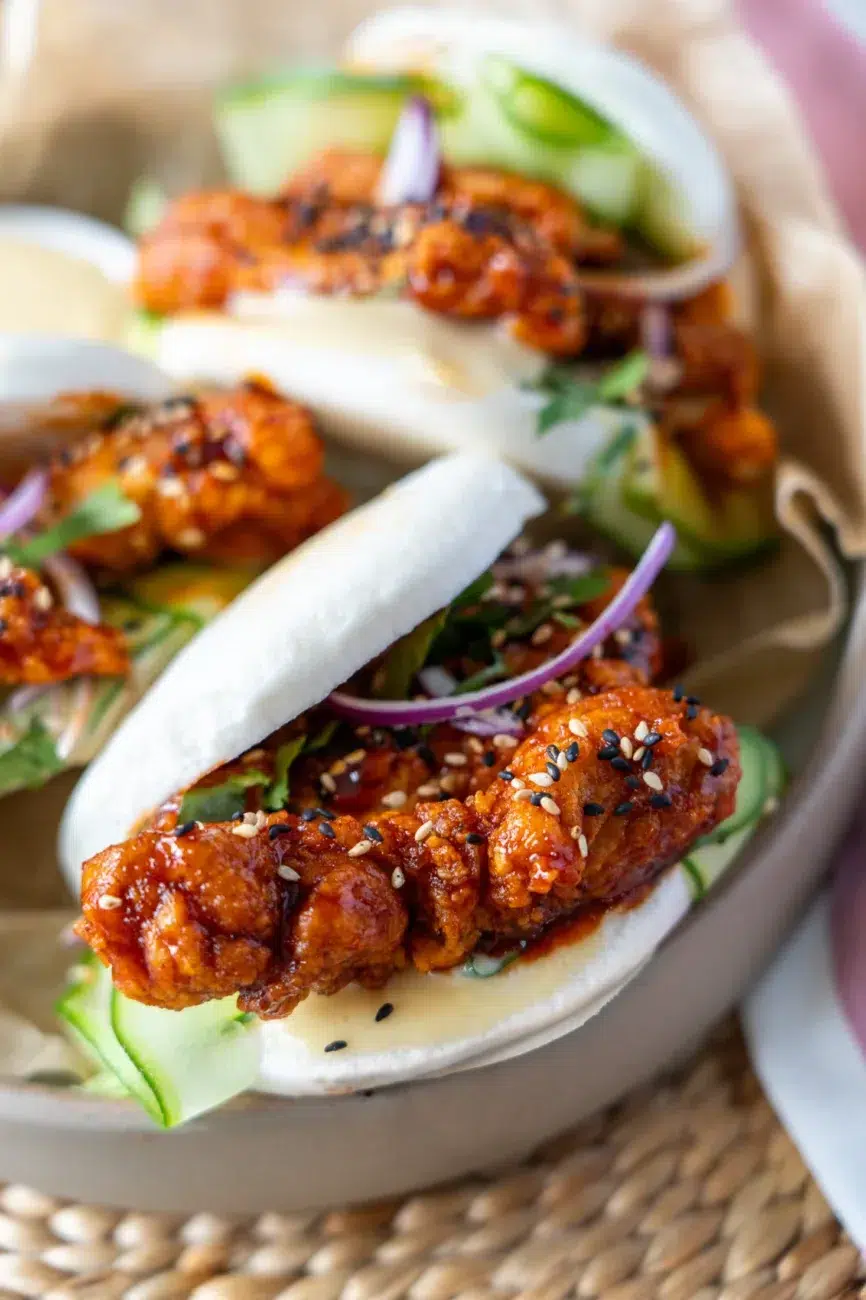
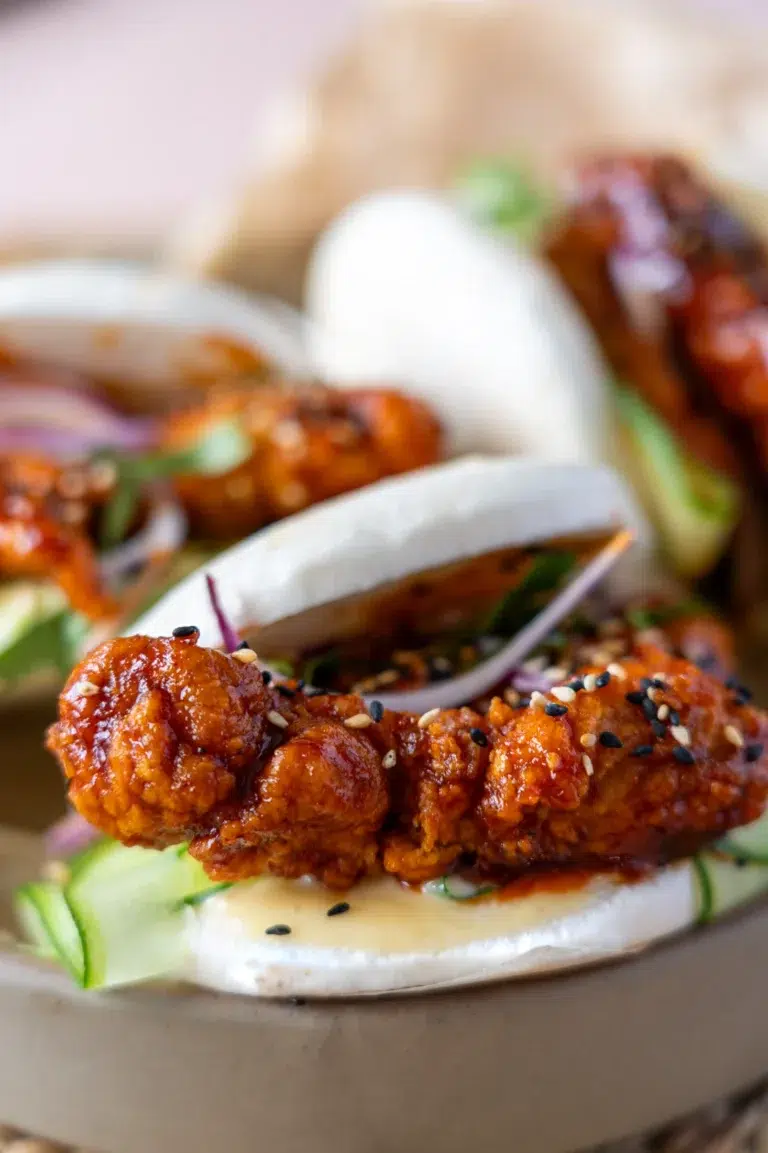
All the Korean fried chicken energy, tucked into soft, fluffy bao. Easy to make at home. Outrageously good. Fun to eat.
If you’ve ever ordered Korean fried chicken bao at a restaurant and wished you could recreate that same crispy-sticky-pillowy magic at home, this recipe will absolutely make your night. It’s one of those meals that feels like a full experience – the kind you set down in the middle of the table and everyone gets a little too excited about – but it’s surprisingly achievable, even if you’ve never cooked anything like this before!
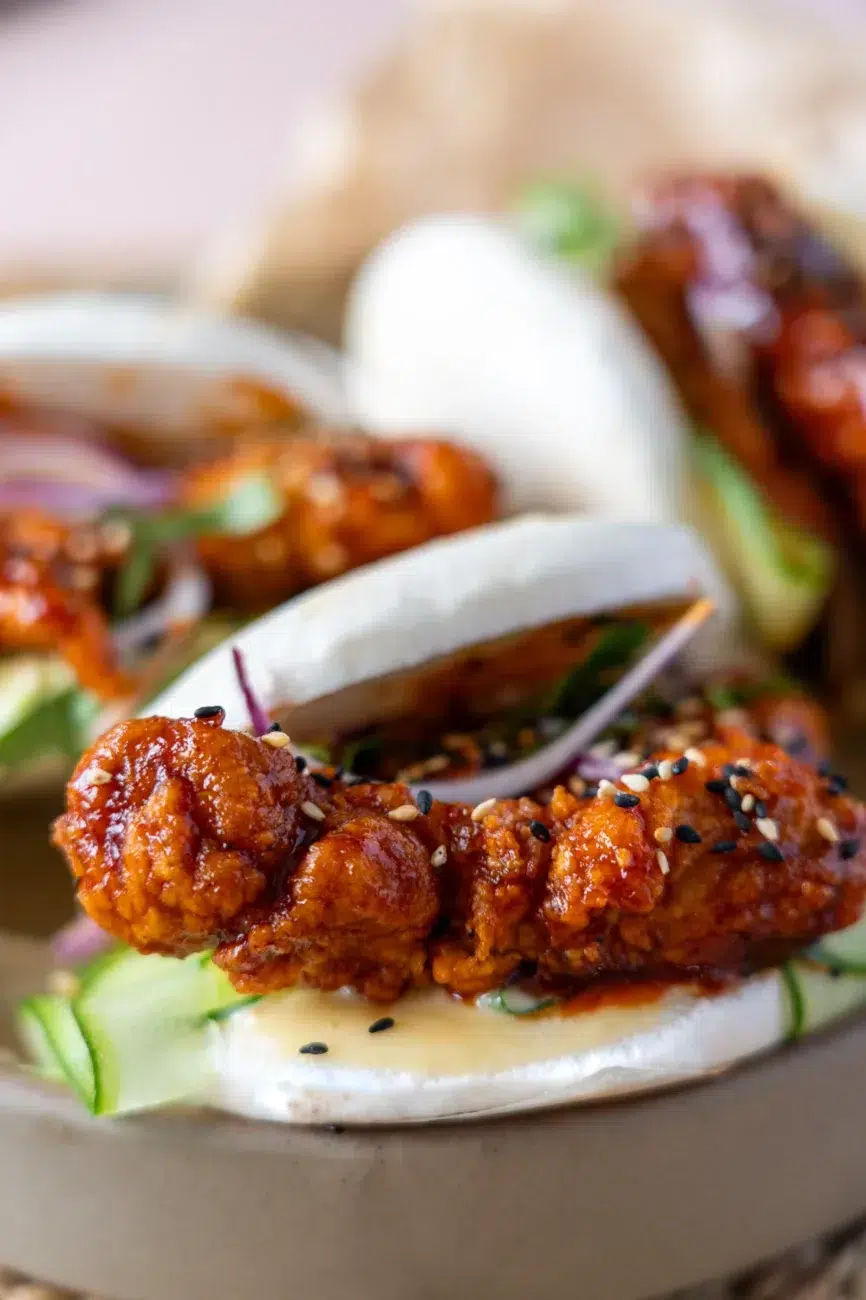
Here in Australia, bao – those soft, fluffy steamed buns – are easy to find in the freezer section of most major supermarkets (see the FAQ section to find out where to find them in your country). But if you can’t track them down, don’t stress – Chinese pancakes, mini flour wraps, or even soft wheat tortillas work beautifully. The most important part of this recipe is the crispy Korean chicken itself: juicy, golden and coated in the glossiest, most outrageously delicious glaze.
This is the kind of dinner I love making on a Friday night or over the weekend. There is a tiny bit of fuss involved – especially if you fry the chicken (which I personally prefer because the crunch is unmatched) – but it’s the fun kind of fuss, the “put some music on, pour a drink, and enjoy the process” kind. And the whole process only takes 40 minutes – but I’ve also provided lots of make-ahead tips. You can air fry the chicken for a lighter option too, and the results are still amazing.
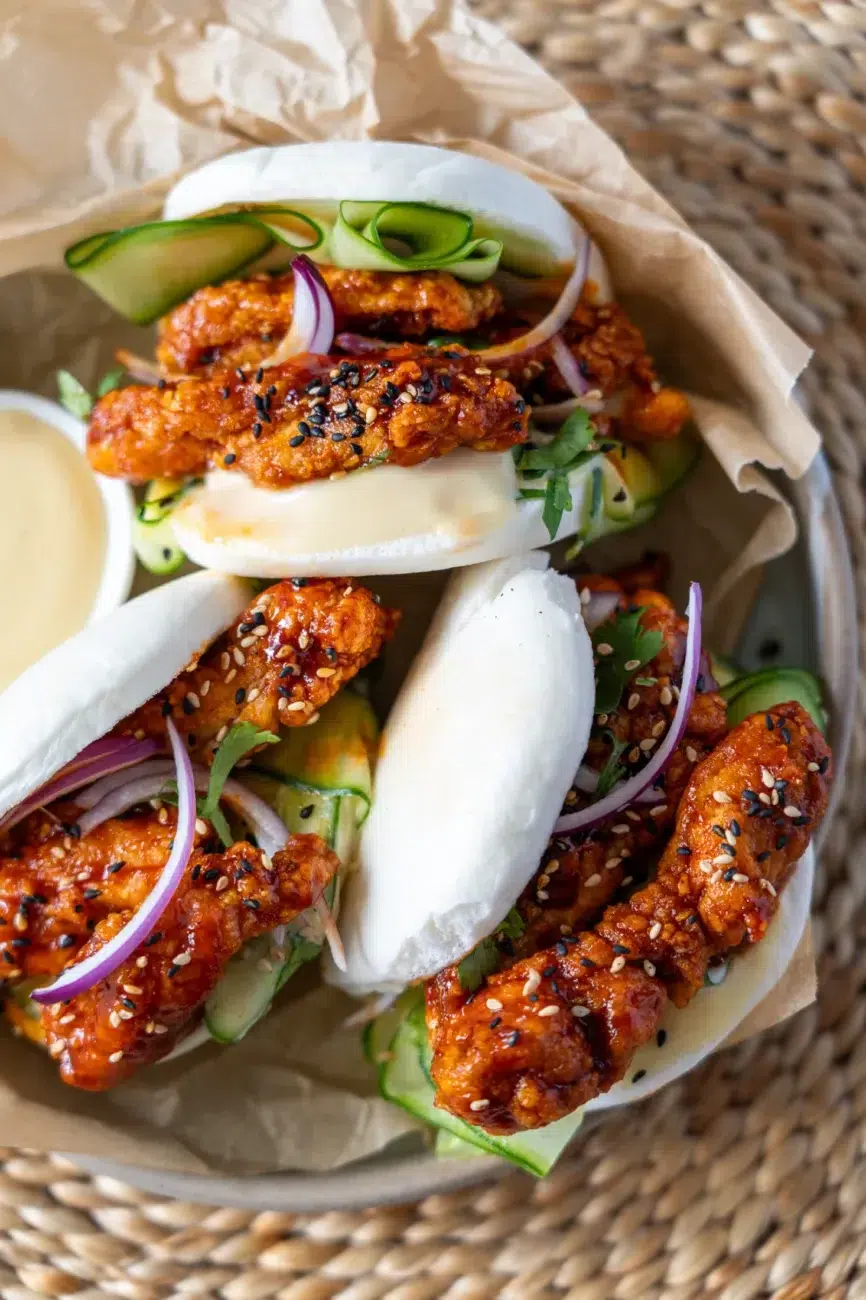
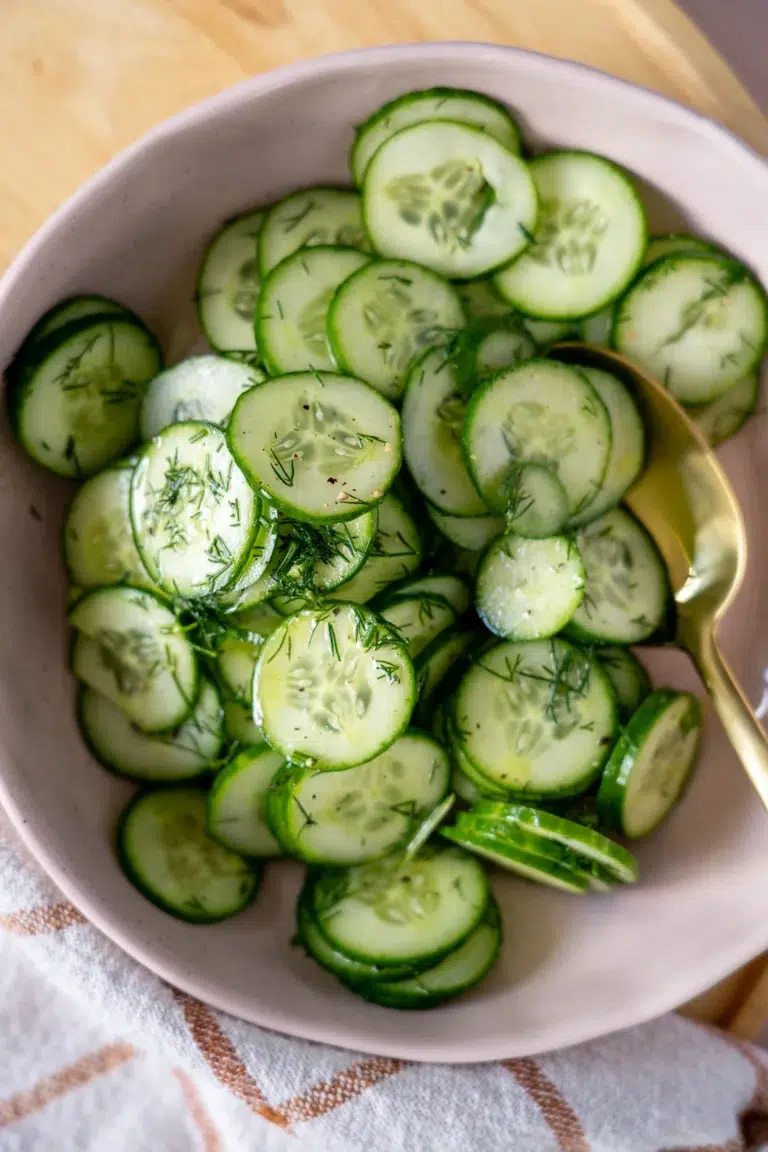
For the toppings, I keep it fresh and simple – creamy sesame mayo, cool cucumber ribbons, sliced red onion and coriander (cilantro) if that’s your thing. Everything piles into the warm bao for the perfect bite: crispy chicken, sticky glaze, creamy sauce, crunchy veggies, soft bun. It is unbelievably good. It’s also ideal if you have fussy eaters (big or little), as you can let everyone build their own bao.
to be incredible.
Meals like this remind me why I cook the way I do. When my kids were little, and eating out wasn’t something we could afford, I made a promise to myself that we’d still create fun, memorable, delicious moments at home that made the week feel special. This is one of those dinners. A little playful, a little indulgent, and something the whole family will talk about for days.
What are bao?
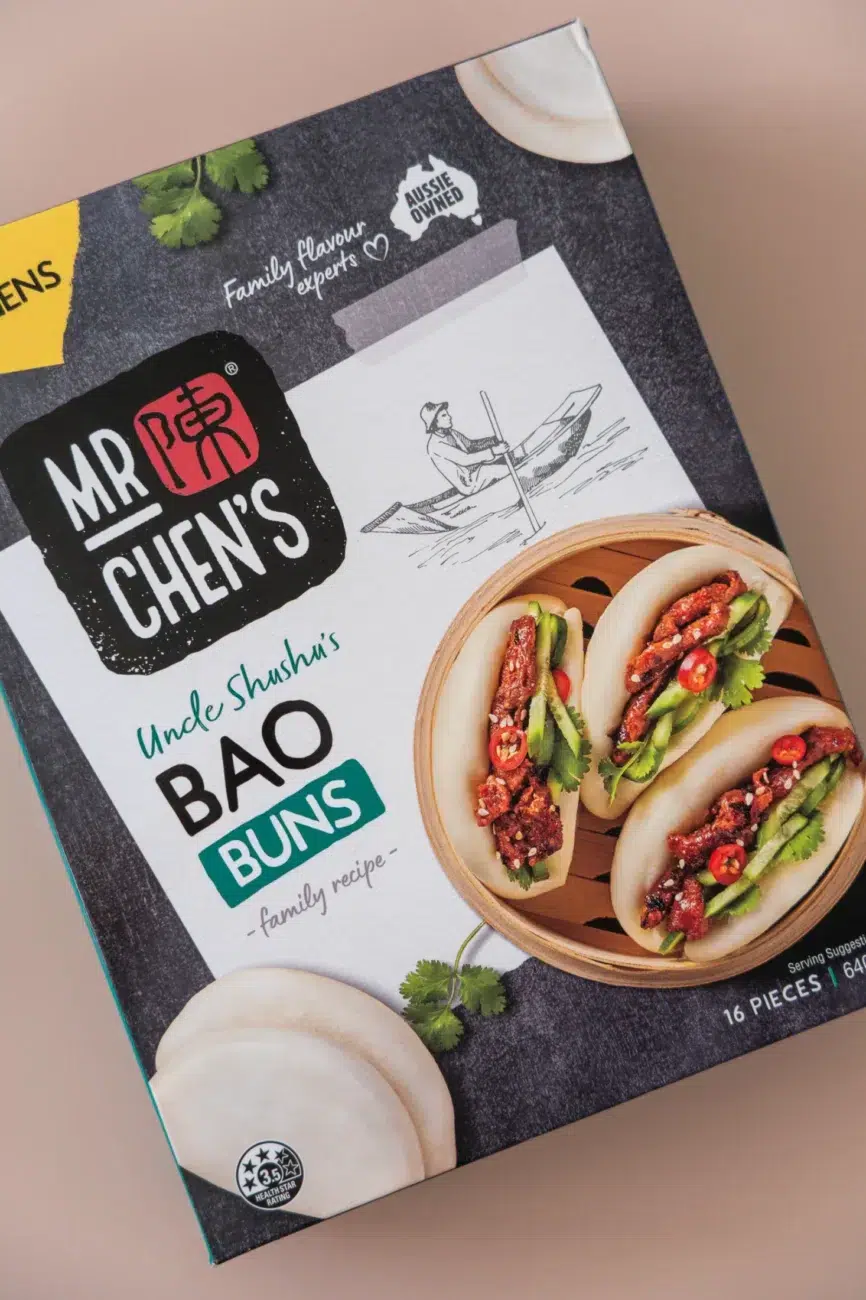
Bao are soft, fluffy steamed buns traditionally found across many Asian cuisines. They’re light, pillowy, slightly sweet and perfect for stuffing with saucy, crispy fillings like this Korean chicken. Here in Australia you’ll find them in the freezer section of Coles and Woolworths. In the US, UK and Europe, look in Asian grocers, Costco, Trader Joe’s, Whole Foods, or the freezer aisle of larger supermarkets. If you can’t find them, see the next FAQ for great alternatives.
I can’t find bao – what can I use instead?
The crispy Korean chicken is the hero, and it works beautifully with:
- Mini wheat tortillas.
- Soft taco-sized wraps.
- Small flatbreads (warm them so they fold easily).
- Basically, anything soft and foldable works. You’ll still get that delicious “build-your-own” vibe.
What should I serve with these Korean Chicken Bao?
The recipe already includes my favourite combination but the bao are incredibly versatile. Other toppings that work beautifully are:
- Shredded red cabbage.
- Julienned carrot.
- Sliced radish.
- Pickled veggies (quick pickled cucumber, onion or carrot).
- A squeeze of lime for brightness.
These bao are very “choose-your-own-adventure”, so use what you already have on hand.
What is gochujang and where do I buy it?
Gochujang is a Korean fermented chilli paste – rich, savoury, sweet and packed with umami. It’s not just “spicy”, it adds depth and body to sauces like this glaze. I include different spice variations and options in the recipe.
Where to find it:
- Australia – Coles, Woolworths, Asian grocers.
- USA – Whole Foods, Trader Joe’s, H-Mart, Walmart, Target.
- UK – Tesco, Sainsbury’s, Waitrose, Asian grocers.
- Europe – Large supermarkets, Asian grocers.
If you enjoyed Korean Chicken Bao, I think you’ll love:
Crispy Chicken Bao Buns Recipe
Sticky Pork Bao Recipe
Pork Belly Banh Mi Recipe
Honey Soy Chicken Banh Mi Recipe
San Choy Bow Recipe
Korean Chicken Bao
These Korean Chicken Bao taste like something you’d order out, but they’re surprisingly doable at home and also family-friendly. Crispy chicken, sticky glaze, soft bao and fresh toppings – the perfect build-your-own dinner for Friday nights or fun weekends in. Mild, customisable and outrageously delicious
- Total Time: 40 minutes
- Yield: 12 bao (serves 4) 1x
Ingredients
CREAMY SESAME SAUCE
- ½ cup (125 g) whole-egg mayonnaise
- 1 tsp sesame oil
- 1 tsp all-purpose soy sauce
- 1 tsp rice vinegar
CRISPY CHICKEN
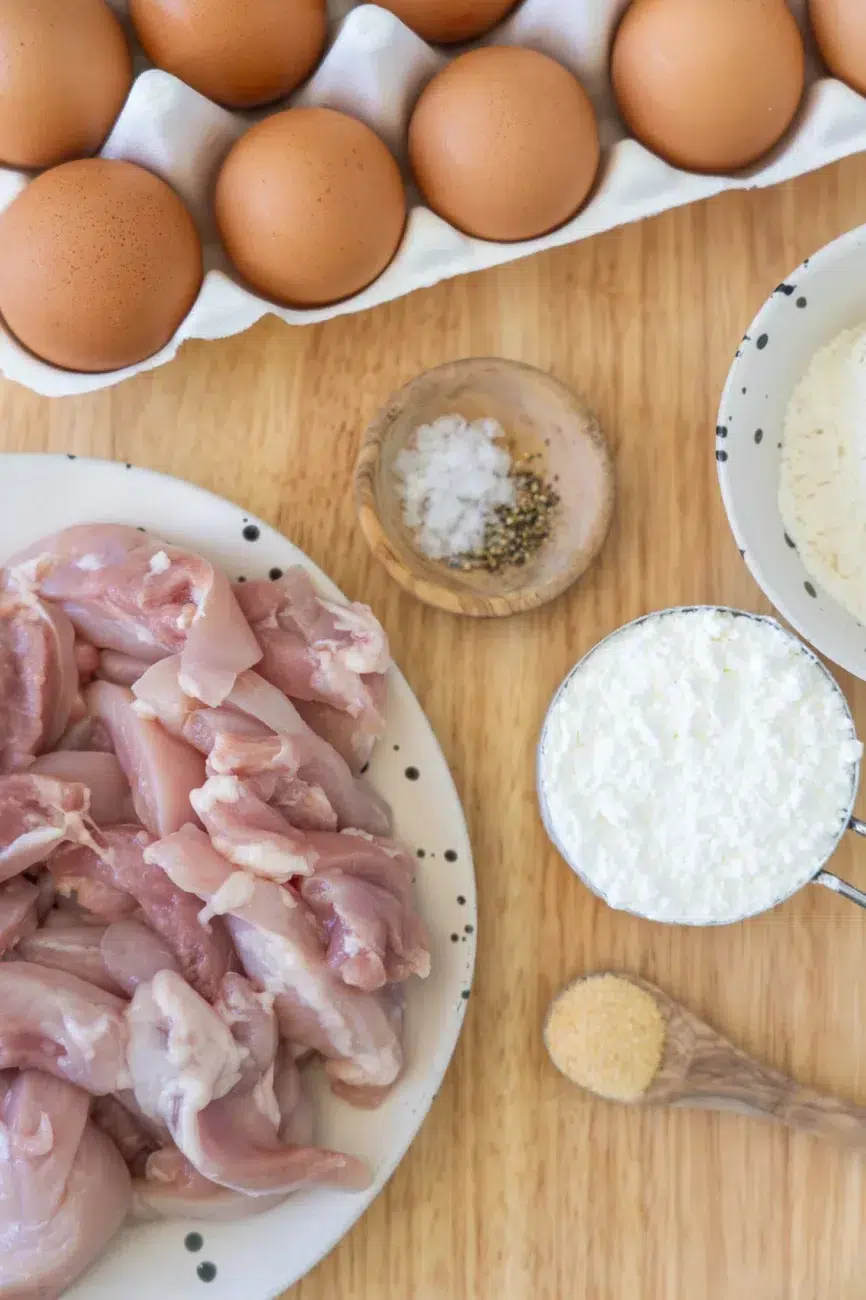
- 500 g (1 lb) boneless, skinless chicken thighs, cut into bite-sized pieces (can be substituted with chicken breast)
- 1 egg
- 2 tbsp cold water
- ½ cup (75 g) plain (all-purpose) flour
- ½ cup (60 g) cornflour (cornstarch)
- 1 tsp garlic powder
- 1 tsp sea salt flakes
- ¼ tsp white pepper
- Neutral oil of choice, for frying (I used light olive oil)
GLAZE
- 1 tbsp neutral oil of choice (I used light olive oil)
- 2 tsp freshly minced garlic
- 2 tbsp ketchup
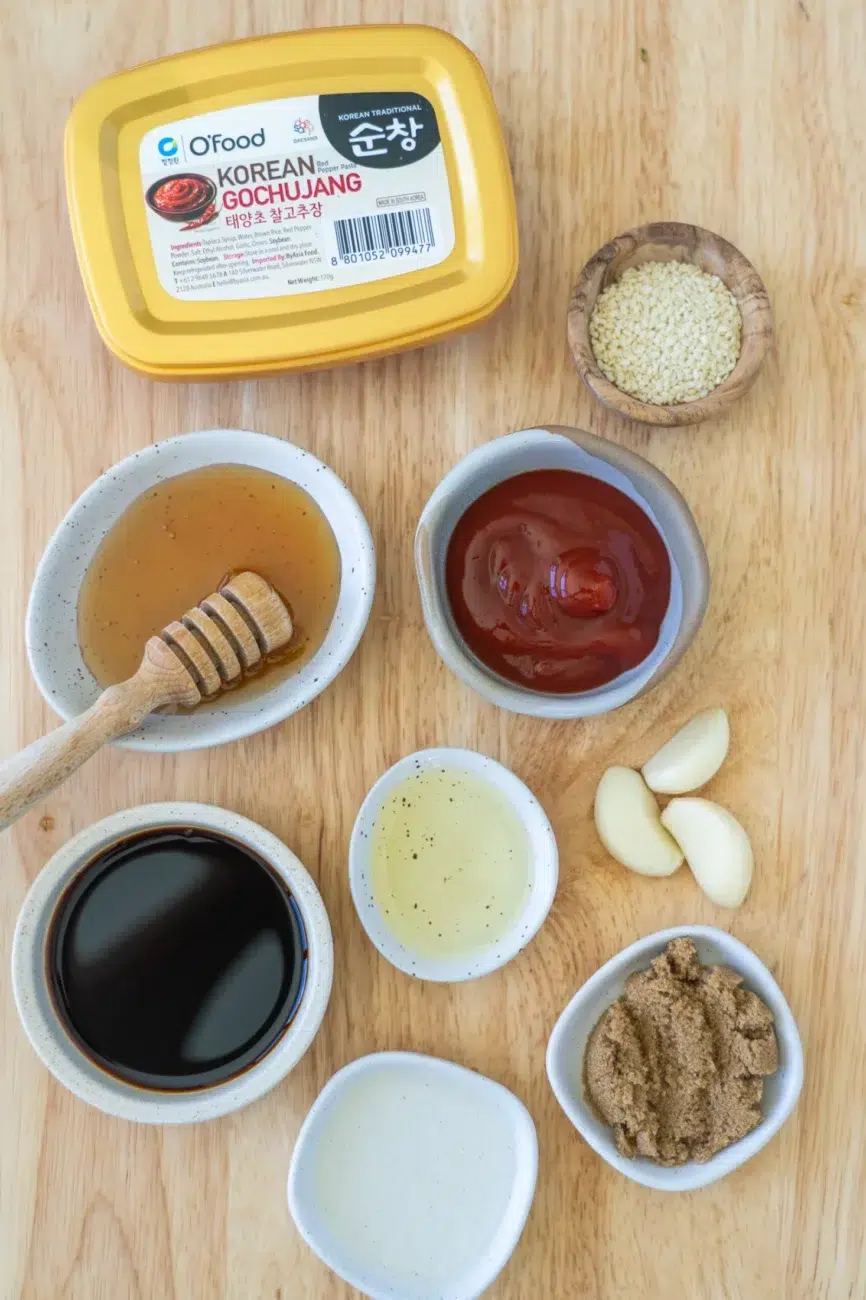
- 2 tbsp gochujang (Korean chilli paste, see note 1 for spice levels and more info)
- 2 tbsp honey
- 2 tbsp all-purpose soy sauce
- 1 tbsp brown sugar
- 1 tbsp rice vinegar
- 2 tbsp water
- 1 tbsp toasted sesame seeds
FOR THE BAO ASSEMBLY
- 12 store-bought bao buns (see note 2 for steaming options and more info)
- 2 small cucumbers, thinly sliced into ribbons
- ½ red onion, thinly sliced
- ¼ bunch coriander (cilantro), finely chopped (optional)
- 2 tsp toasted sesame seeds
Instructions
- Make the creamy sesame sauce – Whisk together all the ingredients in a small bowl. Refrigerate until ready to use.
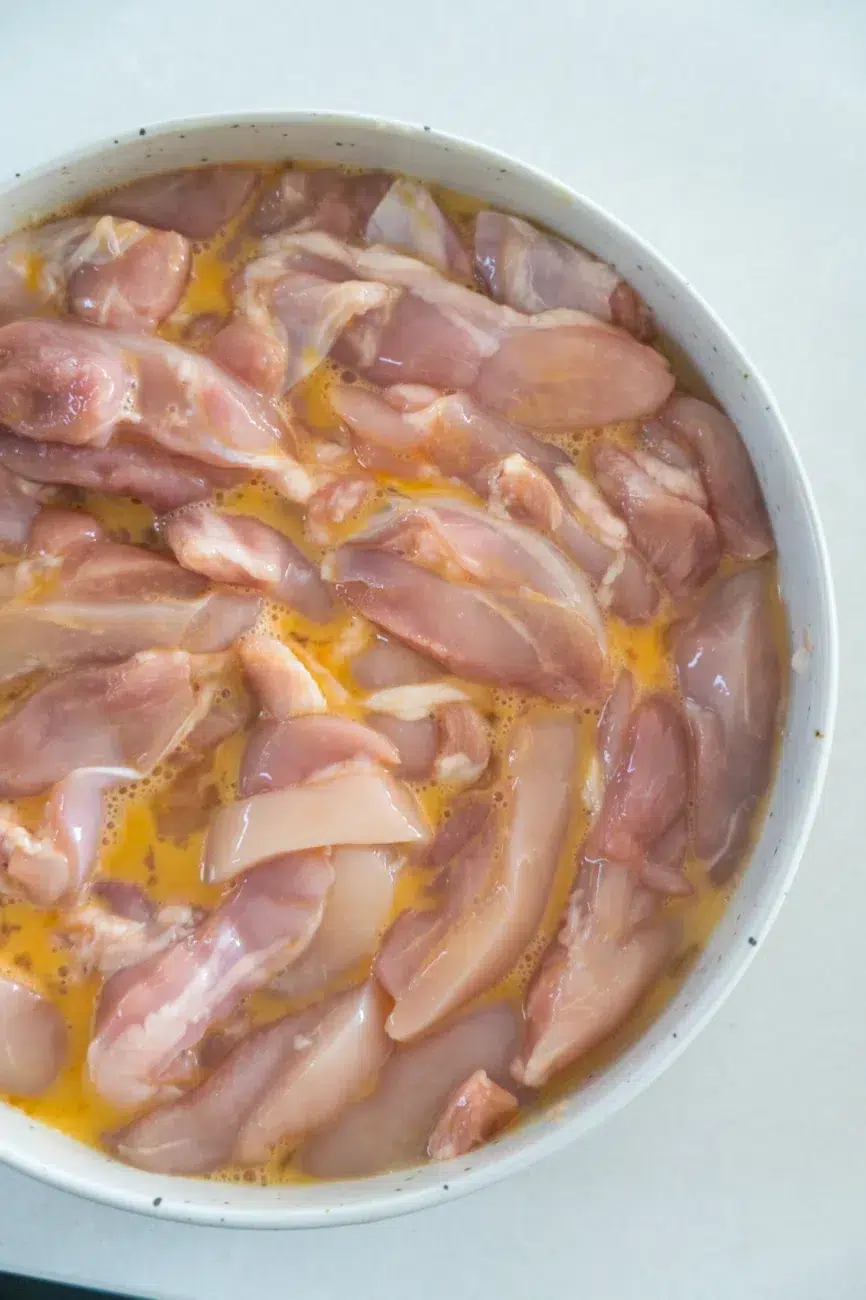
- Prepare the chicken coating – Add the chicken to a medium bowl, followed by the egg and cold water. Use tongs to combine well.
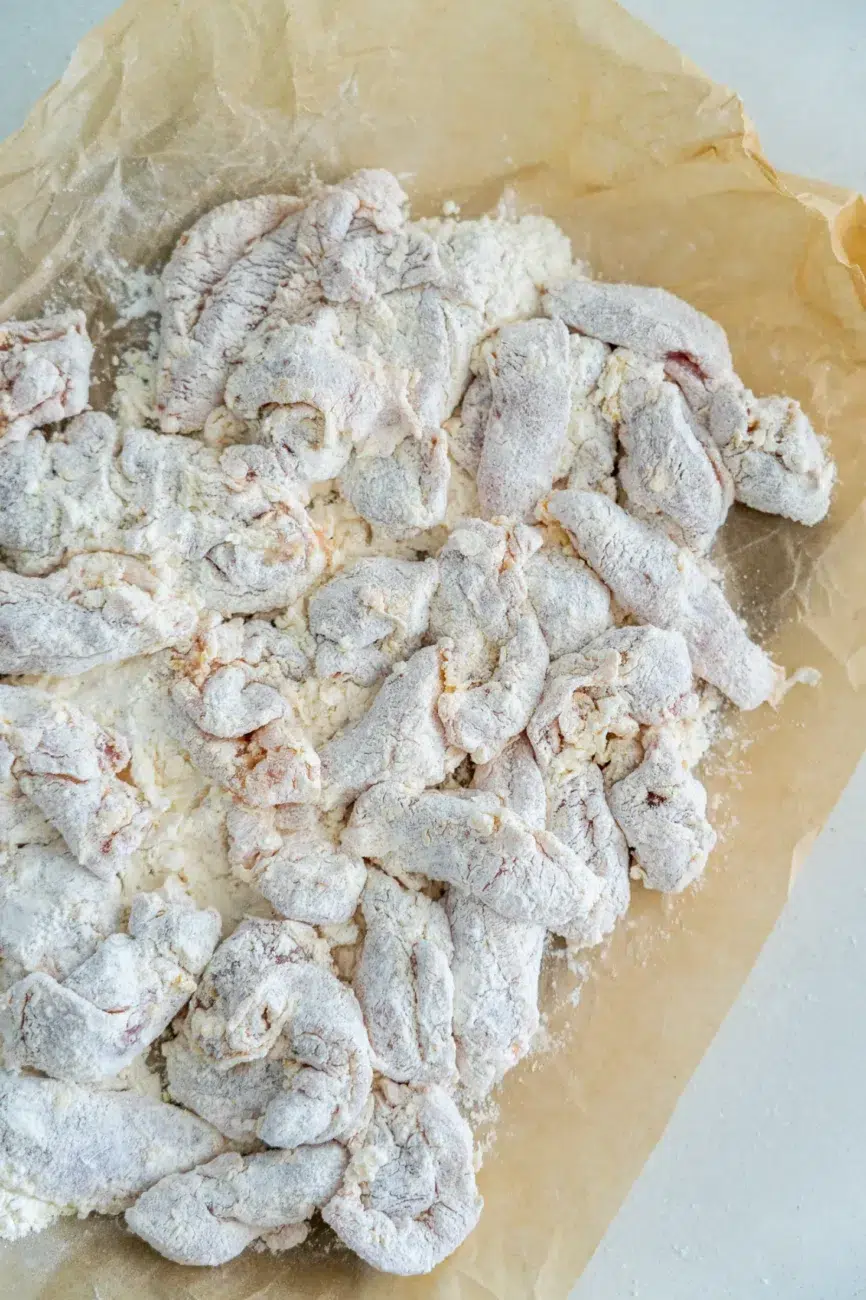
- On a large sheet of baking (parchment) paper, combine the plain flour, cornflour, garlic powder, salt and white pepper. Spread the flour mix out so it’s as flat as possible.
- Using the tongs, remove the chicken from the egg mixture, allowing any excess to drip off. Place the chicken on the flour and lift up the sides of the baking paper to help coat the chicken in the flour mixture.
- Cook the chicken –
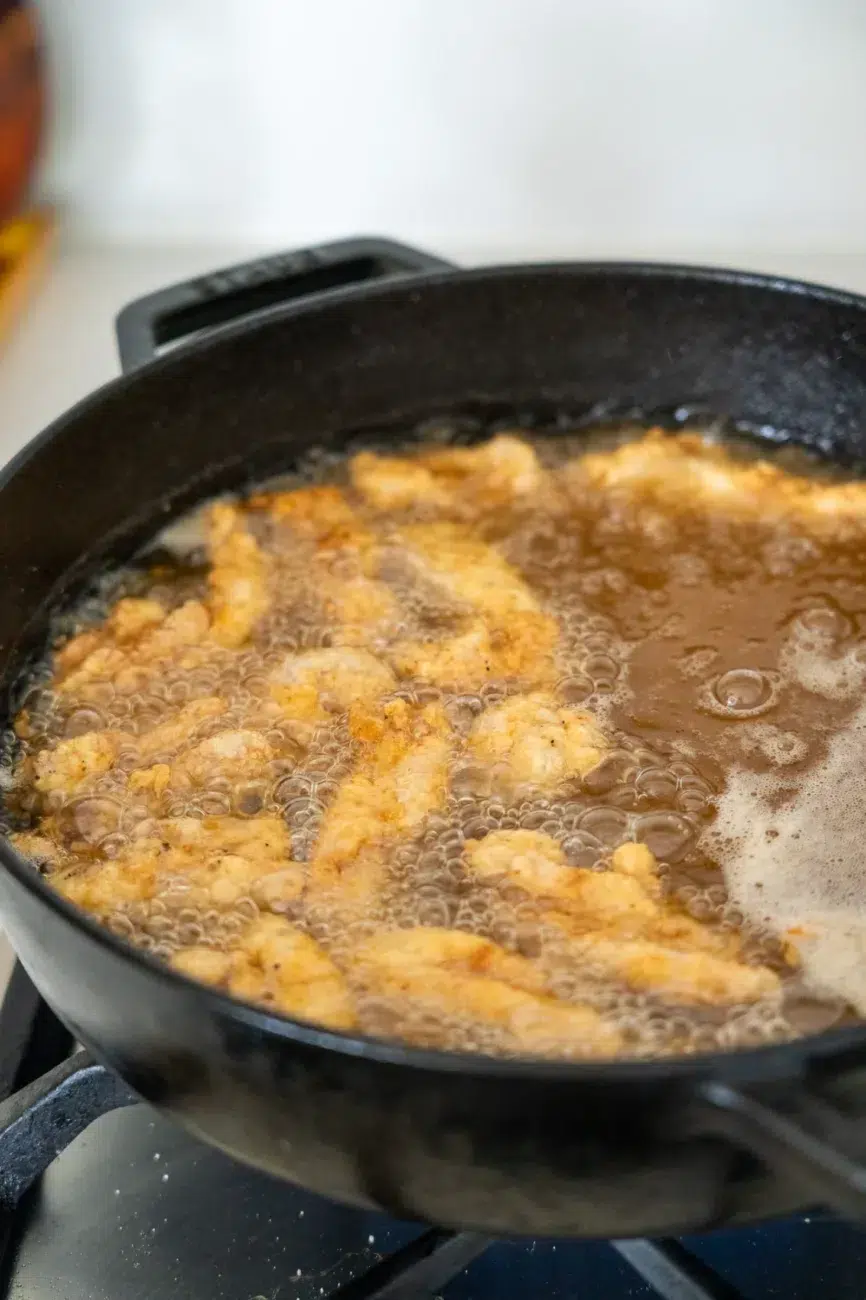
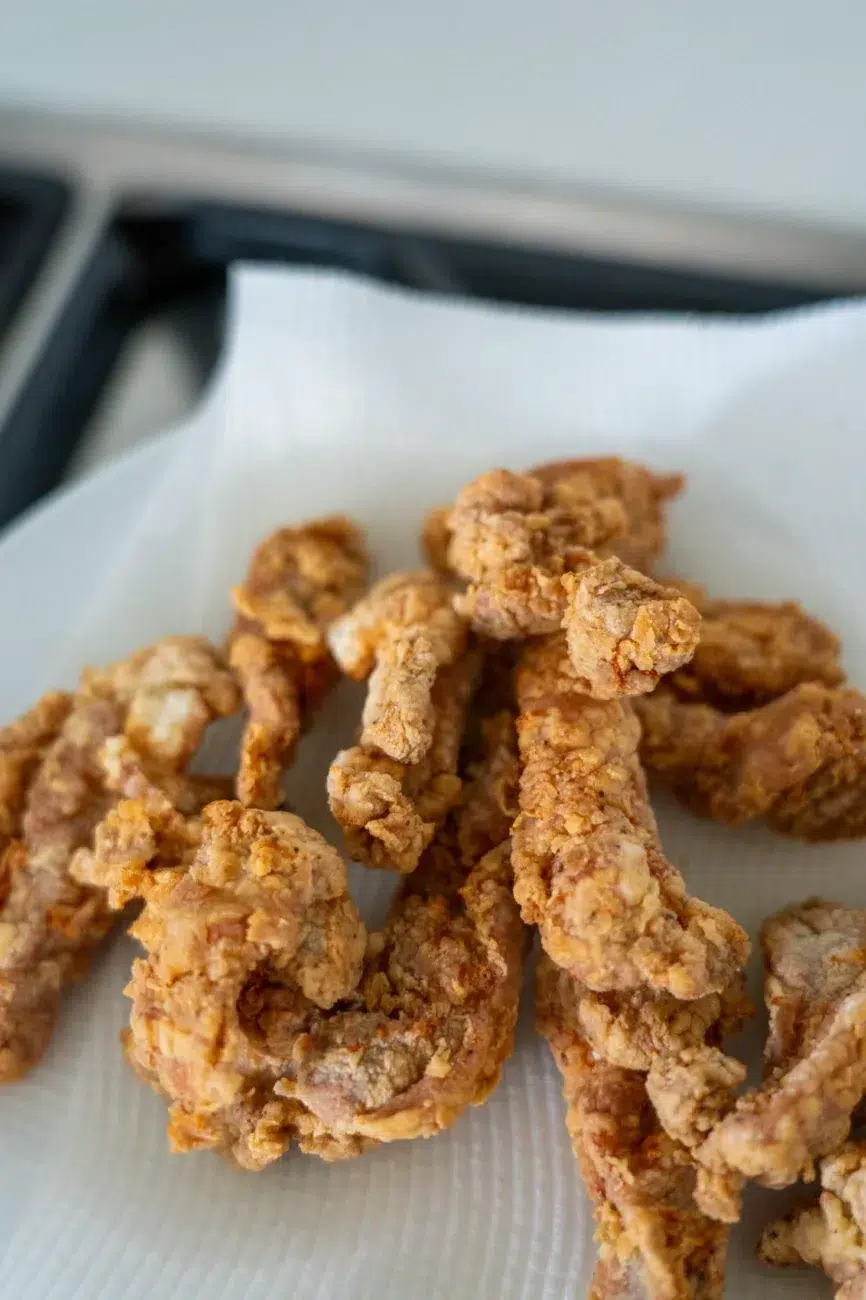
a) To fry (for maximum crispiness): Heat the oil in a deep, heavy-based pan over medium heat. Fry the chicken in batches for 5–6 minutes, or until golden, crispy and cooked through. Drain on a wire rack or paper towel.
b) To air fry (lighter option): Lightly spray the coated chicken with neutral oil. Air fry at 200°C (400°F) for 12–14 minutes, shaking halfway. It won’t be quite as crispy, but still delicious. - Make the glaze – Add the oil and garlic to a small saucepan or non-stick frying pan off the heat (this stops the garlic burning and the sauce splattering). Then put the pan on the stove over low heat and, as soon as the garlic starts sizzling gently, stir in the ketchup, gochujang, honey, soy sauce, brown sugar, rice vinegar and water. Simmer for 2–3 minutes until glossy and slightly thickened.
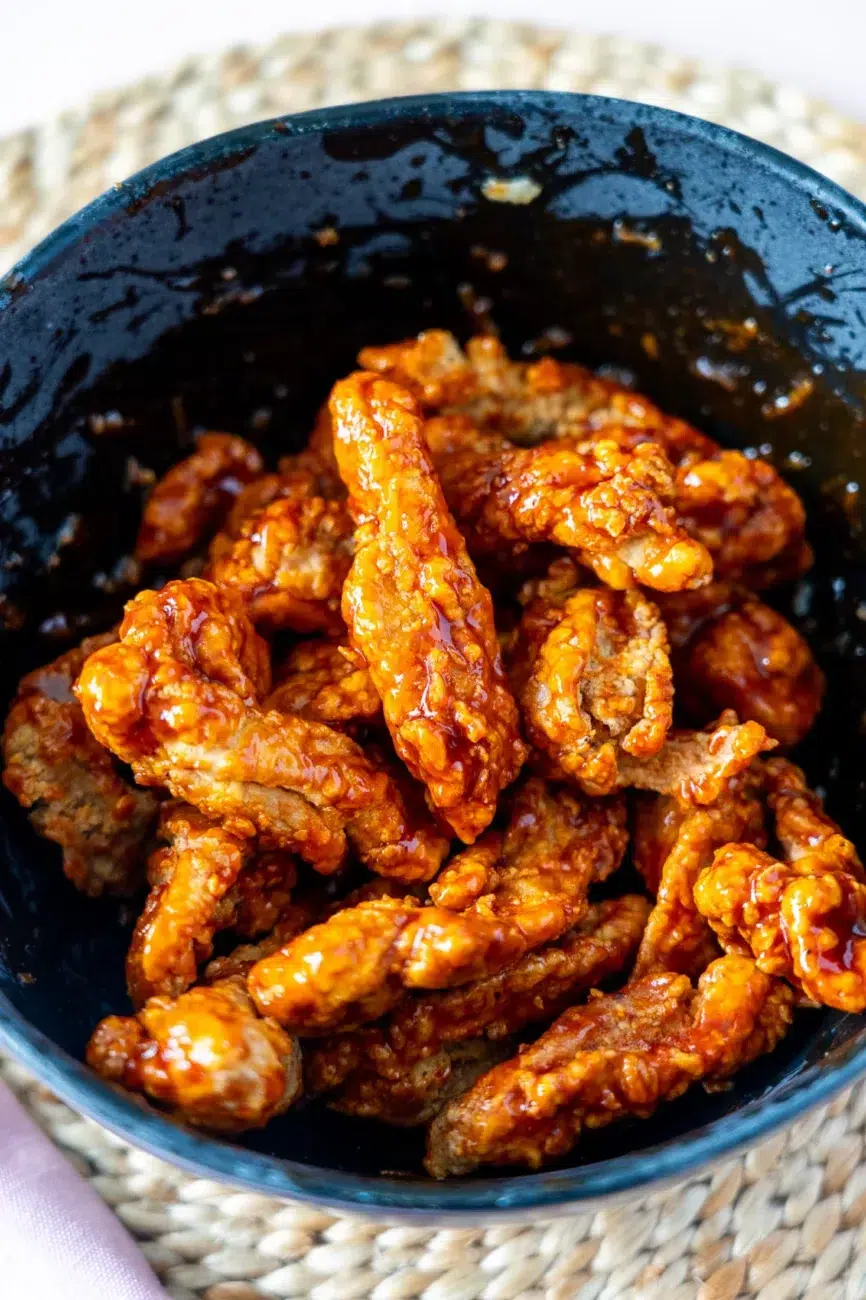
- Coat the chicken – Add the freshly cooked chicken to the glaze and toss until each piece is evenly coated.
- Steam the bao – Steam the bao according to the packet instructions or using one of the methods in note 2. Keep warm until ready to assemble. (To keep them warm: transfer the steamed bao to a plate, cover with a clean tea/dish towel, and cover loosely with a “tent” of foil. They’ll stay soft and warm for up to 20–25 minutes without drying out.)
- Assemble the bao – Spread a little creamy sesame sauce inside each warm bao. Layer with the cucumber, onion, coriander (if using) and the glazed chicken.
- Serve – Finish with a sprinkle of toasted sesame seeds. Serve immediately.
Notes
Note 1 – Adjusting the gochujang spice level Gochujang is a Korean fermented chilli paste that’s rich, savoury and naturally sweet with a punch of heat. It’s the backbone of this glaze. You can find it easily in Australia (Coles, Woolworths, Asian grocers), and it’s widely available overseas too – try H-Mart, Whole Foods, Trader Joe’s, Walmart, Tesco, Sainsbury’s, Waitrose or your local Asian grocer. Spice levels vary by brand, so start with the guide below:
- Very mild – 1 teaspoon gochujang (great for kids or beginners).
- Medium – 1 tablespoon gochujang.
- Hot – 2 tablespoons gochujang (restaurant-style kick).
If you’re unsure, start small – you can always whisk in more once the glaze simmers and thickens.
Note 2 – How to steam bao at home Bao are soft, fluffy, steamed buns used across many Asian cuisines. They’re easy to find in Australian supermarkets (freezer section) and are increasingly available in the US, UK and Europe. If you can’t find them, mini flour wraps or tortillas, or Chinese pancakes are great alternatives.
Here’s how to steam them at home:
Method A – Steamer basket (best result):
- Bring a pot of water to the boil.
- Place the bao into a steamer basket lined with baking (parchment) paper with small holes poked through.
- Cover and steam for 6–8 minutes until warm, soft and fluffy.
Method B – Microwave (if you don’t have a steamer):
- Place the bao on a microwave-safe plate.
- Cover with a damp paper towel (this creates steam).
- Microwave on high for 1–2 minutes, checking after 1 minute.
- They won’t be quite as fluffy as steamed bao but still work beautifully.
Make Ahead
This recipe has a few moving parts, but the good news is you can prep almost everything ahead to make assembly super quick later.
To prep up to 24 hours ahead:
- Creamy sesame sauce – Make, then refrigerate in an airtight container.
- Chicken – Cut into bite-sized pieces and store in the fridge. (Coat only just before cooking so it stays crispy.)
- Toppings – Slice the cucumber, red onion and coriander (cilantro). Store separately in small airtight containers.
- Glaze – Make, then refrigerate in a jar or airtight container. When ready to serve, add the glaze to a small pan with 1–2 tablespoons of water and heat gently until glossy again. Then toss with the hot, freshly cooked chicken.
What should NOT be made ahead:
- Coating the chicken – It will turn gummy and won’t crisp properly. Coat just before pan-frying or air frying.
- Steaming the bao – Steam right before serving for maximum fluffiness. (They cool quickly, which is why we keep them warm under a tea/dish towel.)
If you want to get ahead on the day:
You can set everything up, almost like a build-your-own bao station. Steam the bao, then glaze the chicken last, and assemble straight away. It’s a fun, interactive dinner that feels a bit special – my kids love it.
Leftovers
Fried chicken bao are definitely best eaten fresh, but leftovers can still be enjoyed the next day with a few adjustments.
How to store leftovers:
Keep all the components separate:
- Chicken – Store the unglazed cooked chicken in an airtight container (crispier if you skip the glaze until reheating). Store for up to 2 days in the fridge.
- Glaze – Store separately in a small airtight container or jar. Lasts 4–5 days in the fridge.
- Bao – Store steamed bao in an airtight container for up to 2 days (best made fresh, they will firm up).
- Toppings – Store cucumbers, red onion and coriander (cilantro) separately. Use within 1–2 days for freshness.
Freezing guidance:
- Uncooked, coated chicken – Do not freeze as the coating becomes gummy.
- Cooked, unglazed chicken – Freezes well for up to 1 month.
How to reheat everything:
Chicken
- Oven (best) – 200°C (400°F) (180°C/350°F fan-forced) for 10–12 minutes until crisp.
- Air fryer – 180°C (350°F) for 6–8 minutes.
- Avoid microwaving chicken if possible – it softens the coating.
Glaze
Warm gently in a pan with a splash of water until glossy. Toss with the reheated chicken.
Bao
- Steamer – Steam for 4–5 minutes until soft and warm again.
- Microwave – Wrap in a damp paper towel and heat for 30–60 seconds until fluffy.
Next-day option
If you don’t feel like rebuilding bao the next day, chop the reheated chicken and serve it over rice with the glaze and fresh veggies – a delicious little “Korean chicken bowl”.
- Prep Time: 20 minutes
- Cook Time: 20 minutes
- Category: Chicken
- Method: Frying or Air Fryer, Stovetop
- Cuisine: Korean-inspired













Mel says:
Wow the flavour! Love a good Korean Fried Chicken and this was perfect. But that mayo….THAT was so good.
The family were almost fighting over the last dew bits of chicken.
Nicole says:
This is so brilliant to hear, Mel! Thanks for the rating too. 🧡 Nic x
Nicky K says:
This is a new favourite at my place and will be on regular rotation. Quite simple and really tasty. Thank you for your amazing dinner inspo x
Nicole says:
Wonderful to hear, Nicky! Thanks for the rating too. ❤️ Nic x
Sally says:
I love Korean food and thought this has been on my list to try for awhile. It was absolutely delicious and will very much be a family favourite from now on. My youngest doesn’t like spicy so much but I can put aside some chicken before adding the sauce and it still tastes great. I just love your recipes and how easy they are to pull together on busy week nights. Thank-you Nicole!
Nicole says:
Hi Sally, thanks so much for your lovely comments! I’m thrilled you enjoyed this addictive chicken! Great news that it’s become a favourite. 🙌🏻 ❤️ Nic x
Nicole says:
Thank you Nicole for the recipe. My family loved this especially my 3 teenage sons with bottomless bellies. Your website amazing and helping me enormously!!!!!
Nicole says:
Hi Nicole, so happy you all enjoyed these … I have to agree they are addictive! Sounds like you’ll have to make double next time! ❤️🤣 Thanks for your lovely comment about the website … it means a lot. 🥰 Thanks for the rating too. Nic x
Polly says:
Thank you Nicole. Just finished this meal and it was absolutely delicious. First time using bao buns and it won’t be the last. Superb recipe and very easy to follow. Yet another of your recipes I have cooked and once again clean plates xx
Nicole says:
Hi Polly, I’m so thrilled you’ve discovered bao buns … and this recipe! ❤️ Glad it was a winner for you all. 🙌🏻 Thanks for the rating. Nic x
Marea says:
Love this recipe but even more love the breading technique. We found this dish in an Asian restaurant ad hubby impressed at we can have it at hoe. Just right for a 44 degree day
Nicole says:
Hi Marea, I have to admit I’m pretty addicted to these as well! I’m so thrilled you love them, even on a 44 degree day! 🥰 Nic x
Bec says:
Really delicious, the whole family loved them.
Nicole says:
Love to hear this, Bec! ❤️ Thanks for the rating. Nic x
Melinda says:
This is fabulous! The 3rd recipe in a row from your website that was success with all 5 of us – 3 girls on board.
Huge thanks and congrats for your work and site, all the way from the hear of Transilvania 🙂
Nicole says:
Hi Melinda, thanks for your beautiful comments! 🥰 So thrilled that the recipes are a hit for you … I hope you keep on cooking and enjoying! Thanks for the rating. Nic x
Jessica says:
This may be the single greatest meal I have ever made.
Nicole says:
Oh my goodness, Jessica! What a lovely thing to say … it’s really made my day. 🥰 🥹 So thrilled you loved it and thanks for the rating. Nic x
Tash Lythgoe says:
The whole family loved this even my littlest picky eater. I even kept some chicken aside unsauced, just in case. But she loved it! A teaspoon of the gochujang was a good tip!
Nicole says:
Hi Tash, this is brilliant to hear … especially that these were a hit with even your little eater! 🥰 Clever of you to offer both options but so great that the sauce was a hit! Thanks for the rating, Nic x
Ross says:
Delicious and fresh 10/10
Nicole says:
Wow, thanks for the thumbs up, Ross! So glad these were a hit for you! 🙌🏻 Nic x
Julie says:
One word — DELICIOUS! A definite recommendation. This recipe really elevates an easy weeknight dinner. Thx Nicole! x
Nicole says:
Hi Julie, thanks so much for the lovely feedback! 🥰 So happy you enjoyed it and thanks for the rating. Nic x