







Enjoy the South-East Asian street food vibes in this stir-fry with juicy prawns (shrimp) and crispy pork belly – on the table in 20 minutes!
You know that feeling after a big week? You’re tired and want to “reward” yourself with something delicious – and it would be soooo easy to order takeout. But there’s no need when you can make this incredible noodle dish with all its delicious South-East Asian street food vibes in only 20 minutes! After changing into comfy slippers and pyjamas, it’s really no hassle to cook this for my family. It’s simple, I know exactly what’s going into it and there is none of that “post-takeout slump”. This is fast, but it’s fresh!
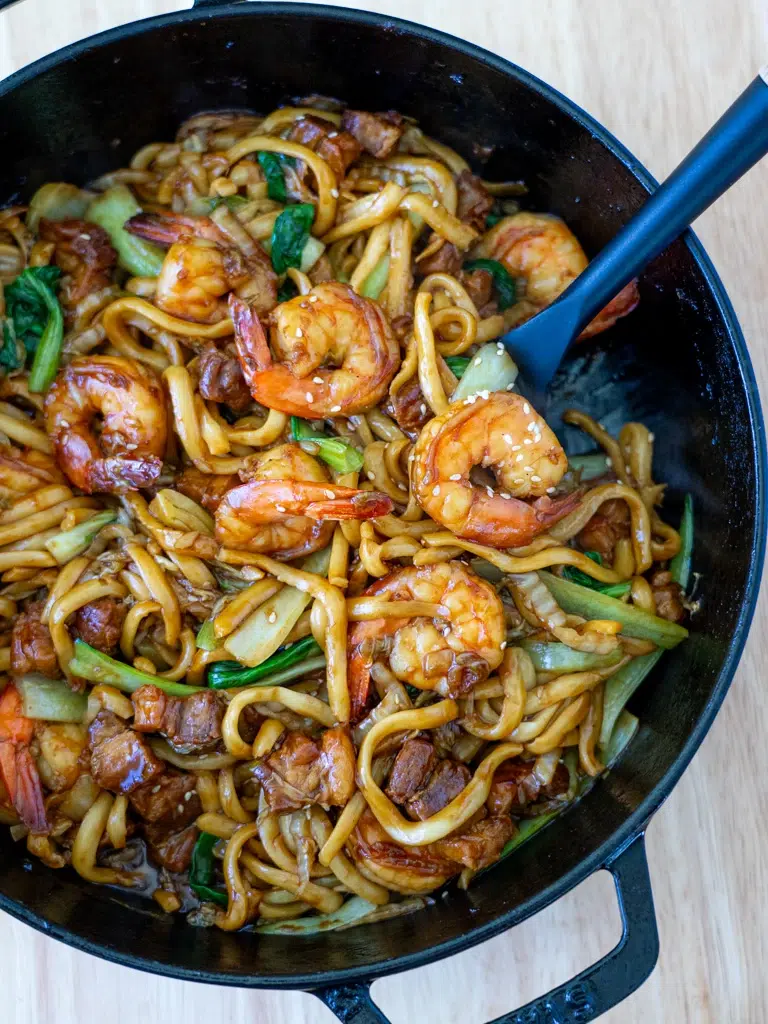
After I first made this recipe, I ended up cooking it MULTIPLE times over the past couple of weeks … it’s irresistible! It is perfect for a cosy Friday night in, snuggled up on the couch, glass of wine in (very) easy reach. As a family we love to TV-dinner it up on Friday, watching our favourite show as we munch our way through this delicious dish … one of the kids falling behind, valiantly insisting they can use chopsticks! It really is the best way to end a long week.
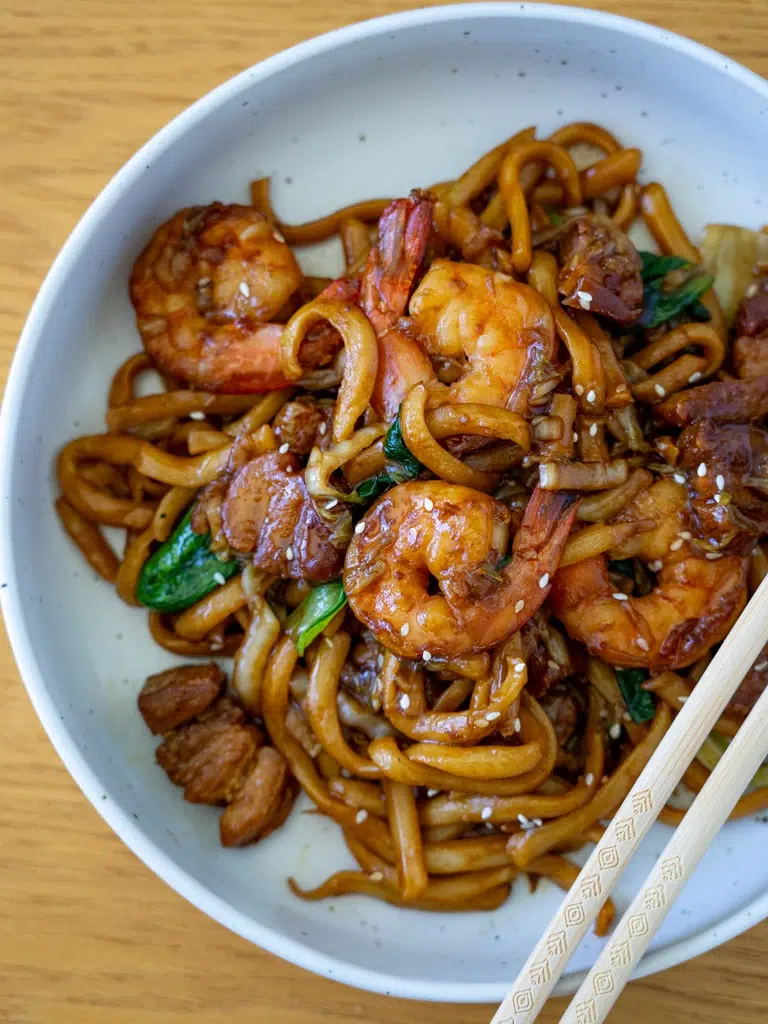
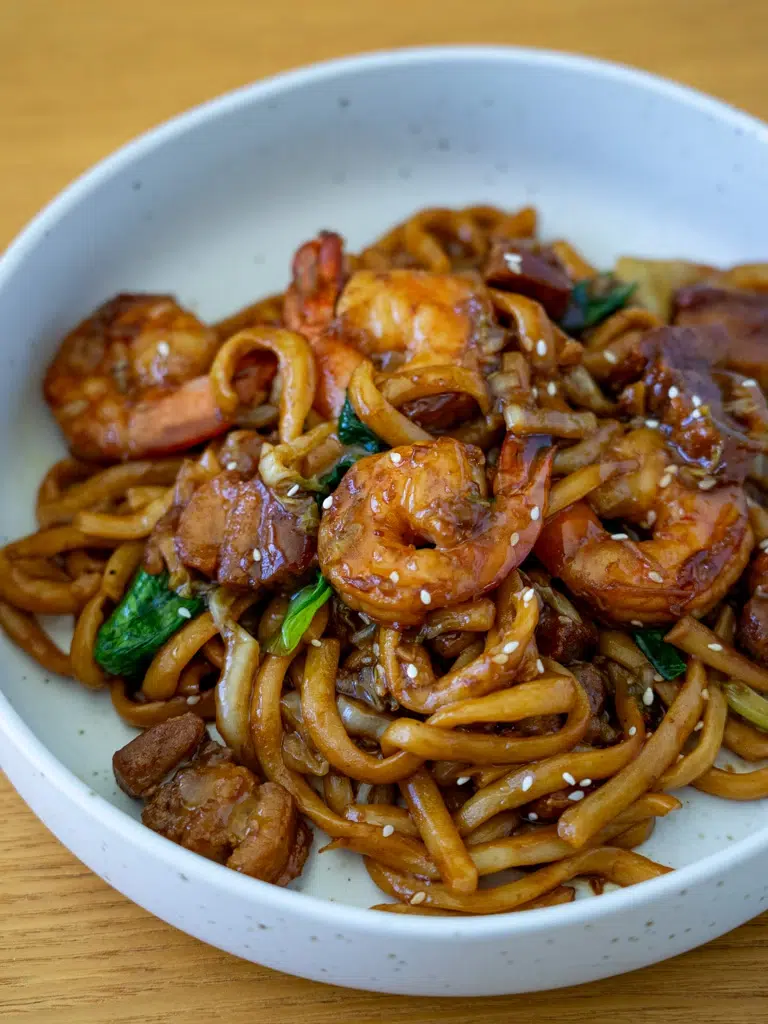
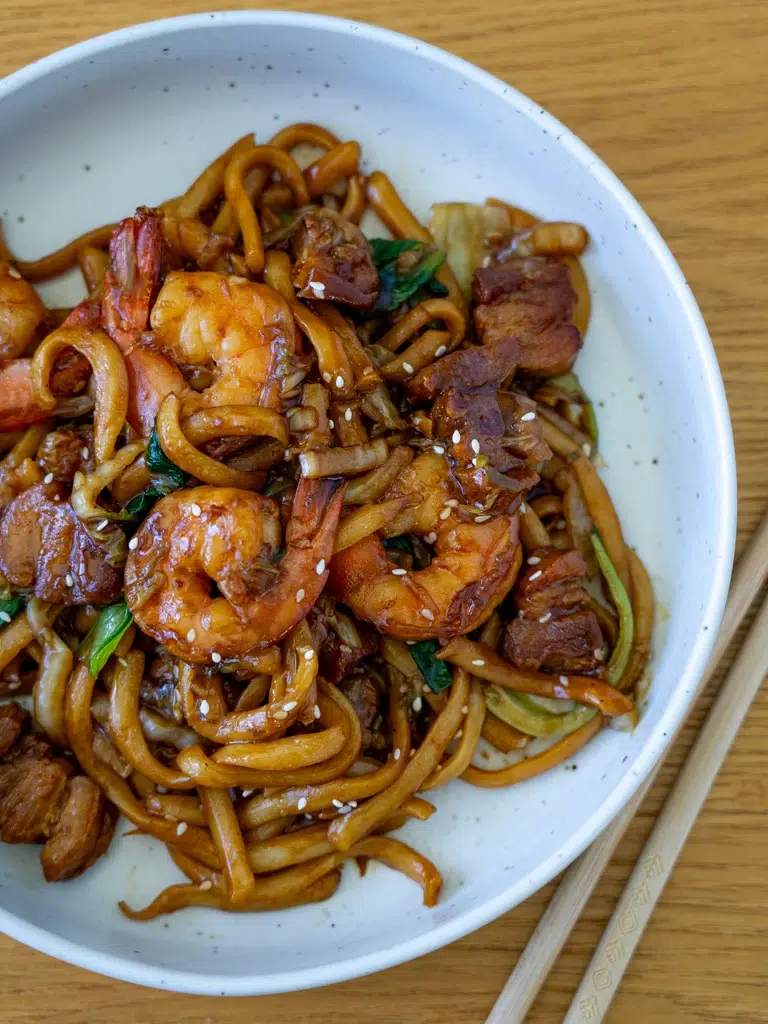
You have to try this one-pan Malaysian-inspired Hokkien Mee. It’s an incredible combo of crispy fried pork belly, juicy prawns (shrimp) and noodles, but it’s also loaded with veggies (which tend to disappear into the luscious sauce, so it’s super kid-friendly). If you prepped the veggies earlier in the week, this becomes a 10-minute wonder!
Can I use a different type of noodle?
Yes! You can use any noodles of choice, but just make sure you prepare them as per the packet instructions. If using dried noodles, cook them for a few minutes less than the packet suggests – cook them until they are just pliable. They will finish cooking in the stir-fry and this will stop them going mushy. Try hokkien noodles, ramen noodles, egg noodles or even thick rice noodles.
Can I use a different type of meat if I don’t eat pork or prawns (shrimp)?
You can swap the pork or prawns for a different type of meat, such as boneless, skinless chicken thighs, or beef rump (sirloin) steak. Or add 300 g (10½ oz) of firm tofu that has been fried for 2–3 minutes on each side – cook this first, then set aside and add to the pan with the noodles in step 5.
What other vegetables can I add?
You can add any other veggies that don’t require precooking, e.g. spring onion (scallion), green capsicum (bell pepper), broccoli, broccolini (tenderstem broccoli), zucchini (courgette), bok choy or snow peas (mangetout).
Watch how to make Malaysian-inspired Hokkien Mee
If you enjoyed Malaysian-inspired Hokkien Mee, I think you’ll love:
Vietnamese Lemongrass Sticky Pork Recipe
Sticky Pork Noodles Recipe
Pork Belly Fried Rice Recipe
Red Curry Peanut Noodles Recipe
Three Cup Chicken Noodles Recipe
Malaysian-inspired Hokkien Mee
“Beautiful. Luscious noodles and lovely balanced sauce. Prawns and pork a delicious combo. 😋” Share PrintIngredients
- 2 tbsp dark soy sauce
- 2 tbsp light soy sauce
- 2 tbsp oyster sauce
- 1 tbsp brown sugar
- 1 tbsp cornflour (cornstarch)
- 2 tbsp water
- 1 tsp sesame seeds
- 2 tbsp neutral oil (see note 1) or extra-virgin olive oil
- 1 tbsp freshly minced garlic
- 250 g (9 oz) pork belly, skin removed, cut into bite-sized pieces (roughly 2 cm/¾ inch)
- 250 g (9 oz) prawns (shrimp), peeled and deveined (tails intact if preferred)
- 600 g (1¼ lb) fresh udon noodles, prepared as per packet instructions (see note 2 for preparation and subs)
- 225 g (3 cups) shredded wombok (napa) cabbage
- 1 bunch Chinese broccoli (gai lan), roughly chopped
Instructions
- Make the sauce – Whisk all the ingredients together in a jug. Set aside.
- Cook the pork – Heat the oil in a large, deep, heavy-based pan over high heat. Add the pork and cook for 4–5 minutes, tossing, until crisp and brown all over (be careful as the fat from the pork can spit!).
- Add the prawns – Add the prawns and toss for another 30 seconds until they are almost cooked through, followed immediately by the garlic. Cook, tossing, for a further 30 seconds.
- Add the veggies – Add the wombok and Chinese broccoli. Toss for 1 minute or until the vegetables start to wilt.
- Add the noodles and sauce – Add the udon noodles and sauce. Toss using tongs until well combined and everything is coated in the sauce.
- Serve – Divide among four bowls and serve immediately.
Nutrition information
Disclaimer re gluten-free and dairy-free recipes













Tamara says:
I didn’t add the pork belly (budget) and didn’t have dark soy sauce and it was still so good! Quick and super easy, will be making again!
Nicole says:
Hi Tamara, so happy this still worked out for you with what you had on hand! Thanks also for the rating. ❤️ Nic x
Amy says:
Hi Nicole, I’ve got this on the list to cook tomorrow. I’m just wondering though, where did you get this pot? Looks like a good quality, deep cast iron one. Thanks!
Nicole says:
Hi Amy, this is my incredible Staub Chistera, I use it several times a day and it will last me a lifetime. Check out my full story on my favourite equipment if you’d like to find out more. And I also just uploaded a story about cleaning cast-iron. Nic x
Lauren says:
So quick and easy! Absolutely delicious! Will have to make a double batch next time as everyone wanted seconds 🙂
Nicole says:
Wonderful to hear, Lauren! Thanks for the rating, Nic x
Emma says:
This was great, I used tofu and everyone liked it.
Nicole says:
Hi Emma, so glad you enjoyed this with the tofu. Thanks for the rating, Nic x
Uki says:
Hi Nicole,
Do you think it will taste the same leaving out the pork?
Nicole says:
Hi Uki, if you don’t want to use pork, you could swap it for boneless, skinless chicken thighs, or beef rump (sirloin) steak. Or, if you are vegetarian, you could add 300 g (101/2 oz) of firm tofu that has been fried for 2–3 minutes on each side – cook this first, then set aside and add to the pan with the noodles in step 5. Does this help? Nic x
yaseera says:
Hi Nicole if i do use the beef how long would you suggest i cook the strips for and what should i cook it in. garlic salt pepper ?
Nicole says:
Hi Yaseera, you can swap the pork for beef and cook for the same amount of time (or just a tad less if you prefer). You can leave all the other ingredients as is … a lot of salty flavour comes from the sauce, and there is already garlic in the stir-fry. I hope this helps. Nic x
Jane Campbell says:
Beautiful. Luscious noodles and lovely balanced sauce. Prawns and pork a delicious combo. 😋😋
Nicole says:
So happy you enjoyed this, Jane! Thanks for the rating, too! Nic x
Jill says:
Amazing flavour, such a quick and easy mid-week meal!
Nicole says:
Wonderful to hear, Jill! Thanks also for the rating. Nic x
Jo says:
Can I ask what brand of noodle? Not having the right noodle can make a big difference to me
Nicole says:
Hi Jo, I have used Obento in the video here, but I also use Wokka brand – both are equally delicious. Nic x