






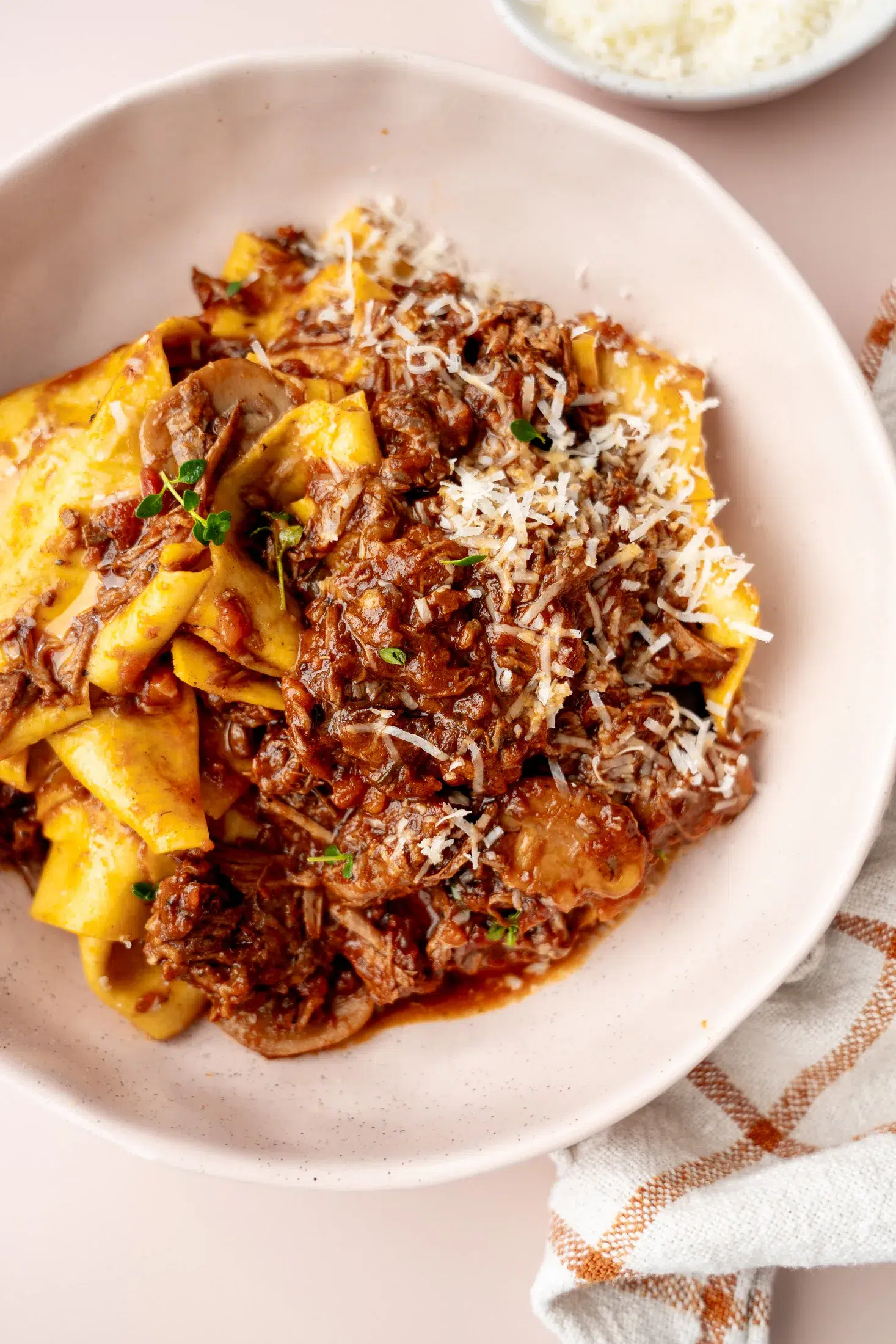
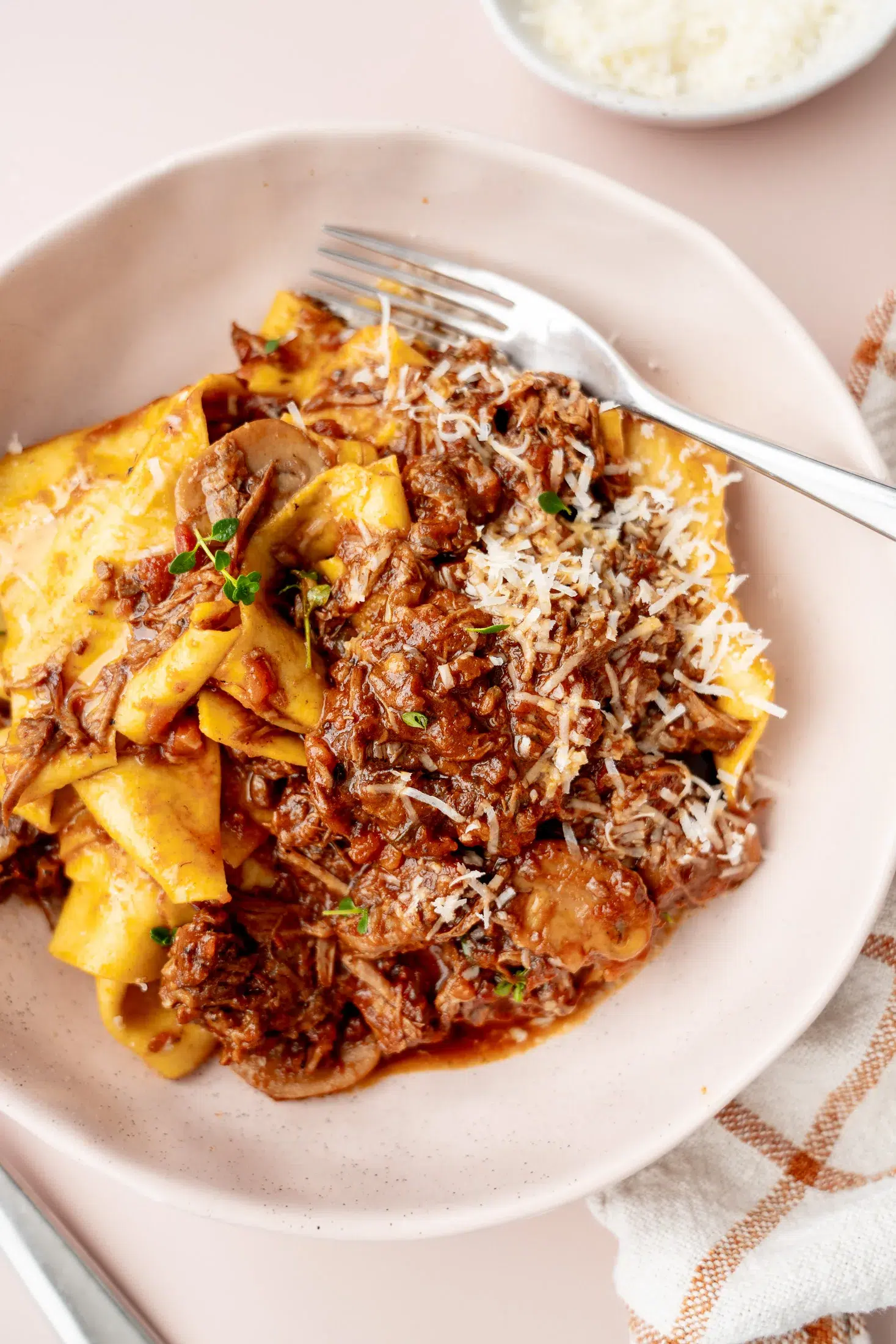
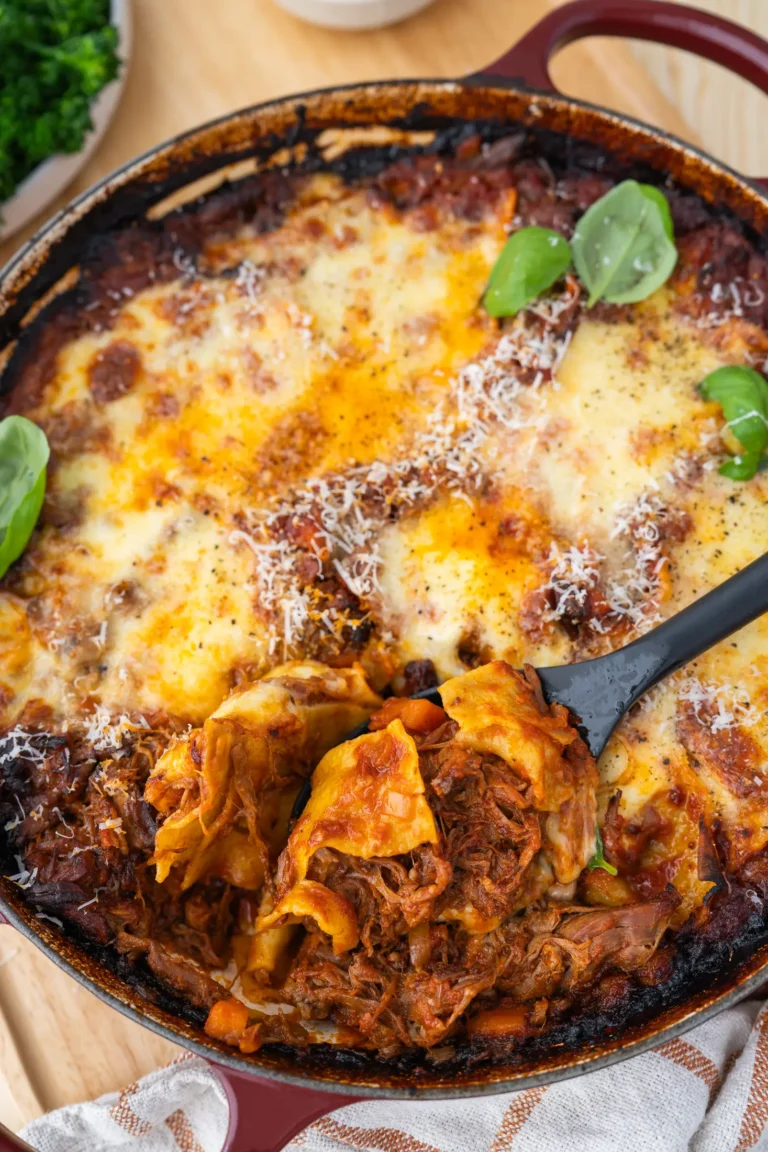
Tender, slow-simmered beef chuck (braising/casserole) steak in a rich tomato and mushroom ragu, finished with a touch of milk and tossed through fresh pappardelle made from lasagne sheets.
There is something so satisfying about putting a slow-cooked dinner on the stove. The prep is relatively low effort, and then you just let it do its thing while the house fills with the incredible smell of beef and tomatoes simmering away. A couple of hours later, you’ve got not one, but multiple meals ready to enjoy.
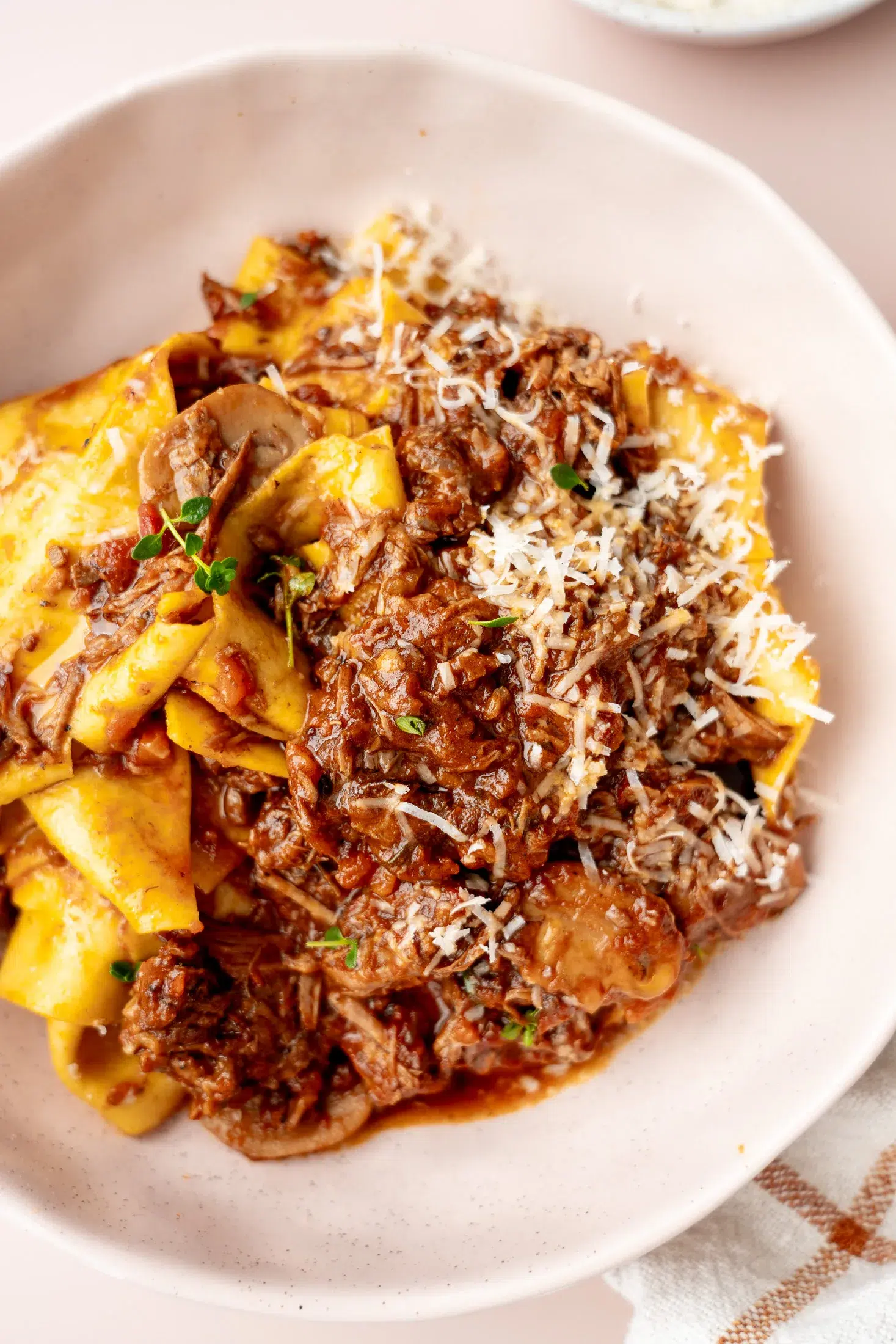
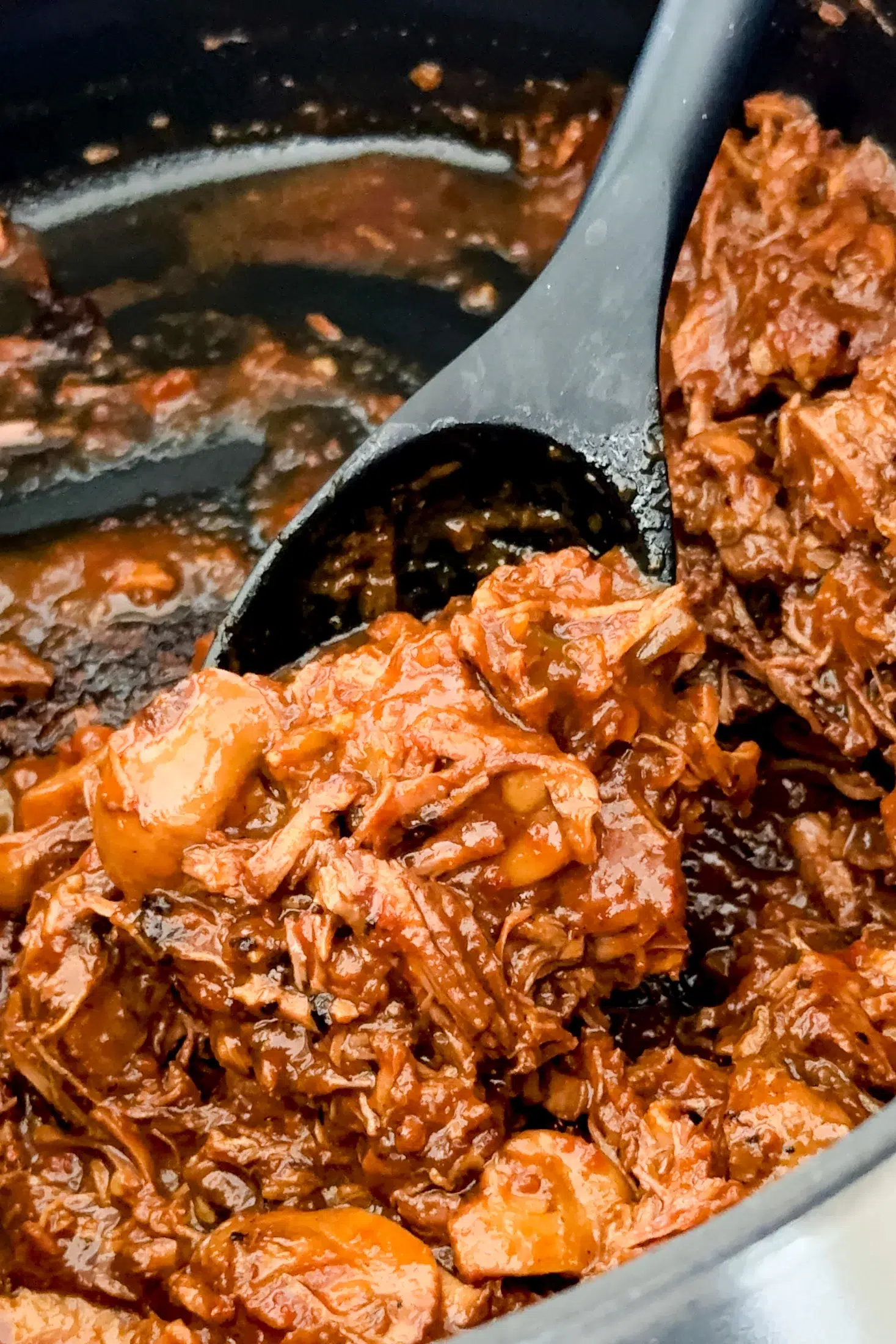
This ragu takes beef chuck (braising/casserole) steak, which is otherwise quite a tough cut, and transforms it into something truly fall-apart and delicious. The sauce is rich and deeply savoury, and what makes this one extra special is the combination of beef and mushrooms simmered together with red wine and balsamic vinegar.
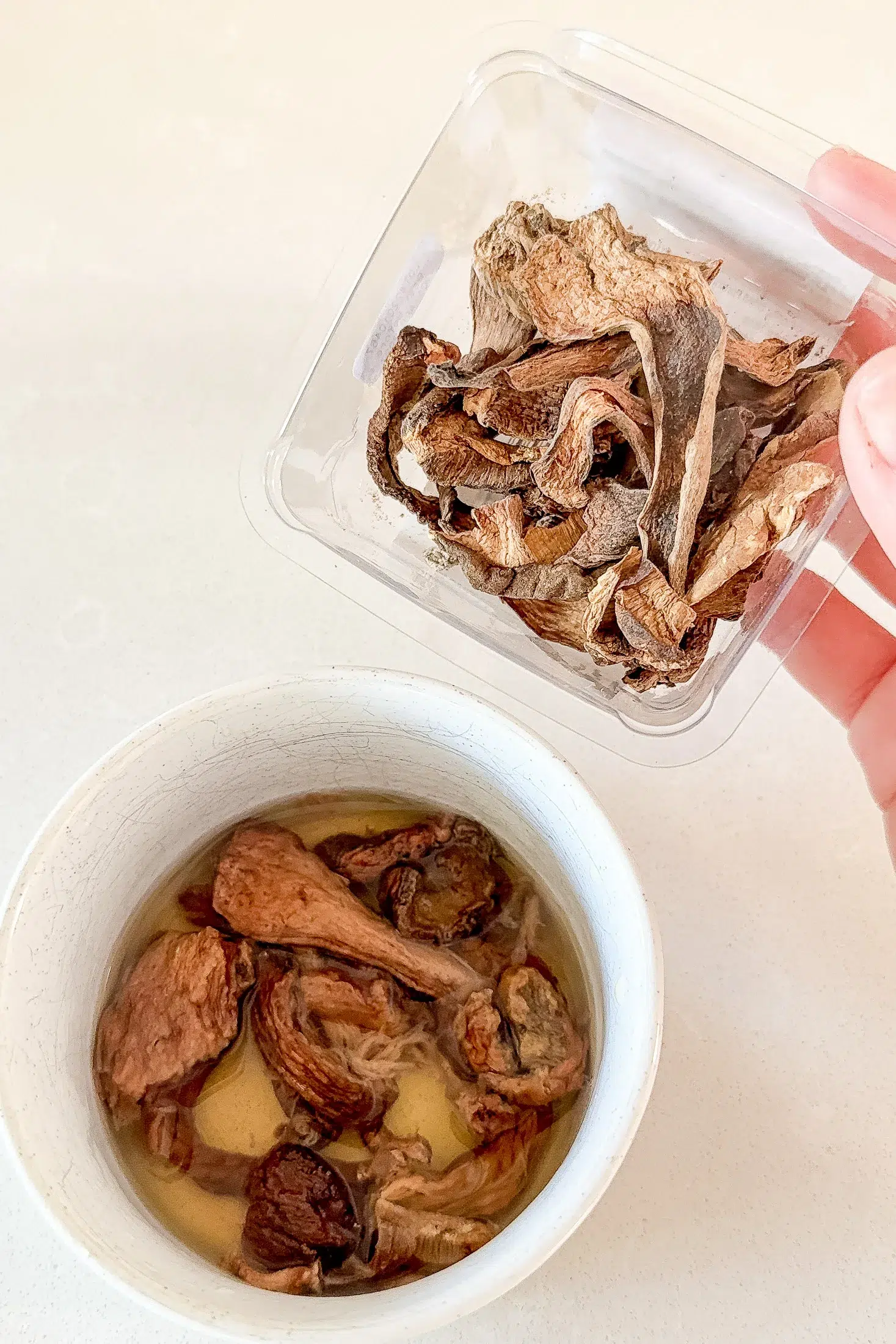
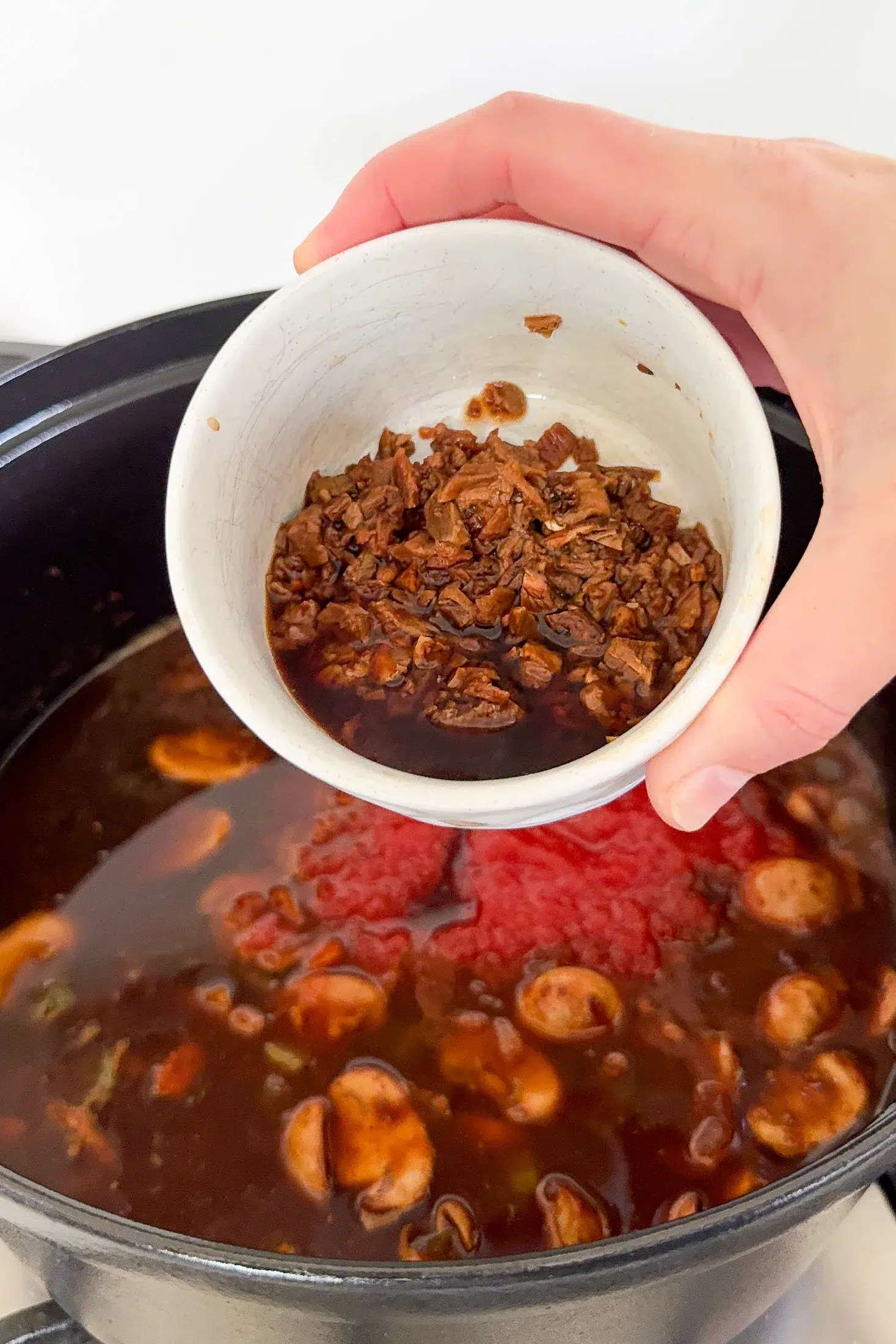
The dried porcini mushrooms are an ingredient I’ve only recently started using and I’m completely sold! You can find them at most major supermarkets now. All you do is steep them in boiling water, then use both the mushrooms and the soaking liquid in the ragu. They add a beautiful earthy aroma and a depth of flavour that takes the whole dish to the next level. You can absolutely leave the porcini out if you can’t get your hands on them, but if you can source them, I really recommend giving them a go.
The red wine is 100% optional. The ragu is delicious without it, but it does add a beautiful flavour. And then right at the end, you stir through a splash of milk. I know this might sound a little unusual, but this step is really worth it. It mellows everything out, removes any harsh acidity from the wine and the tomatoes, and just makes the whole sauce so rounded and smooth.
For the pasta, I’ve used fresh lasagne sheets sliced into pappardelle-style strips. They cook in under a minute and hold the sauce beautifully. But you could absolutely serve this over creamy mashed potatoes, soft polenta, or with crusty bread for dipping.
This Slow-cooked Beef and Mushroom Ragu recipe has become a firm family favourite at our place. We’ve just hit winter here in Australia, but this really is a year-round dish. Make a big batch, freeze the leftovers, and you’ve got meals ready to pull out whenever you need them!
Can I use a different cut of beef?
Chuck (braising/casserole) steak is ideal because it has enough fat and connective tissue to break down during the long cook, giving you beautifully tender, shreddable meat. Gravy beef (boneless shin) or beef cheeks would also work well. Avoid lean cuts like rump (sirloin) or topside (top round) as they tend to dry out over the slow cooking time.
Can I make this in a slow-cooker?
Yes! Brown the beef and cook the vegetables on the stovetop first, then transfer everything to your slow-cooker. Cook on low for 6–8 hours or high for 3–4 hours until the beef is tender enough to shred. You may need to remove the lid for the last 30 minutes to help the sauce thicken.
Can I use dried pasta instead of fresh lasagne sheets?
Absolutely. Pappardelle, fettuccine or tagliatelle would all work well. Cook the dried pasta according to the packet directions in a separate pot, then drain and toss through the ragu. The fresh lasagne sheet method is just a handy shortcut.
What else can I serve this with?
This ragu is gorgeous over creamy mashed potato, soft polenta, or with crusty bread for dipping, or try garlic bread. You could also stir it through rigatoni or any short pasta shape. It works well on its own or with a simple green salad on the side.
Why is my ragu still quite liquidy after 2½ hours?
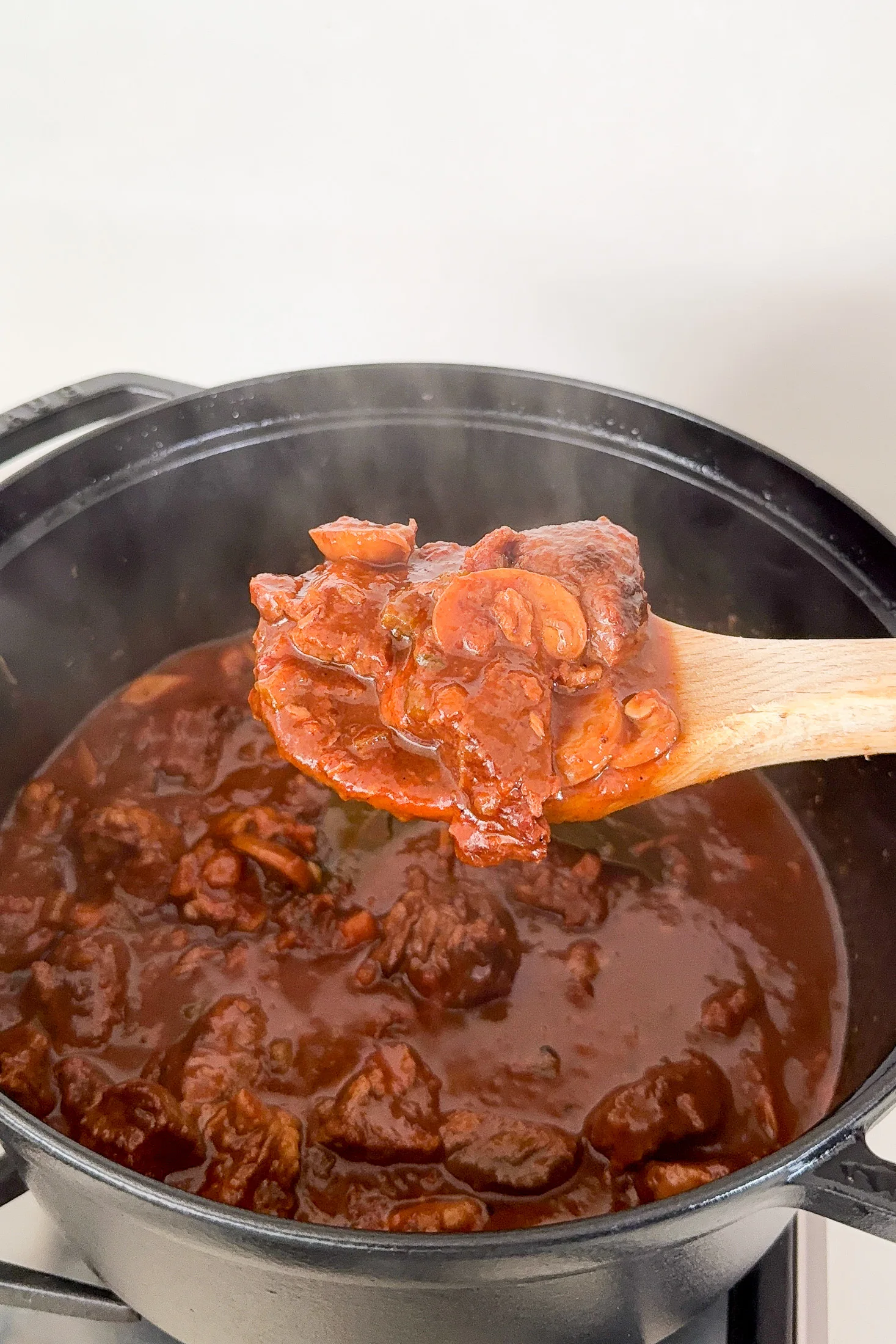
Your ragu should maintain a gentle simmer for the entire cooking time, not just the occasional bubble. The sauce thickens through both evaporation and the flour coating the beef. The exact reduction can vary depending on the pot you’re using. A wider pot allows more evaporation than a narrower one, and some lids trap more moisture than others. Different cuts of beef and even mushrooms can also release slightly different amounts of liquid.
If your sauce is thinner than you’d like after the cooking time, simply remove the lid and continue simmering for another 10–20 minutes, or until it reaches a rich, thick, glossy consistency.
If you enjoyed Slow-cooked Beef and Mushroom Ragu, I think you’ll love:
Slow-cooker Beef Ragu Recipe – A hands-off slow-cooker version with tender shredded beef in a rich tomato sauce that practically cooks itself.
One-pot Creamy Bolognese Recipe – Rich, creamy bolognese cooked entirely in one pot with no draining required.
Minced (Ground) Beef Stroganoff Recipe – A budget-friendly stroganoff using minced (ground) beef instead of strips, with a creamy mushroom sauce the whole family will love.
Red Wine Braised Short Ribs Recipe – Fall-apart tender short ribs braised low and slow in red wine with vegetables.
Crispy Potato Topped Beef “Pie” Recipe – Comforting beef filling topped with layers of crispy golden potatoes for the ultimate weeknight pie.
Slow-cooked Beef Stroganoff Recipe – A beautiful slow-cooked version of the classic with tender beef in a creamy mushroom sauce that the whole family will love.
Slow-cooked Beef and Mushroom Ragu
“If you are craving comfort food this is the recipe. Easy to make and the flavour is lovely and satisfying. The beef was so tender.” Share Pin Recipe PrintIngredients
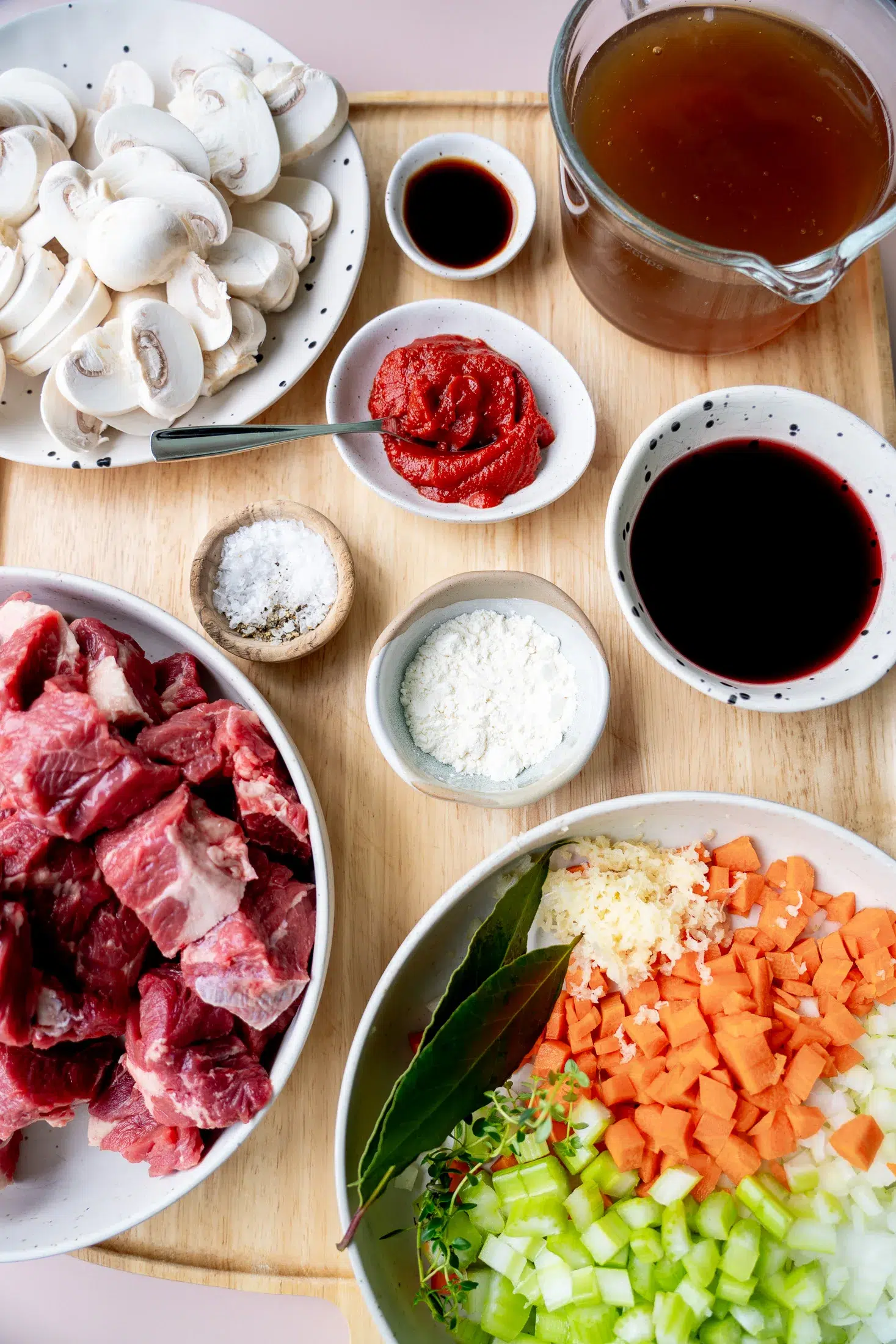
- 10 g (¼ oz) dried porcini mushrooms (optional, see note 1)
- 1 kg (2 lb) beef chuck (braising/casserole) steak, cut into 3–4 cm (1¼–1½ inch) pieces
- 1 tsp sea salt flakes, plus extra to taste
- ½ tsp freshly cracked black pepper, plus extra to taste
- 2 tsp plain (all-purpose) flour
- 2 tbsp extra-virgin olive oil
- 125 ml (½ cup) water
- 1 large brown onion, finely chopped
- 1 carrot, peeled and finely chopped
- 2 celery stalks, finely chopped
- 1 tbsp freshly minced garlic
- 300 g (10½ oz) white mushrooms, sliced
- 2 tbsp tomato paste
- 125 ml (½ cup) red wine (optional, see note 2)
- 500 ml (2 cups) beef stock
- 400 g (14 oz) canned crushed tomatoes
- 1 tbsp aged balsamic vinegar
- 1 tsp sugar
- 2 bay leaves (fresh or dried)
- 2 fresh thyme sprigs (or 1 tsp dried thyme), plus extra to serve (optional)
- 60 ml (¼ cup) milk
- Finely grated parmesan, to serve
- 500 g (1 lb) fresh lasagne sheets
Instructions
- Soak the porcini mushrooms, if using – Wash the dried mushrooms well, then place them in a mug. Pour 2 tablespoons of boiling water over the mushrooms and set aside to hydrate, until needed.
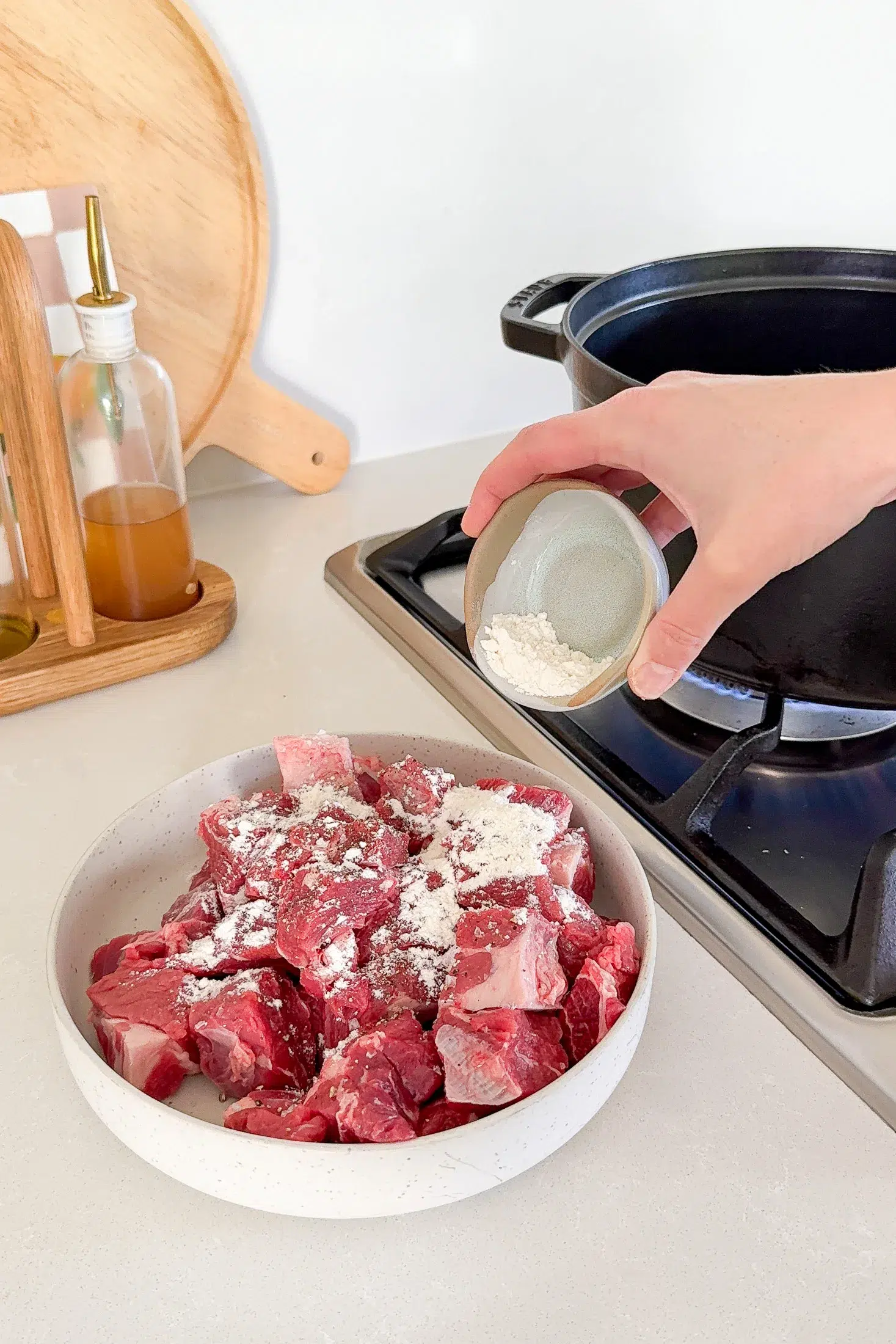
- Season the beef – Place the beef on a plate and sprinkle it with the salt, pepper and flour. Toss to coat.
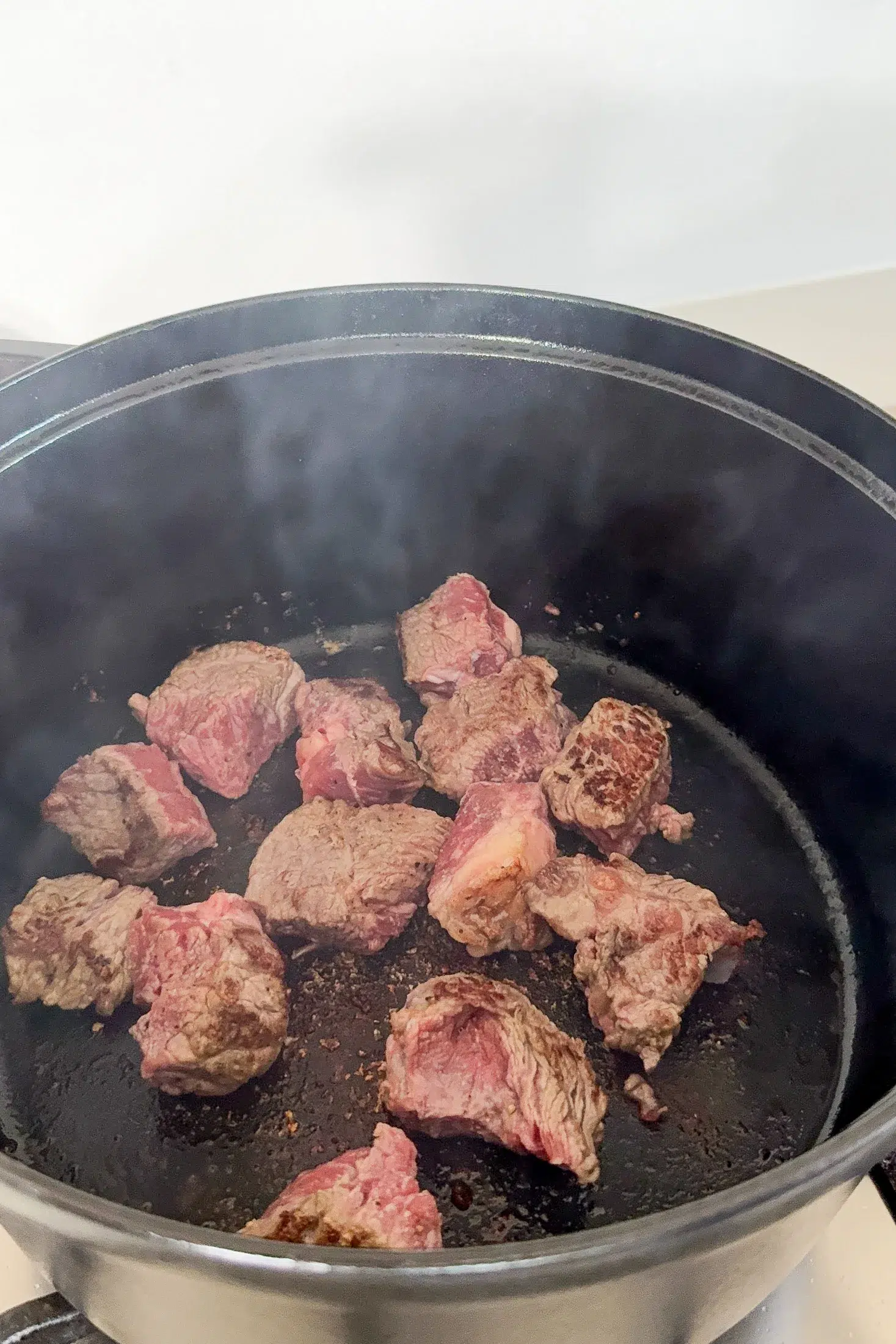
- Brown the beef – Heat the olive oil in a deep heavy-based pan with a lid over medium–high heat. Add the beef. Don't overcrowd – cook in batches if needed (I normally do two batches). Cook for 4–5 minutes per batch, turning occasionally until well browned. Remove the beef with tongs and set aside on a plate.
- Start the base – Add the water to the base of the pan to deglaze. Add the onion, carrot, celery and garlic. Cook, stirring, for 3–5 minutes until softened.
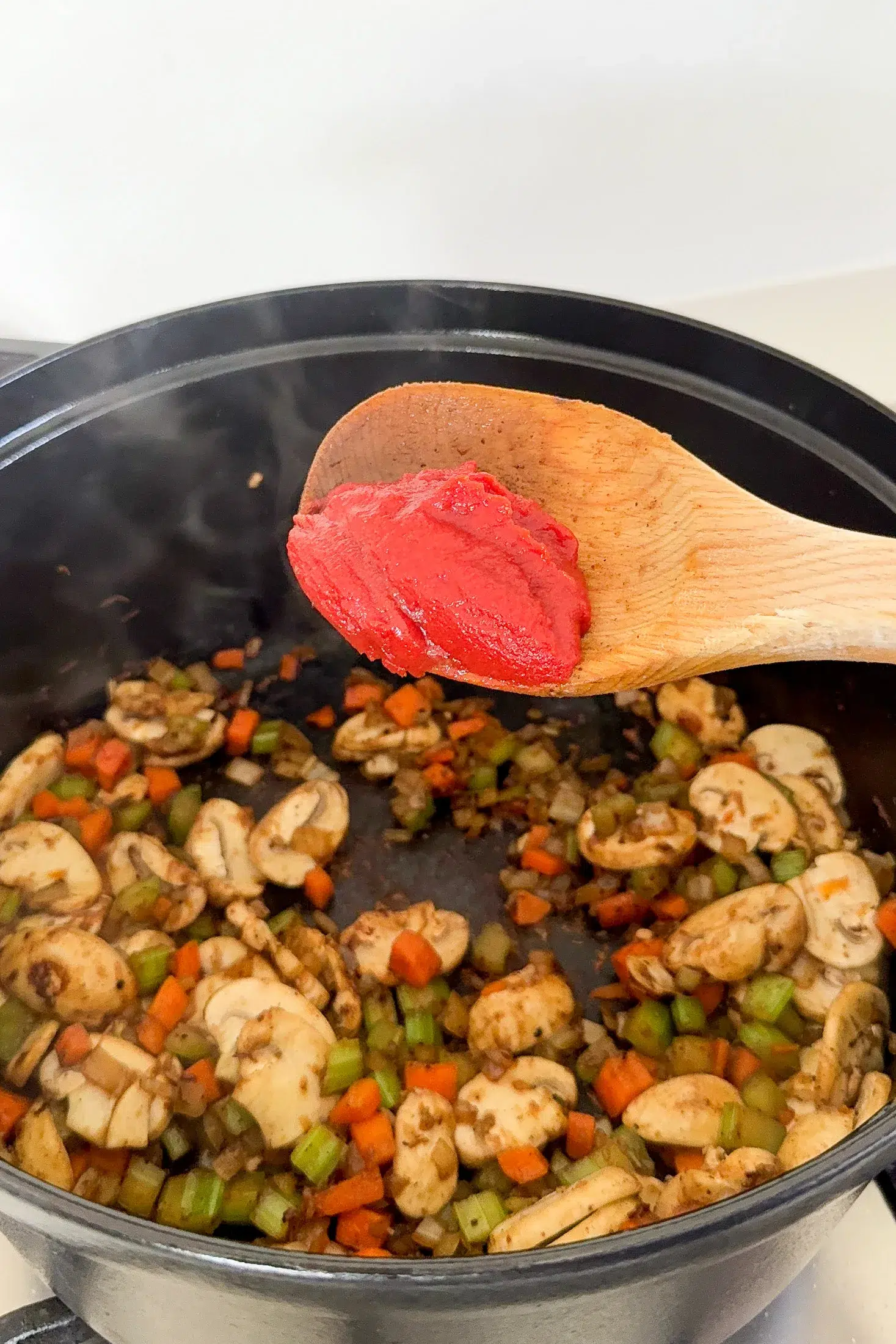
- Add the mushrooms – Add the white mushrooms and cook for 3–4 minutes, or until starting to soften.
- Add the tomato paste and wine – Add the tomato paste and cook, stirring, for 1–2 minutes, then add the wine. Cook, stirring, for a further 1 minute or until the wine has reduced by half.
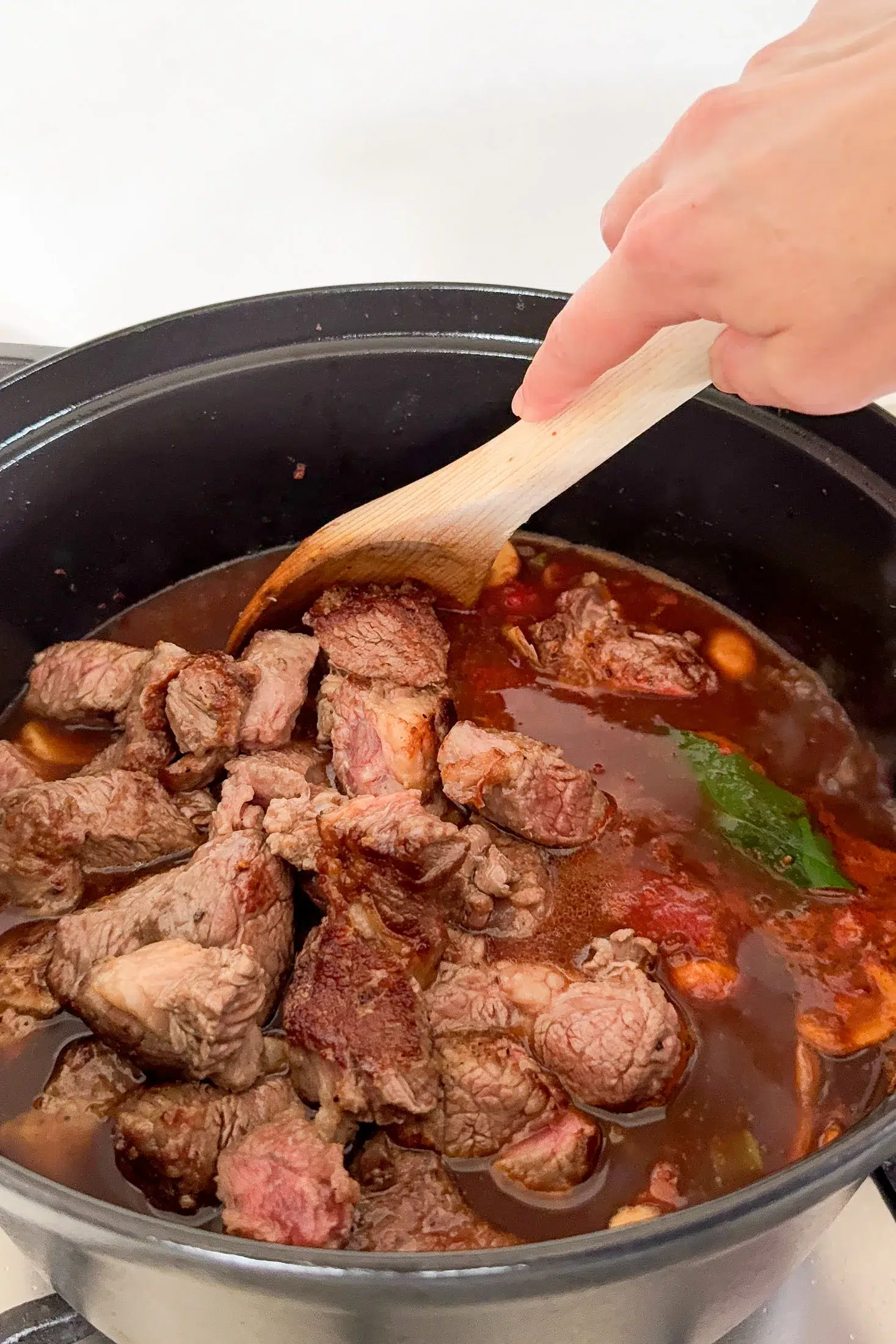
- Add the simmer ingredients – Add the beef stock, tomatoes, porcini mushrooms and soaking liquid (if using), balsamic, sugar, bay leaves and thyme. Return the beef to the pan and bring to a simmer.
- Finish – Remove the thyme sprigs and bay leaves. Shred the beef with two forks. Add the milk and stir to combine. Taste the ragu and season with extra salt and pepper to your liking (I normally add around ½ teaspoon extra of sea salt flakes at this point depending on how salty my stock is). Turn the heat off.
- Cook the pasta – Bring a large pot of salted water to the boil.
- Prepare the pappardelle – Cut the lasagne sheets into strips roughly 2.5 cm (1 inch) wide. Cook them AFTER you have prepared the sauce. They will only need 30–60 seconds and can then be drained and added directly to the sauce.
- Serve – Serve sprinkled with the extra fresh thyme leaves (if using) and freshly grated parmesan.
Watch how to make it
Nutrition information
Nutritional information on this site is calculated using Foodworks Professional, the nutrition analysis software trusted by dietitians, researchers and food manufacturers across Australia and New Zealand. Disclaimer re gluten-free and dairy-free recipes.
















Steph says:
Where are you black cooking pots from? 🙂
Simple Home Edit Team says:
Hi Steph, not sure which pot you are referring to, but they are all listed here. Hope this helps! 😊
Vanessa says:
This was delicious – so hearty and comforting for a cold winters’ night. The flavour depth was spot on.
Mia says:
I’ve just made this following the recipe to a tee and I have SO much excess liquid. I’m now cooking it for longer with the lid off but can’t see how all of this liquid could reduce to the point that it looks like the photos/video. Any tips to prevent this or explanation as to what may have caused this? It’s basically a soup.
Nicole says:
Hi Mia! I’m so sorry that happened. ❤️ It definitely shouldn’t be soupy by the end of the cooking time. Cooking it uncovered for a little longer is exactly the right thing to do, and it should continue to reduce into a rich, glossy ragu.
A few things can affect how much the sauce reduces. Different pots evaporate moisture at different rates (a wider pot will reduce more quickly than a narrower one), and the ragu should maintain a gentle simmer for the entire cooking time rather than just the occasional bubble. Some cuts of beef and mushrooms can also release a little more liquid as they cook. If, after the cooking time, it’s still a little thinner than you’d like, simply keep simmering it uncovered until it reaches that lovely thick consistency. Thanks so much for taking the time to let me know. I’ll add a note to the recipe to make that a little clearer for everyone. Nic x
Heide says:
What is considered to be 1 serving! Are you suggesting 1 serving is over 1000 calories!
Mumma K says:
Heidi, I thought the same so uploaded to MyFitnessPal app and without the pasta it’s around 600. Still a very indulgent meal but sounds absolutely delicious. I plan on a half serve with some air fried cauliflower and broccoli to lighten it up. A cauliflower puree would be delicious too.
Mumma K says:
Nicole, I thought the same so uploaded to MyFitnessPal app and without the pasta it’s around 600. Still a very indulgent meal but sounds absolutely delicious. I plan on a half serve with some air fried cauliflower and broccoli to lighten it up. A cauliflower puree would be delicious too.
Nicole says:
Thank you for taking the time to share this. 😊 The recipe is based on four generous servings, but to be honest it’s probably closer to six regular servings. I love your suggestions of the air-fried vegetables and cauliflower purée — both sound absolutely delicious alongside the ragu. ♥️
Nicole says:
Hey Heide, thanks so much for your message!
The nutrition information is calculated based on the full recipe divided by the number of servings, including the pasta. Rich slow-cooked dishes with beef chuck and pasta can sit higher in calories per serve. That said, nutrition calculators can vary depending on the specific brands and quantities used, so if you want a precise count I’d recommend entering the ingredients directly into your preferred tracker.
❤️
Niki says:
This was AMAZING! My daughter licked that bowl CLEAN. We had enough for dinner, lunch the next day, and I froze some for another day when we need it. Your recipes are always winners in our house Nicole xx
Alison says:
This is so good! I left out the porcini mushrooms and used my slow cooker and enjoyed the result. Made enough for extra meals.
Nicole says:
Oh this is wonderful to read, thank you so much Alison! I’m so glad you loved the recipe! ❤️
Megan says:
If you are craving comfort food this is the recipe. Easy to make and the flavour is lovely and satisfying. The beef was so tender. I used fresh gluten free lasagne sheets and it worked really well.
Essie says:
Hi Nicole, really excited to try your new recipe out! Sorry if this is a silly question, but can I use balsamic glaze instead of the aged balsamic? Wondering if I can use the glaze I already have, or if I need to buy another… if so, is there a brand you recommend?
Thank you, and love your work! Super excited for your new book too! Auto-buy for our family 💯
Nicole says:
Hi Essie, thanks so much for your comment! Not a silly question at all. You can definitely use balsamic glaze instead — I’d just leave out the sugar in the recipe since the glaze is already quite sweet, and that’ll keep the flavour balanced.
If you do want to grab a balsamic vinegar for recipes like this, I normally just pick up the Coles or Woolworths brand. I look for ones that are all natural with no numbers or additives in the ingredients and no added sugar. And for something a bit more special (think dressings, cheese boards with olive oil and dippy bread), I love the Giovanna Pavarotti Gold Balsamic Vinegar 250ml. It’s available at loads of specialty shops and Harris Farm, or online. A bit dearer but it lasts ages and is super versatile!
I really appreciate your support and you being here — so excited you’re looking forward to the new book, it’s going to be a good one! Nic x
Essie says:
Thank you Nicole, this turned out perfectly, the whole family were so, so happy and so was I!
I used the glaze and left out the sugar as you suggested, though I’ve since picked up a bottle of coles balsamic, and the giovanna because we love dippy bread with oil, yummy, thank you so much for the recommendations