






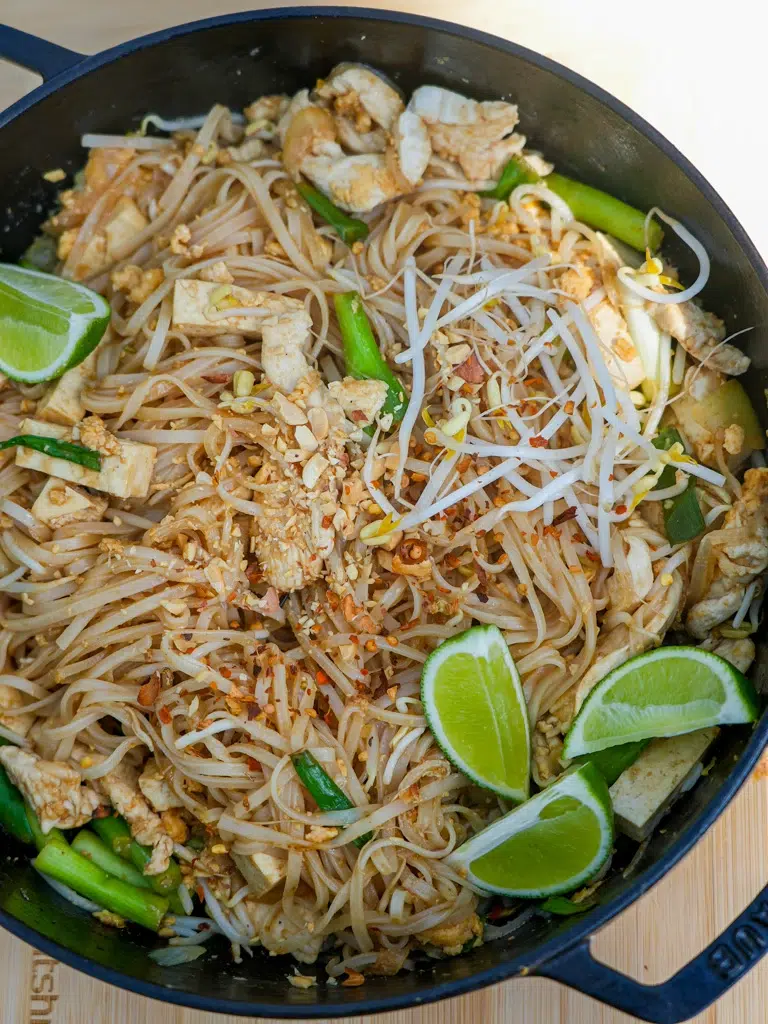
This simple homemade version of the classic Thai takeout tastes just like the real deal!
I confess, I used to rely on store-bought pad Thai sauce from the supermarket, thinking a homemade version would be too complicated or require specialty ingredients. I had tried a recipe once before, but the flavour wasn’t quite right. However, after a bit of experimentation, I have found a way to make a quick and easy Homemade Chicken Pad Thai that tastes just like the real deal – no specialty items needed! There’s nothing like curling up with a big bowl of this comforting dish on a busy weeknight – I could literally eat this everyday!
Rather than relying on takeout, I find it so satisfying recreating my family’s restaurant favourites in the comfort of my own kitchen, especially if it’s a stress-free experience! I also like knowing exactly what’s in the food I make, as well as saving money otherwise spent on takeout, which can often be disappointing in flavour.
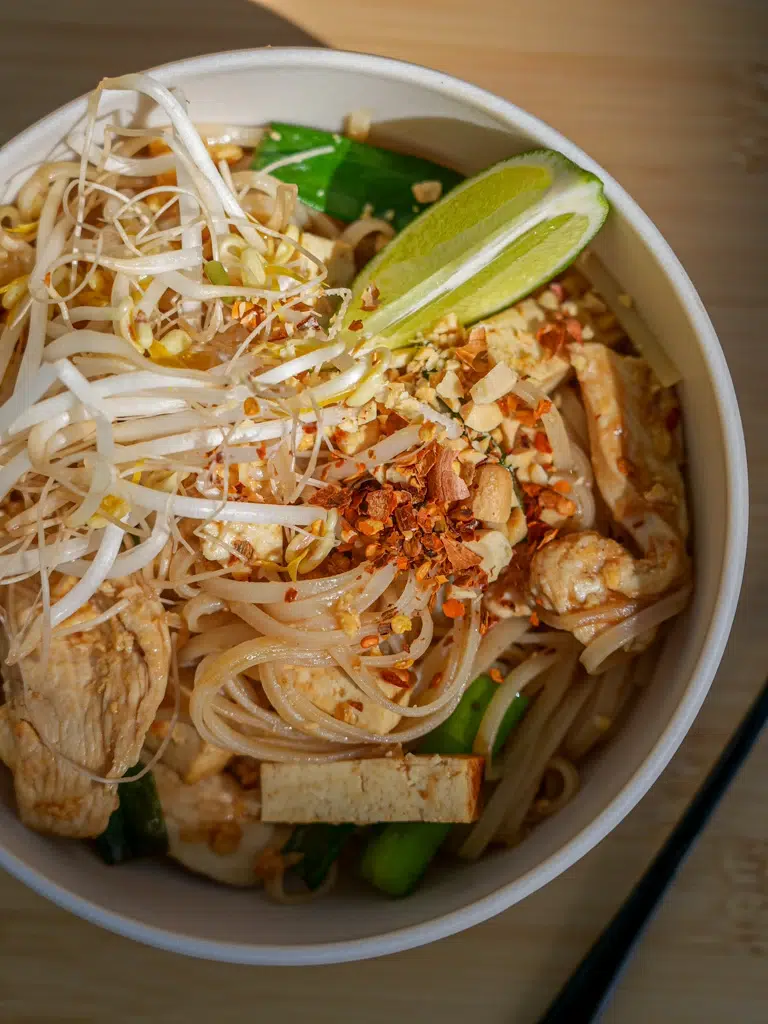
This recipe is simple, packed with protein from eggs, chicken and tofu, and full of vegetables, which can be adapted to suit everyone’s tastes. Once the simple prep is done, the pad Thai comes together quickly, making it the perfect choice for busy nights. It’s DELICIOUS, especially with the crunchy peanuts and a squeeze of lime juice on top.
What other vegetables can I add?
Try adding finely sliced bok choy, Chinese broccoli (gai lan), julienned carrot, sliced green beans or sliced snow peas (mangetout) for an extra boost of vegetables. Add these just after the egg and cook for 1–2 minutes (ensure the vegetables are cut small, so they cook quickly).
How to avoid mushy, broken noodles?
Rice noodles cook very quickly, and following the packet instructions can lead to mushy noodles. Boil them just until pliable (about 1–2 minutes), then rinse under cold water, drain and set aside. They’ll finish cooking in the pan with the sauce. Using this method = perfect noodles every time!
What should pad Thai sauce taste like?
The flavour of pad Thai should be a perfect combination of salty, sour and sweet. The salt comes from the fish sauce, sweet from the brown sugar and sour from the lime and tamarind. Taste the dish as you go and if you feel it’s lacking in one of these areas, add a dash more of the relevant ingredient until it tastes good to you.
Watch how to make Homemade Chicken Pad Thai
If you enjoyed Homemade Chicken Pad Thai, I think you’ll love:
Thai Beef and Noodle Salad Recipe
Juicy Thai Beef Lettuce Cups Recipe
Chicken and Thai Basil Stir-fry with Noodles Recipe
Chicken Green Curry Recipe
Chicken Thai Red Curry Recipe
Homemade Chicken Pad Thai
Share PrintIngredients
- 250 g (9 oz) dried thin rice noodles
- 3 tbsp neutral oil (see note 4)
- 1 small brown onion, finely sliced
- 1 tbsp freshly minced garlic
- 500 g (1 lb) boneless, skinless chicken breast, finely sliced
- 2 eggs, whisked
- 200 g (7 oz) firm tofu, cut into strips (optional)
- 6 spring onions (scallions), cut into 3 cm (1¼ inch) batons, white and green parts separated
- 180 g (2 cups) bean sprouts, plus extra to serve
- Extra bean sprouts
- 35 g (¼ cup) crushed peanuts
- 1 tbsp chilli (red pepper) flakes
- 1 lime, cut into quarters
Instructions
- Make the sauce – Combine the ingredients for the pad thai sauce in a small bowl.
- Boil the noodles – Prepare the noodles by cooking them in a pot of boiling water until they are just pliable (for 1–2 minutes). Do not follow the noodle packet instructions, or your noodles will turn to mush! Rinse the noodles under cold running tap water until you have removed all the heat, then drain thoroughly in a colander. Set aside.
- Cook the chicken – Heat the oil in a large, deep, heavy-based pan over medium–high heat. Add the onion and garlic and cook, stirring, for 30 seconds, then immediately add the chicken. Cook the chicken for 1–2 minutes until it has just changed colour (it will continue cooking with the other ingredients).
- Push the chicken to one side of the pan (add a little more oil if needed to the empty side if it is looking dry).
- Add the egg – Add the egg to the empty side of the pan and cook until it is scrambled/set, using your spoon to move the egg around the pan. Combine the egg with the chicken.
- Add the vegetables, noodles and sauce – Add the tofu, spring onion, the partially cooked noodles and the sauce.
- Toss gently in the pan, using tongs, for 1–2 minutes, until the sauce is coating all of the ingredients.
- Serve – Serve with extra bean sprouts, crushed peanuts and chilli flakes on top. Squeeze with lime before serving.
Nutrition information
Disclaimer re gluten-free and dairy-free recipes



















Bek says:
No matter what I do, I’m a slow cook and everything feels like it takes 5x longer than a recipe says- not this one! Literally served up in 30 minutes, including cutting the chicken and veggies! It is seriously delicious and tastes just like the real deal, it’s about to be on high rotation in our house!
Grace says:
Love this – pretty simple to pull together and hits the spot when we’re craving take out.
Nicole says:
Wonderful to hear, Grace! Thanks for the rating, Nic x
Yolanda says:
I’m sorry to say that this was the only simple home edit recipe that has not worked for me and that we actually couldn’t eat. Love all of the other recipes I’ve tried but this one was just not right.
Nicole says:
So sorry that this one didn’t work out for you, Yolanda. If you don’t mind me asking, what was the problem you had? Nic x
Kirthana says:
Really nice recipes,Turned out so well, Thank you so much for sharing!
Nicole says:
Happy you enjoyed this one, Kirthana! Thanks for the rating, Nic x
Sarah says:
Love Simple Edit but this one missed the mark.
Nicole says:
Hi Sarah, I’m sorry this didn’t work out for you. I’d really be interested to hear what you didn’t like? I do like getting feedback so I can improve my recipes if needed. Nic x
Claud says:
This has become a family favourite, the best home pad thai recipe I’ve found!
Nicole says:
Hi Claud, what lovely feedback!! So great to hear and thanks for the rating, Nic x
Emma says:
I’ve made this multiple times now and it’s simple and delicious! Perfect balance of all the flavors.
Nicole says:
Love to hear this, Emma! Thanks for the rating, Nic x
Shauna says:
Delicious! You never get a recipe wrong 🙂
Nicole says:
Awww, thanks so much, Shauna! That’s lovely of you to say! Nic x
Becki says:
Way too sweet the balance is not right.