






Soft, gooey cinnamon scrolls without the wait – no yeast, no rising, just mix, roll and bake!
I don’t bake often – not because I don’t love it, but because I don’t have the time. Anyone who’s made cinnamon scrolls before knows they can be a bit of a mission … rolling, proofing, waiting, and then waiting again. And for me, that just doesn’t fit into real life.
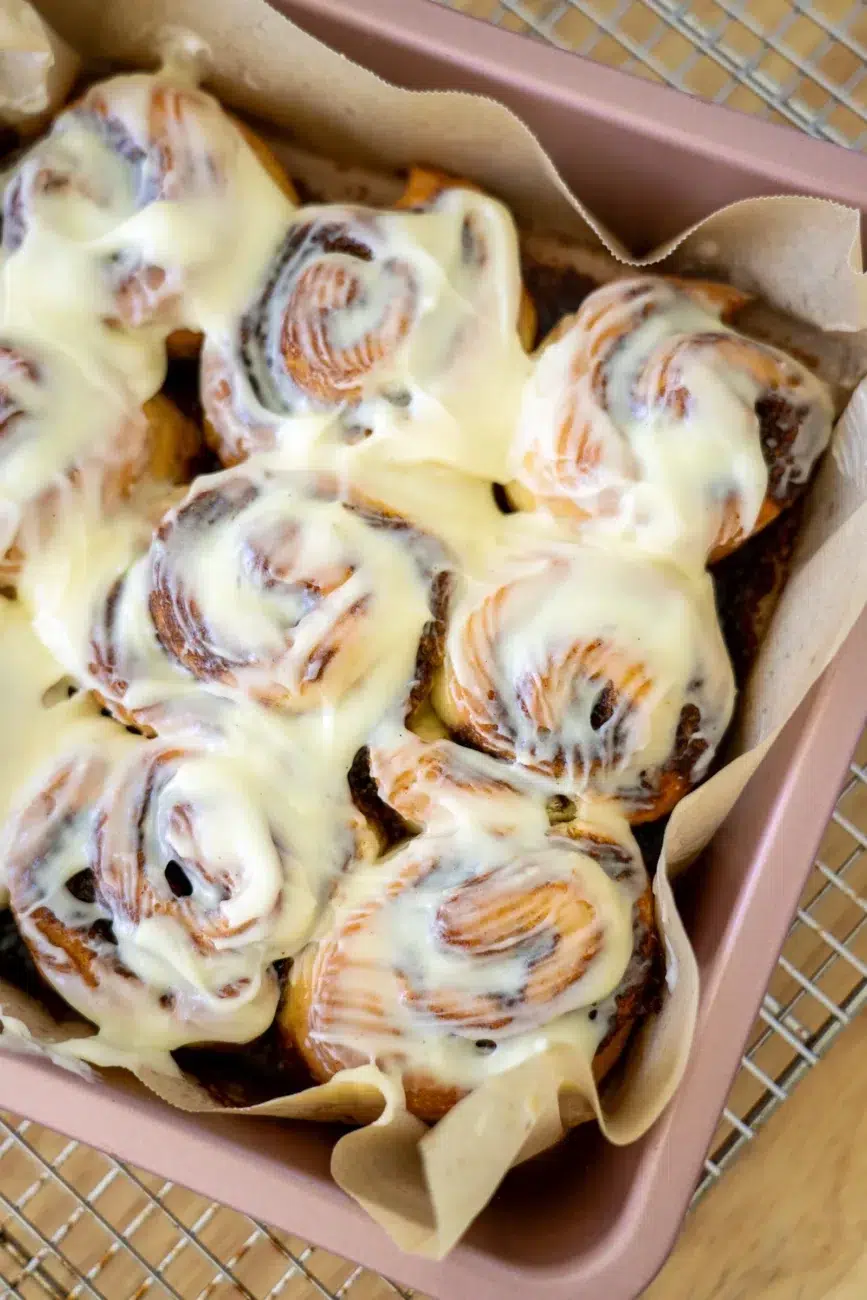
This recipe is exactly what baking needs to be in my world – quick, low effort and actually worth it. No yeast, no resting – just mix, roll and bake. And somehow, you still end up with something that tastes like it’s straight from the bakery.
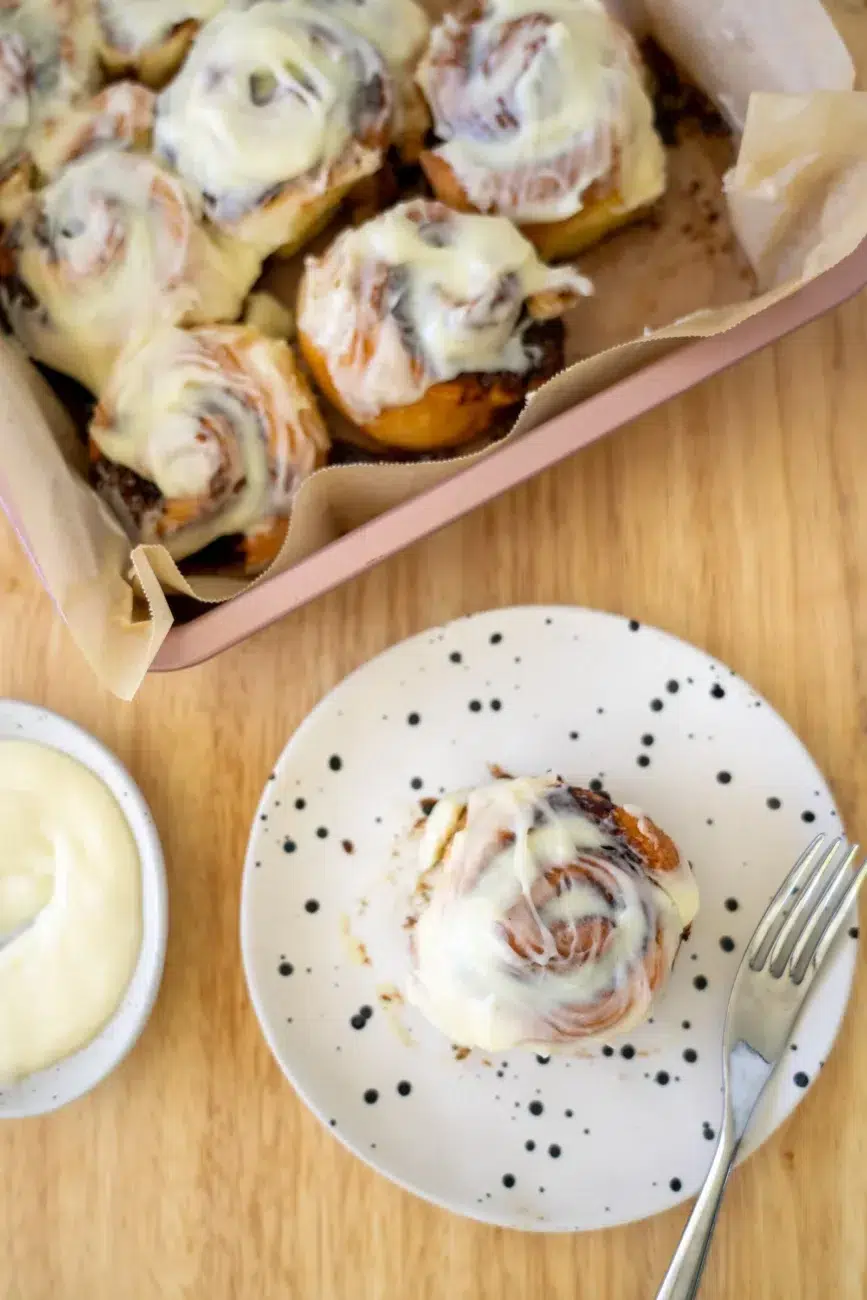
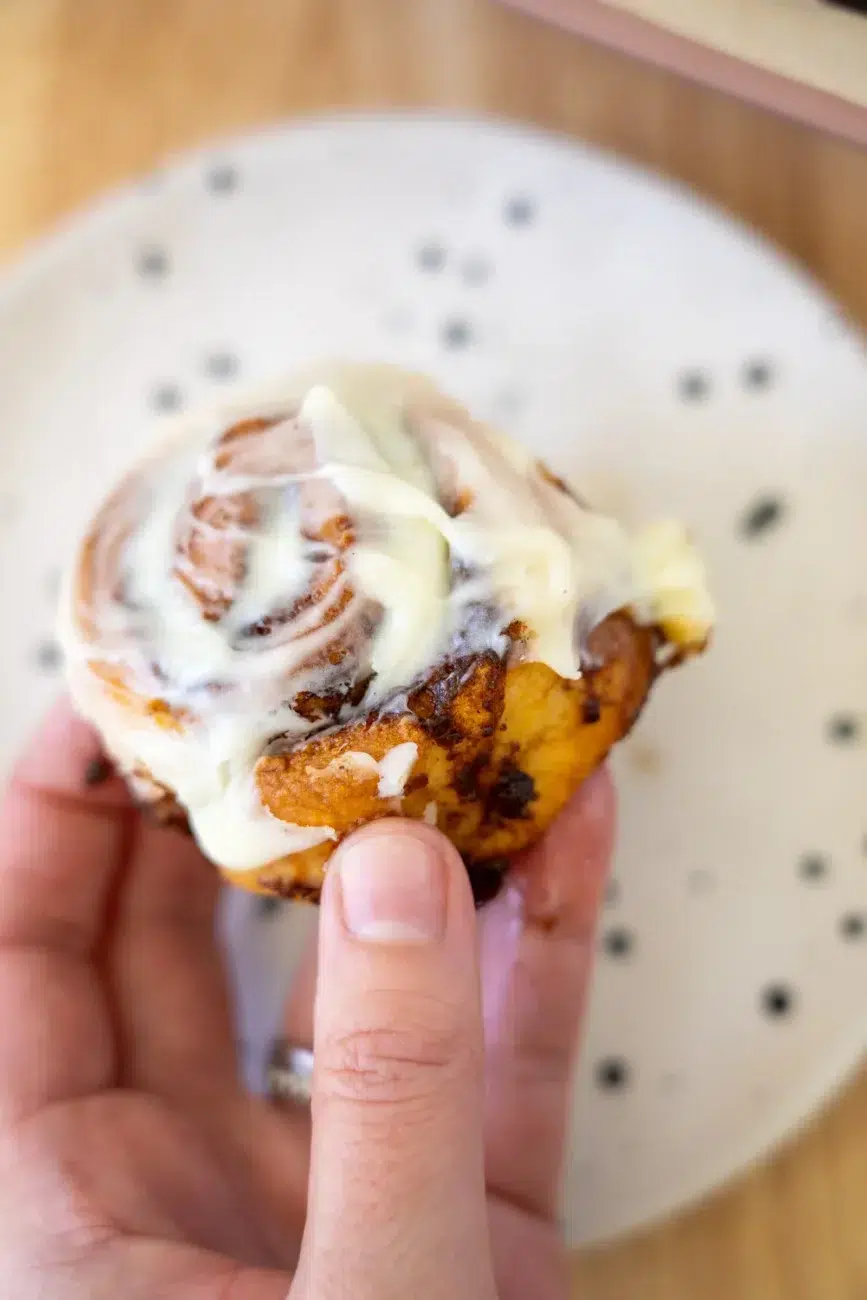
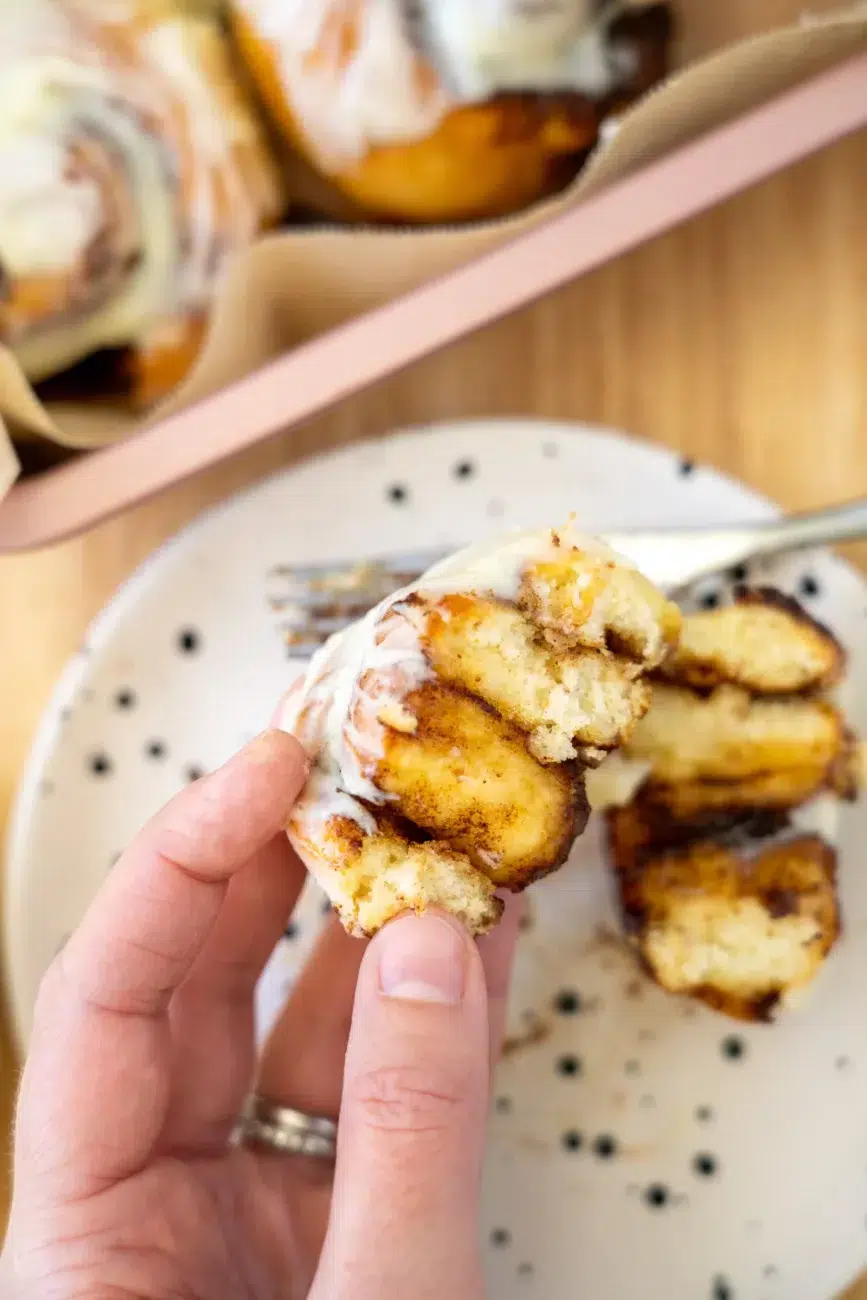
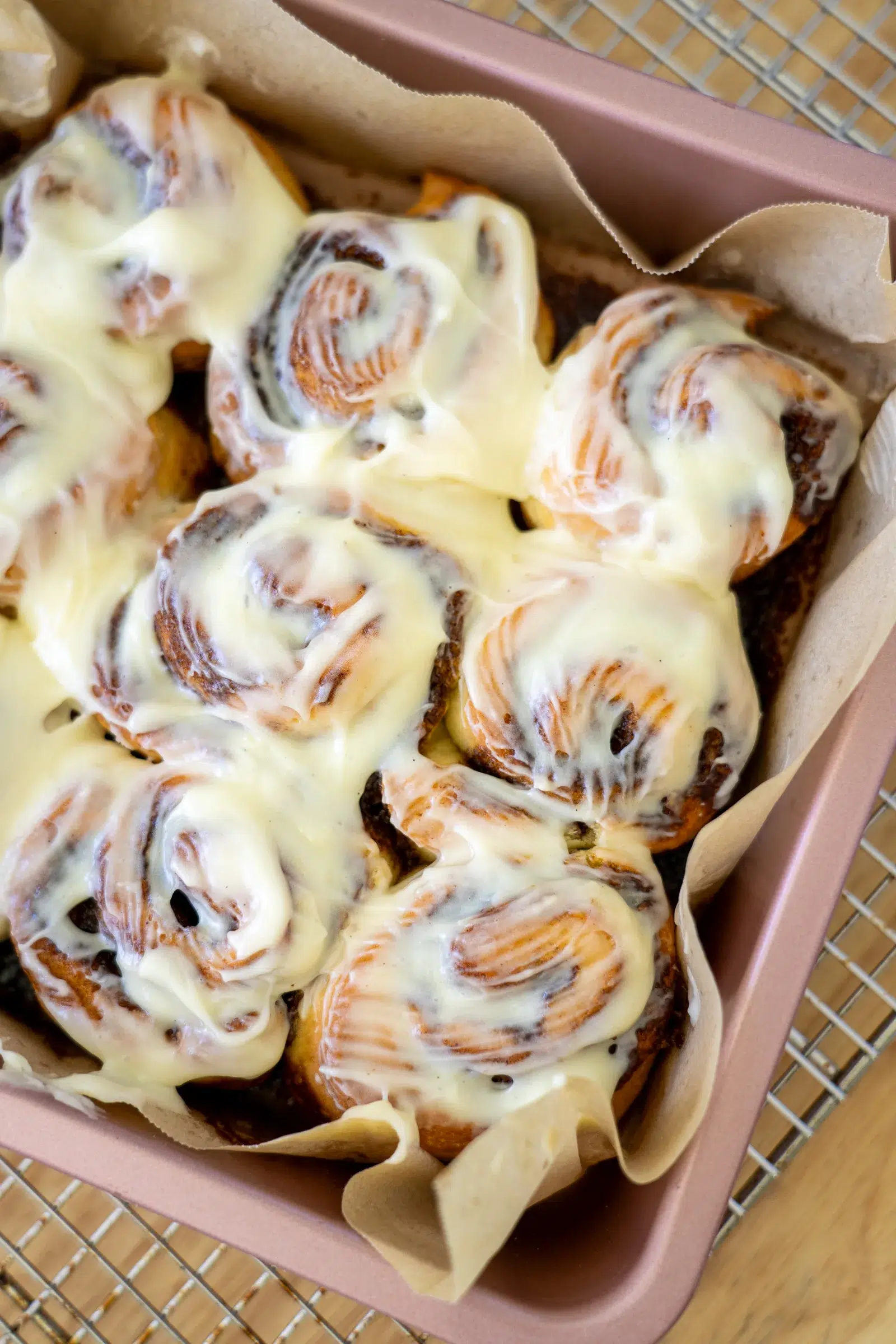
These Easy No-yeast Cinnamon Scrolls are soft, fluffy, packed with a buttery cinnamon centre and finished with a thick, glossy cream cheese glaze. I’ve made them more times than I can count, and my family absolutely loves them.
With only 15 minutes of prep and just over 20 minutes in the oven, you’ve got a warm, fresh batch of cinnamon scrolls on the table – using simple supermarket ingredients. No fuss, no waiting, just really good baking!
Can I make cinnamon scrolls without yeast?
Yes – this recipe is designed to be made without yeast. Instead of waiting for dough to rise, the yoghurt and self-raising flour create a soft, fluffy texture without any proofing time. It’s a much quicker, low-effort way to make cinnamon scrolls at home.
Why are my cinnamon scrolls doughy in the centre?
This usually comes down to the dough being rolled too thick or slightly underbaked. Roll your dough to approximately 30 x 24 cm (12 x 9½ inches) so the layers aren’t too thick, and bake until the centre scroll feels soft but set. If needed, bake for an extra 1–2 minutes.
Why is my dough sticky?
This dough is meant to be soft and slightly sticky – that’s what gives you soft scrolls. Lightly dust with flour when rolling, but avoid adding too much or the scrolls will become dense and dry.
Can I use plain (all-purpose) flour instead of self-raising flour?
Yes. Use 250 g (1¾ cups) of plain flour and add 2½ teaspoons of baking powder. Mix well before adding the yoghurt.
Can I use low-fat yoghurt?
Full-fat Greek yoghurt is best for this recipe. It gives a softer texture and better flavour. Low-fat yoghurt doesn’t achieve the same results.
What’s the best cream cheese to use for the glaze?
Use block cream cheese, not spreadable. Block cream cheese gives you a thick, glossy glaze that sits beautifully on the scrolls. Spreadable cream cheese will result in a much thinner frosting.
Why is my filling leaking out?
A small amount of melting is normal, but if too much leaks out it can be due to overfilling or the butter being too soft. Make sure the filling is spreadable but not runny, and roll the dough tightly to help keep the layers intact.
Can I use gluten-free flour to make cinnamon scrolls?
Yes, but with a few adjustments. Use a good-quality gluten-free self-raising flour blend that contains xanthan gum for structure. The dough will be softer and more delicate to handle, and the scrolls may be slightly less fluffy than the original version.
If using gluten-free flour, you may need to add an extra 1–2 tablespoons of flour when rolling to help with stickiness. Bake until the centres are fully set, as gluten-free dough can feel slightly softer. I recommend shaping the rolls slightly thicker and handling gently, as gluten-free dough can be more fragile.
If you enjoyed Easy No-yeast Cinnamon Scrolls, I think you’ll love:
Valentine’s Day Brownies Recipe
Moist Blueberry Muffins Recipe
White Chocolate Crepe Cake Recipe
Classic Waffles Recipe
Easy Fluffy Pancakes Recipe
Easy No-yeast Cinnamon Scrolls
“DELICIOUS! Obsessed!” Share Pin Recipe PrintIngredients
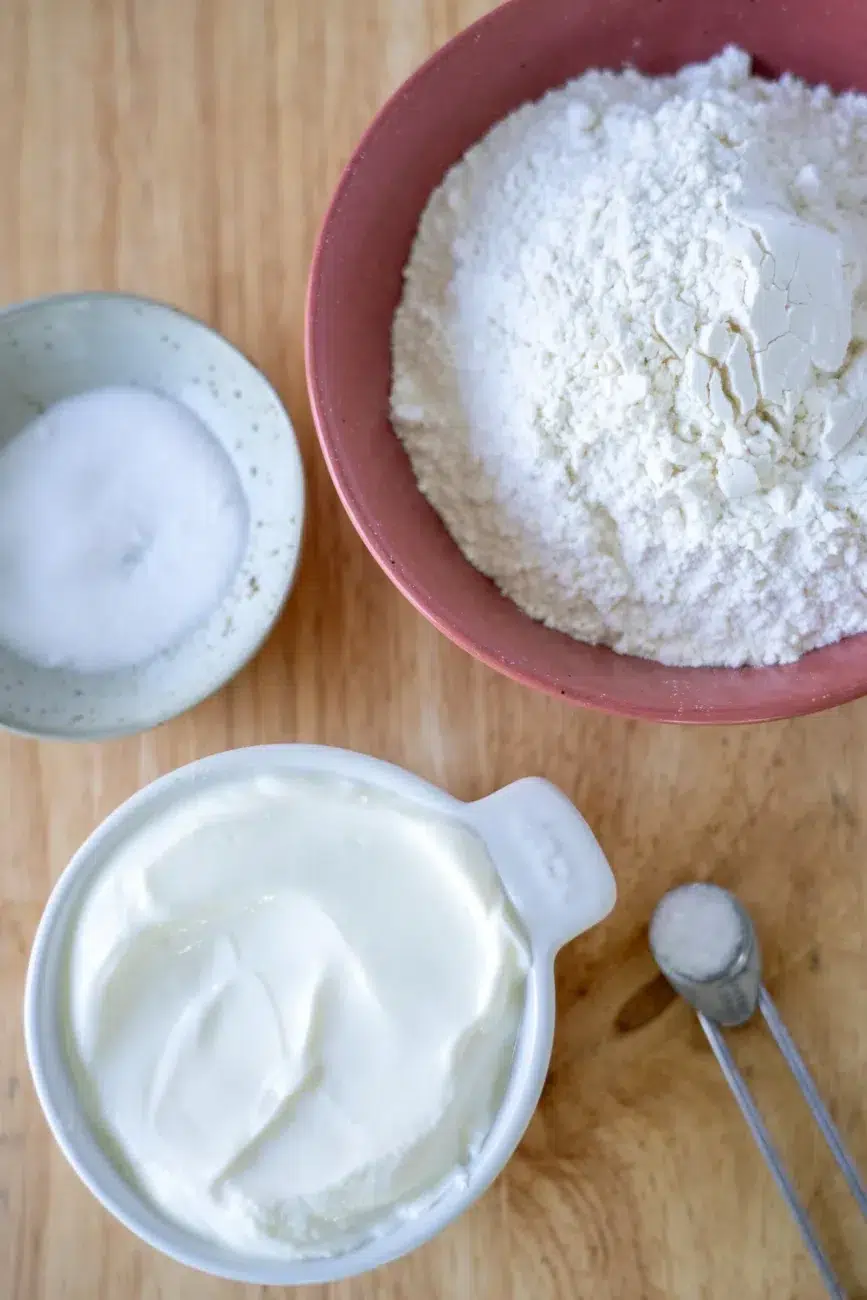
- 250 g (1⅔ cups) self-raising flour, plus extra for dusting
- 1 tbsp caster (superfine) sugar
- 1 pinch sea salt flakes
- 250 g (1 cup) Greek yoghurt (must be full-fat)
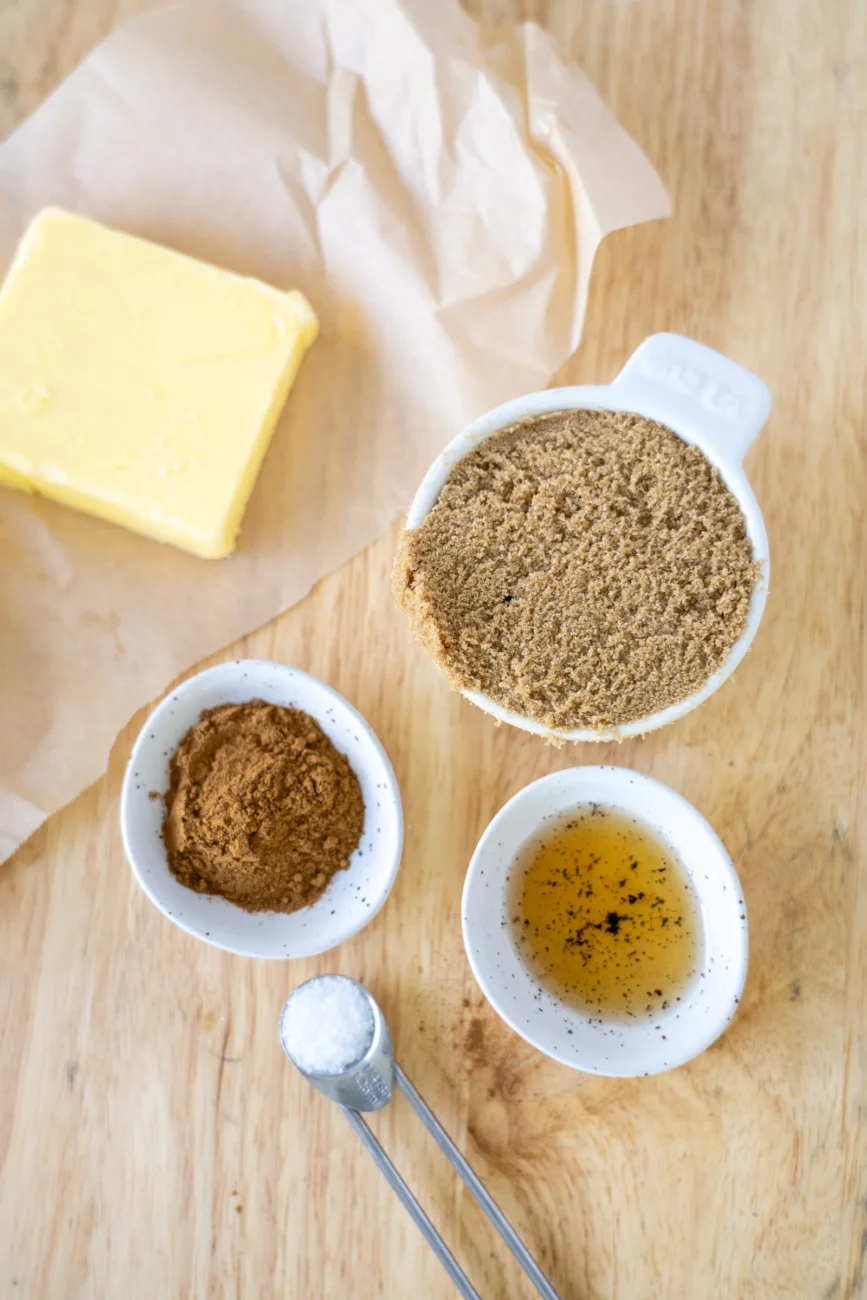
- 65 g (2¼ oz) unsalted butter, softened
- 80 g (⅓ cup) brown sugar
- 1½ tsp ground cinnamon
- 1 tsp vanilla extract
- ¼ tsp sea salt flakes
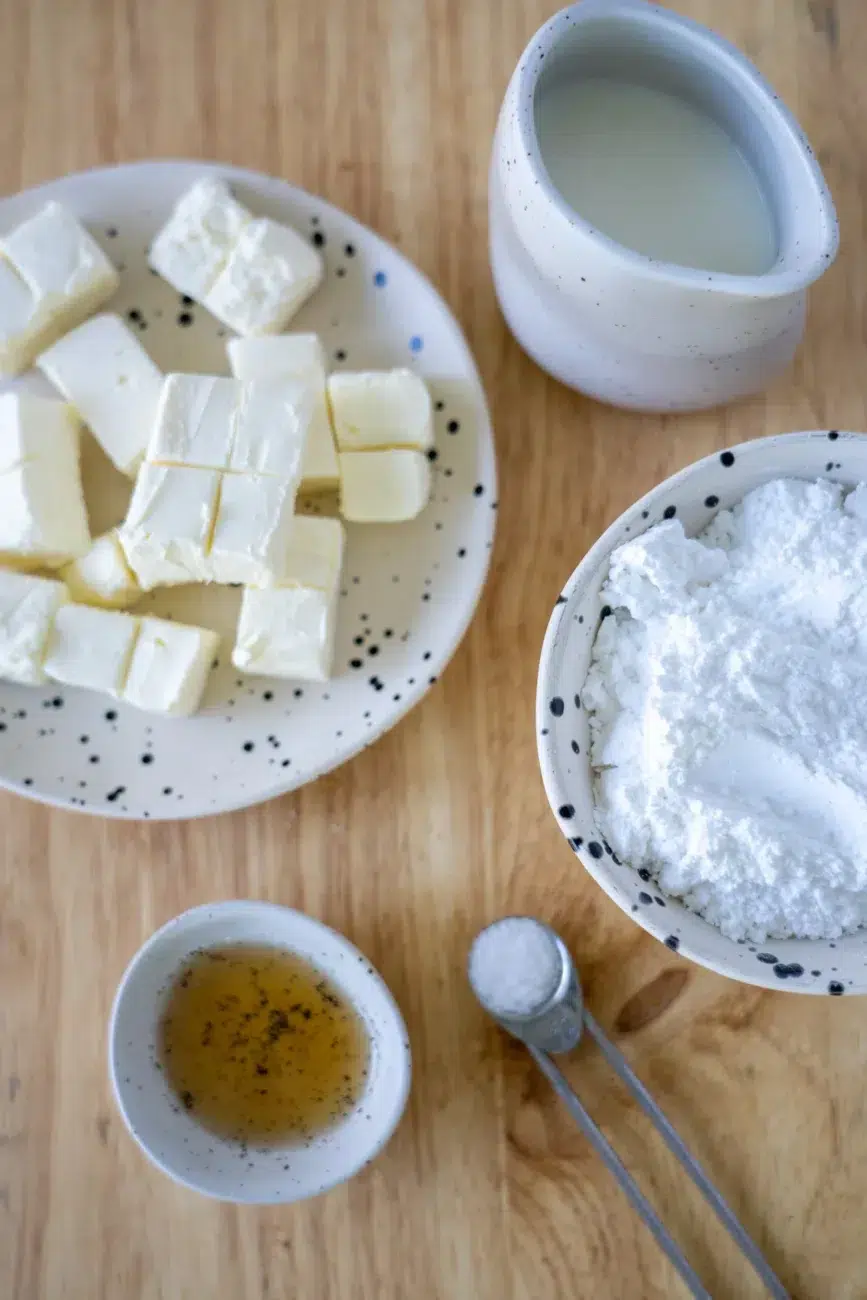
- 125 g (4½ oz) block cream cheese, softened
- 90 g (¾ cup) icing (confectioners’) sugar mixture
- 1 tsp vanilla extract
- ¼ tsp sea salt flakes
- 2 tbsp full-cream (whole) milk or thickened (whipping/heavy) cream, or more if needed
Instructions
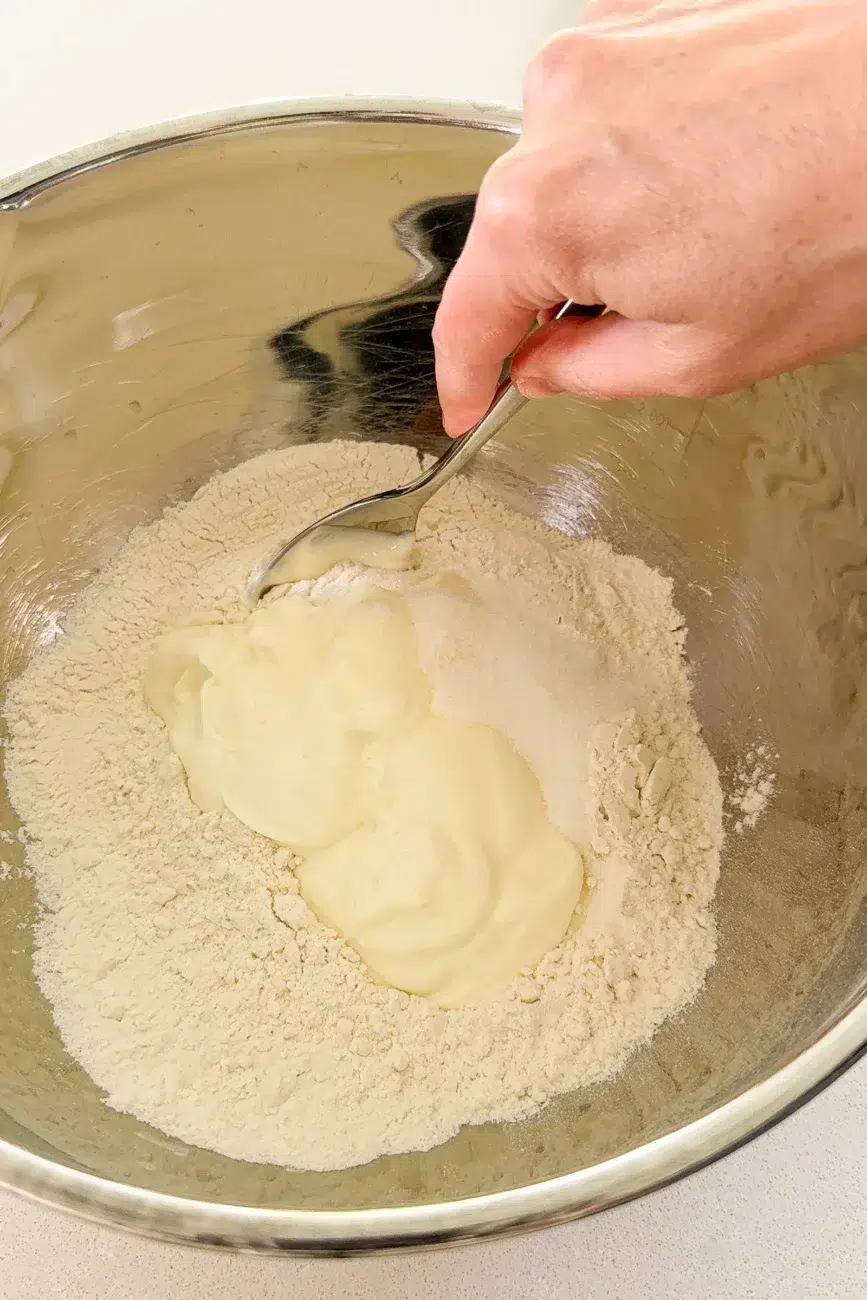
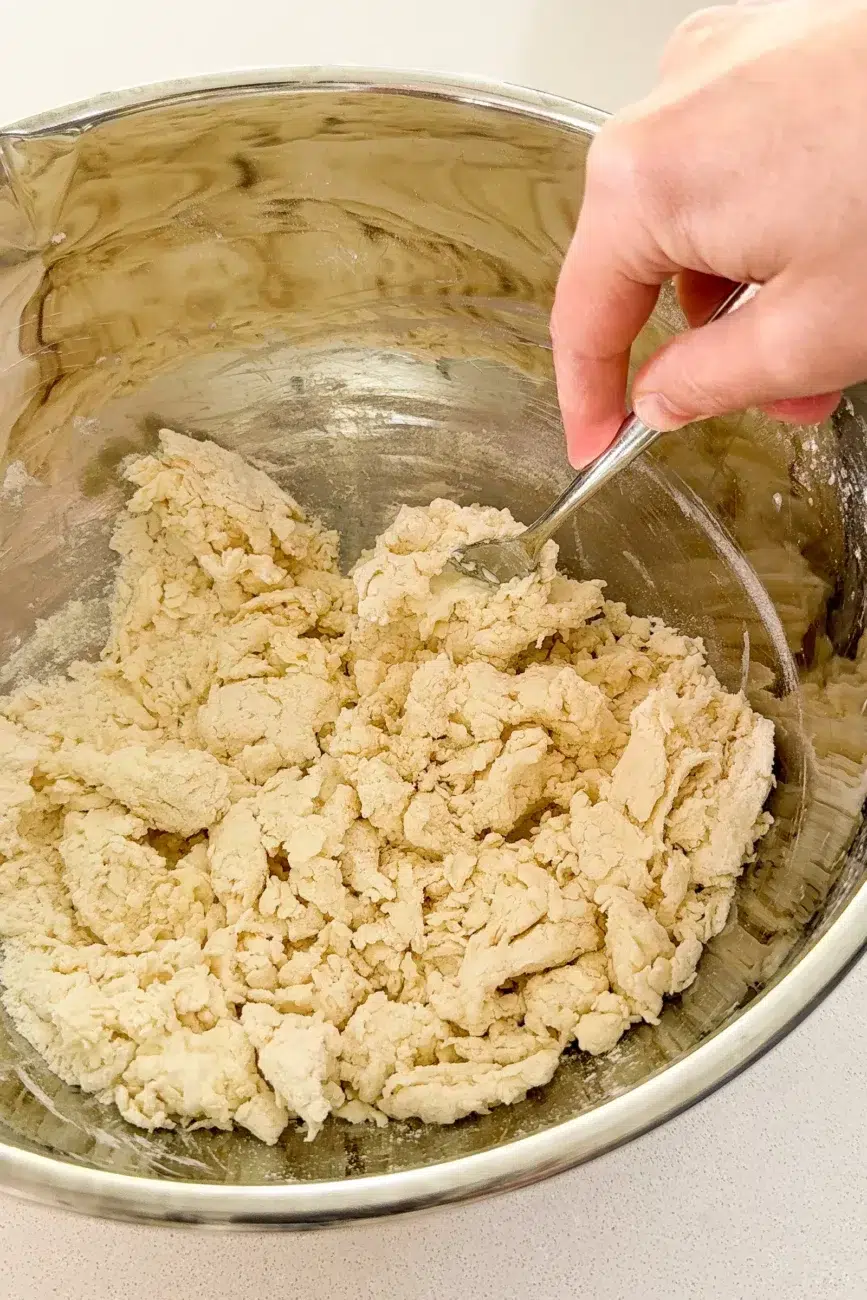
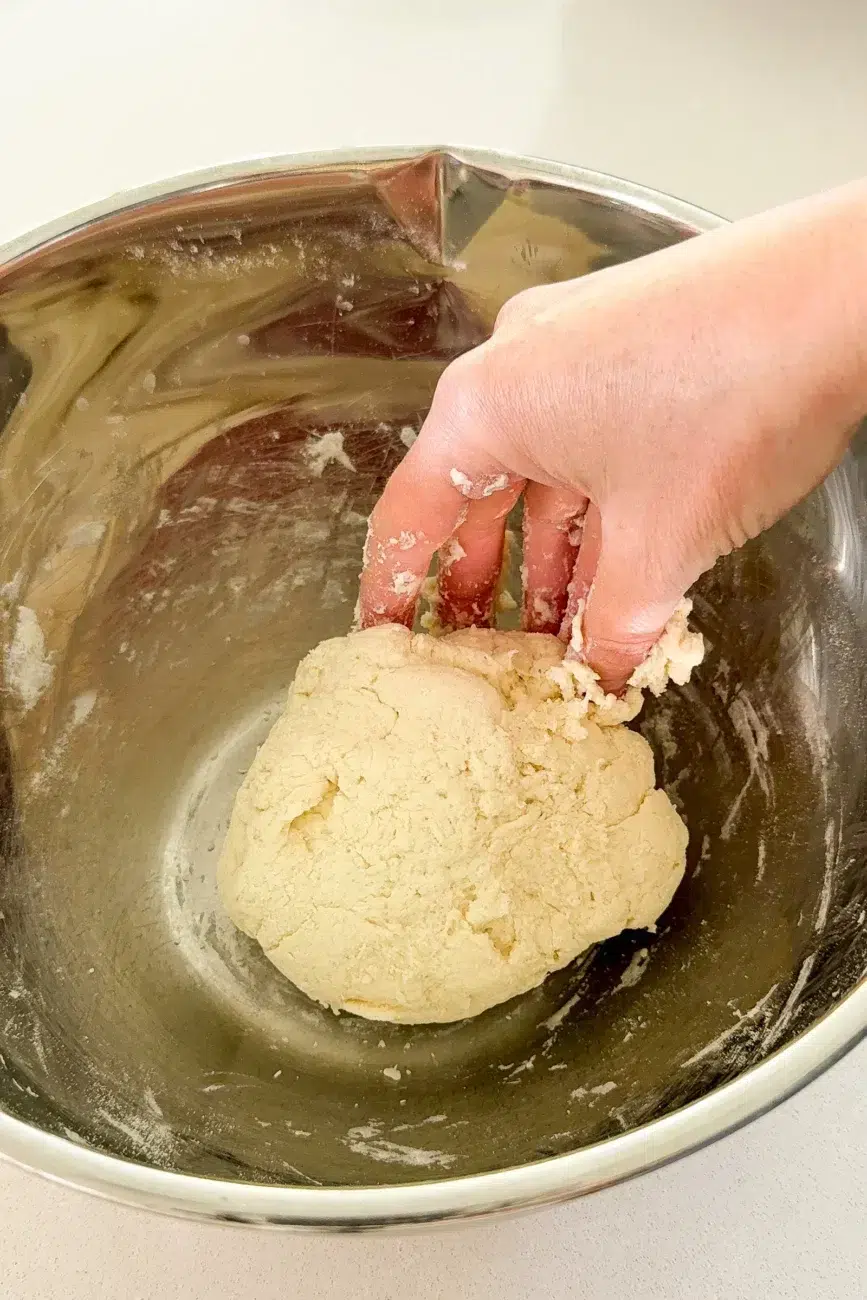
- Make the dough – In a large bowl, combine the flour, sugar and salt. Add the yoghurt and mix with a spoon until a shaggy dough forms. Use your hands (dusted in flour if needed) to combine into a dough ball. This shouldn’t take more than 1–2 minutes. The dough should be soft and slightly tacky. Once well combined, it will feel more sticky than dry.
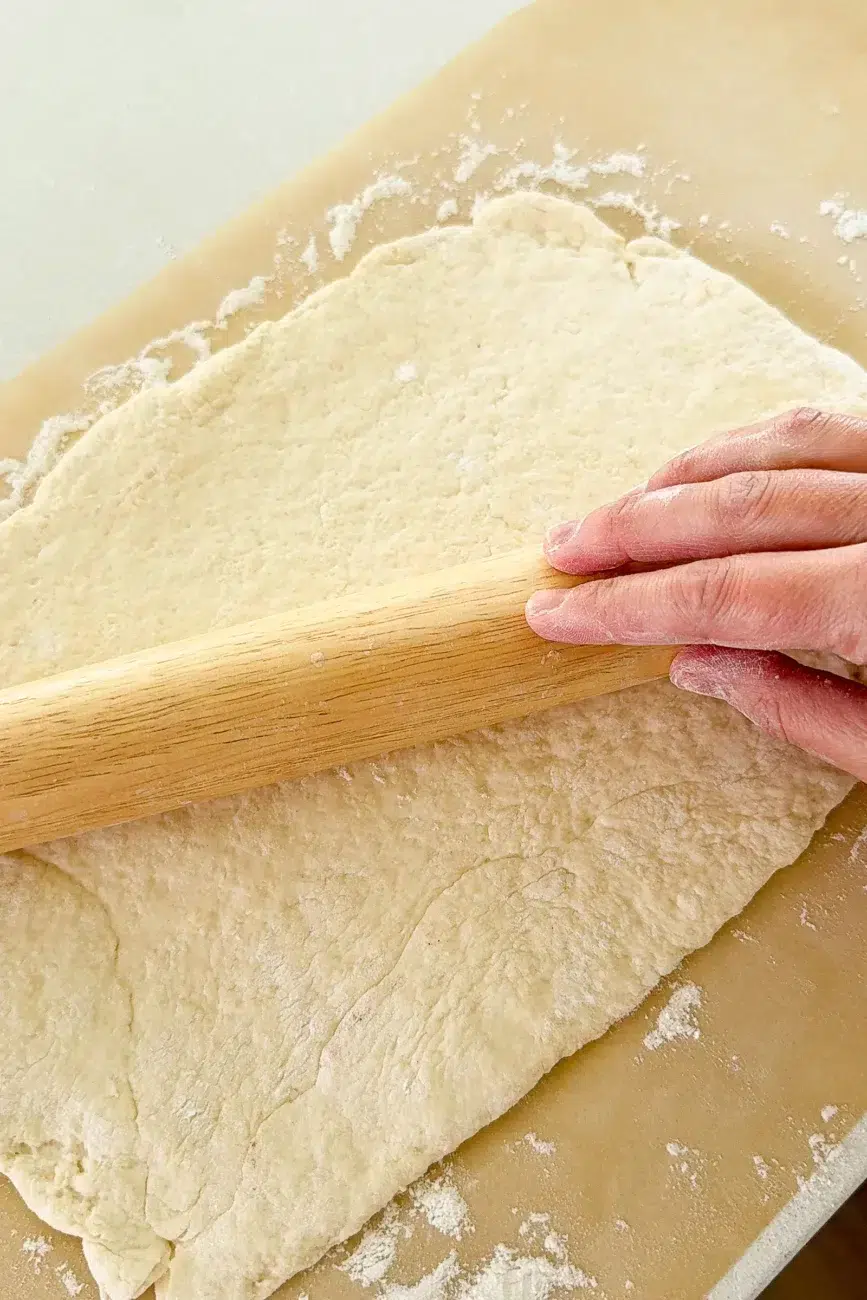
- Roll out – Dust a large sheet of baking (parchment) paper with flour. Place the dough in the centre with an extra sprinkling of flour on top. Roll the dough into a rectangle approximately 30 x 24 cm (12 x 9½ inches). The dough will be quite sticky – as you roll, lift the dough every so often to ensure it isn’t sticking to the baking paper, add a sprinkling more of flour if it is.
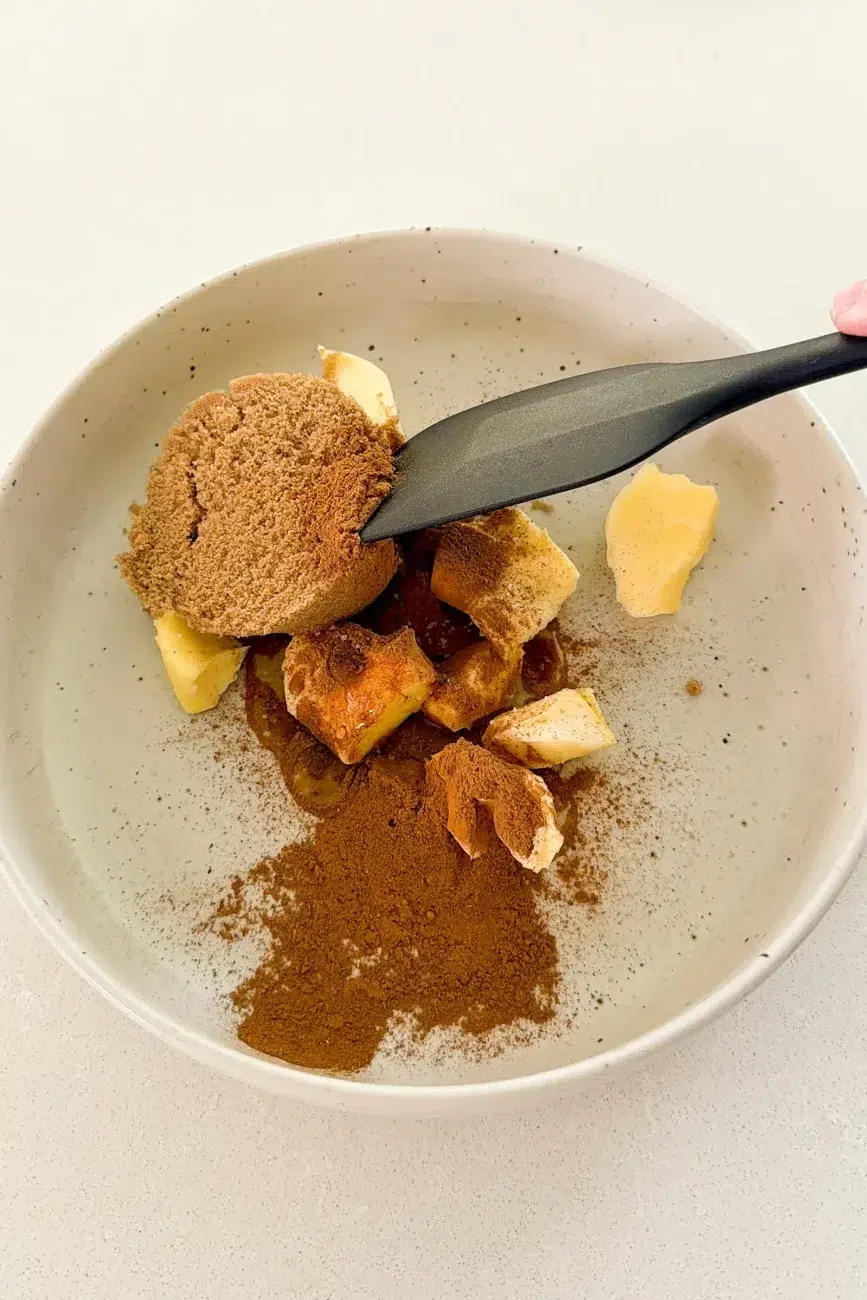
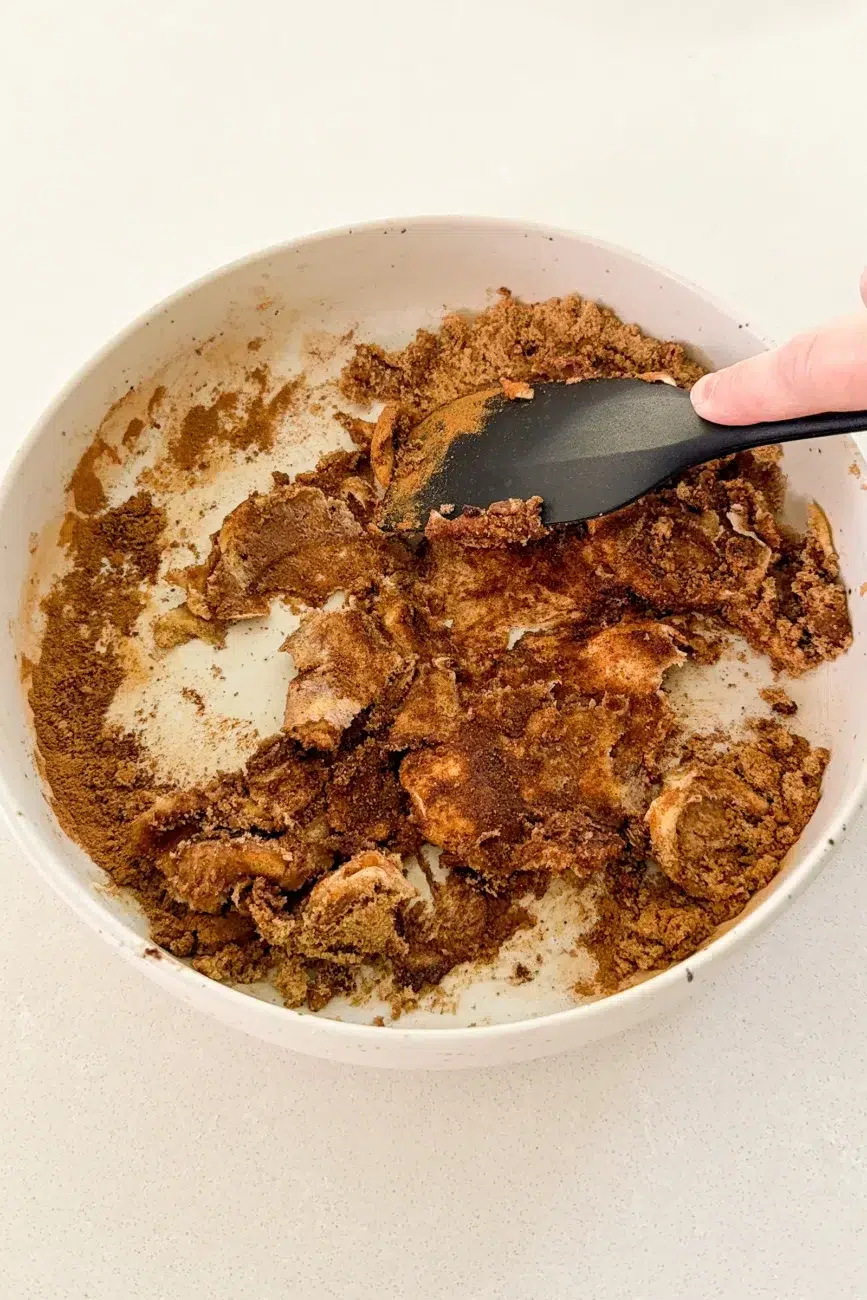
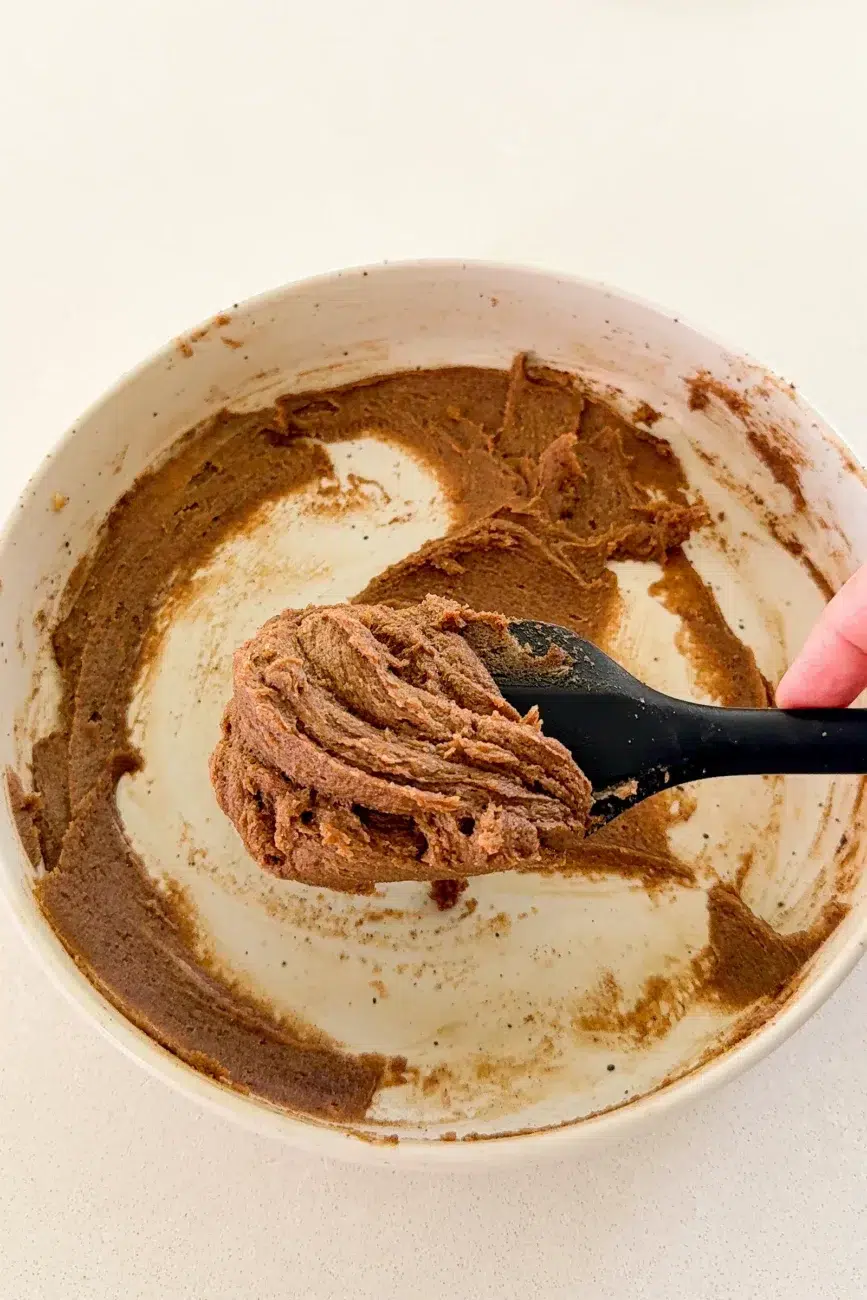
- Make the filling – In a bowl, mix the softened butter, brown sugar, cinnamon, vanilla and salt until smooth and spreadable.
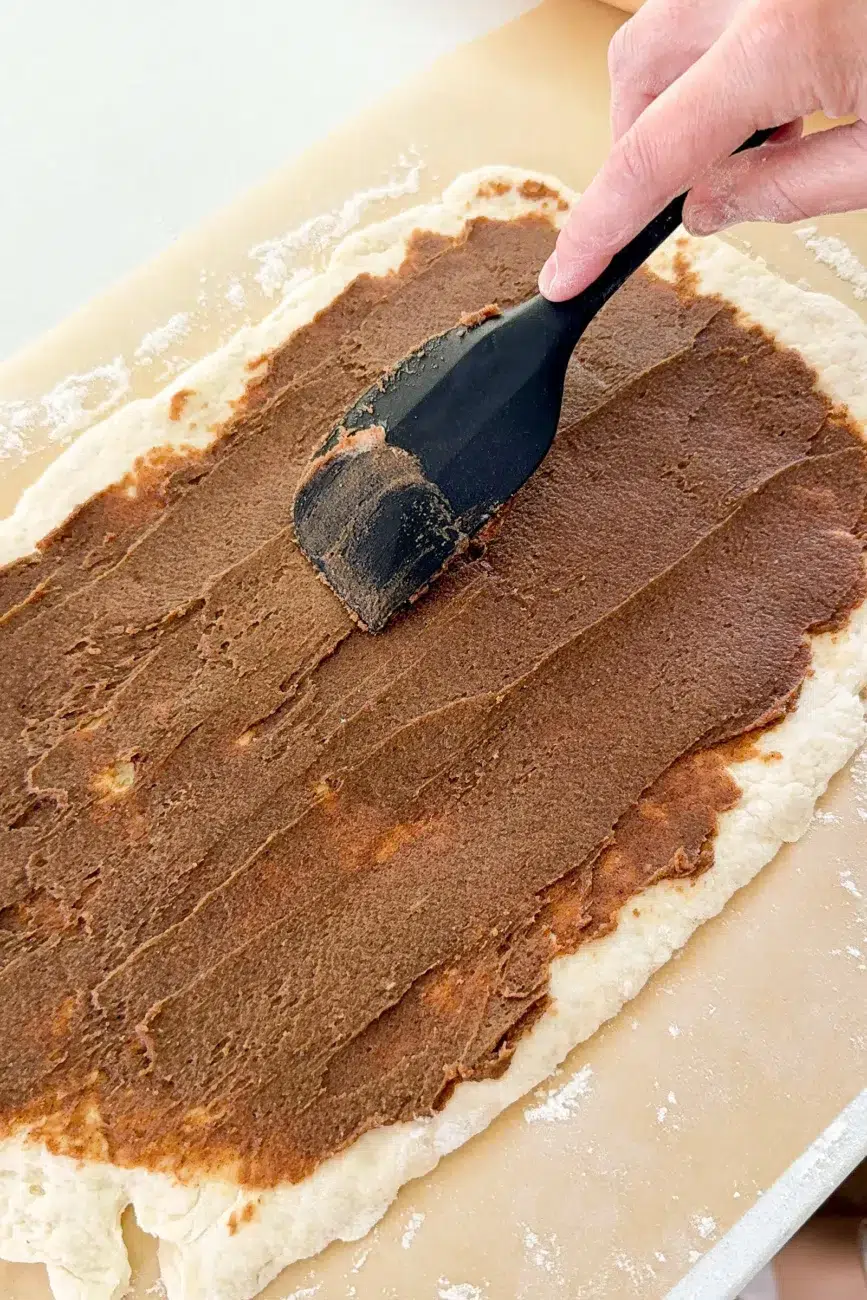
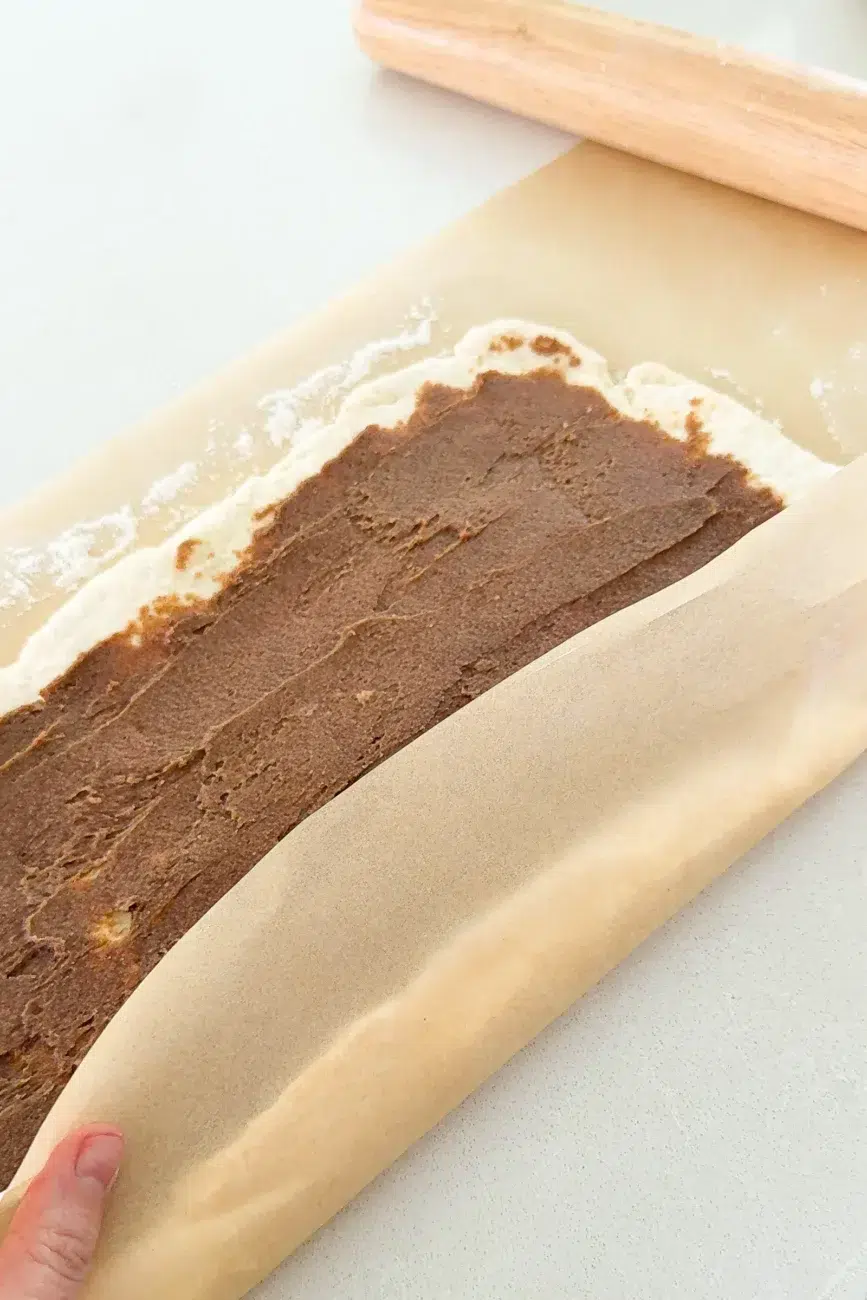
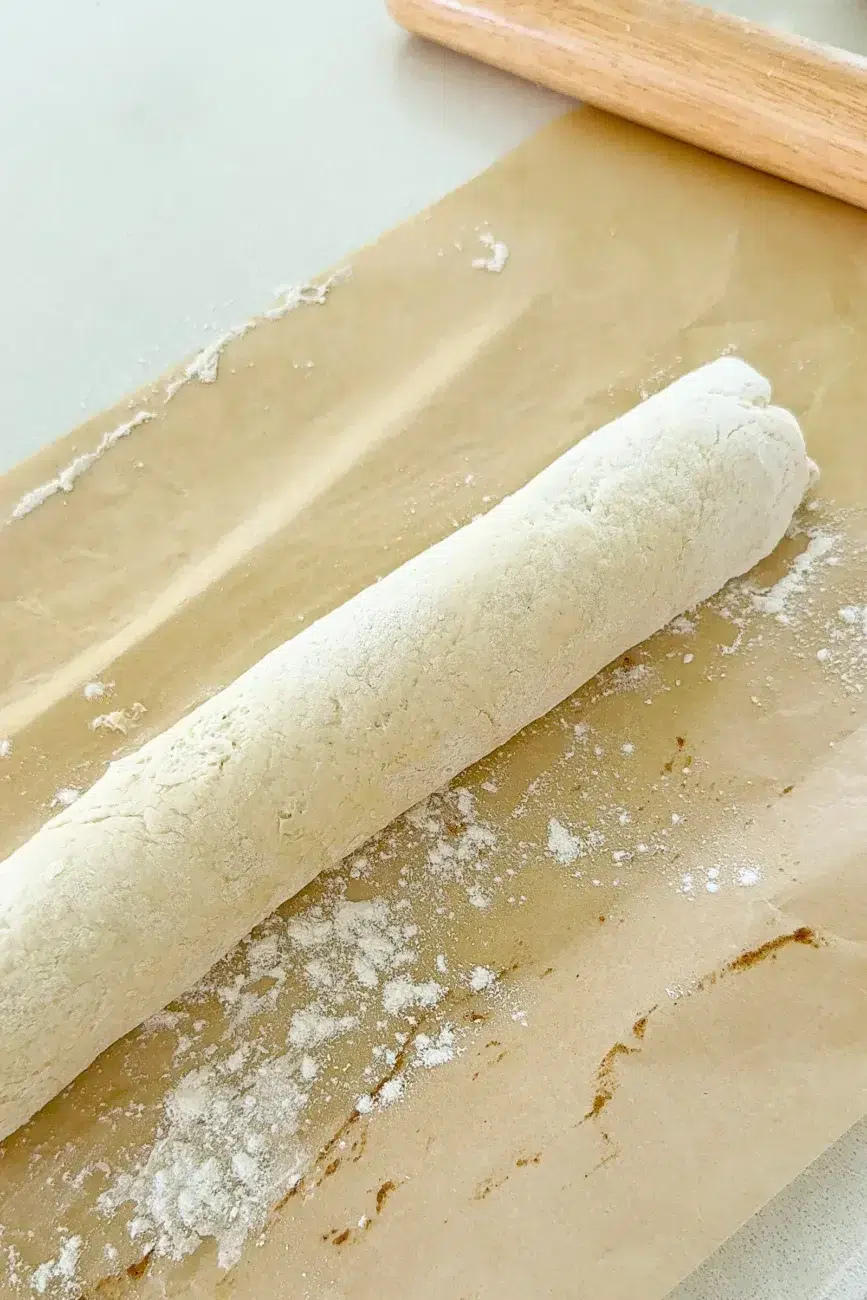
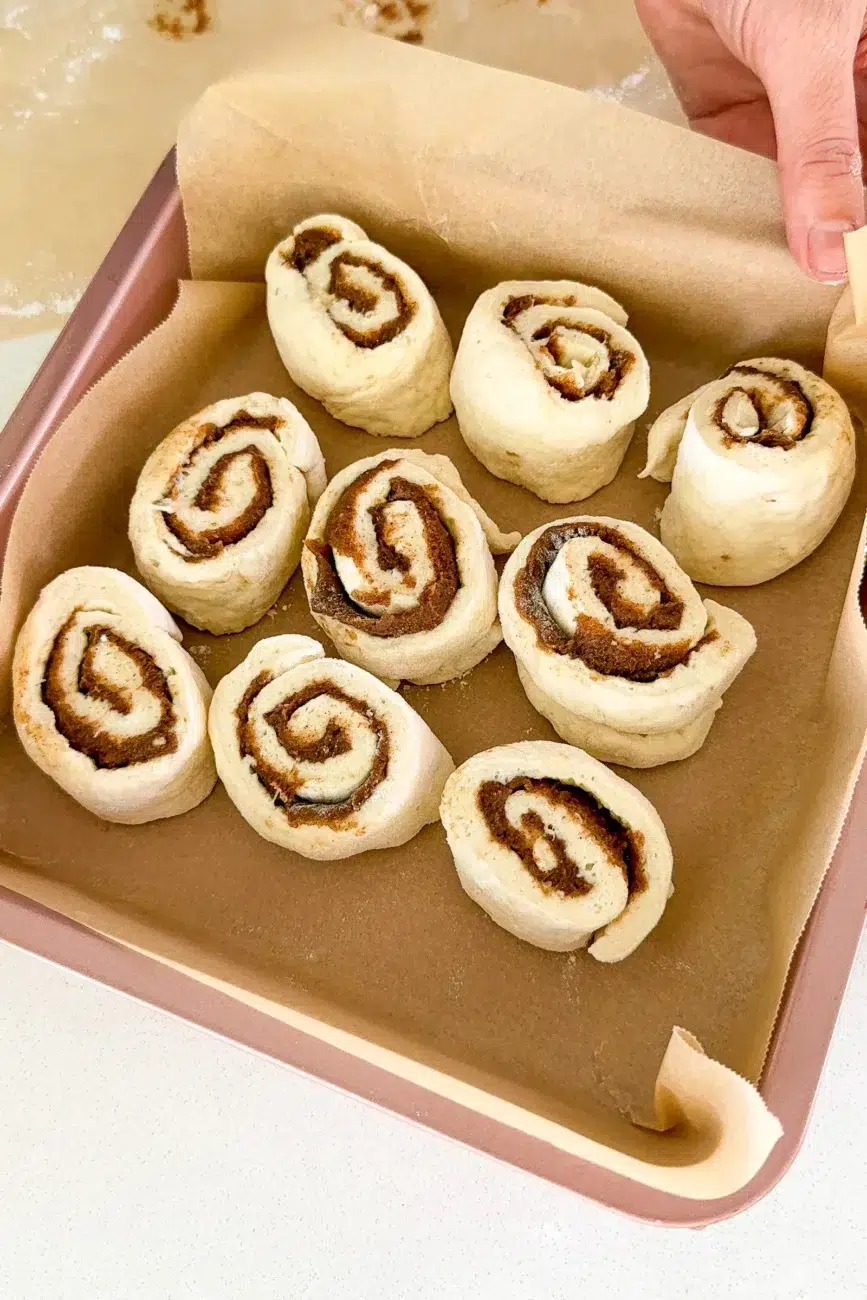
- Assemble the scrolls – Spread the filling evenly over the dough, leaving a 1 cm (½ inch) border around the edges. Starting from the long side, roll tightly into a log using the baking paper to help. Slice into nine even pieces. Use a sharp knife and cut straight down without pressing or squashing the dough.
- Arrange – Place the scrolls into a lined 20 cm (8 inch) baking dish or tin so they are 1 cm (½ inch) apart. See note 1.
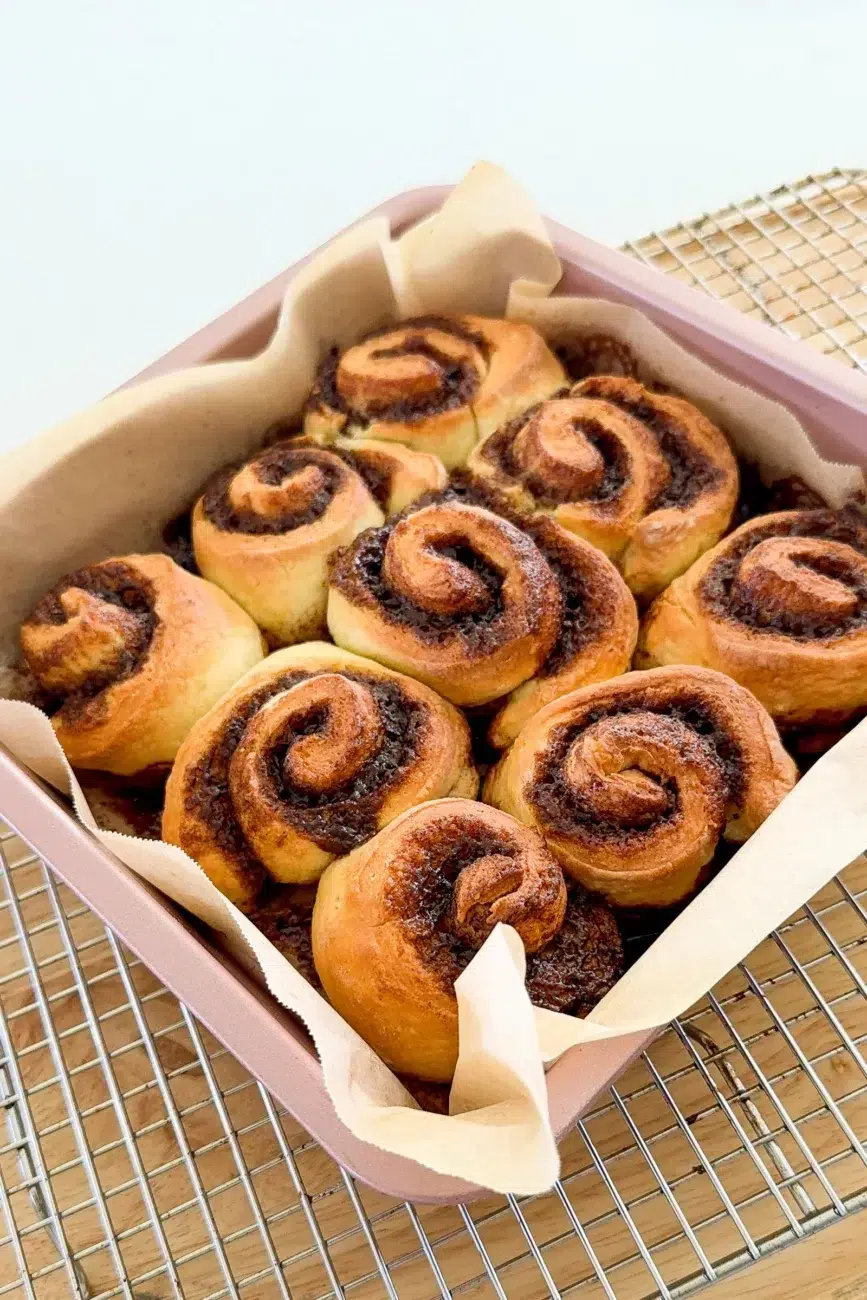
- Bake – Bake at 180°C (350°F) (160°C/325°F fan-forced) for 20–22 minutes, or until lightly golden on top and just cooked through – the centres should remain soft. See note 1.
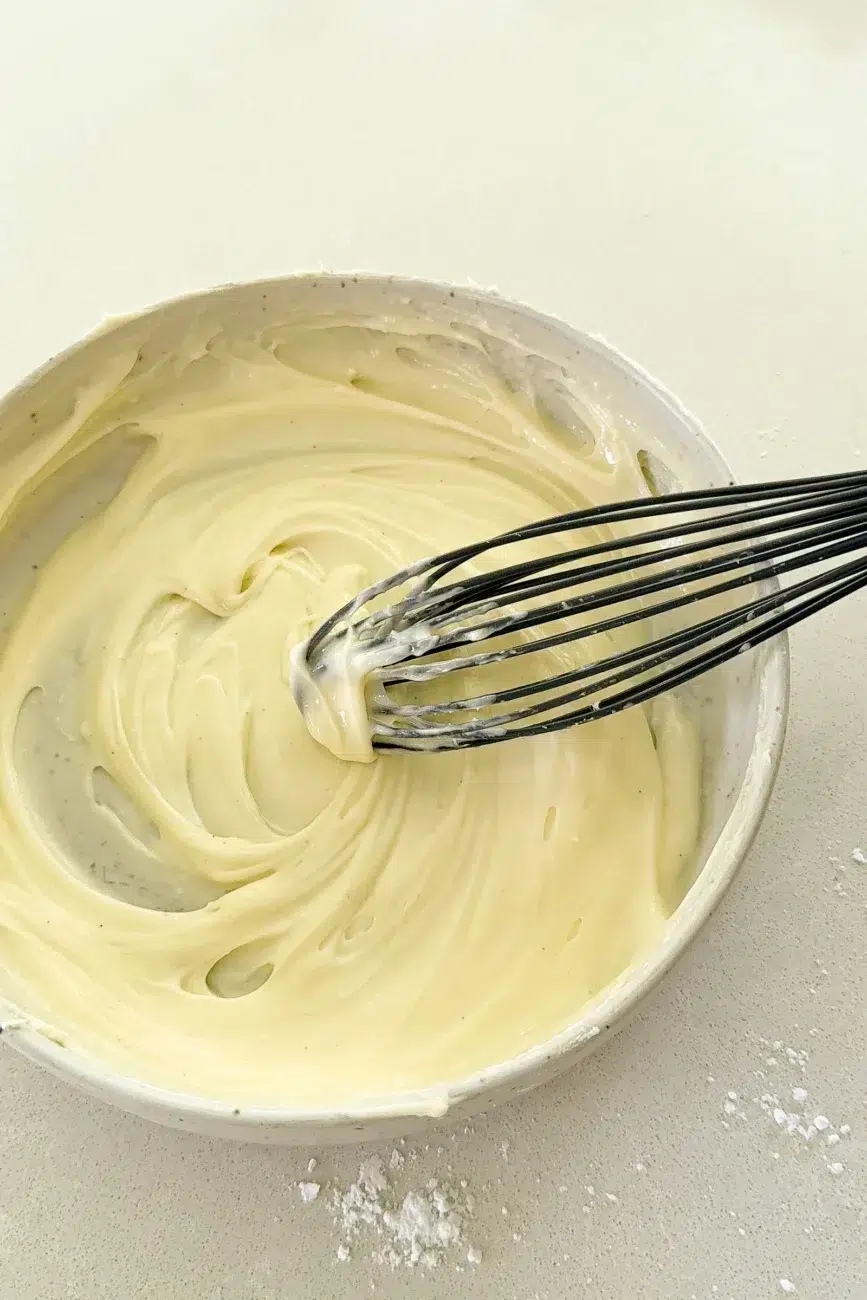
- Make the glaze – In a bowl, beat (or whisk well) the cream cheese until smooth. Add the icing sugar, vanilla, salt and enough milk (1 tablespoon at a time) to create a thick but pourable glaze.
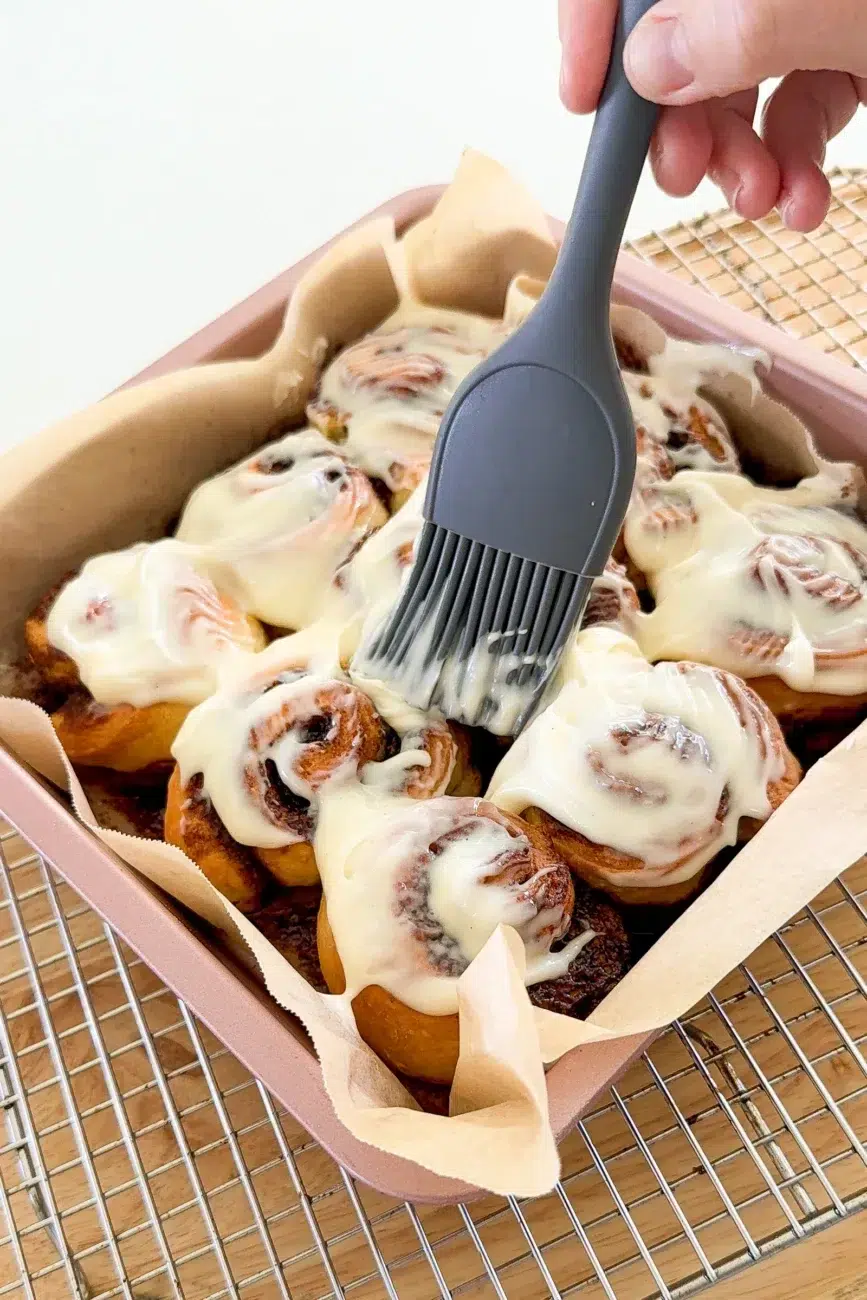
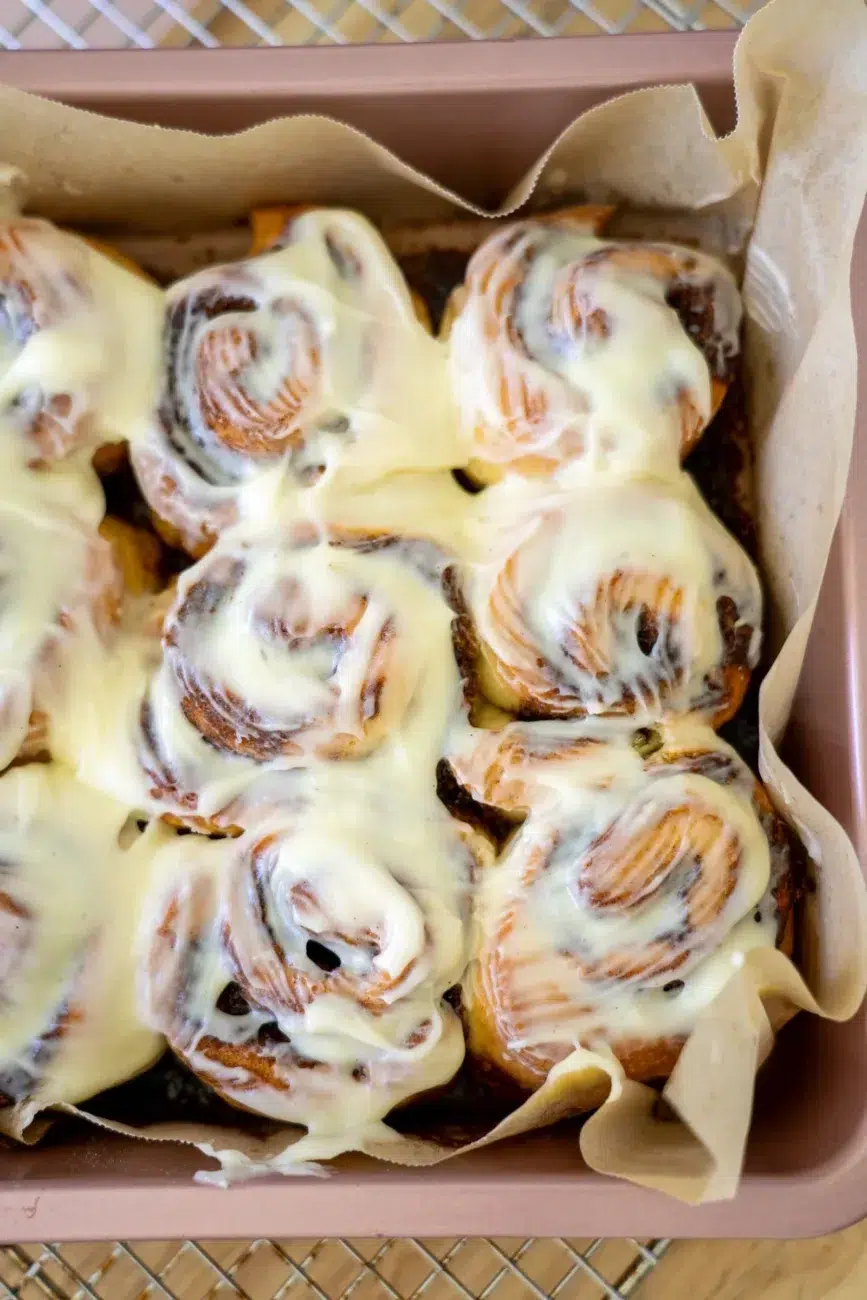
- Glaze – Brush half the glaze over the warm scrolls so it melts into them while the scrolls are still warm. Once slightly cooled, drizzle over the remaining glaze for a thick, creamy finish.
Watch how to make it
Nutrition information
Nutritional information on this site is calculated using Foodworks Professional, the nutrition analysis software trusted by dietitians, researchers and food manufacturers across Australia and New Zealand. Disclaimer re gluten-free and dairy-free recipes.
Recipe notes
Notes
Note 1 – You may notice some melted butter in the base of the pan after baking, which is completely normal and is generally absorbed back into the scrolls as they cool. Oven temperatures can vary quite a bit, which may also affect browning. Ensure your oven is preheated by at least 20 minutes before baking. Use a metal baking dish.Make Ahead
You can prepare the components ahead to save time, but for the best texture, these are best baked fresh. Option 1 – Prep components ahead Prepare the dough and cinnamon filling up to 24 hours in advance. Store separately in airtight containers in the fridge. Before using, allow the dough to sit at room temperature for 20–30 minutes to soften, making it easier to roll. Option 2 – Assemble ahead You can assemble the scrolls in the baking dish, cover tightly and refrigerate for up to 12 hours. Bake straight from the fridge, adding an extra 2–3 minutes to the cooking time if needed. Glaze The glaze can be made up to 2 days ahead and stored in the fridge. Bring to room temperature and stir well before using. Add a splash of milk if needed to loosen.Leftovers
Store leftover cinnamon scrolls in an airtight container in the fridge for up to 3 days. The scrolls will firm up slightly when cold, but soften again once reheated. To reheat –- Microwave: 15–20 seconds until soft and warm.
- Oven: 160°C (325°F) (140°C/275°F fan-forced) for 8–10 minutes.

















Jessica says:
I watched your video twice and still cut them incorrectly 🤣 But I ended up with 12 smaller scrolls and cooked them in a round pan for 18 minutes and they came out perfectly!
Stephanie says:
I have made these at least 10 times for my kids and without the cream cheese sauce on top. Absolutely delicious !!
Elizabeth says:
So easy so delicious
Audrey says:
These tasted really good but did not come out like the video. When I first pulled them out there was a ton of melted butter in the bottom which eventually absorbed as they cooled. I also followed the directions to make self rising flour and I’m not sure why they didn’t turn out great. They didn’t brown even after leaving them in for extra time and they didn’t rise much at all.
Nicole says:
Hi Audrey, I’m so pleased you enjoyed the flavour, but I’m sorry they didn’t turn out as expected. 😊 The homemade self-raising flour may possibly have contributed, particularly if the baking powder wasn’t very fresh, as that can affect how much the scrolls rise. The melted butter could also simply be from the filling melting before the dough had fully set in the oven. Oven temperatures can vary quite a bit too, which may explain the lack of browning. Thank you so much for sharing your experience — it’s really helpful feedback, and I’ll add some extra notes to the recipe to help other readers troubleshoot these issues as well. ♥️
Caroline says:
Oh my goodness. Just made these. Absolutely delicious. Loved by everyone. Thank you.
Jody says:
I don’t think I can make these again because I wanted to eat all 9 in one sitting. They. Are. Incredible.
Nat says:
2 Sundays in a row these have been on the “to bake” for the week ahead, kids love them for the lunchbox which is always a win
Nicole says:
Hey Nat, thanks so much for your message! Love that these are a weekly bake — and anything that’s lunchbox approved is always a win! Nic x
Alisha says:
These are exceptional! 10/10, no notes.
Nicole says:
Aww, thank you Alisha! 🧡 Nic x
Rachelle says:
I don’t even like these usually but OH MY GOD, this recipe is AMAZING!!
the whole family was thoroughly impressed, so much so I made them two nights in a row! Great recipe!
Nicole says:
Thanks so much for this wonderful feedback, Rachelle! Thanks for the rating too. 🧡 Nic x
Caitlin says:
I made all the mistakes Nic tells you not to make and they still turned out yummy! My butter was too soft, my roll wasn’t tight enough AND I used spreadable cream cheese 😱 Still tasted fantastic! Will cook a smidge longer next time and without the mistakes I’m sure they’ll be A1!
Nicole says:
Hi Caitlin, so happy that you loved these! Sounds like you didn’t do a bad job at all! 😊 Nic x
Kim says:
Made these for mother’s day and oh they are just delicious! Defiantly going to be a staple in our household for special morning teas – and the glaze was amazing!!!
Nicole says:
So happy these were a hit for you, Kim! Thanks for the rating. 😊 Nic x
Kimmie Barnes says:
Made these for mother’s day and oh they are just delicious! Defiantly going to be a staple in our household for special morning teas – and the glaze was amazing!!!