

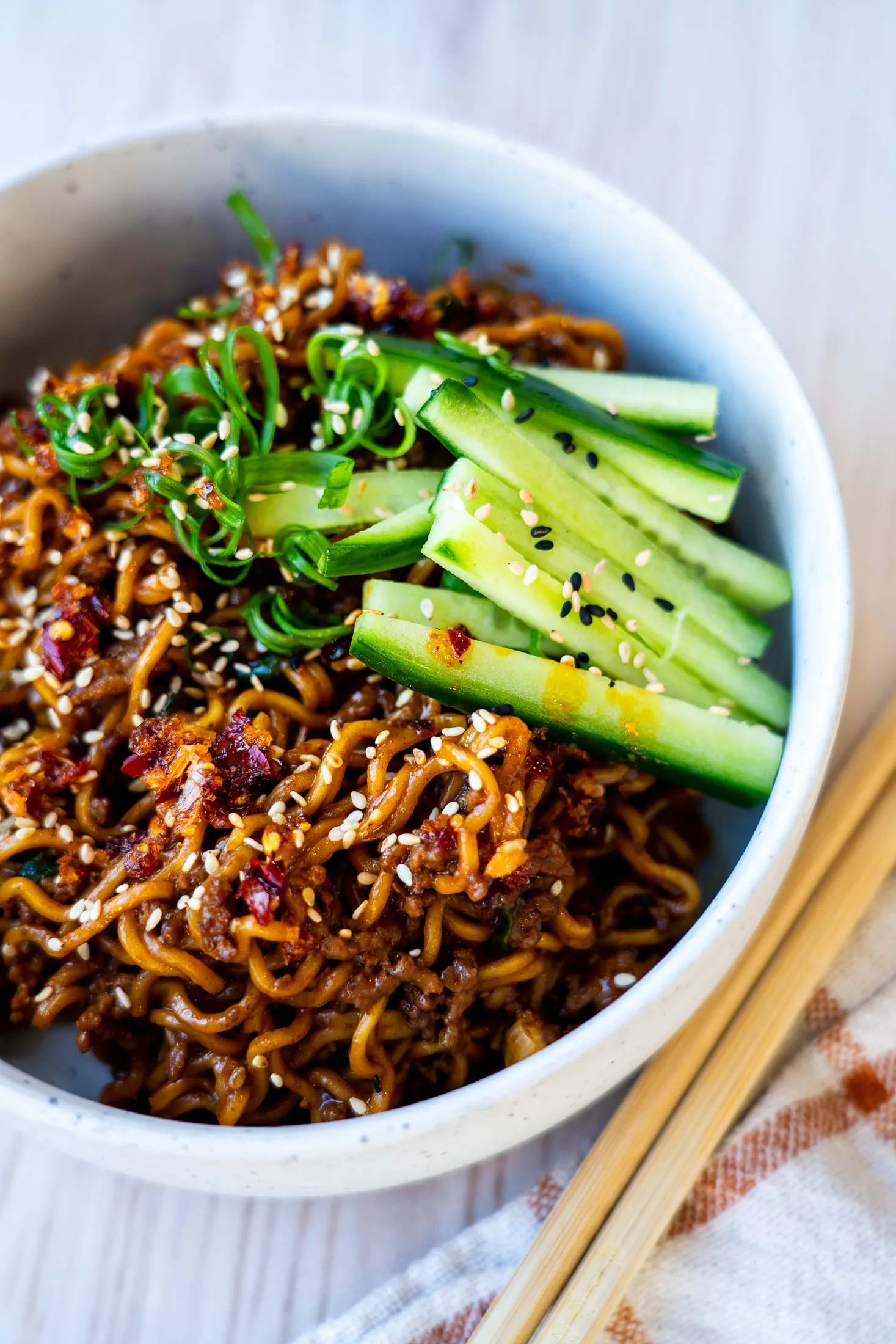






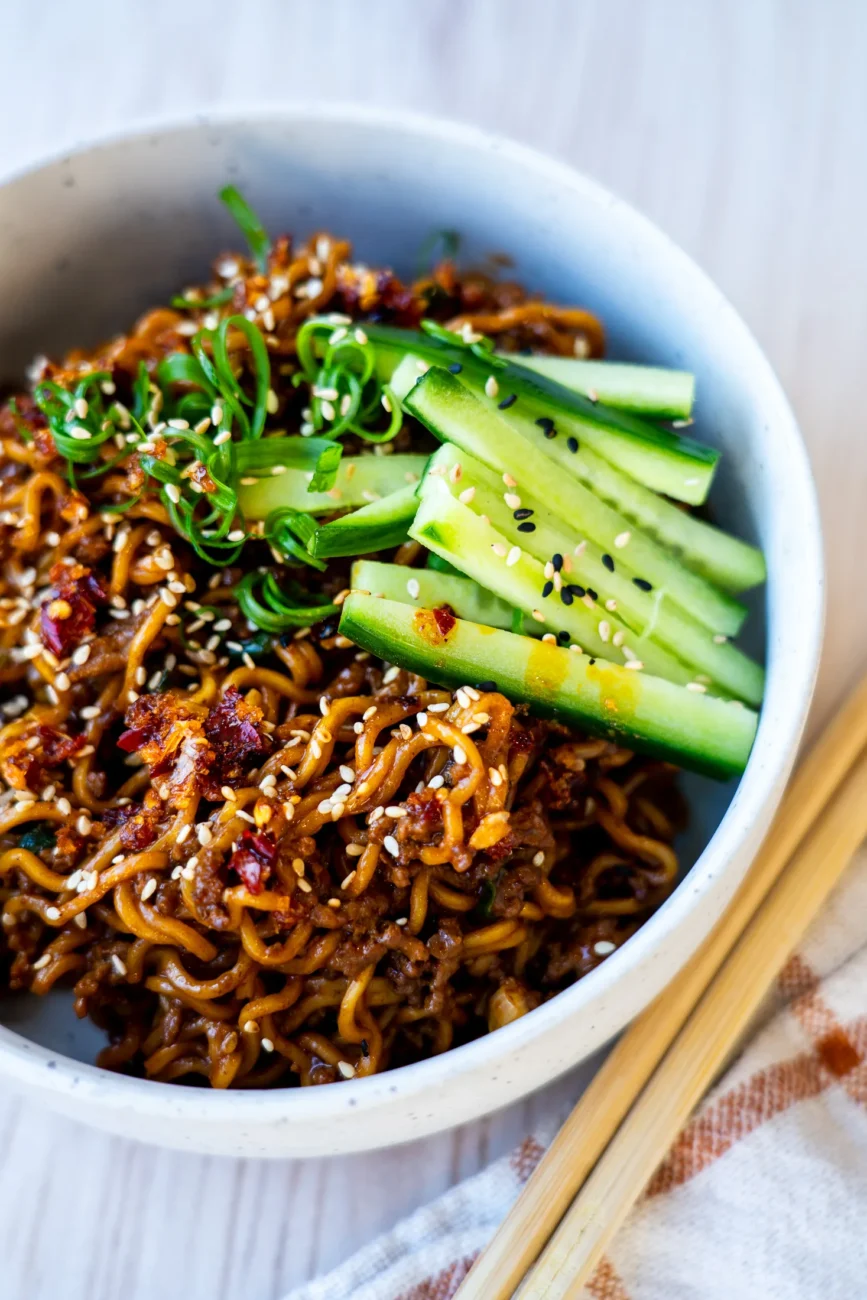
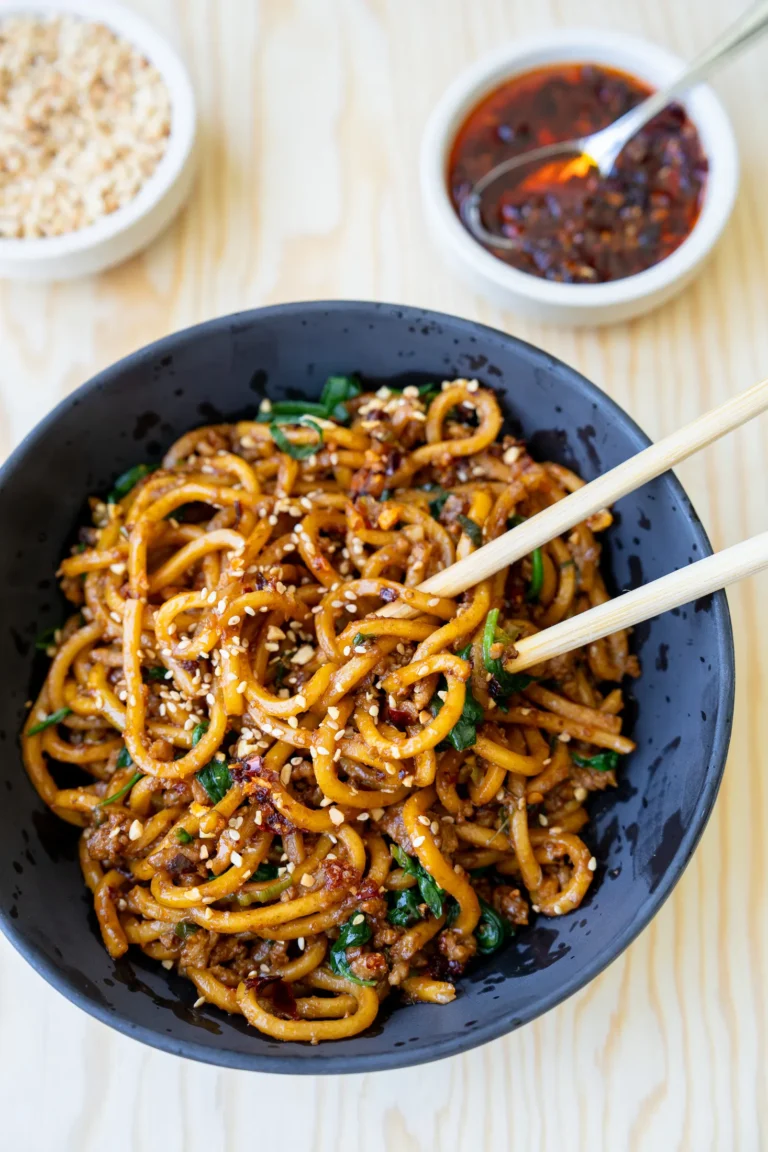
Creamy, glossy Korean-style beef noodles cooked entirely in one pan using simple supermarket ingredients – ready in 20 minutes!
These One-pan Korean-style Beef Noodles taste like Korean BBQ, but in a creamy, glossy form. 😂 This easy dinner is ready in 20 minutes, it’s stress-free and it’s super family-friendly. You can add a handful of vegetables to the noodles, or top with the fresh vegetables of choice – it’s one of those recipes where anything goes.
If you’re like me, minced (ground) beef probably makes a regular appearance in your weekly shop. It’s easy and fast to cook with and the kids love it, so I’m always looking for new ways to use it, so it doesn’t feel like the same meal on repeat.
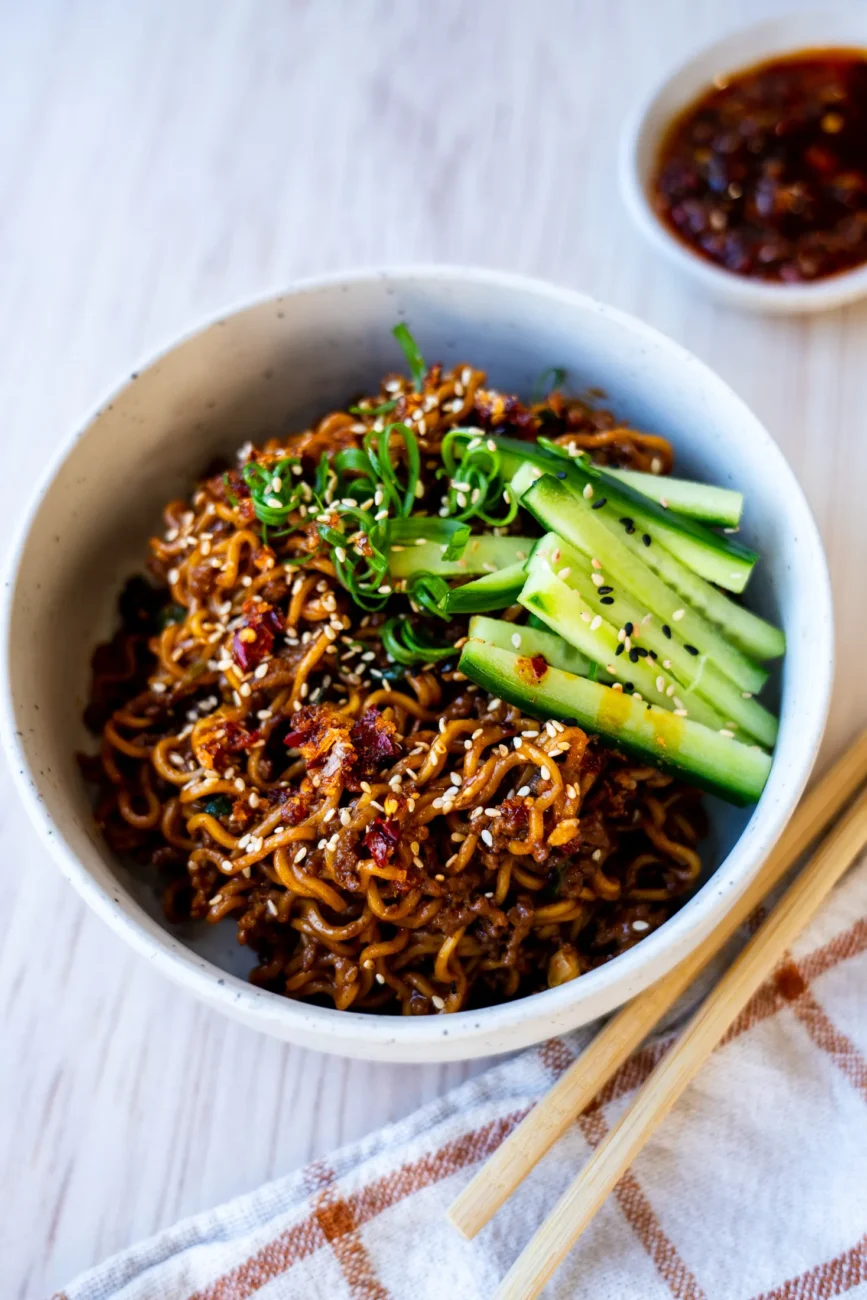
This recipe was my attempt to create something a little different using ingredients I already had on hand. The flavour is inspired by Korean BBQ, with gochujang, soy sauce, garlic, ginger and a wildcard (coconut milk!) that adds a little creaminess and takes this from good to unbelievable. Gochujang is a Korean fermented chilli paste that’s now widely available in most major supermarkets. It lasts for ages in the fridge and adds incredible flavour, depth and colour to recipes. If you’re new to it or cooking for little ones, start with a smaller amount and work your way up. You can also leave it out entirely if needed. (See below for some other recipes on the website that use this sauce.)
For me, the more achievable a recipe feels, the more likely I am to make it on a busy weeknight. I also love recipes that make the process of getting dinner on the table more streamlined. In this dish, the noodles cook directly in the sauce, which means one less pot to wash and one less step to think about.
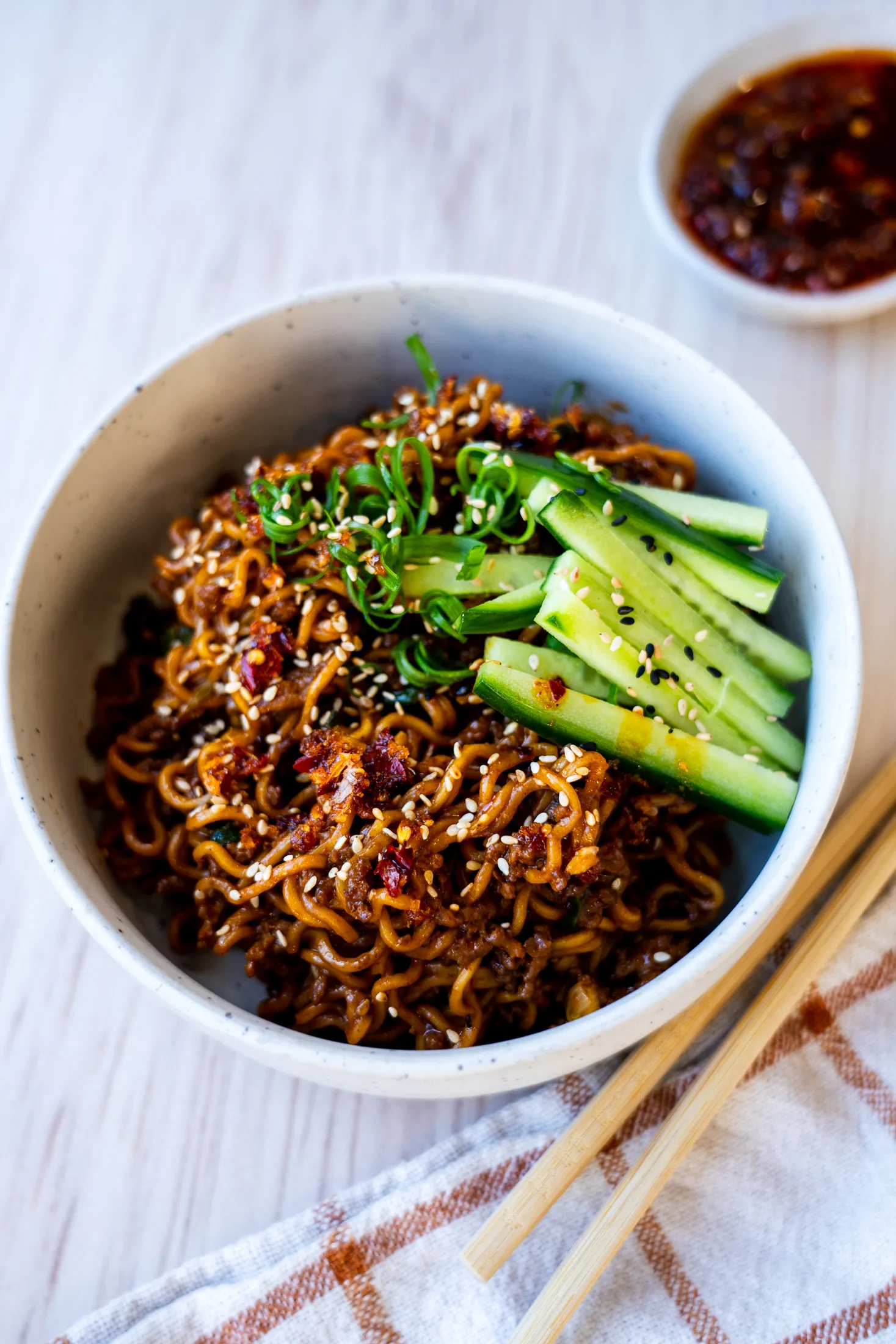
Finish with whatever toppings make you happy. I love cucumber, spring onion (scallion), sesame seeds and a drizzle of chilli oil, but this is very much a “use what you’ve got” kind of dinner. And those are often the recipes that end up becoming go-tos.
Can I make this with minced (ground) chicken or pork?
Yes. Beef mince gives the noodles a rich, savoury flavour, but chicken mince or pork mince work beautifully too.
What vegetables can I add to One-pan Korean-style Beef Noodles?
This recipe is very flexible, making it perfect for using up vegetables you already have in the fridge.
Add 1–2 cups of any of the following (or a combination):
- Shredded wombok (napa) cabbage
- Julienned carrot
- Bean sprouts
- Finely sliced mushrooms
- Finely sliced onion
- Small broccoli florets
- Shredded Chinese broccoli (gai lan)
- Snow peas (mangetout)
Add firmer vegetables with the beef, and softer vegetables during the final few minutes of cooking.
What toppings work well with One-pan Korean-style Beef Noodles?
Toppings are a great way to add freshness and texture. Some of my favourites include:
- Sliced cucumber (I like to cut it into batons)
- Spring onion (scallion)
- Sesame seeds
- Bean sprouts
- Kimchi
- Soft-boiled eggs
- Crispy fried shallots
- Chilli oil or chilli oil crisp
Mix and match depending on what you have available.
Which ramen noodles are best to use?
Instant ramen noodles work best for this recipe – the curly-style noodles that come in packets with seasoning sachets. The seasoning sachets aren’t used in this recipe, so you can discard them or save them for another use.
Can I use different noodles?
Absolutely. Fresh noodles, egg noodles and rice noodles all work well. Cook them separately according to the packet instructions, then reduce the water in the recipe to 125 ml (½ cup) before combining everything.
What is gochujang?
Gochujang is a Korean fermented chilli paste made from chilli, rice and soybeans. It adds savoury flavour, depth, colour and a gentle heat to recipes. Most major supermarkets now stock gochujang in the international aisle. If you’re new to it or cooking for children, start with a smaller amount and increase to taste, or simply omit. You can also substitute it with 1 tablespoon of sriracha + 1 teaspoon of honey (plus 1 teaspoon of miso paste if you have it).
I bought gochujang for this recipe. What else can I use it with?
Gochujang lasts for months in the fridge, so it’s well worth keeping on hand.
Some of my favourite recipes that use it include:
- Gochujang Mayo – A creamy, spicy sauce that’s incredible on burgers, wraps, schnitzels, fries and sandwiches.
- Korean Beef Rice Bowls – The recipe that inspired these noodles, featuring minced (ground) beef in a sticky Korean-inspired sauce, served over rice.
- Korean Chicken Bao – Crispy chicken coated in a sweet, sticky gochujang sauce and tucked into fluffy bao buns.
My noodles seem too dry or too saucy. What should I do?
Different noodle brands absorb liquid at different rates.
- If the noodles seem too dry, add 2 tablespoons of water at a time until loosened.
- If the sauce is too thin, continue cooking, uncovered, for a few minutes until thickened.
Remember that the noodles will continue absorbing the sauce as they sit.
If you enjoyed One-pan Korean-style Beef Noodles, I think you’ll love:
- Korean Beef Rice Bowls Recipe – The recipe that inspired these noodles. Big, bold Korean flavours with minced (ground) beef, a sticky gochujang sauce and fluffy rice, ready in 20 minutes.
- One-pan Beef Ramen Noodles Recipe – Another crowd-pleasing one-pan noodle dinner using minced (ground) beef and ramen noodles in a rich, savoury sauce the whole family will love.
- Beef Chow Mein Recipe – A classic fakeaway with tender beef, crunchy vegetables and silky noodles tossed in a glossy soy-based sauce.
- San Choy Bow Recipe – A lighter way to enjoy savoury minced (ground) beef with fresh, crunchy lettuce cups packed with Asian-inspired flavours.
- Big Mac Tacos Recipe – If you love minced (ground) beef fakeaway dinners, these loaded tacos are just as fun and absolutely perfect for a Friday night.
One-pan Korean-style Beef Noodles
“The sauce tasted amazing! It came together quickly. I’ll definitely make it again.” Share Pin Recipe PrintIngredients
- 3 tbsp soy sauce
- 1½ tbsp dark soy sauce
- 2 tbsp brown sugar or honey
- 2 tbsp rice wine vinegar
- 2 tbsp sesame oil
- 2 tbsp gochujang (see note 1 for spice levels and subs)
- 1 tbsp peanut butter (can be omitted)
- 2 tbsp neutral oil
- 500 g (1 lb) minced (ground) beef
- 1 tsp freshly minced garlic
- 1 tsp freshly minced ginger
- 1 tbsp tomato paste
- 250 ml (1 cup) coconut milk (see note 2 for substitutions)
- 3 x 85 g (3 oz) bundles of ramen noodles, or any other instant noodle packets, flavouring sachets discarded (see note 3 for more details)
- 375 ml (1½ cups) water
- 2 spring onions (scallions), finely sliced, plus extra to serve
- Sesame seeds
- Sliced cucumbers
- Chilli oil (optional)
Instructions
- Make the sauce – Combine the sauce ingredients in a small bowl or jug. Whisk to combine, then set aside.
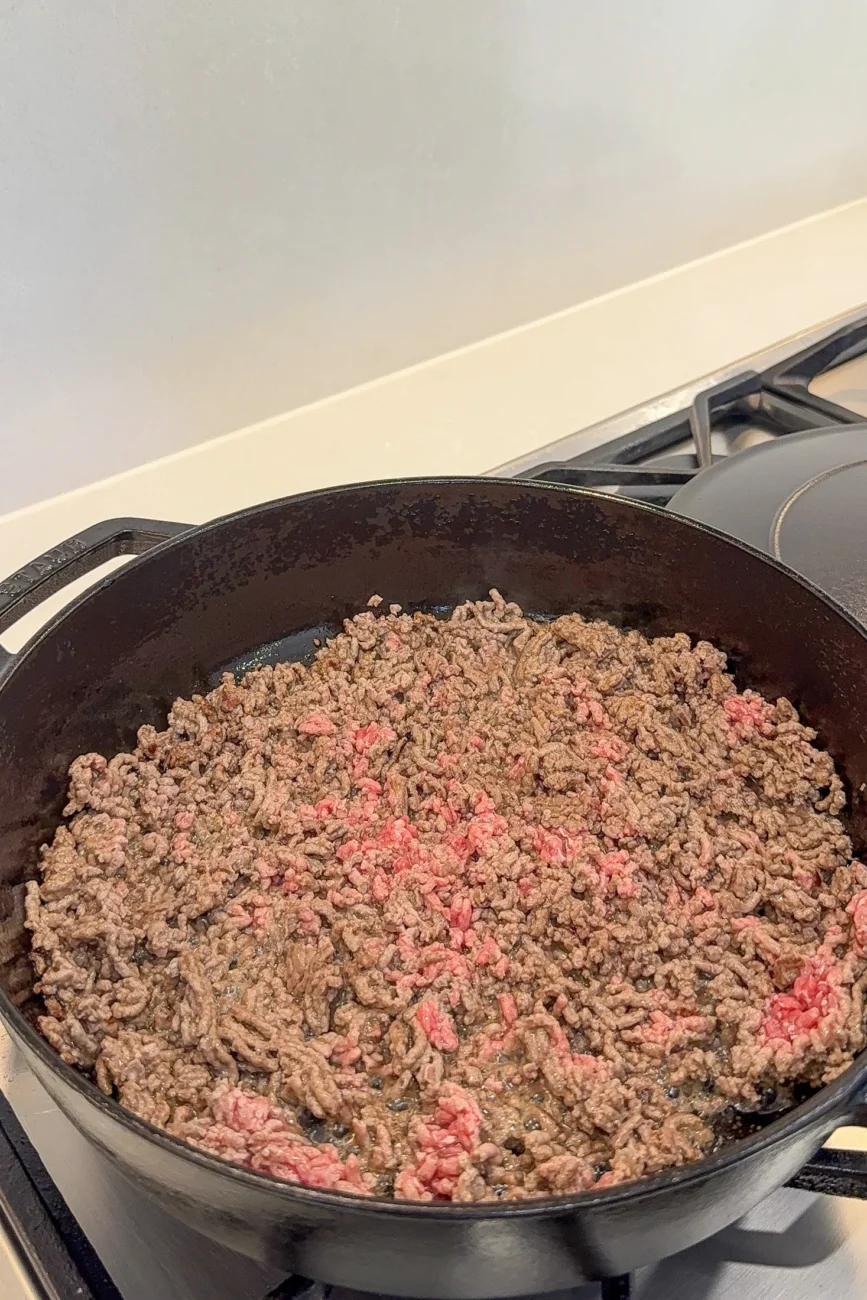
- Cook the beef mince – Heat the oil in a large heavy-based pan with a lid over medium–high heat. Add the beef mince, break it up with a spatula and leave it undisturbed for 4–5 minutes until it begins to caramelise. Flip it over and continue cooking for a further 3–4 minutes until cooked through.
- Add the garlic and ginger – Add the garlic and ginger and cook, stirring, for 60 seconds.
- Stir in the tomato paste – Stir through the tomato paste.
- Add the sauce – Add the sauce, stir and cook for 60 seconds until slightly thickened.
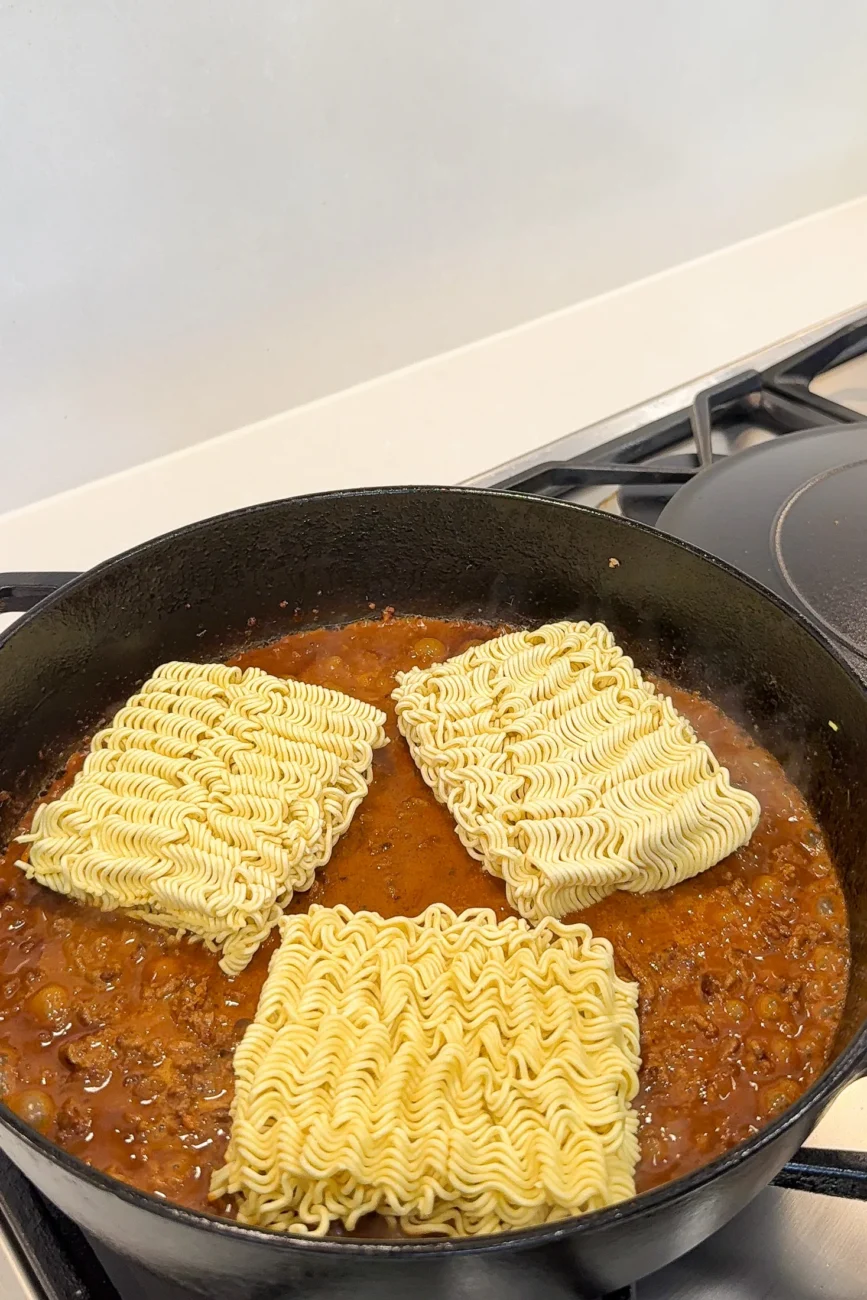
- Add the coconut milk and noodles – Stir through the coconut milk, then add the noodles to the pan, followed immediately by the water. The noodles won’t be completely submerged in the liquid and that is okay. Try and nestle them in so they are as submerged as possible with their tops exposed.
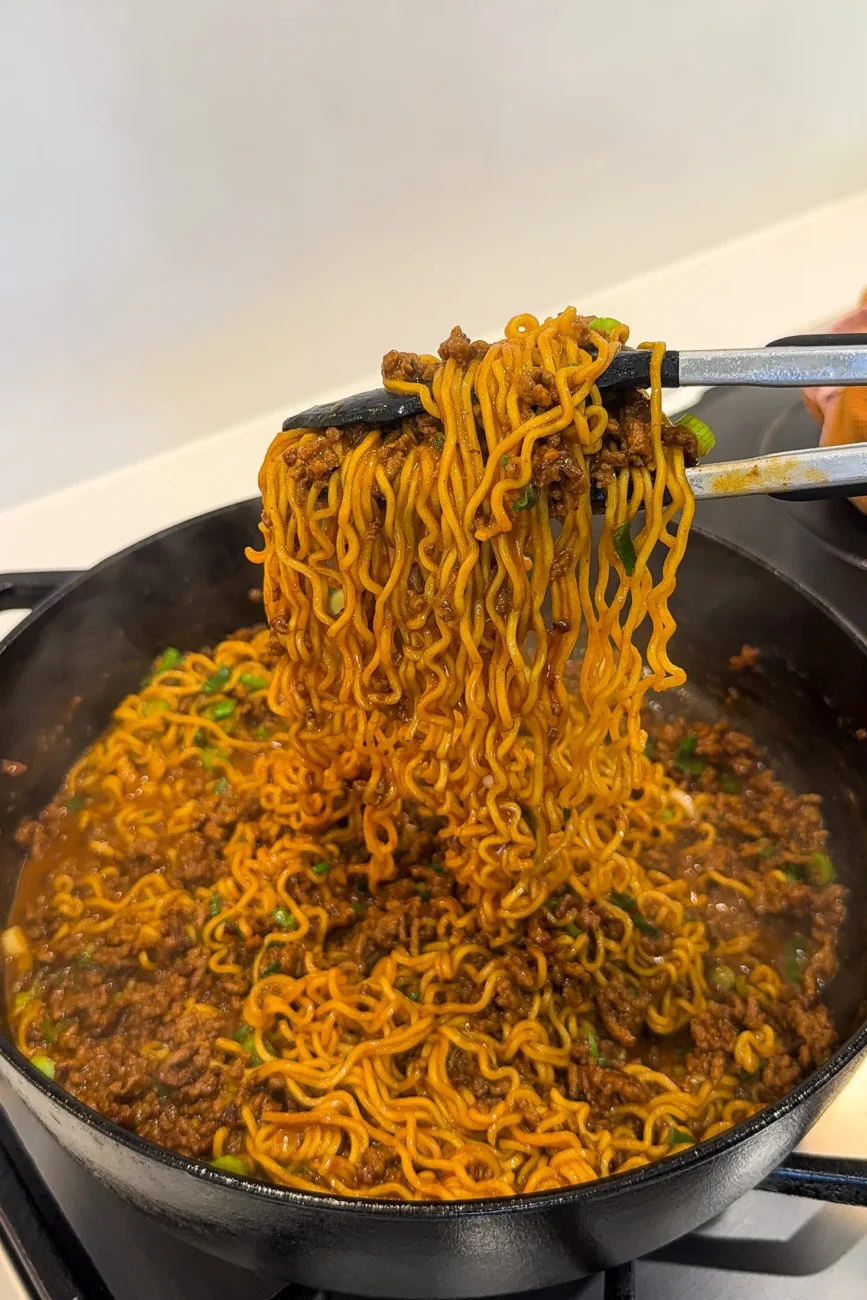
- Place the lid on – Cover and cook for 2 minutes. Uncover, turn the noodle bundles over using tongs and cover again. Cook for 1 minute.
- Uncover and add the spring onion – Uncover the pan, give the noodles another toss with tongs to absorb the sauce (they will continue to absorb the sauce as they sit). Add the spring onion and toss with tongs for 60 seconds or until the spring onion is well distributed. (See note 4 for sauce thickness.)
- Serve – Serve the noodles divided among four bowls, topped with extra spring onion, sesame seeds, sliced cucumbers and chilli oil, if using.
Watch how to make it
Nutrition information
Nutritional information on this site is calculated using Foodworks Professional, the nutrition analysis software trusted by dietitians, researchers and food manufacturers across Australia and New Zealand. Disclaimer re gluten-free and dairy-free recipes.
Recipe notes
- Mild – 1 tablespoon
- Medium – 2 tablespoons
- Hot – 3 tablespoons
If using fresh noodles, egg noodles or rice noodles, cook them separately and reduce the water in the recipe to 125 ml (½ cup). Note 4 – Sauce thickness
- Sauce too thick – Add 2 tablespoons of water at a time to loosen.
- Sauce too thin – Continue cooking over high heat, uncovered, until thickened to your liking. Remember the noodles will continue to absorb the sauce as they sit.

















Mary says:
I’ve made this twice now, so delicious. Everyone loves it.
Jane says:
I found this recipe super salty. We were chugging the water after this one! I didn’t have dark soy sauce, so just used ordinary and coconut cream instead of coconut milk. Those were the only changes I made, so I don’t know why this was too salty!
Nicole says:
Hi Jane! Oh no, I’m sorry to hear you found this one too salty! ❤️ The saltiness of ingredients like soy sauce and gochujang can vary quite a bit between brands, which may explain the difference. The substitutions you made should otherwise work perfectly well in this recipe. If you decide to give it another go, I’d suggest trying a salt-reduced soy sauce and adjusting the amount to suit your taste. I hope that helps, and thank you for taking the time to share your feedback! Nic ❤️
Amy says:
Delicious! Have to use GF noodles but it was delicious !!
Kimberly says:
This was so delicious! My packaged ramen loving 8 year old devoured it, and I loved having it for lunch the next day. New household favorite!
Anna Stewart says:
This was a really easy dinner with well balanced flavors, thank you
TM says:
Made this a few days ago and we all loved it, my 11 month old included. We opted for a small amount of sriracha instead of gochujang to keep it an appropriate spice level for him, but my husband and I agreed it was missing something without the gochuhang. It was still delicious though, and especially savory. The recipe held up fine as leftovers but I think it is a meal best made fresh. Quick and easy!! Will make again.
liz says:
Can you make a gluten version suggestion for the noodles please
Nicole says:
Hi Liz! Yes — I’d use rice noodles for a gluten-free version. Cook them separately according to the packet instructions, then reduce the water in the recipe to ½ cup (125 ml) before tossing everything together. You’ll also need to make sure your gochujang is gluten-free, as that can vary between brands. Nic x
Melissa Lovett says:
Hii! The flavour is amazing but for some reasons it’s full of liquid, what did I do wrong?? 🤪
Simple Home Edit Team says:
Hi Melissa, Nic recommends to continue cooking over high heat, uncovered, until thickened to your liking. Just remember that the noodles will continue to absorb the sauce as they sit. It’s also a good idea to use a heavy-based pan. 😊
Kim says:
Delicious, made if for entire family. Added some chopped zucchini, matchstick carrots and sugar snap peas, completeneal
Liz says:
Delicious! This was a great meal. I loved the peanut butter in it and appreciate all the lovely notes that come with all of her recipes. We paired it with sauteed carrots and asian cucumbers. Will become a staple in our household!
Vivian says:
Loved by everyone in my family! Added carrots and zucchini to sneak in some veggies for my little one! Kiddos said it was “very good” which is a rare statement! your recipes have all been a fav with my kids!
Pearl says:
We have a peanut allergy in the house, any recommended substitutions or ok to leave out?
Simple Home Edit Team says:
Hi Pearl, if you have an allergy, you can simply omit the peanut butter. 😊