






There is nothing better than a homemade, fresh Basil Pesto, particularly when it’s so easy to make in under 15 minutes. Whether it‘s stirred through pasta, made into a creamy sauce with chicken, added to a salad dressing, spread on a big piece of sourdough or dolloped on top of a pizza, it is the ultimate way to add a whole heap of flavour to a meal without a whole heap of effort. It‘s worth taking the time to make your own pesto, since many of the store-bought varieties are made with additives or can be expensive. This homemade version is completely customisable and the store-bought version just can’t compare to the taste. See below to find out how to store your pesto and keep it in the fridge for up to 2 weeks!
How long can you store homemade Basil Pesto?
Homemade pesto can be stored in the fridge for up to 2 weeks. Store in an airtight container and drizzle the top of the pesto with extra olive oil – this is the key to preserving the pesto and keeping it fresh. It may darken over time on the top, but it will be completely fine to eat. Top it generously with olive oil each time after use. Freeze in ice-cube trays for up to 2 months. Thaw completely in the fridge overnight to use.
Basil Pesto
“This is the nicest pesto I’ve ever tasted. It’s quick & easy to make.” Share Pin Recipe PrintIngredients
- 100 g (4 cups) fresh basil leaves (you can substitute half with flat-leaf parsley for a fragrant, brighter pesto)
- 50 g (½ cup) freshly grated parmesan
- 80 g (½ cup) pine nuts, walnuts or macadamia nuts (I love using walnuts!)
- 1 garlic clove, freshly minced
- 1 tsp sea salt flakes
- ½ tsp freshly cracked black pepper
- 125 ml (½ cup) extra-virgin olive oil, plus extra for storing the pesto
Instructions
- Place the basil leaves (and parsley if using), parmesan, nuts, garlic, salt and pepper into a food processor. Pulse for 5–10 seconds, scraping down the sides as needed until the mixture resembles fine crumbs.
- Running the food processor, slowly add the olive oil, scraping down the sides as needed, and blitz until smooth.
- Store in an airtight container; see the storage instructions below.
Nutrition information
Disclaimer re gluten-free and dairy-free recipes





















Emma W says:
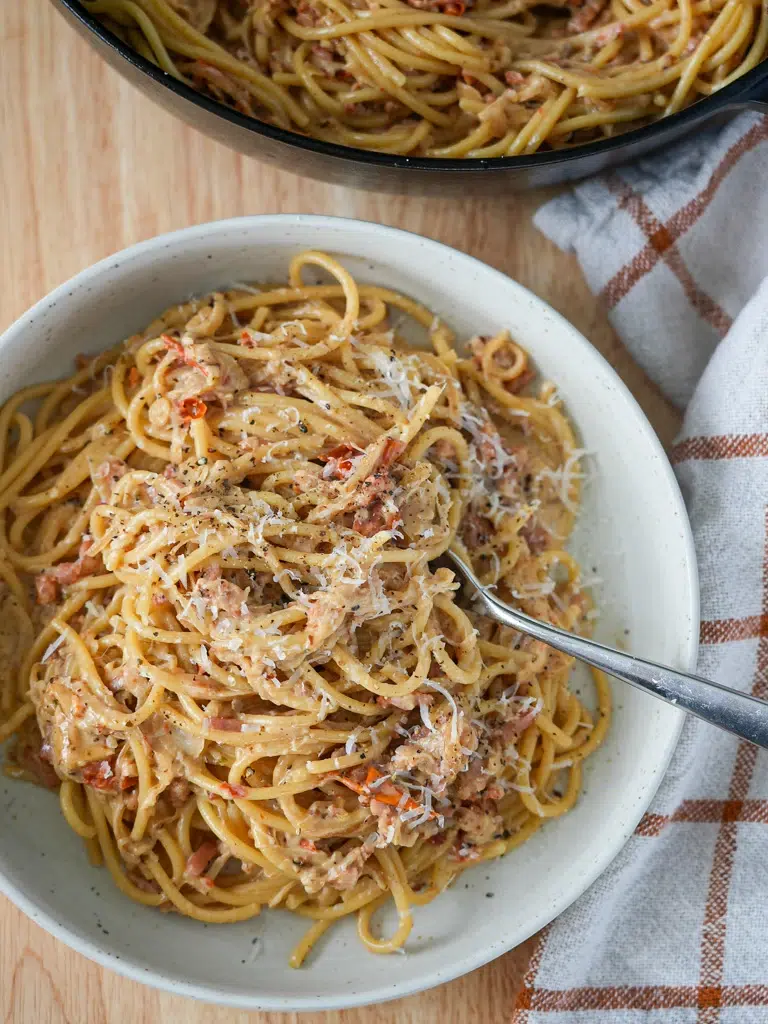
Used this pesto in the pesto pasta salad, both were delish!
Nicole says:
Really happy you enjoyed the pesto and the salad, Emma! Making your own pesto is much better than store-bought, isn’t it! Thanks for the rating too. Nic x
Sophie says:
Love this pesto recipe. I halved it as it’s all the basil/parsley (I used 1/2 basil, 1/2 parsley) I had. Easy and delicious!
Nicole says:
Really glad this worked so well for you, Sophie … especially with the ingredients you had on hand! Having a good pesto recipe is essential! Nic x
michelleviselli says:
This is the nicest pesto I’ve ever tasted. Such a great way to use the excess basil leaves from our plants. It’s quick & easy to make. The longest part is picking the 2 cups of basil leaves but even that is easy. We love it on chicken, pasta & even make a pesto pizza. Delicious.
Nicole says:
Oh this is so wonderful to hear – Thank you so much for taking the time to comment and rate the recipe. It really does mean so much to me. We absolutely love this recipe and I’m so pleased you love it too! x