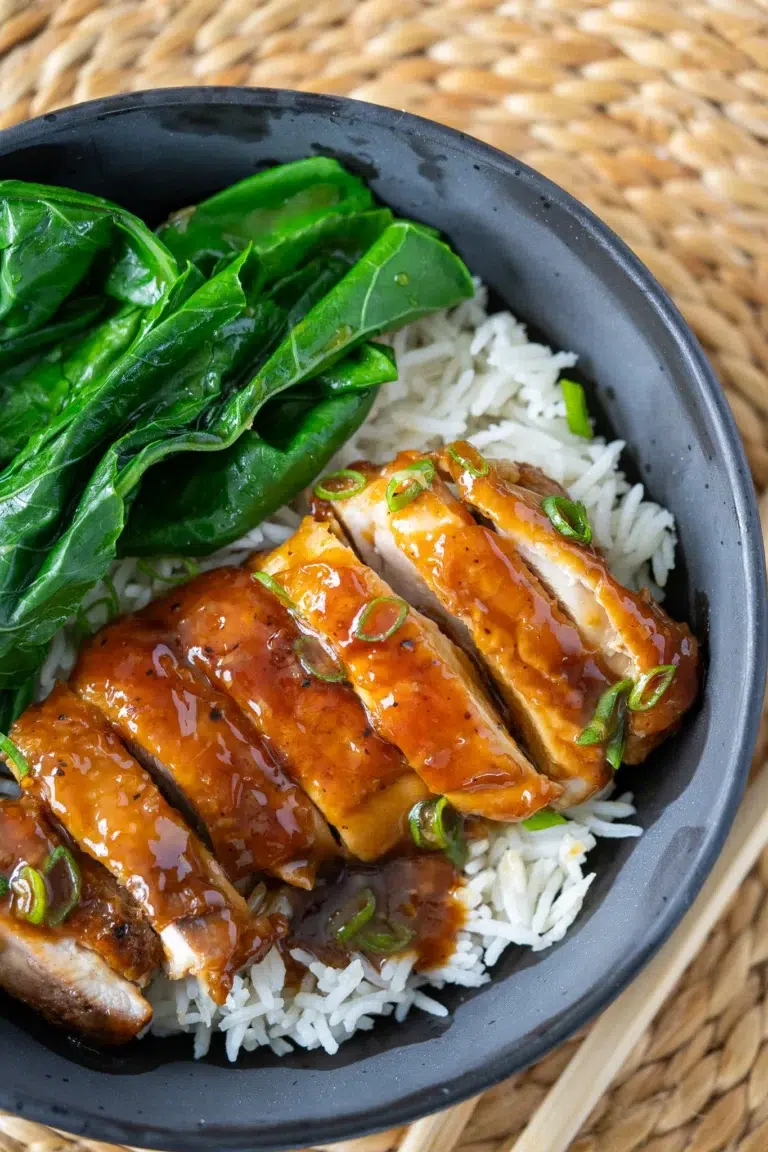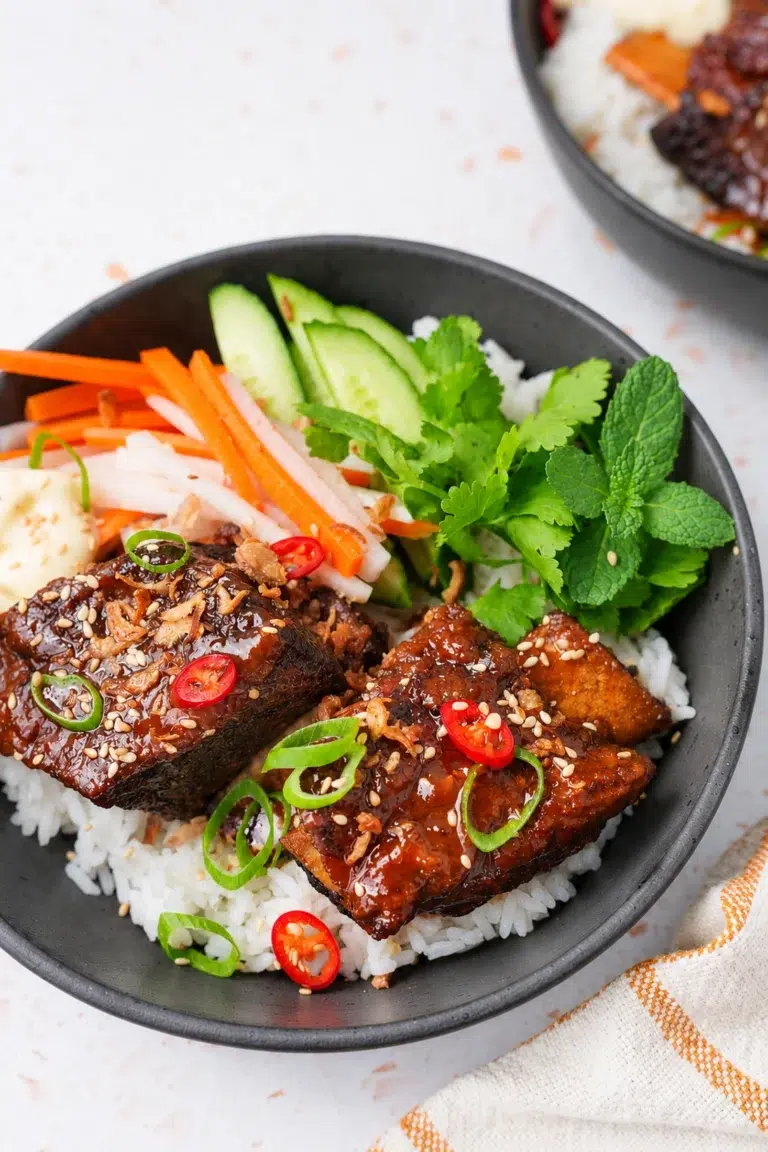




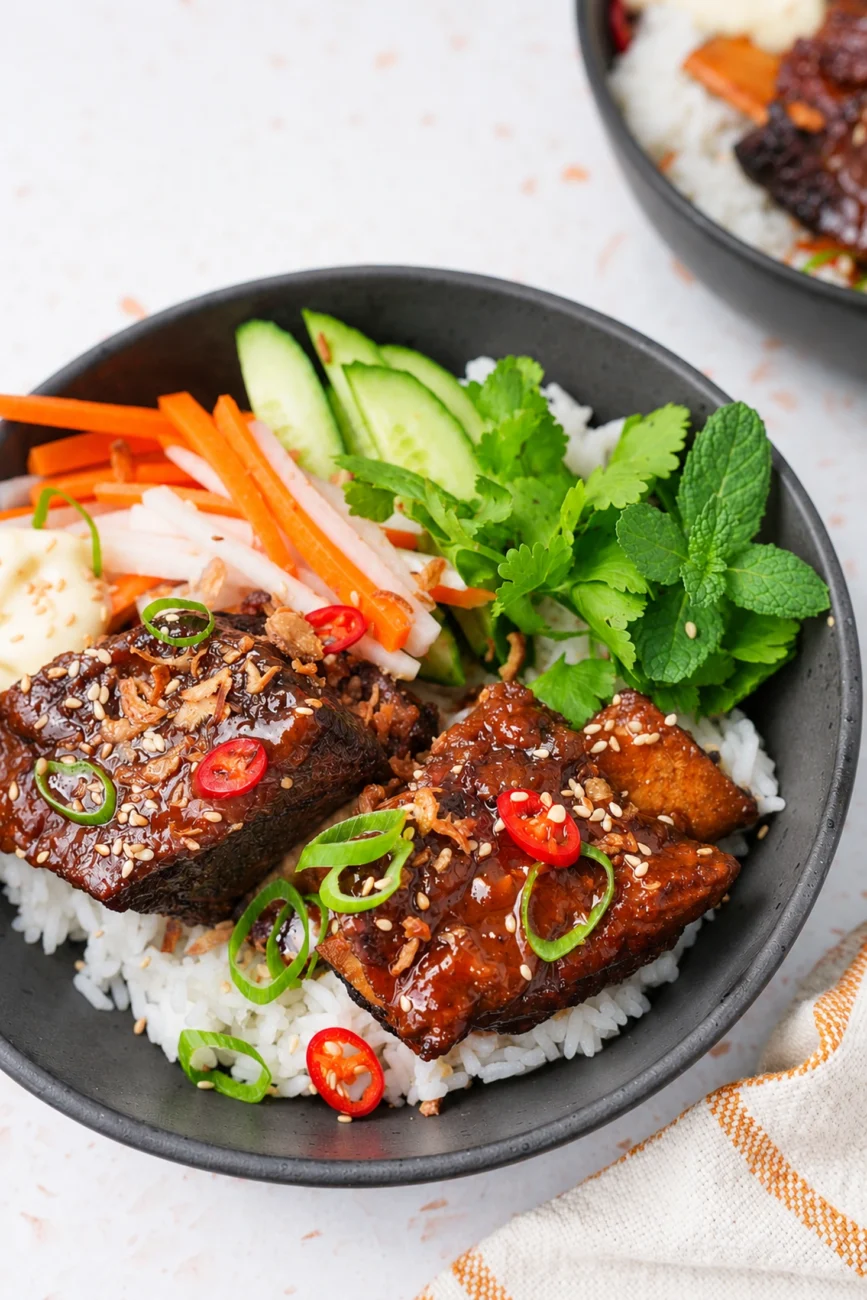
Fall-apart miso beef short ribs, all the little sides and plenty of sauce for the rice. We’re staying in.
I love a good recipe for beef short ribs. It’s one of those ingredients that feels really luxurious but is actually really simple to work with at home. Very little prep, a few hours in the oven, and you have beautiful, melt-in-the-mouth beef with plenty of sauce to spoon over your rice. These Sticky Miso Beef Short Ribs have taken me a questionable number of attempts to get exactly where I wanted them. My family has eaten copious amounts of beef ribs. Luckily, they love them, because there has been a lot of “we’re having them again … I’ve just changed one thing”. 😂
The inspiration came from a meal that Heath (hubby) and I had at a Japanese restaurant in The Rocks in Sydney years ago, before we had kids. They served the beef with lettuce cups and all these little sides and sauces, and I absolutely loved it. It’s not even on their menu anymore, which tells you how long I’ve been thinking about this meal! I wanted my own version with that same balance of sweet and salty, fall-apart beef and enough beautiful pan sauce left for the rice. The sauce was important. We weren’t going through all this to have dry rice.
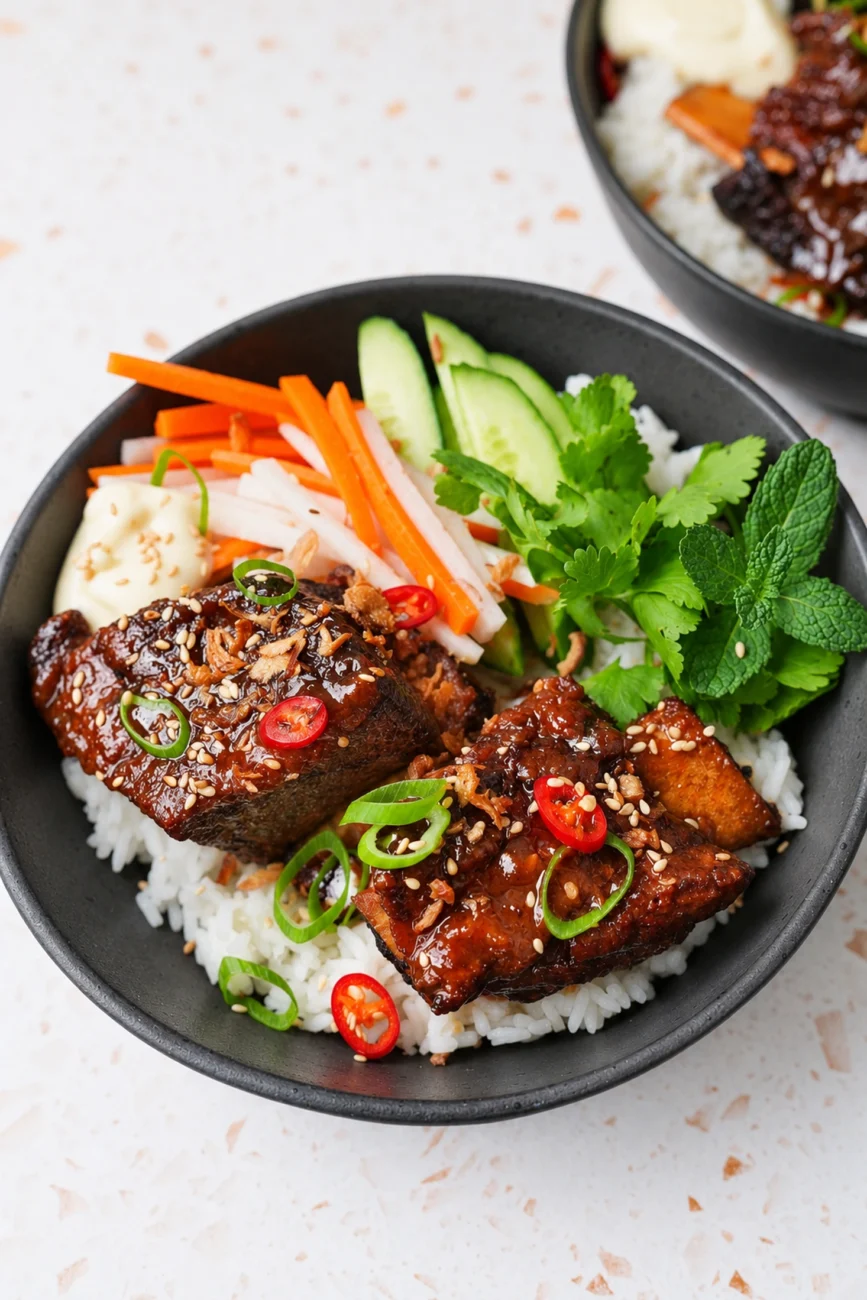
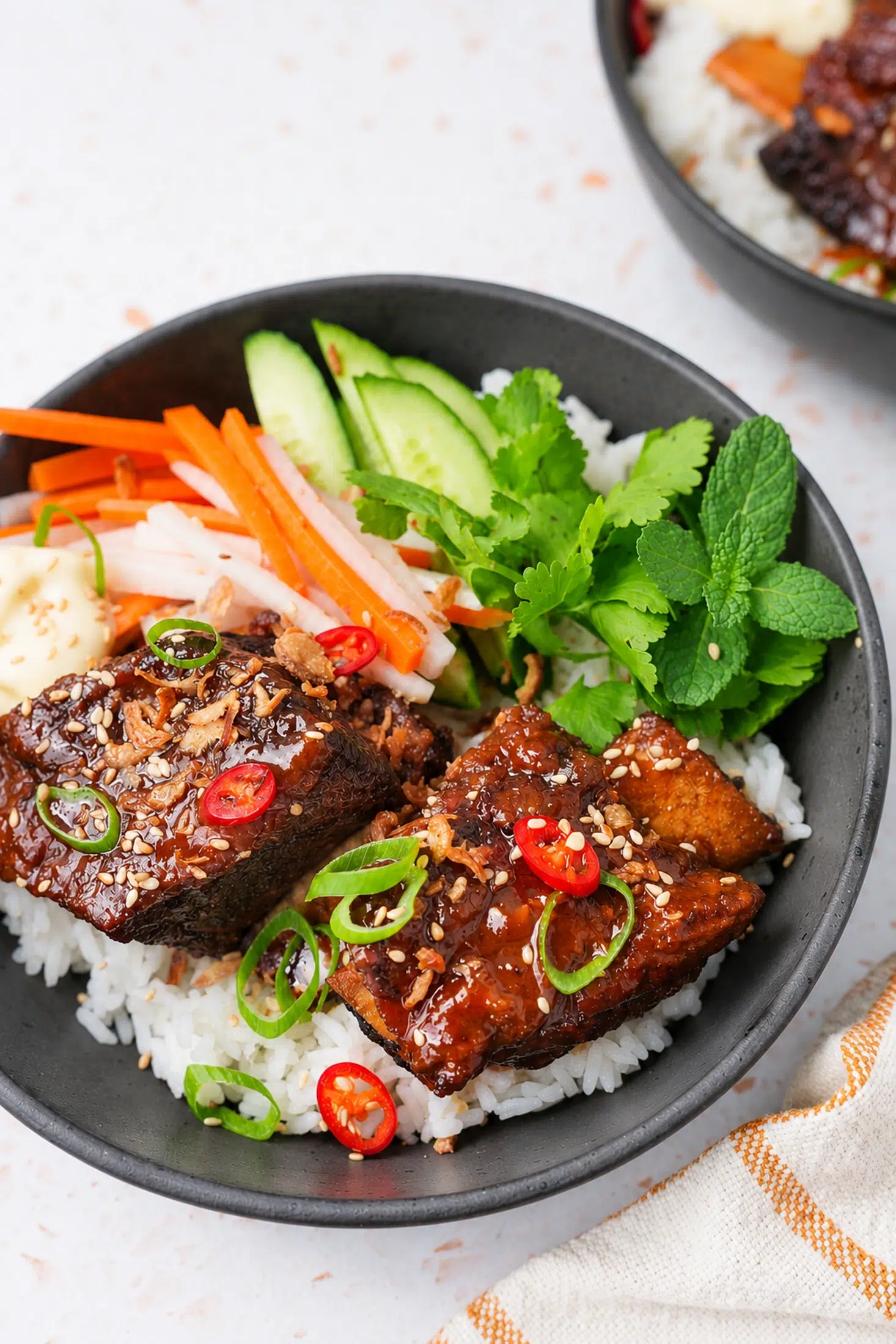
But my favourite part might actually be all the little sides. In the recipe you may spot an ingredient I haven’t really talked about on the blog before – daikon, which is a white radish. I didn’t used to cook with it much, but after having it at a local Vietnamese restaurant, I fell in love with it, asked a couple of questions and have barely stopped using it since – there’s now usually a batch of carrot and daikon pickle in my fridge. That crunchy, tangy pickle served with the rich beef is so good. Then there’s cucumber, fresh herbs, chilli, spring onion (scallion), store-bought crispy fried shallots and – because obviously we’re being indulgent here – a creamy sesame mayo. A little bit of everything in each mouthful … divine.
You can absolutely serve the ribs with rice and broccoli, or grab some bagged coleslaw and microwave rice and call it a day. But if you have the time, I really do think the sides are worth making. Beef ribs are a bit of a treat these days, and this is how I like to make a meal of them. The recipe is also lovely if you’ve got company, because everything can go in the middle of the table and everyone can load up with whatever sides and sauces they like.
This is a Sunday dinner at our place. I love having a day where we’re home, I’m pottering around and getting through the things I need to do, and these are slowly cooking in the oven. They require time, but very little attention – just a tightly covered pan and the occasional check to see if they need a splash of water. When I first started cooking, I never imagined I’d be making beef ribs at home. If that’s where you’re at, definitely give these a go. There’s no complicated technique here, and sitting down to a meal like this that you’ve made yourself, does feel pretty special.
What should I serve with Sticky Miso Beef Short Ribs?
I love serving these with rice to catch all that beautiful sauce, then something crunchy and tangy alongside to cut through the rich beef, and creamy sesame mayo. You don’t need to make every side listed here – although apparently I do. 😂 Here are plenty of options depending on what you have and how much you feel like doing.
Rice and noodles
- Steamed jasmine rice – My first choice. It soaks up the miso sauce without adding another flavour to the mix.
- Steamed basmati, long-grain or brown rice – All work well, so use what you normally have at home.
- Microwave rice – Absolutely. The beef has been cooking for hours, so the rice can take 90 seconds.
- Rice noodles – Serve the beef and sauce over cooked rice noodles, then add cucumber, fresh herbs and the pickle.
- Udon noodles – Their thick, chewy texture is lovely with the tender beef. Toss with a little of the pan sauce just before serving.
- Soba noodles – Serve warm with the beef, or cool alongside cucumber, spring onion (scallion) and sesame dressing.
Crunchy salads and pickles
- Carrot and daikon pickle – My favourite with this recipe. That tangy crunch makes such a difference alongside the rich beef, and you can prepare it ahead.
- Carrot-only pickle – A lovely option if you can’t find daikon. Use the pickle recipe, replacing the daikon with extra carrot.
- Cucumber – Plain slices are all you need, or use ribbons made with a vegetable peeler. Cool, crunchy and very little effort.
- Asian-style cucumber salad – A cucumber salad with rice wine vinegar and sesame is delicious here. Keep the dressing light because there’s already plenty of sauce on the beef.
- Cabbage slaw – Finely shredded cabbage and carrot with spring onion (scallion) and a light rice wine vinegar dressing. Add the sesame mayo at the table.
- Bagged coleslaw mix – An excellent shortcut. Serve it undressed for crunch, or toss with a little sesame mayo just before eating. If you’d prefer to make your own, check out my BEST Coleslaw Recipe (only 10 minutes to make!).
- Leafy green salad – Lettuce, cucumber and a simple tangy dressing are enough. It doesn’t need to be complicated.
- Pickled ginger or sliced red radishes – Lovely little extras if you’re putting together a help-yourself spread.
Vegetables
- Steamed broccoli or broccolini (tenderstem broccoli) – One of the easiest ways to make this a complete dinner. Spoon a little beef sauce over the top.
- Bok choy or pak choy – Steam or quickly stir-fry, keeping the stems slightly crisp.
- Green beans – Steamed, blanched or quickly tossed in a pan with a little garlic.
- Snow peas (mangetout) or sugar snap peas – Lovely for crunch. Blanch briefly rather than cooking until soft.
- Edamame – Shelled edamame are easy to add to rice bowls and need very little preparation.
- Stir-fried greens – Choy sum, Chinese broccoli (gai lan) or spinach with a little oil and garlic. Go lightly on extra soy sauce, as the beef sauce already brings saltiness.
- Roasted cauliflower or pumpkin (winter squash) – Good if you’d like something more substantial. Keep the seasoning simple and serve with a fresh or pickled side too.
Fresh herbs, sauces and crunchy toppings
- Fresh mint and coriander (cilantro) – I love both with this meal. Put a handful on the table and let everyone add their own.
- Spring onion (scallion) – Finely sliced and scattered over the beef or rice.
- Fresh chilli or chilli oil – Serve separately so everyone can choose their own level of heat.
- Crispy fried shallots – Add just before eating so they stay crisp.
- Toasted sesame seeds – A simple finishing touch if you have them.
- Creamy sesame mayo – My favourite sauce to serve alongside. A little with the beef, rice and tangy pickle is such a good combination.
- Lime wedges – For anyone who likes an extra squeeze of freshness.
Other ways to serve it
- Lettuce cups – Pull the beef from the bones and pile it into butter lettuce or baby cos (baby romaine) leaves with rice, pickle, cucumber and sesame mayo.
- Loaded rice bowls – Rice on the bottom, then beef, sauce, crunchy vegetables, herbs and whatever toppings everyone likes.
- A sharing platter – Serve the ribs and sauce in the middle of the table, with rice, pickle, cucumber, herbs and sesame mayo in separate bowls. This is how I like serving it when we have company.
- The very low-effort version – Microwave rice, bagged slaw and the sesame mayo. Still a dinner I’d be very happy to sit down to.
What type of beef short ribs should I buy?
I recommend buying the short, chunky “English-cut” beef short ribs (also known as Jacob’s Ladder in the UK) rather than the long flanken-style ribs (Argentinian-style/Korean-style). The shorter cut is meatier, easier to fit into the pan, and generally cooks more evenly, which makes it ideal for slow braising. Look for thick, meaty, bone-in beef short ribs, ideally cut into individual pieces with one bone in each. Choose pieces of a similar size so they cook more evenly.
How do I know when beef short ribs are cooked?
Start checking after 2½ hours, as the timing will depend on the size of your ribs and the pan you’re using. A fork should slide into the thickest part easily, and the meat should pull apart with very little effort. If it still feels firm or holds together stubbornly, cover the pan tightly and keep cooking, checking again in 20–30 minutes.
Why are my beef short ribs still tough?
They usually need more time. Short ribs need slow-cooking to soften, so being able to push a fork into the meat isn’t quite enough – it should also pull apart easily. Check there’s still sauce in the pan, add a splash of water if needed, then cover tightly and return them to the oven.
Can I make Sticky Miso Beef Short Ribs in the slow-cooker?
Yes! These beef short ribs are well suited to the slow-cooker. The beef becomes beautifully tender with very little hands-on cooking. You’ll just need to reduce the water, as the slow-cooker retains much more moisture than the oven.
- Brown the ribs – Follow step 2 of the recipe, browning the ribs in a large frying pan over medium–high heat. Transfer to the slow-cooker.
- Prepare the sauce – Whisk together the garlic, ginger, miso paste, brown sugar, mirin, soy sauce, rice wine vinegar and 375 ml (1½ cups) of boiling water instead of the 750 ml (3 cups) specified in the oven method. Pour a little of the mixture into the frying pan, scraping up any browned bits, then transfer everything to the slow-cooker.
- Slow-cook – Arrange the ribs in the slow-cooker, turning to coat in the sauce. Cover and cook on Low for 8–9 hours or High for 5–6 hours, or until the beef is very tender and pulls apart easily with a fork. Larger ribs may need additional cooking time, if they aren’t tender at the end of the cooking time, cook them for longer (in 30-minute intervals, checking in between).
- Finish the sauce – Carefully transfer the ribs to a plate. Skim any excess fat from the cooking liquid, then transfer the sauce to a saucepan. Bring to a gentle simmer. If the sauce is too thin, simmer briefly to reduce, tasting as you go. If the flavour is already rich and well balanced, use the optional cornflour (cornstarch) slurry from the recipe to thicken it without concentrating the miso and soy sauce further.
- Serve – Return the ribs to the finished sauce, turning gently to coat. Serve with steamed jasmine rice, carrot and daikon pickle, cucumber, creamy sesame mayo and your favourite toppings, as directed in the original recipe.
Tip: There’s no need to turn the ribs during slow-cooking. Keep the lid closed to retain the heat and moisture.
If you enjoyed Sticky Miso Beef Short Ribs, I think you’ll love:
- Red Wine Braised Short Ribs Recipe – Restaurant-style red wine braised beef short ribs – slow-cooked, low effort, and worth staying in for. Only 20 minutes of prep from you, then let the oven do the rest.
- Red Wine Lamb Shanks Recipe – In this comforting and flavour-packed dish, lamb shanks are cooked with vegetables in a delicious tomatoey sauce flavoured with garlic and herbs and optional red wine until the meat is fall-apart tender.
- Easy Oven-baked BBQ Pork Ribs Recipe – These oven-baked pork ribs are wrapped in baking (parchment) paper and foil so they cook in their own juices, guaranteeing tender meat every time. Glazed with a quick homemade BBQ sauce, they’re foolproof, family-friendly and perfect for entertaining.
- The BEST Beef Pot Roast Recipe – Fall-apart beef, tender vegetables and a rich, glossy gravy, this classic oven-braised pot roast is the ultimate low-effort comfort food – and most of the cooking time is hands-off.
- Beef Casserole Recipe – This beef casserole with potatoes and carrots is comfort food at its best, perfect to make ahead for busy weeknights or to indulge in during a cosy weekend. Just 10 minutes of prep time, then the stove does the rest of the work.
Sticky Miso Beef Short Ribs
Share Pin Recipe PrintIngredients
- 6 bone-in beef short ribs (see note 1)
- 2 tbsp neutral oil or light olive oil
- 4 garlic cloves, finely grated
- 1 x 4 cm (1½ inch) piece of fresh ginger, finely grated
- 100 g (⅓ cup) white miso paste
- 55 g (¼ cup) firmly packed brown sugar
- 60 ml (¼ cup) mirin
- 1 tbsp all-purpose soy sauce
- 1 tbsp rice wine vinegar
- 750 ml (3 cups) boiling water, plus extra as needed during cooking
- 125 ml (½ cup) boiling water
- 2 tsp caster (superfine) sugar
- ½ tsp sea salt flakes
- 80 ml (⅓ cup) rice wine vinegar
- 1 large carrot, peeled and cut into thin matchsticks
- 1 x 8 cm (3¼ inch) piece daikon, peeled and cut into thin matchsticks (see note 2)
- 125 g (½ cup) whole-egg mayonnaise
- 2 tsp toasted sesame oil
- 1 tsp rice wine vinegar
- 1½ tsp water, to loosen
- 1 tsp cornflour (cornstarch) mixed with 2 tsp cold water per 250 ml (1 cup) cooking sauce
- Steamed jasmine rice
- Sliced cucumber
- 5 g (½ cup) loosely packed fresh coriander (cilantro) leaves
- 5 g (⅓ cup) loosely packed fresh mint leaves
- 2 spring onions (scallions), finely sliced
- Finely sliced fresh red chilli (optional)
- Crispy fried shallots
Instructions
- Preheat the oven – Preheat the oven to 180°C (350°F) (160°C/325°F fan-forced). Pat the beef ribs dry with a paper towel.
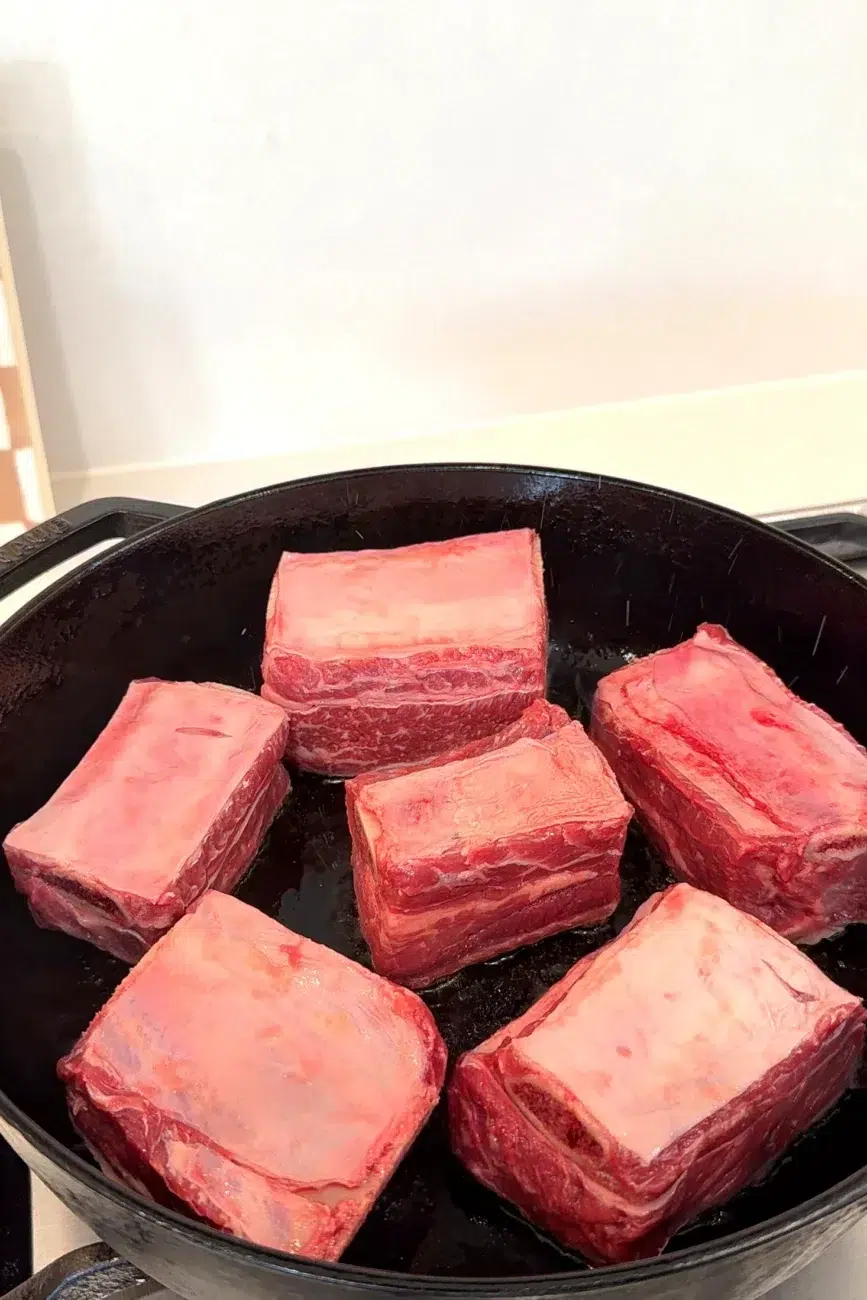
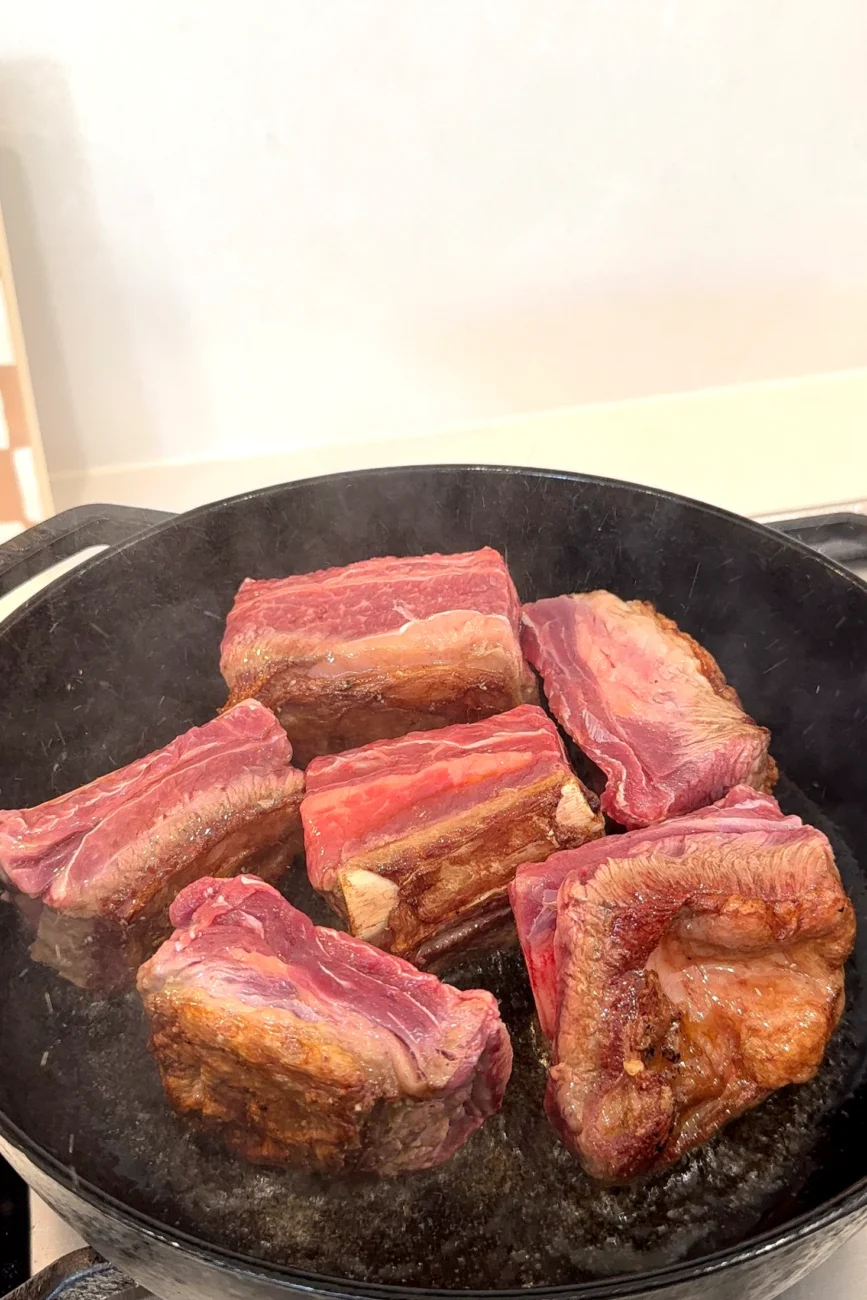
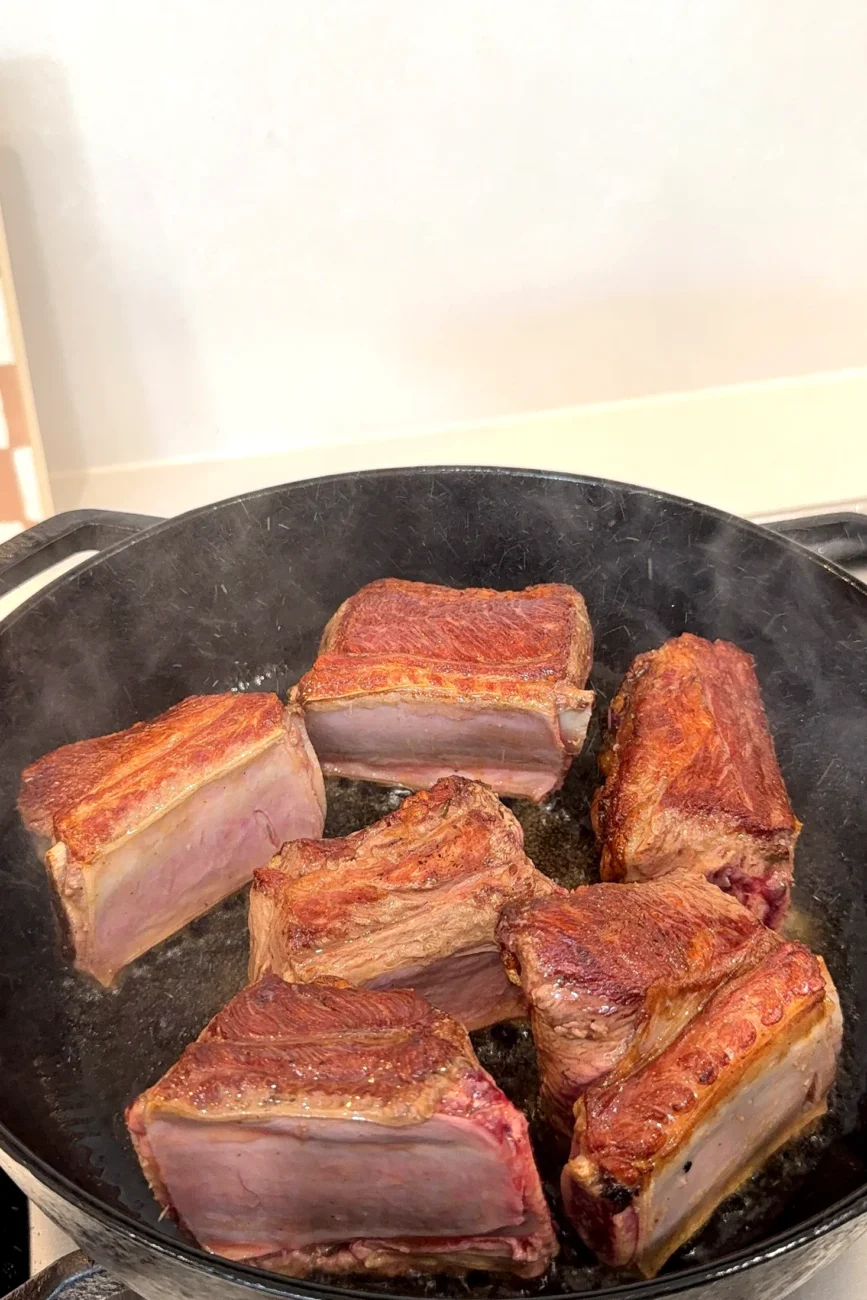
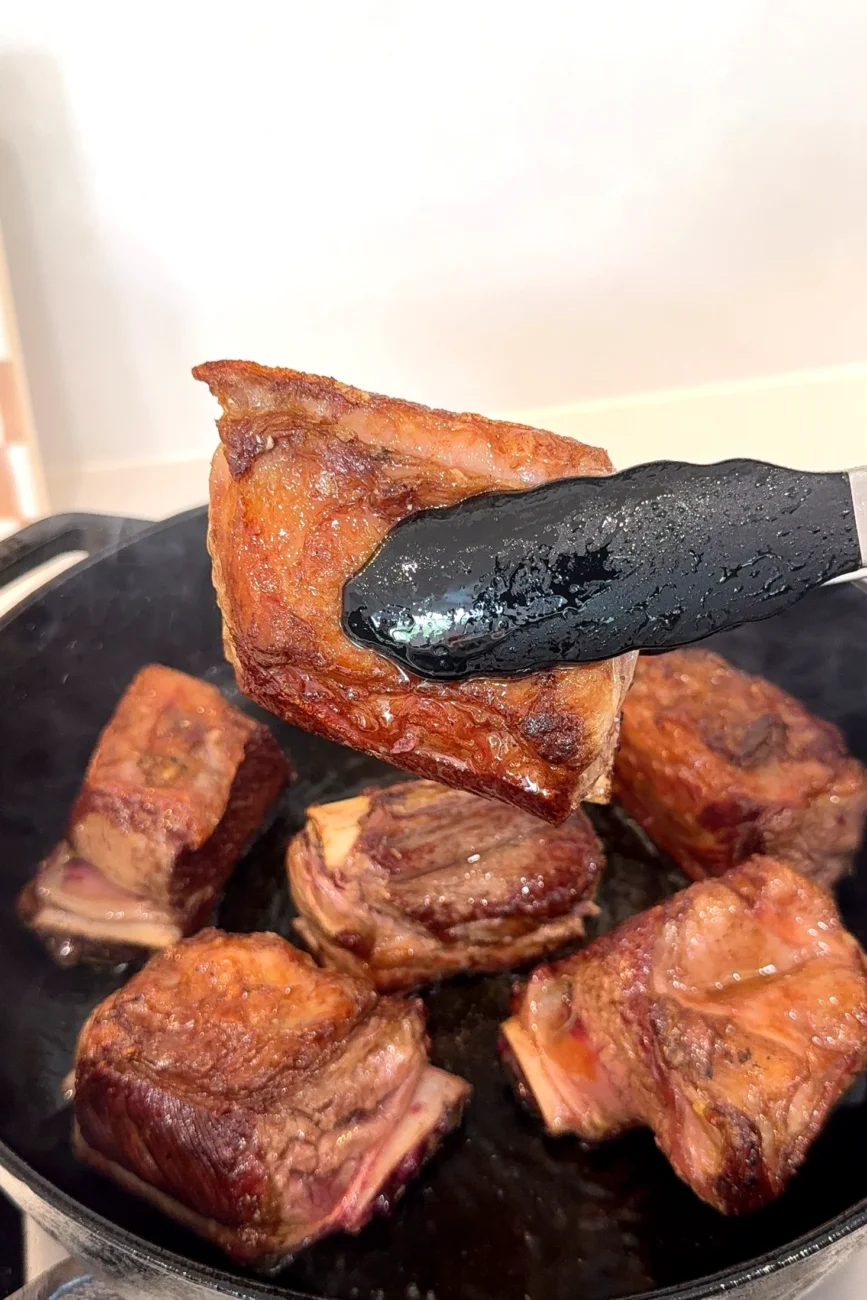
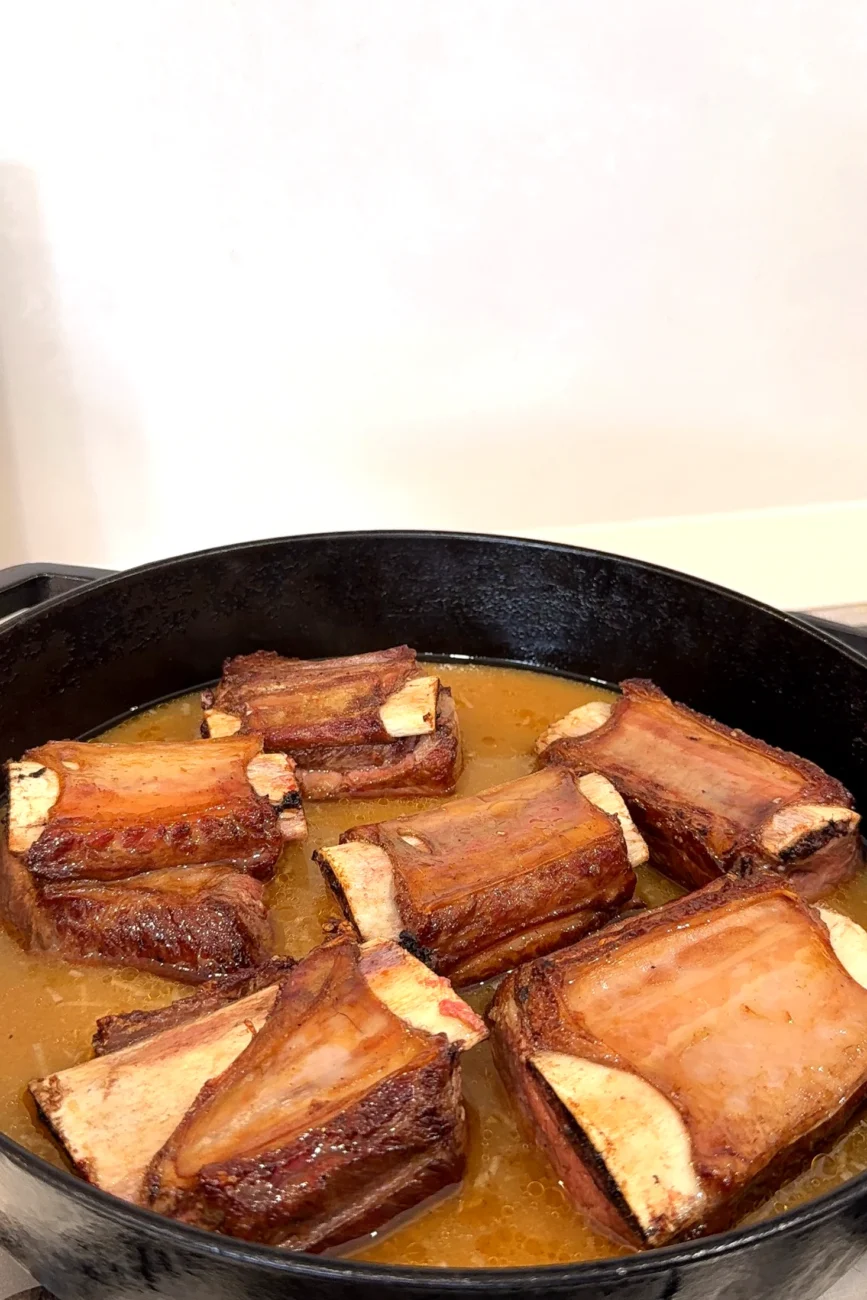
- Brown the ribs – Heat the oil in a large heavy-based flameproof casserole dish over medium–high heat. Brown the ribs in batches on all meaty sides, then transfer to a plate. Spoon out some of the excess fat if desired, leaving 2 tablespoons. Turn the heat off.
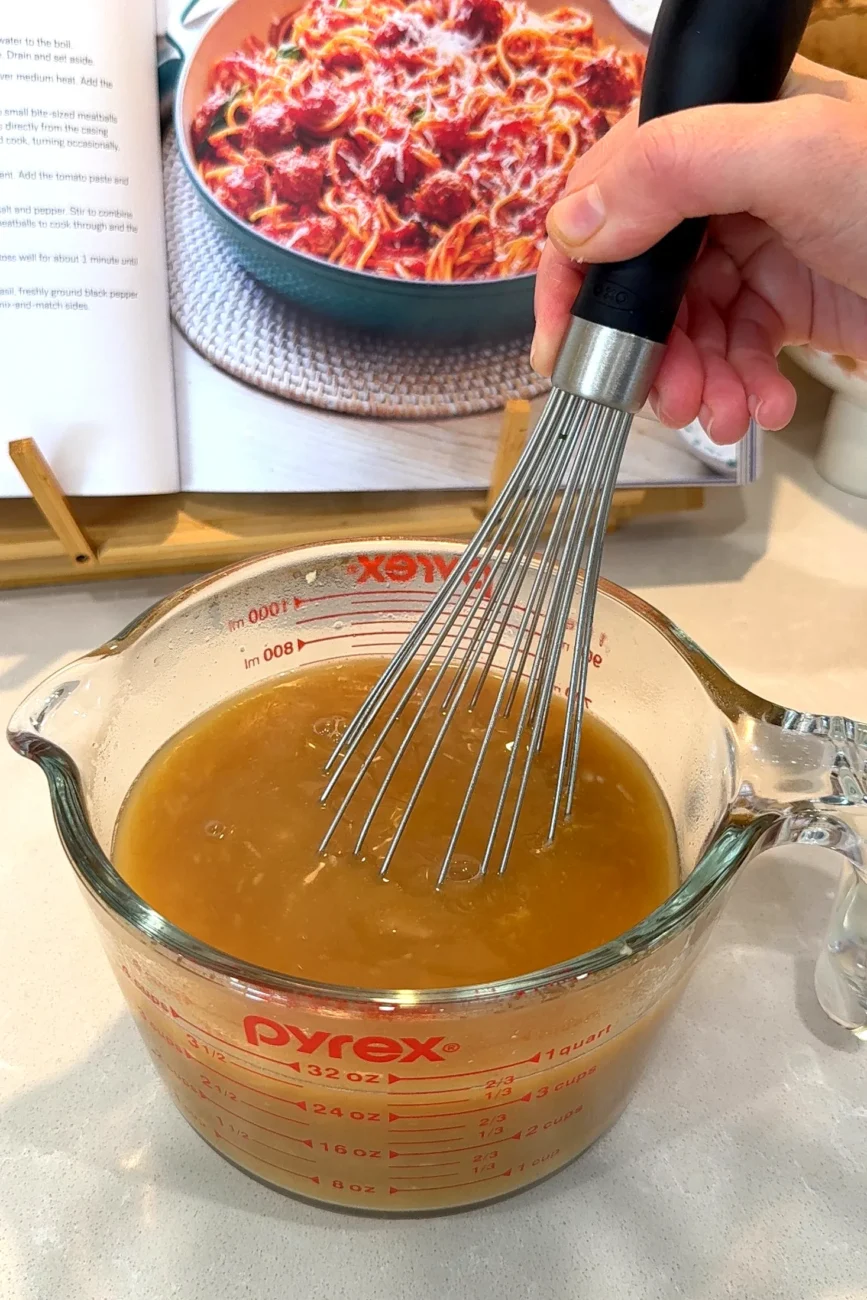
- Add the braising mixture – Whisk together the garlic, ginger, miso, brown sugar, mirin, soy sauce, rice wine vinegar and water until combined. Pour into the casserole dish and stir, scraping up any browned bits from the bottom. Return the ribs and any resting juices to the dish, arranging them in a snug single layer. Bring to a simmer.
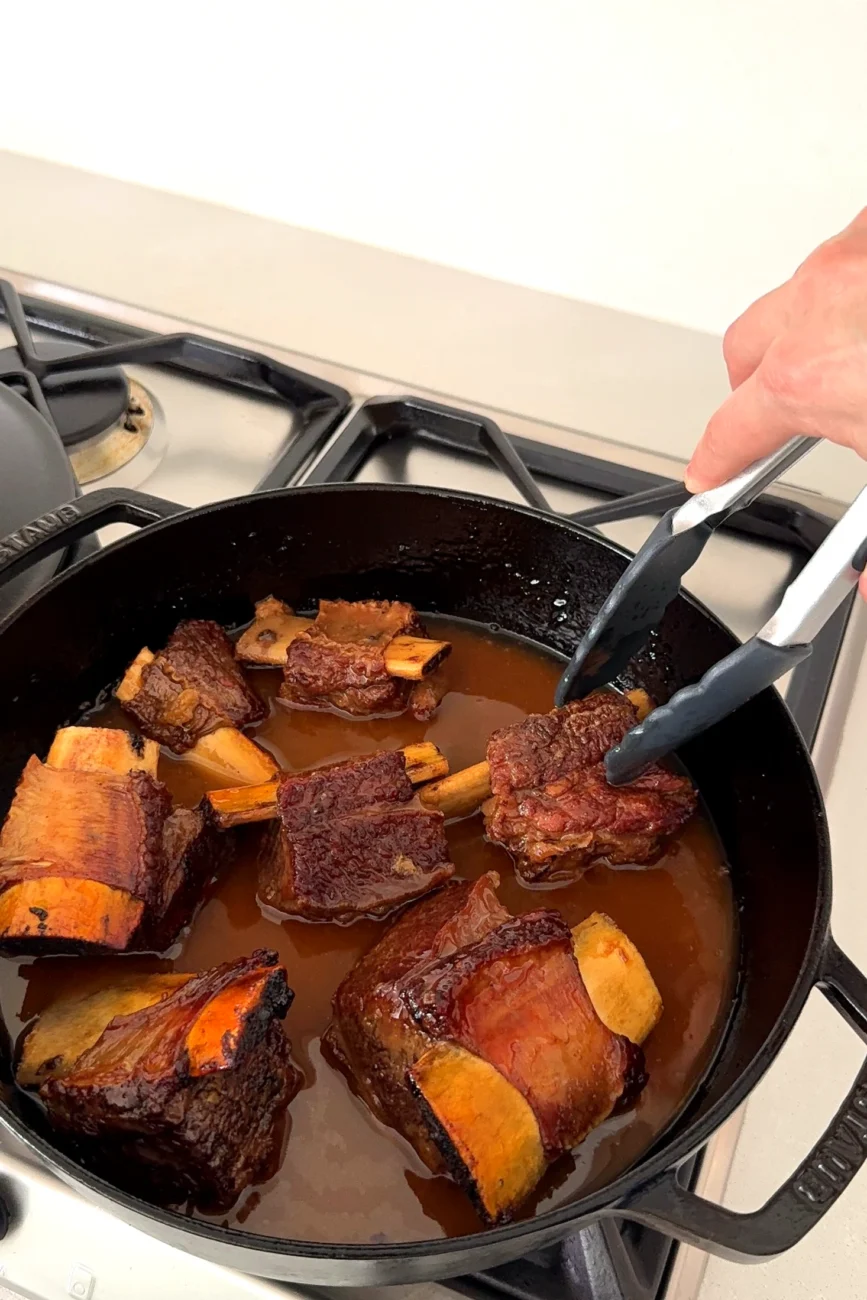
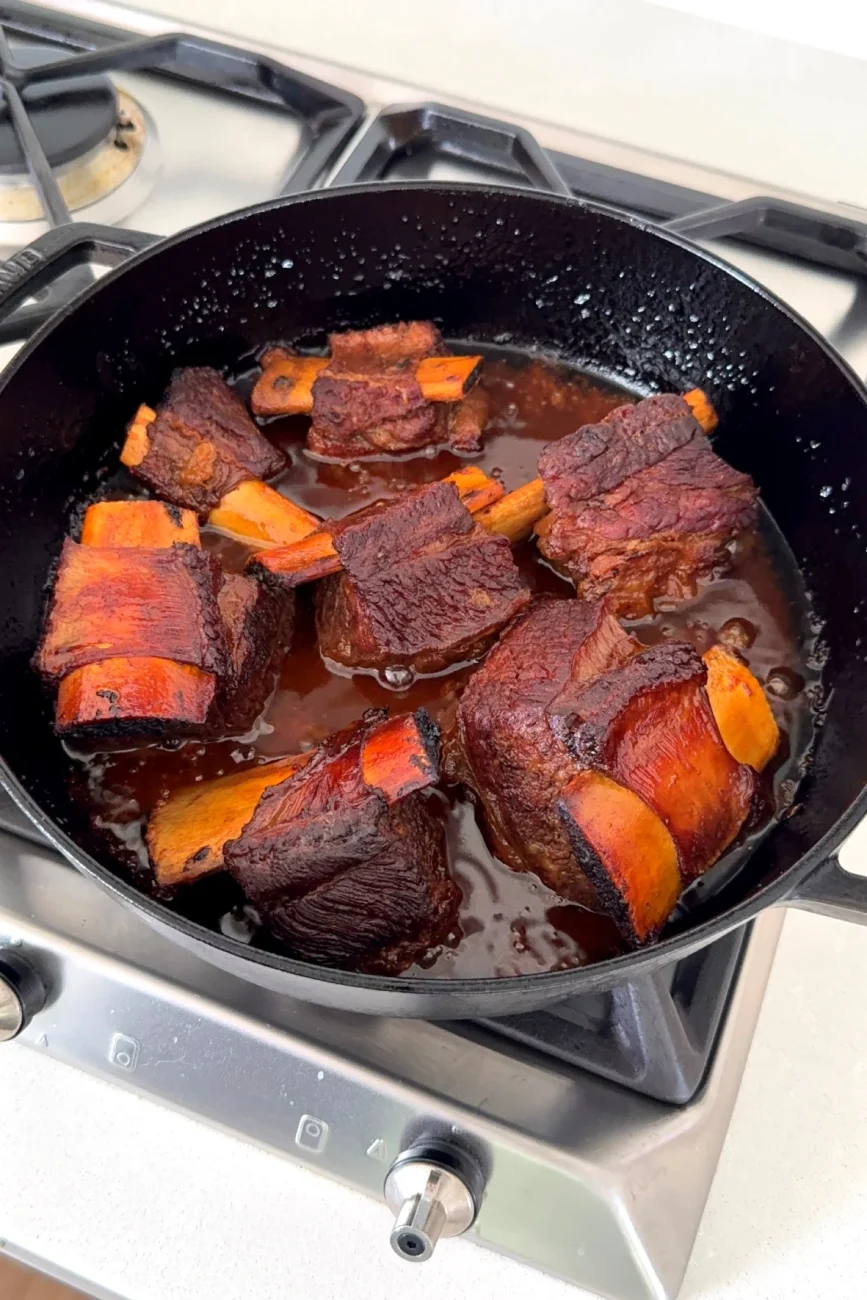
- Slow-cook – Cover tightly with a lid, or baking (parchment) paper and a tight double layer of foil, and transfer to the oven. Cook for approximately 2½–3½ hours, or until very tender, turning the ribs after approximately 1½ hours. Start checking the meat at the 2½-hour mark, as the cooking time will depend on the size and thickness of your ribs. A fork should slide into the thickest part of the meat easily, and the meat should pull apart with very little resistance. If it is still firm, cover tightly and continue cooking, checking every 20–30 minutes. Larger ribs may take longer. Check the liquid when turning the ribs and at each tenderness check. There should still be a pool of sauce around the ribs that flows when stirred. If the sauce has become thick and paste-like, is starting to stick around the edges, or has reduced enough to leave patches of the base dry, gently stir in 60 ml (¼ cup) of water. Add another splash if needed – the sauce should loosen and flow around the ribs again. Cover tightly and continue cooking. (See note 3.) To make in a slow-cooker, see the FAQ section above for all the details.
- Make the quick pickle – While the beef is cooking, combine the boiling water, sugar and salt in a heatproof bowl or jar. Stir until dissolved, then add the rice wine vinegar. Add the carrot and daikon, pressing them into the liquid so they are submerged. Set aside to cool, then cover and refrigerate until ready to serve. Allow at least 30 minutes for the vegetables to pickle, although 1–2 hours will give a more developed flavour. (See note 2.)
- Make the creamy sesame mayo – Combine the mayonnaise, sesame oil and rice wine vinegar in a small bowl. Stir until smooth, then gradually add the water until the mayo is thin enough to drizzle from a spoon. Cover and refrigerate until ready to serve.
- Finish the sauce – Carefully transfer the tender ribs to a plate and loosely cover to keep warm. Skim any excess fat from the surface of the sauce. The finished sauce should be glossy and pourable, coating a spoon while still flowing easily. Taste before reducing further. If it is too thick or tastes too concentrated, stir in a little water, 1 tablespoon at a time, until you are happy with the flavour and consistency. If it is too thin and the flavour is balanced, simmer gently on the stovetop until slightly thickened. If it is already rich and well seasoned, use the cornflour slurry below rather than reducing it further.
- Thicken if needed – For a thicker sauce without further reduction, stir the cornflour and water to combine, then gradually stir it into the gently simmering sauce. Simmer for 1–2 minutes, stirring, until thickened. Use the ratio listed in the ingredients as a guide, adding only as much slurry as needed.
- Serve – Return the ribs to the sauce and gently spoon it over to coat. Divide the steamed jasmine rice among serving bowls and top with the beef and sauce. Add the sliced cucumber and a small pile of drained carrot and daikon pickle. Drizzle with the creamy sesame mayo, then scatter over the coriander, mint, spring onion, fresh chilli (if using) and crispy fried shallots. Serve immediately.
Nutrition information
Nutritional information on this site is calculated using Foodworks Professional, the nutrition analysis software trusted by dietitians, researchers and food manufacturers across Australia and New Zealand. Disclaimer re gluten-free and dairy-free recipes.