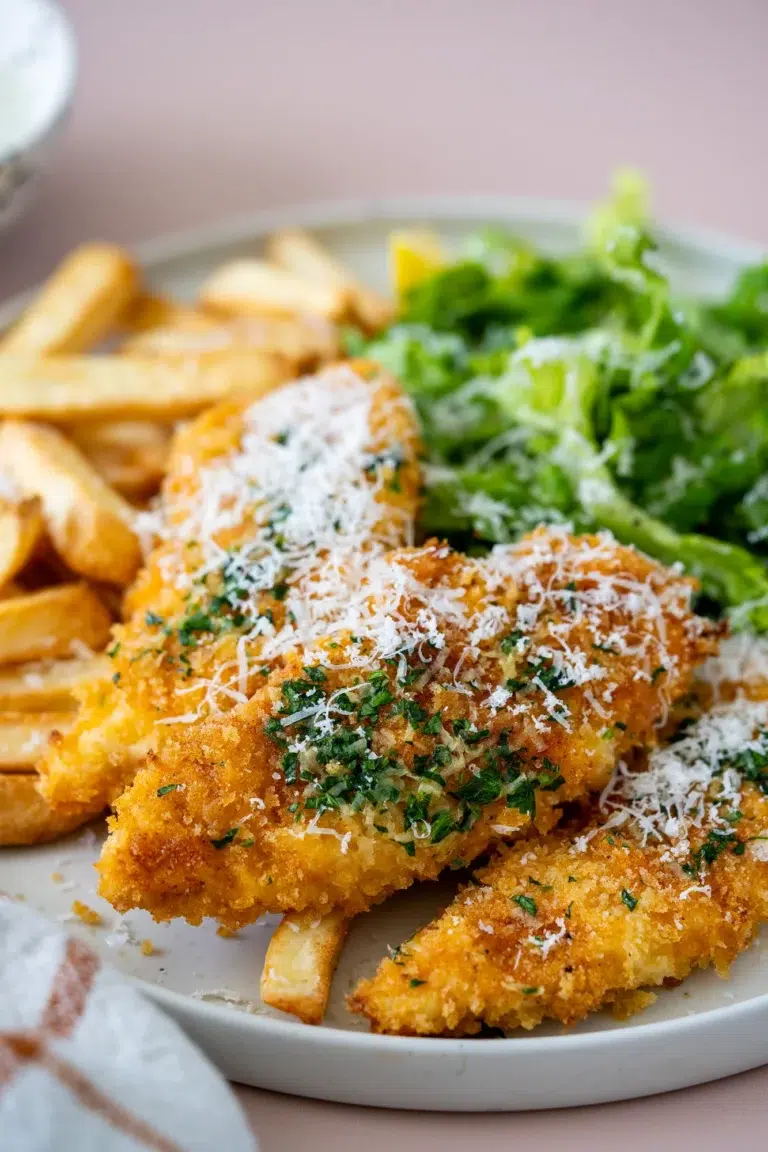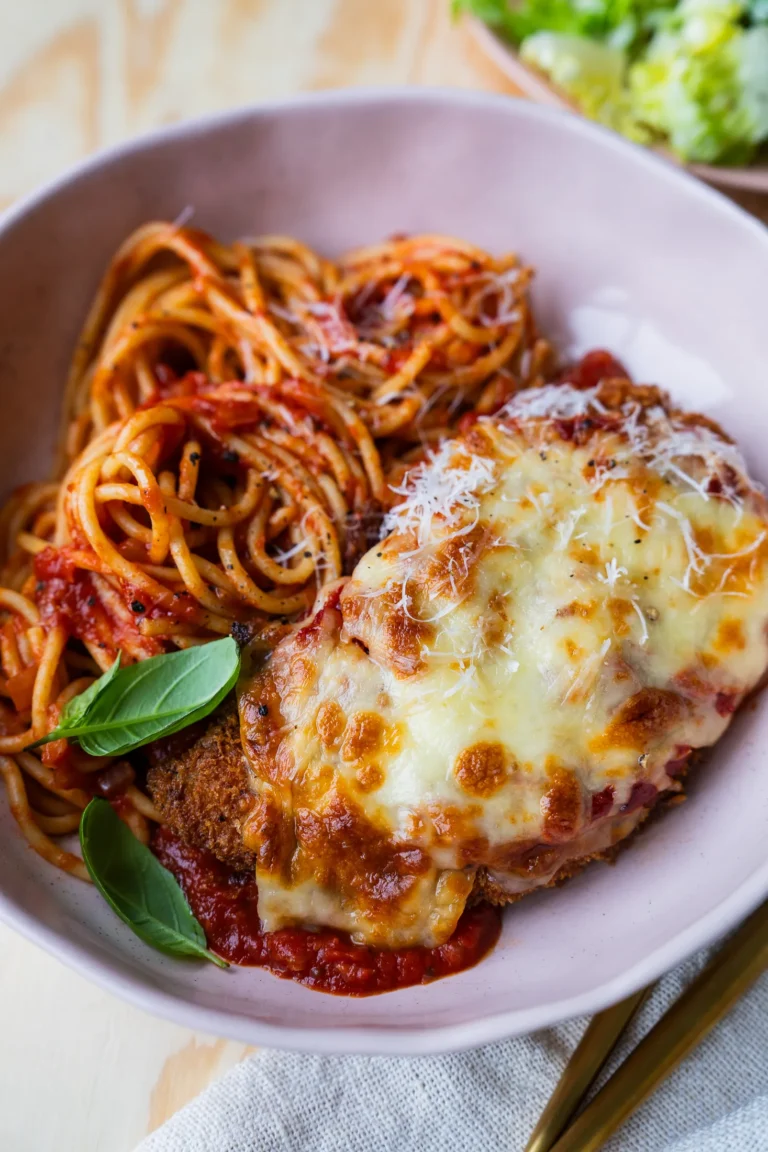



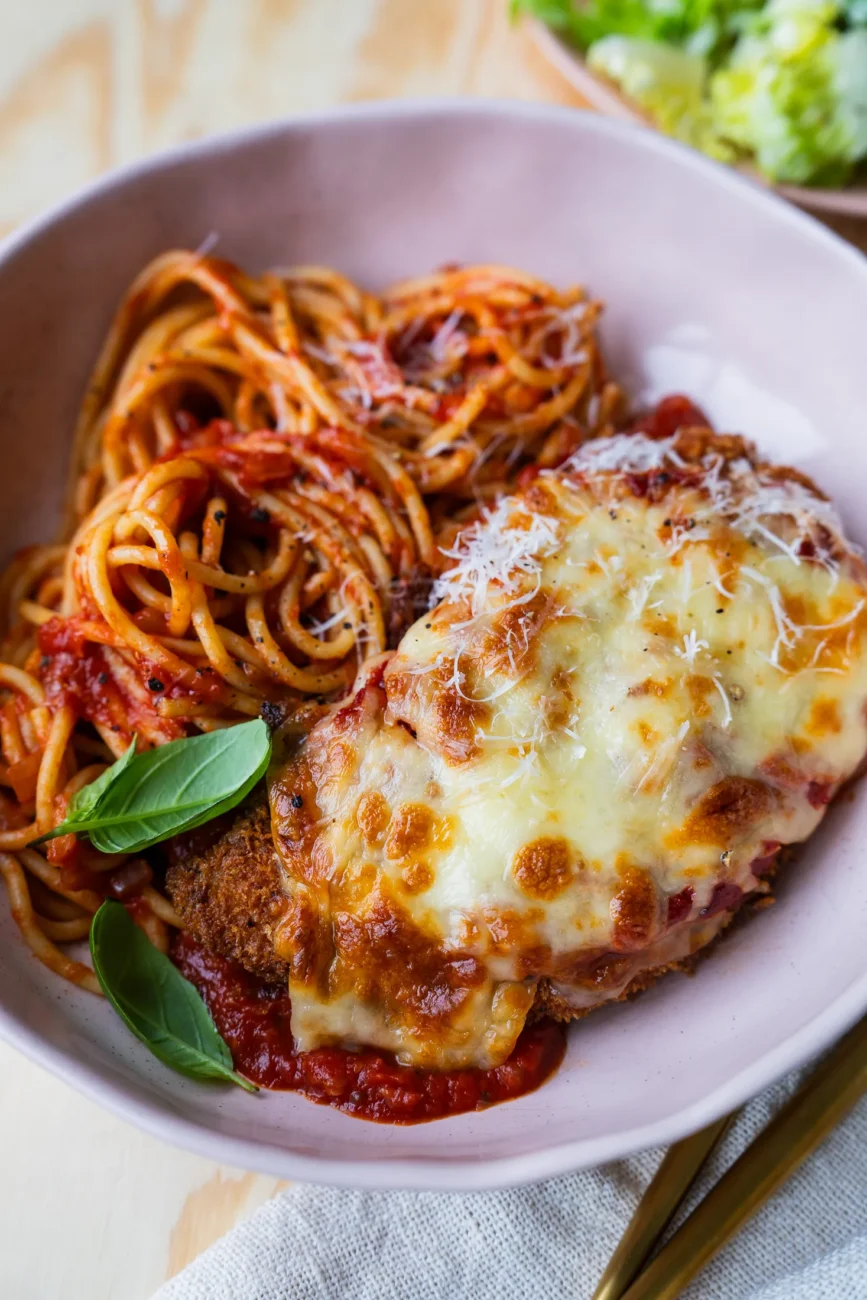
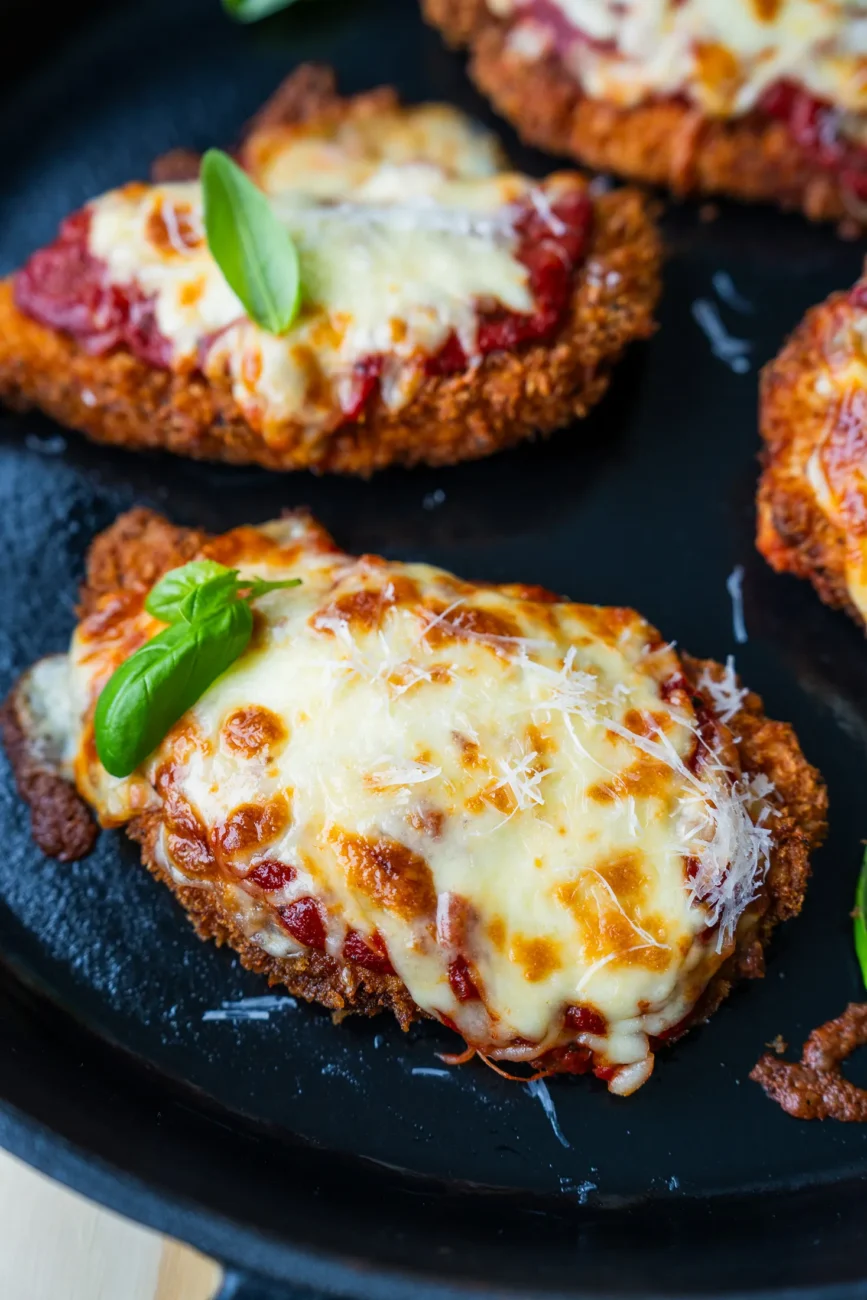
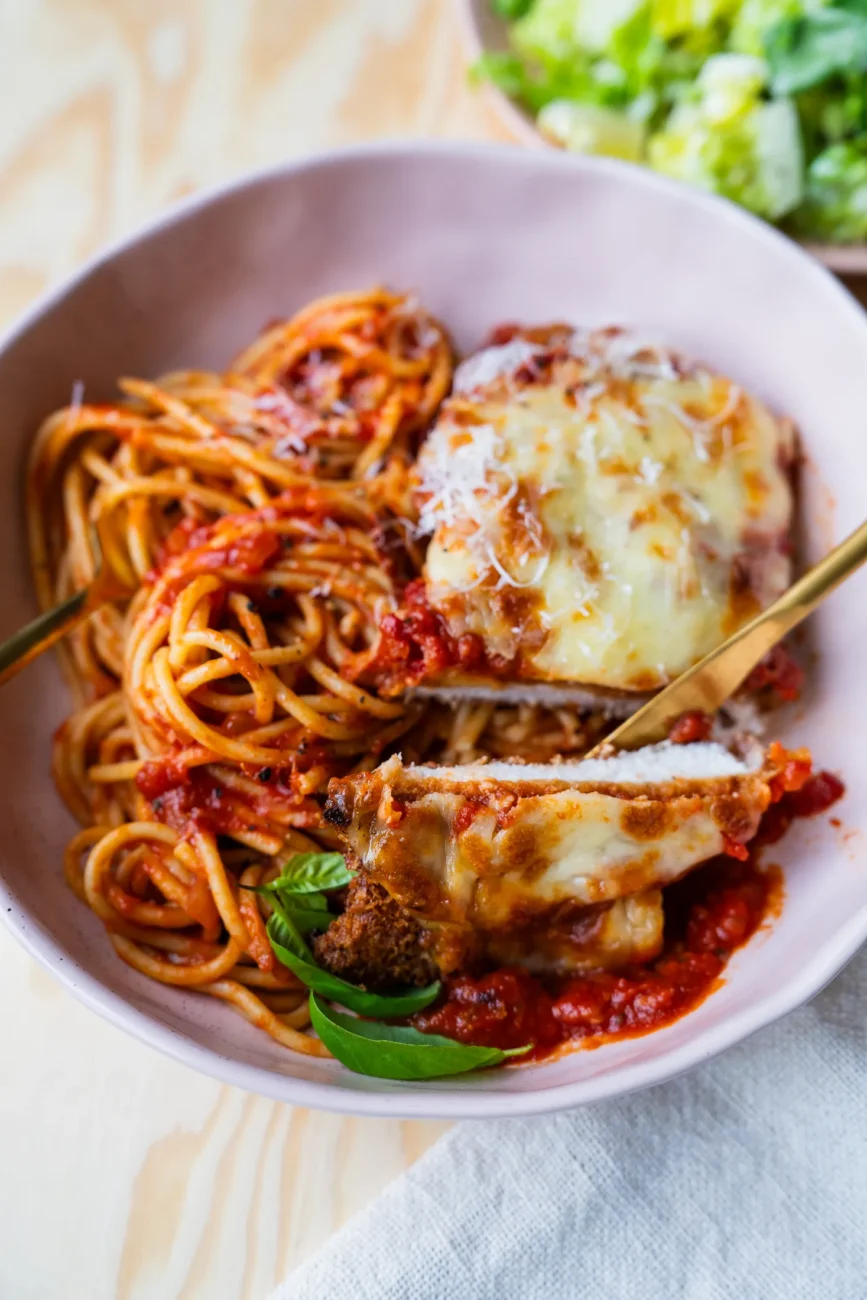
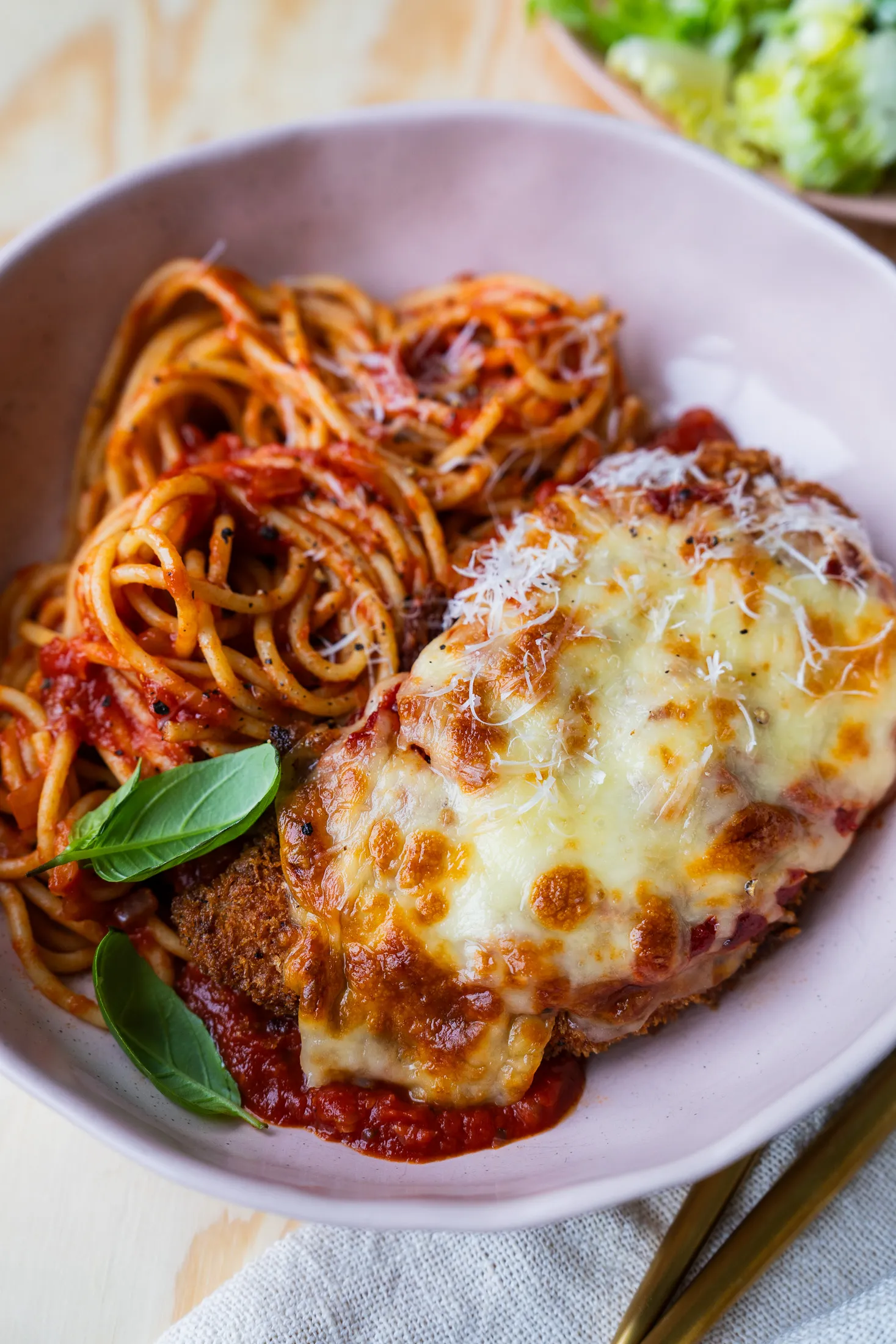
Golden, crispy parmesan-crumbed chicken with the most tender, juicy centre, homemade tomato and basil sauce (marinara), and bubbling mozzarella. Served with spaghetti tossed through that beautiful sauce, this is a Chicken Parmigiana (Chicken Parmesan) worth staying in for!
Chicken Parmigiana (or Chicken Parmesan, as it’s known in the US) is one of those dinners that everyone in our house gets excited about. And while it’s not something I’m throwing together on a busy Tuesday night, it’s absolutely worth the little bit of extra effort. When I made this recently, my son told me it tasted like “restaurant chicken”. I’m not entirely sure what qualifies as restaurant chicken, but I’ll happily take the compliment. 😂
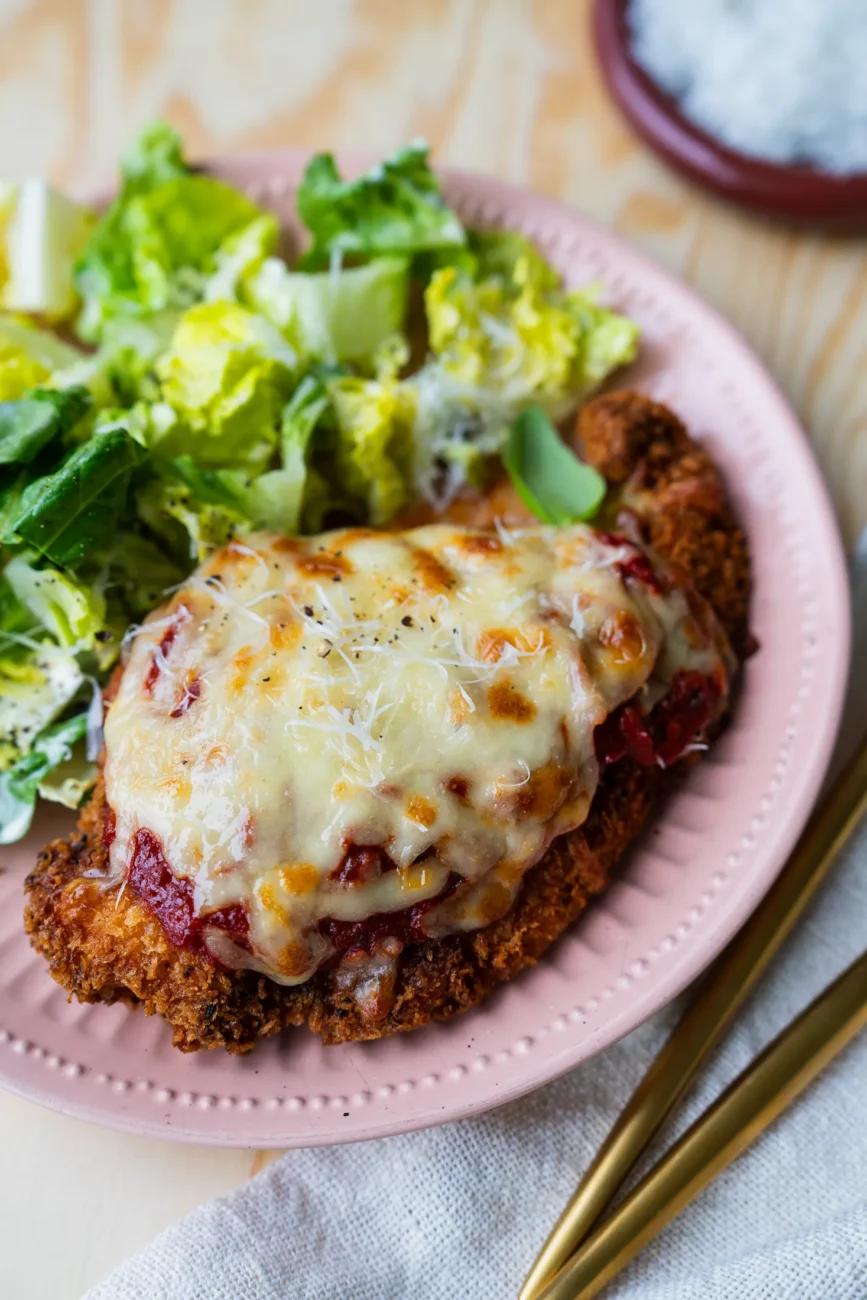
The chicken is seasoned before being coated in crispy parmesan breadcrumbs, then topped with a homemade tomato and basil sauce (marinara) and bubbling mozzarella. I’ve included instructions for both pan-frying and oven-baking, along with all the little tips that make a difference, particularly when it comes to keeping the chicken beautifully tender.
And can we talk about the spaghetti? Here in Australia, we’re used to serving our chicken parmis with fries and salad, but I’ve taken a little inspiration from the Italian-American tradition of serving chicken parmesan with spaghetti, and I’m completely converted! It makes so much sense. You’re already making the tomato sauce, so why not make a little extra and toss it through the pasta? I’m not sure I’ll ever go back. 😂
Why you’ll love this Chicken Parmigiana (Chicken Parmesan)
- Make it fried or baked – I’ve included both methods, so you can choose between a beautifully golden, shallow-fried crumb or a slightly lighter oven-baked version.
- Incredibly tender chicken – A simple seasoning step before crumbing (breading) makes all the difference to the flavour and tenderness of the chicken.
- Homemade tomato and basil sauce (marinara) – Made with everyday supermarket ingredients in around 15 minutes, with enough sauce to toss through the spaghetti too.
- A family favourite that’s easy to customise – Serve the chicken with or without the tomato sauce and mozzarella, depending on what everyone likes.
- Worth making extra – Double the crumbed (breaded) chicken and tomato sauce and freeze them separately. You’ll have most of the work done for another dinner.
Ingredients and substitutions
You only need everyday supermarket ingredients to make this Chicken Parmigiana (Chicken Parmesan) recipe. Here are a few things worth knowing before you start.
- Boneless, skinless chicken breasts – Slice each breast horizontally to create two thinner pieces (known as chicken cutlets in the US), then pound them to an even thickness. This helps them cook quickly and evenly without drying out.
- Panko breadcrumbs – My preference for a light, crispy coating. Regular breadcrumbs work too, although the crumb will be finer and slightly less crunchy. Use gluten-free breadcrumbs if needed.
- Parmesan – Mixed directly into the breadcrumbs for extra flavour. Freshly grated parmesan is my preference, but finely grated store-bought parmesan works too.
- Passata – Also known as strained tomatoes or tomato puree in the US, it’s the base of marinara sauce. Look for plain, unseasoned passata rather than tomato paste.
- Fennel seeds – Completely optional! I love the Italian-inspired flavour they add to the sauce, but they’re quite strong. If you’re not already a fennel fan, I’d recommend leaving them out.
- Mozzarella – Freshly grated or sliced mozzarella both work beautifully. Pre-shredded mozzarella is absolutely fine here too.
- Spaghetti – I make enough homemade tomato sauce to coat the chicken and toss through the spaghetti. You can substitute another pasta shape or serve with fries and salad instead.
Need to make it gluten-free, dairy-free or egg-free? I’ve included substitutions in the recipe notes below, including an egg-free alternative for crumbing (breading) the chicken.
How to make Chicken Parmigiana (Chicken Parmesan)
There are a few steps involved, but nothing complicated. The trick is to get everything organised before you start cooking the chicken. Here’s how I make it:
Prepare and season the chicken
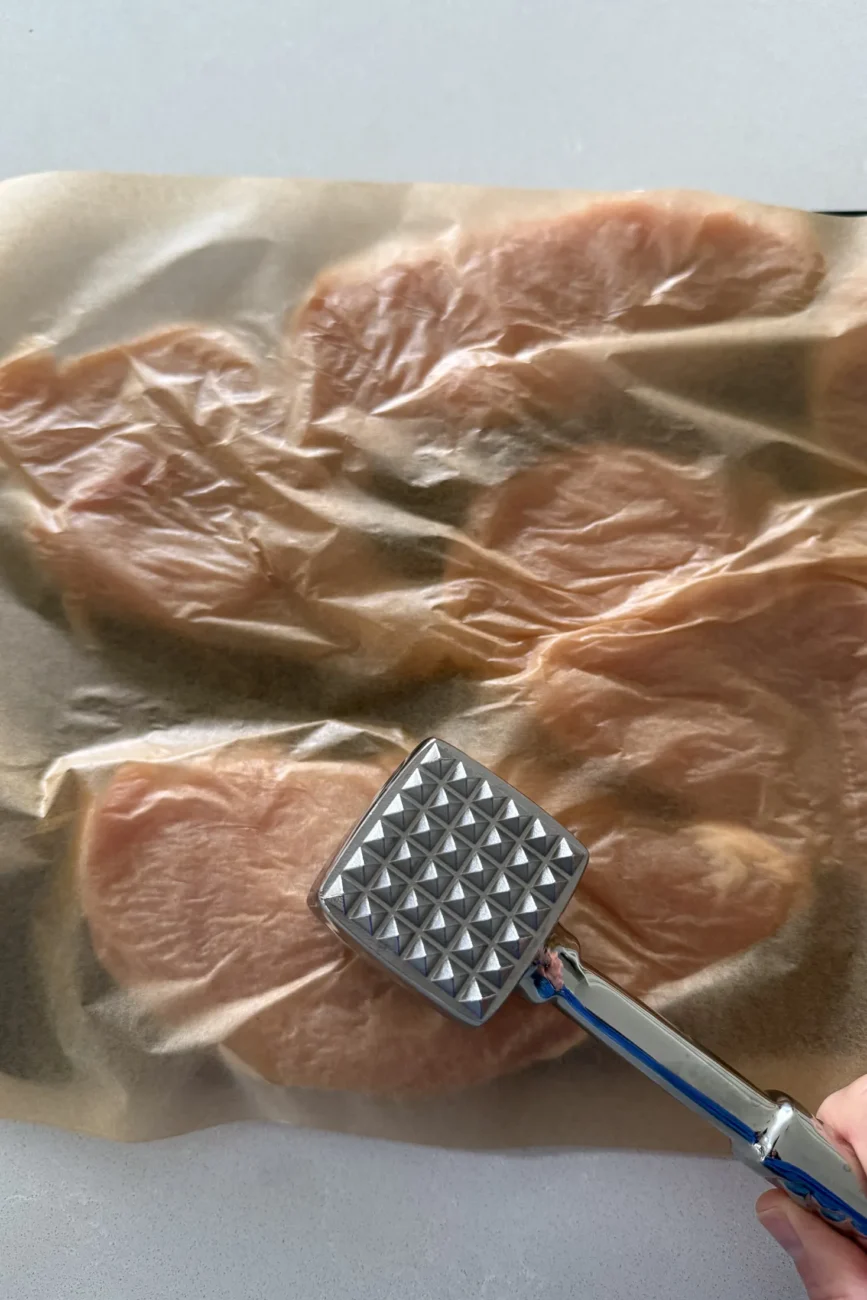
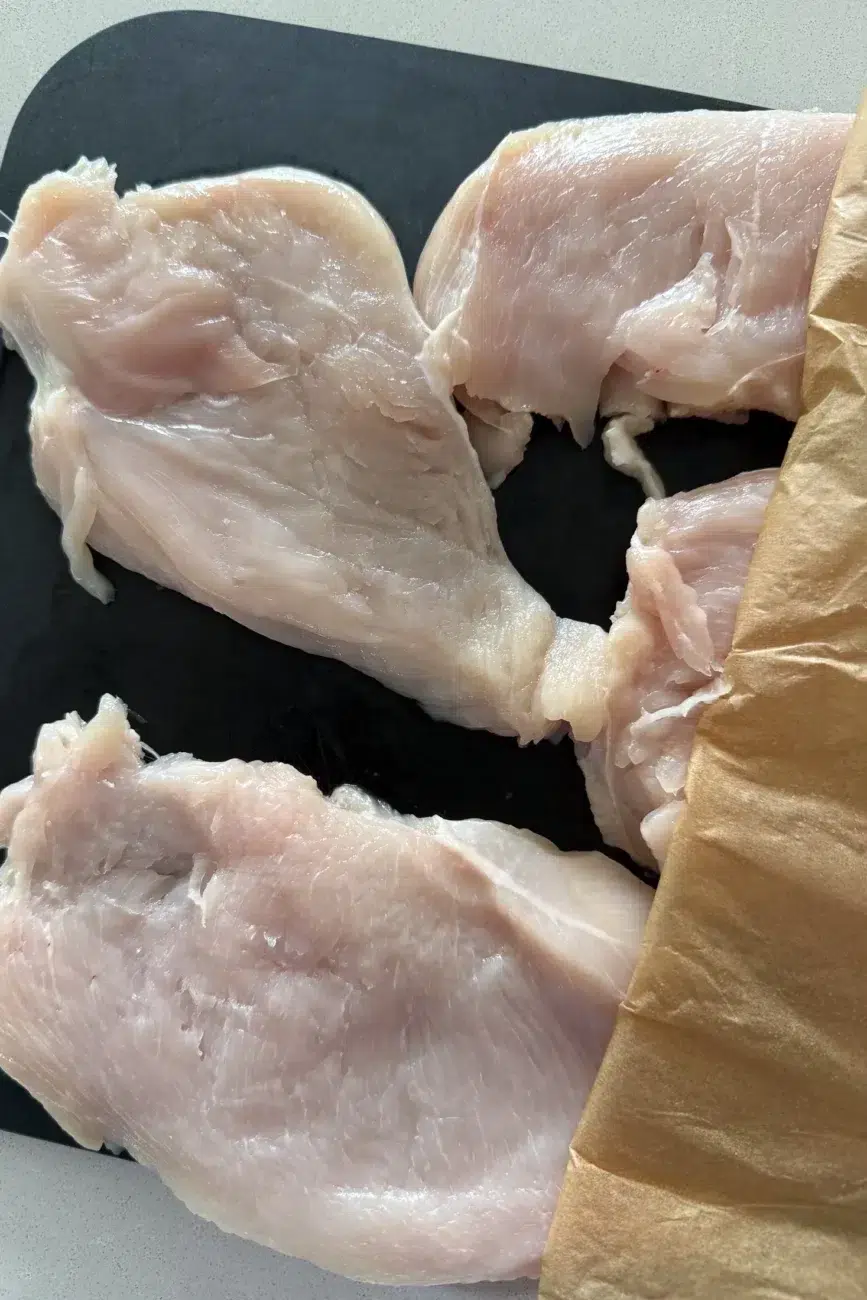
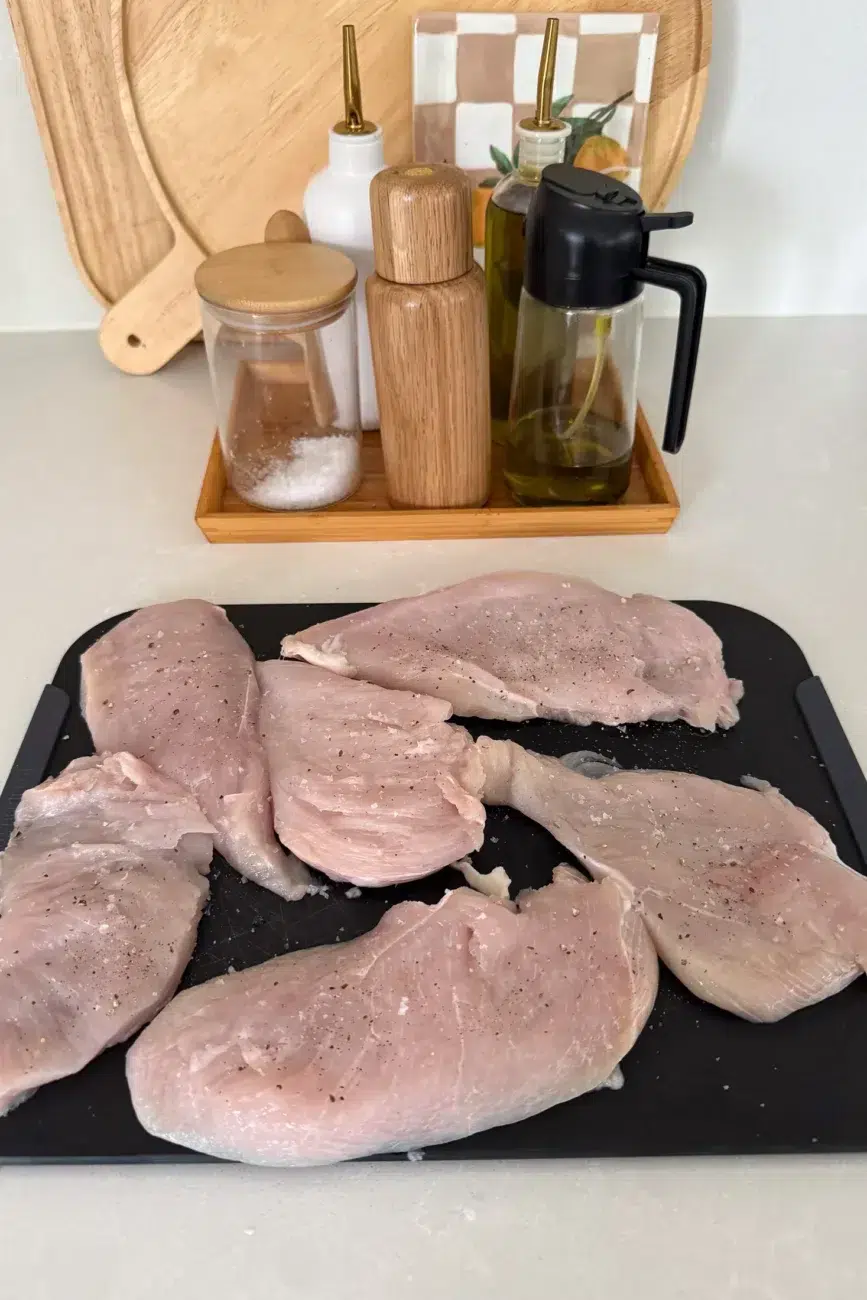
(1) Slice the boneless, skinless chicken breasts horizontally to create six thinner cutlets, then gently pound them to an even thickness. (2) I use baking (parchment paper) to keep things less messy. (3) Season both sides generously with salt and pepper and set aside while you prepare the sauce and breadcrumbs. This short resting time gives the seasoning a chance to work into the chicken, making it more flavourful and helping it retain moisture during cooking.
1
2
3
Make the homemade tomato and basil sauce (marinara)
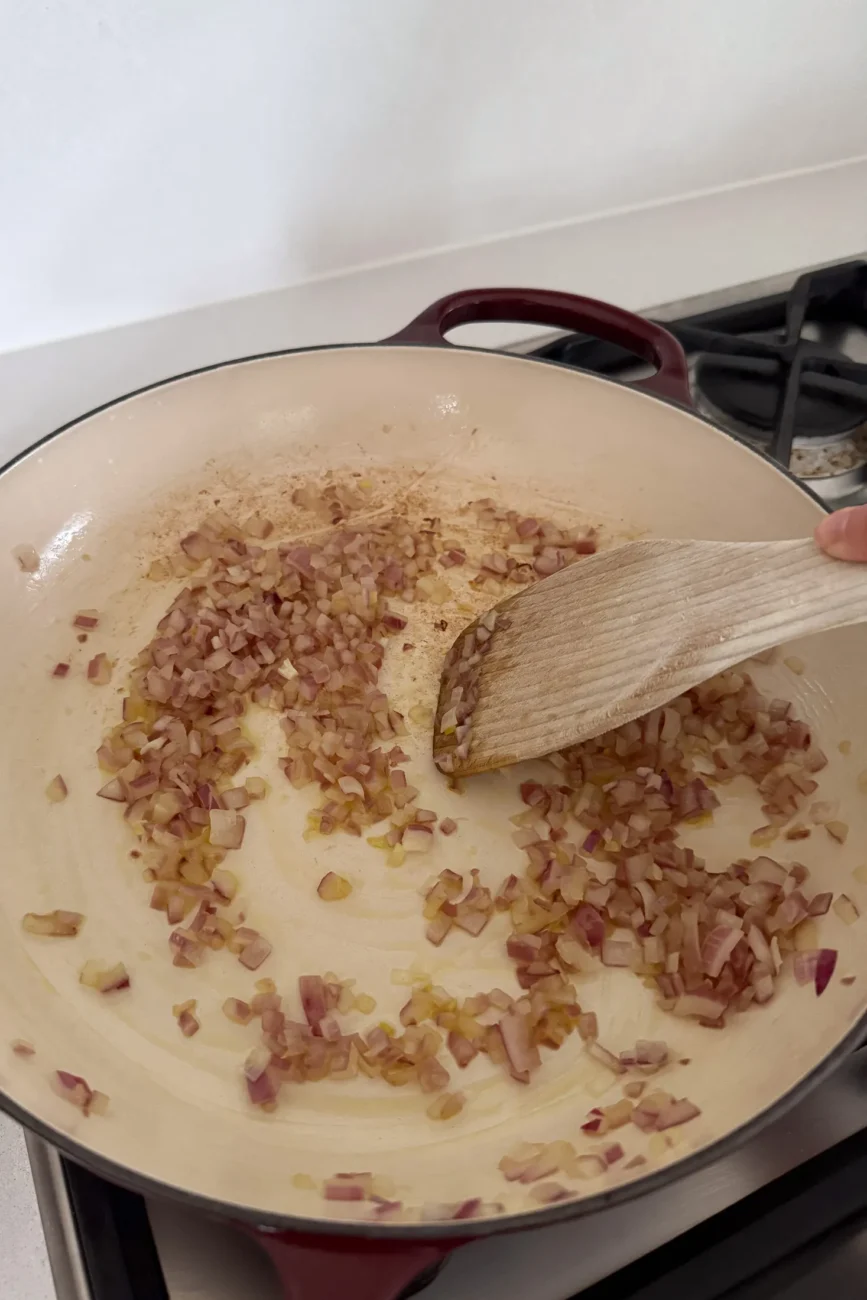
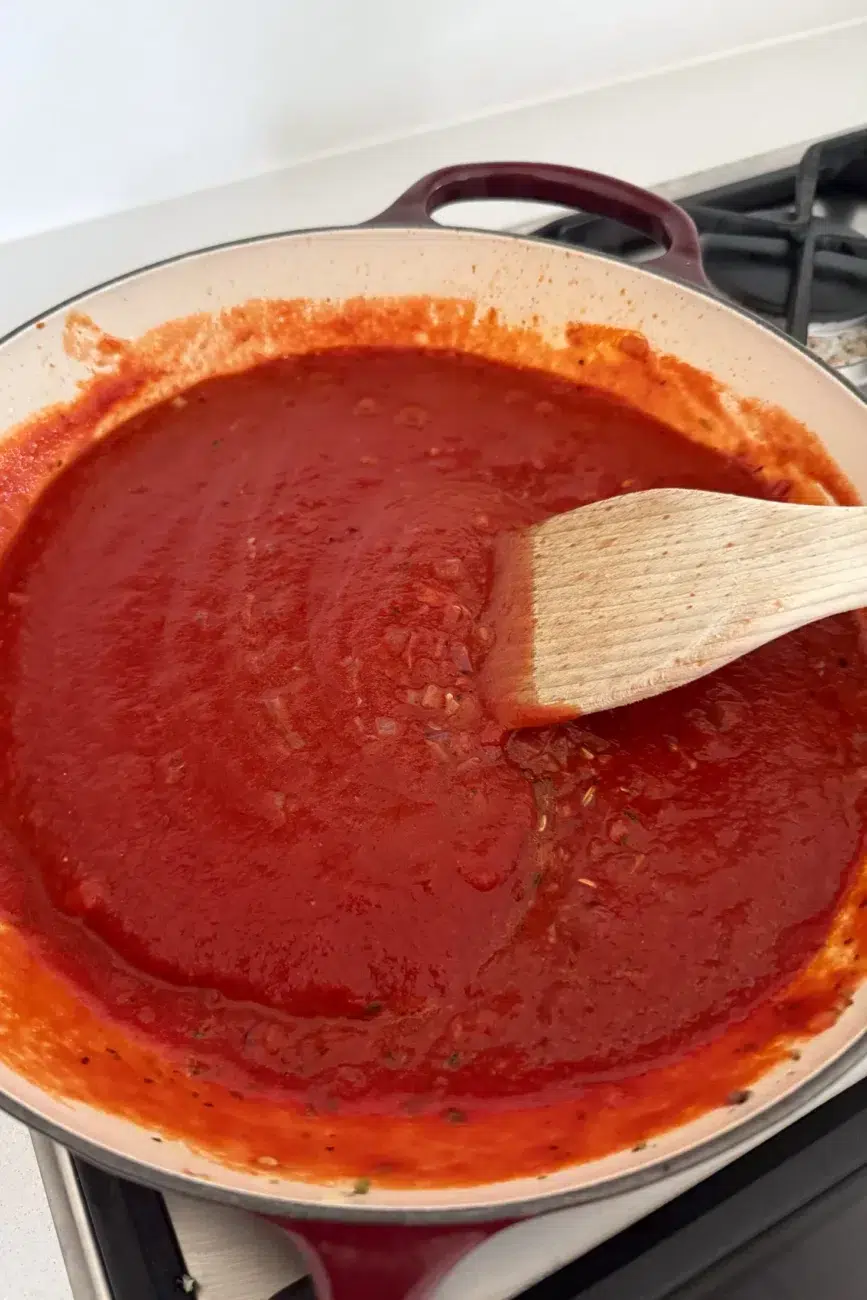
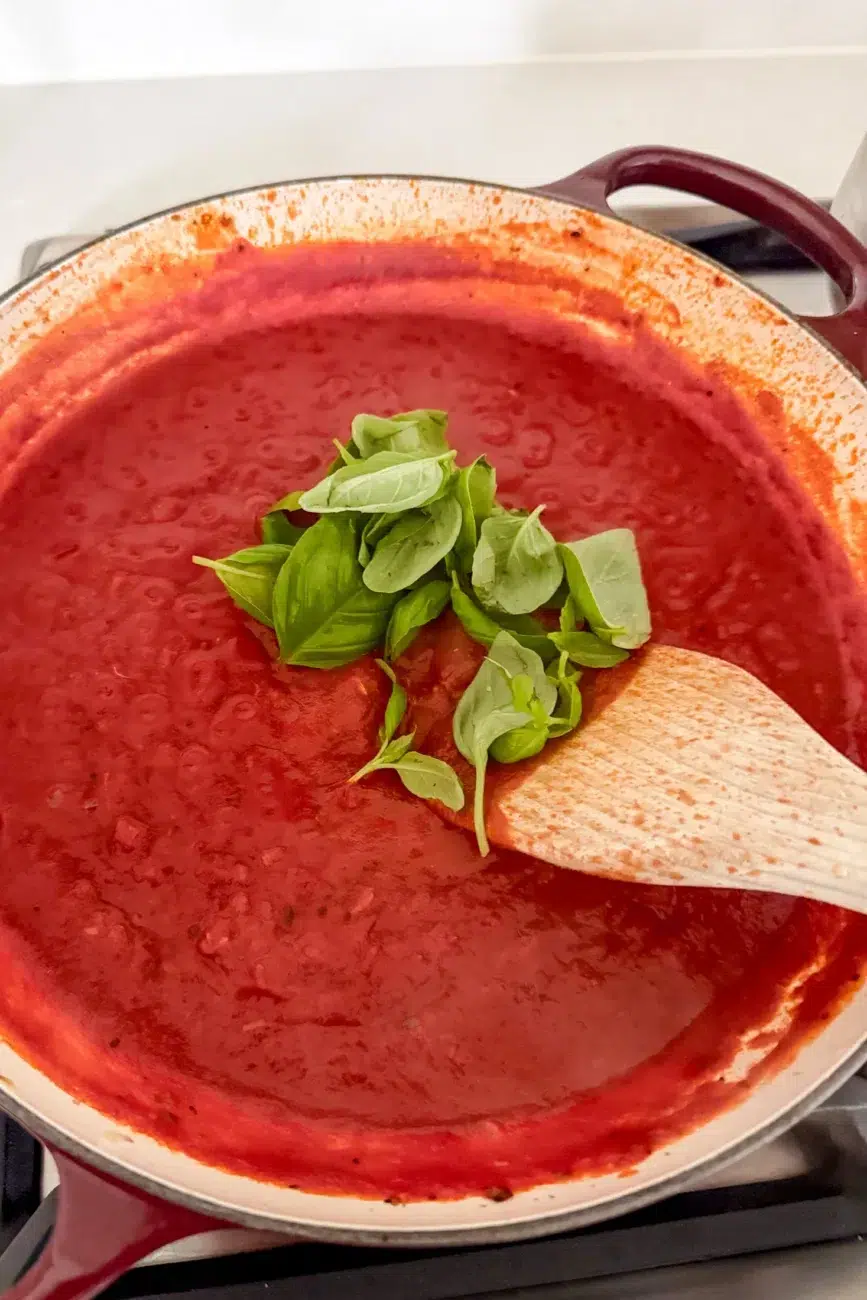
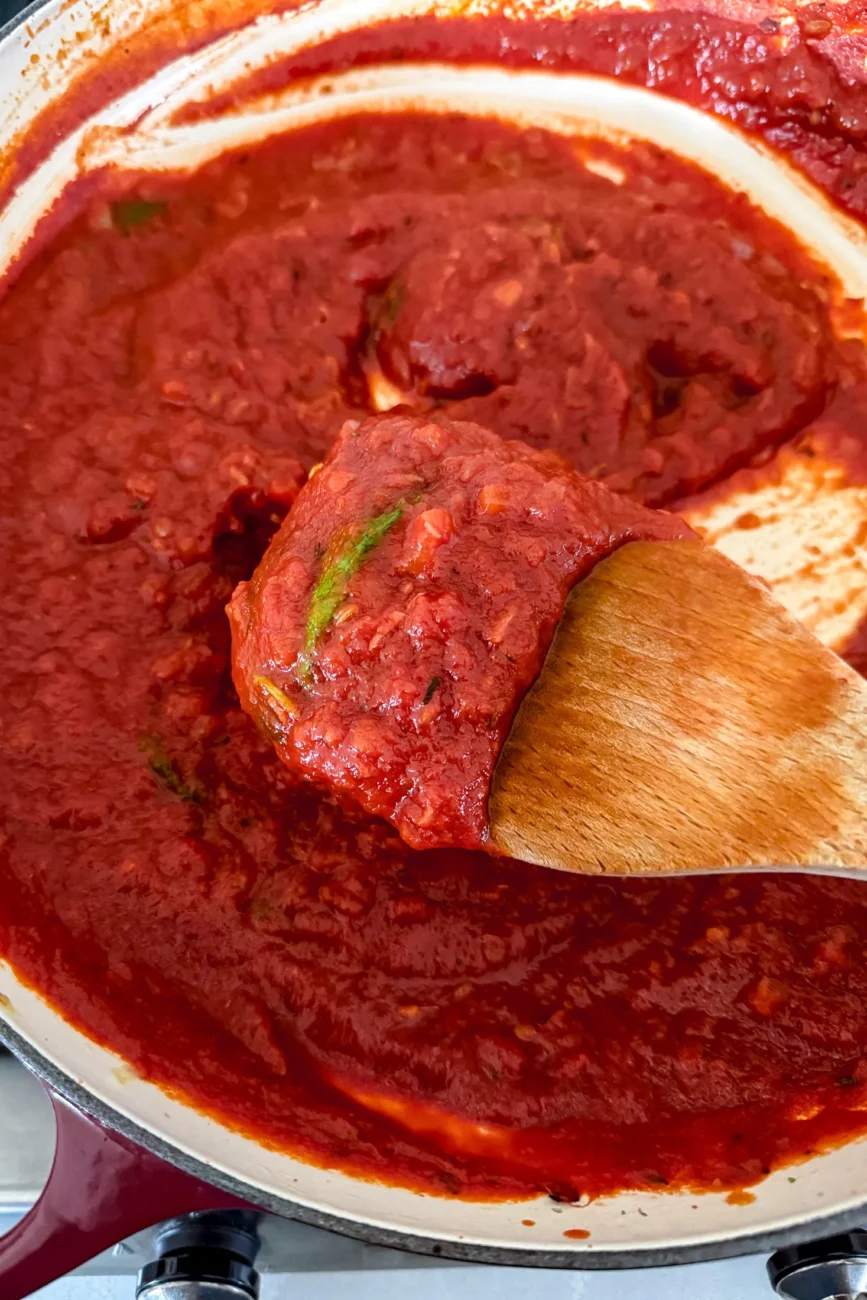
(1) Soften the onion in olive oil, then add the garlic, oregano and optional fennel seeds. (2) Stir through the passata (strained tomatoes), season and simmer for approximately 10 minutes until slightly thickened. (3) Turn off the heat before adding the fresh basil.
1
2
3
4
(4) The sauce doesn’t need to simmer for hours. We’re looking for a simple, well-seasoned tomato sauce that works beautifully with both the chicken and spaghetti.
Set up your crumbing (breading) station
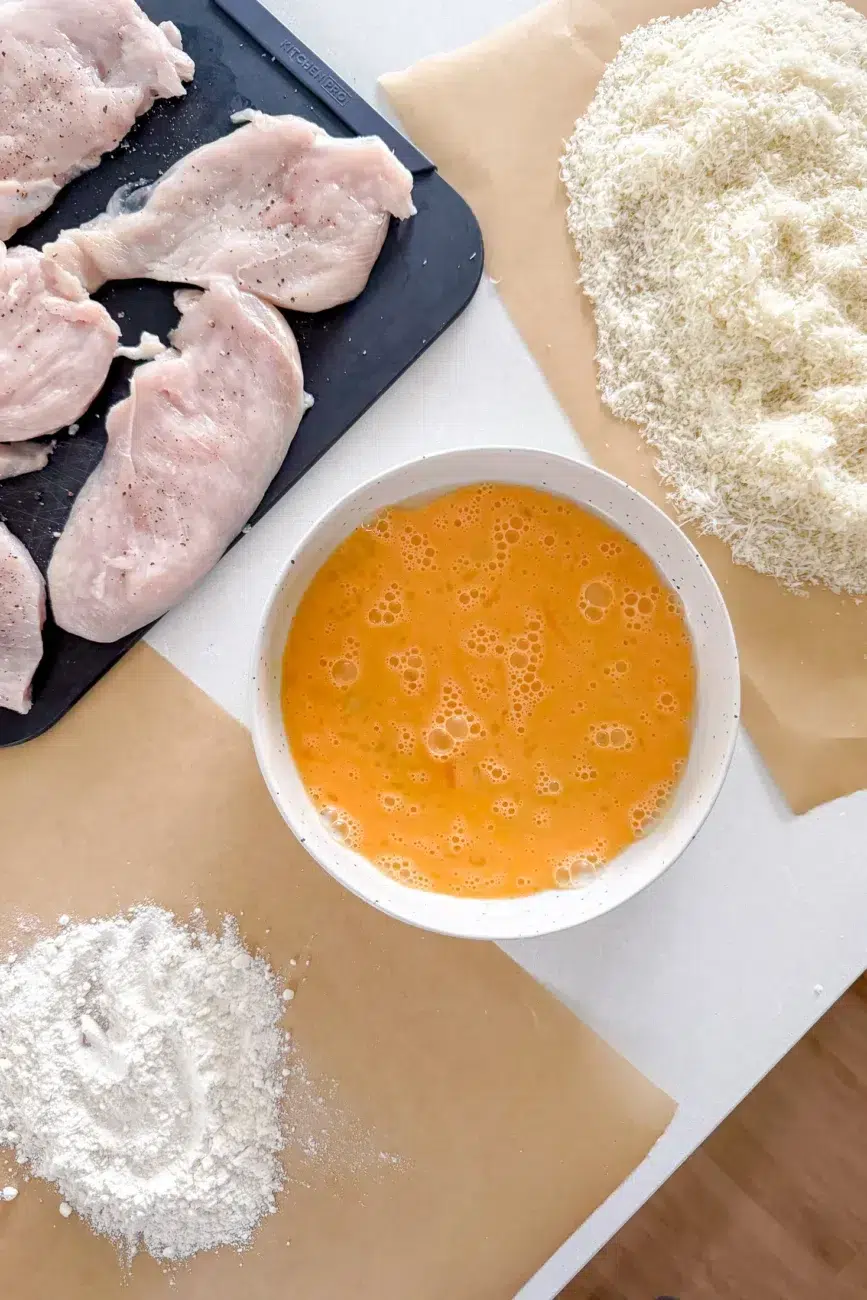
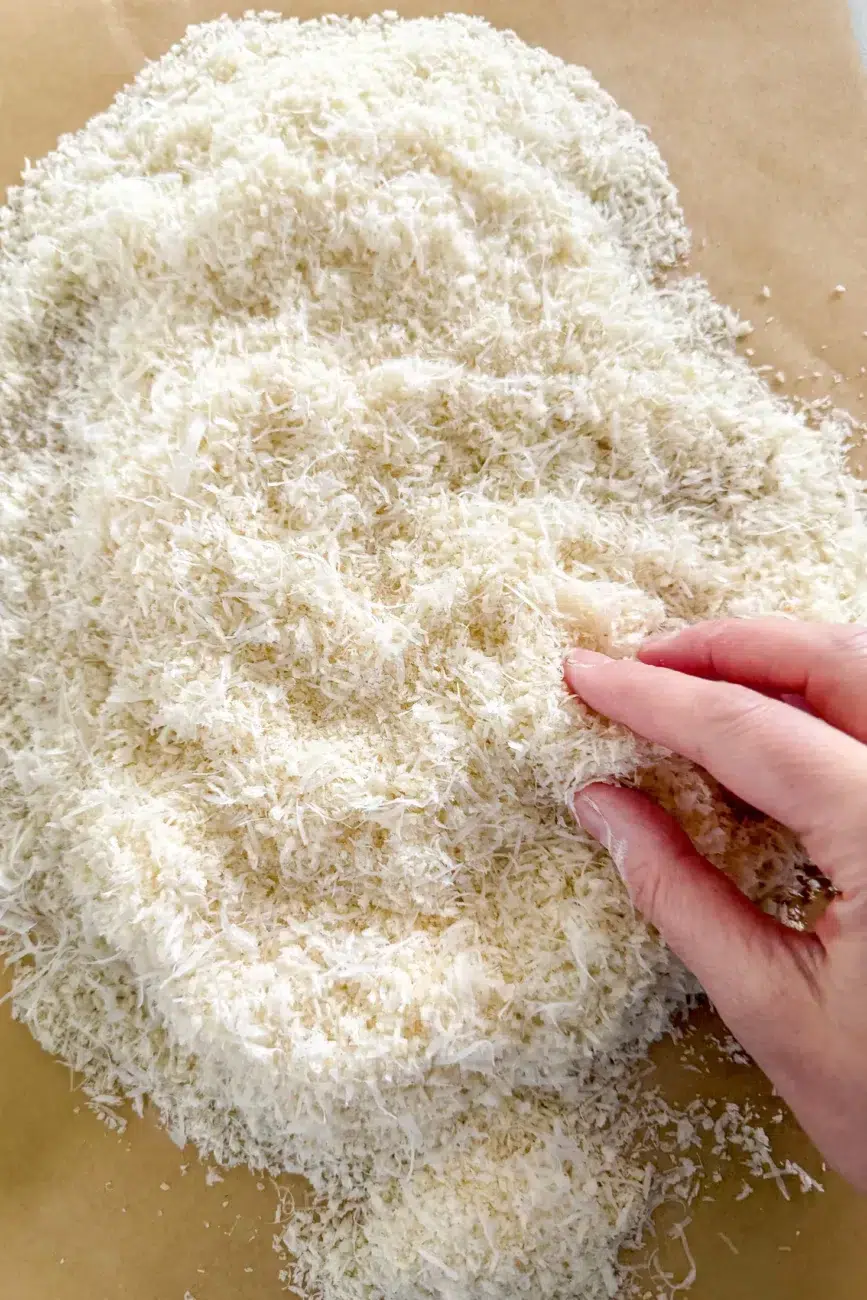
(1) Place the flour on a sheet of baking (parchment) paper, whisk the eggs in a shallow bowl and combine the panko breadcrumbs, parmesan and garlic powder on another sheet of baking paper.
1
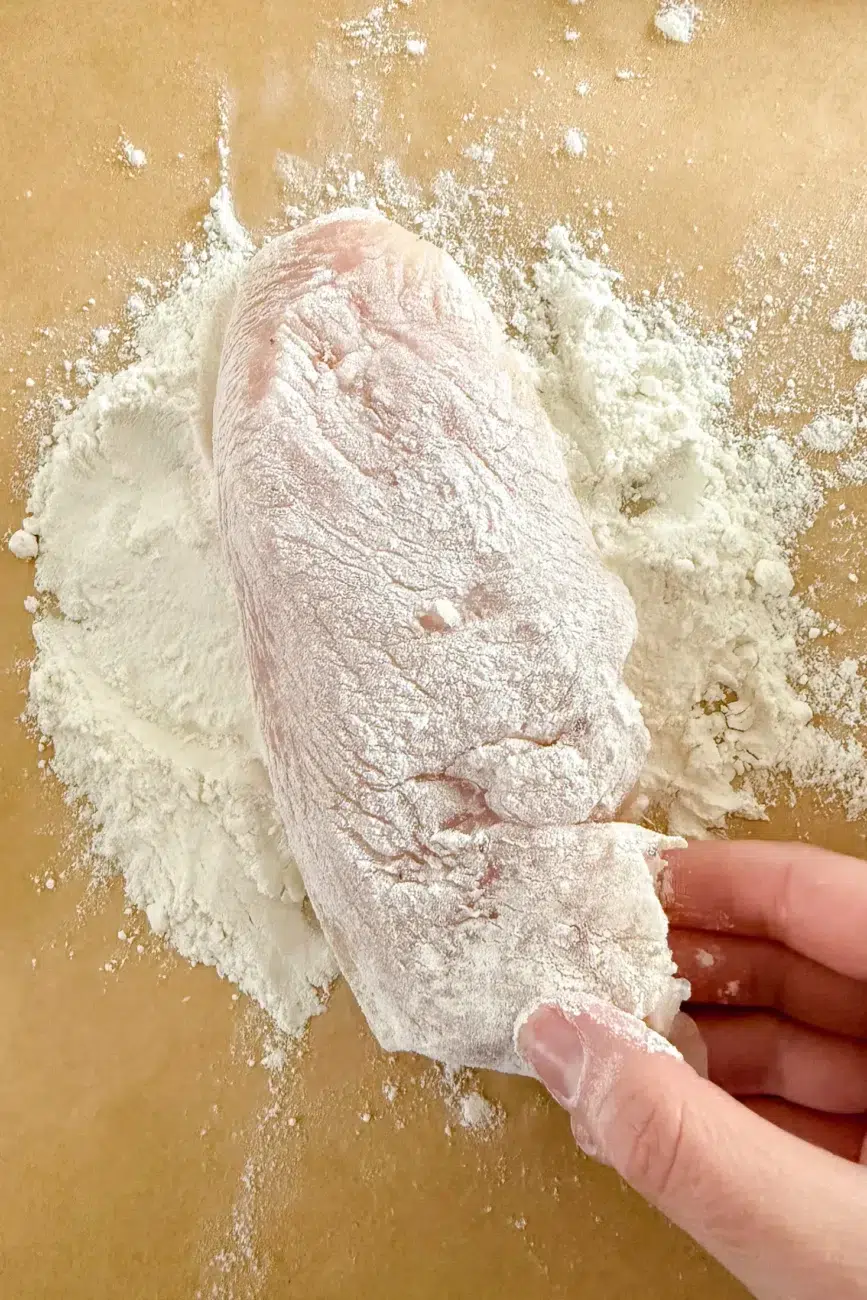
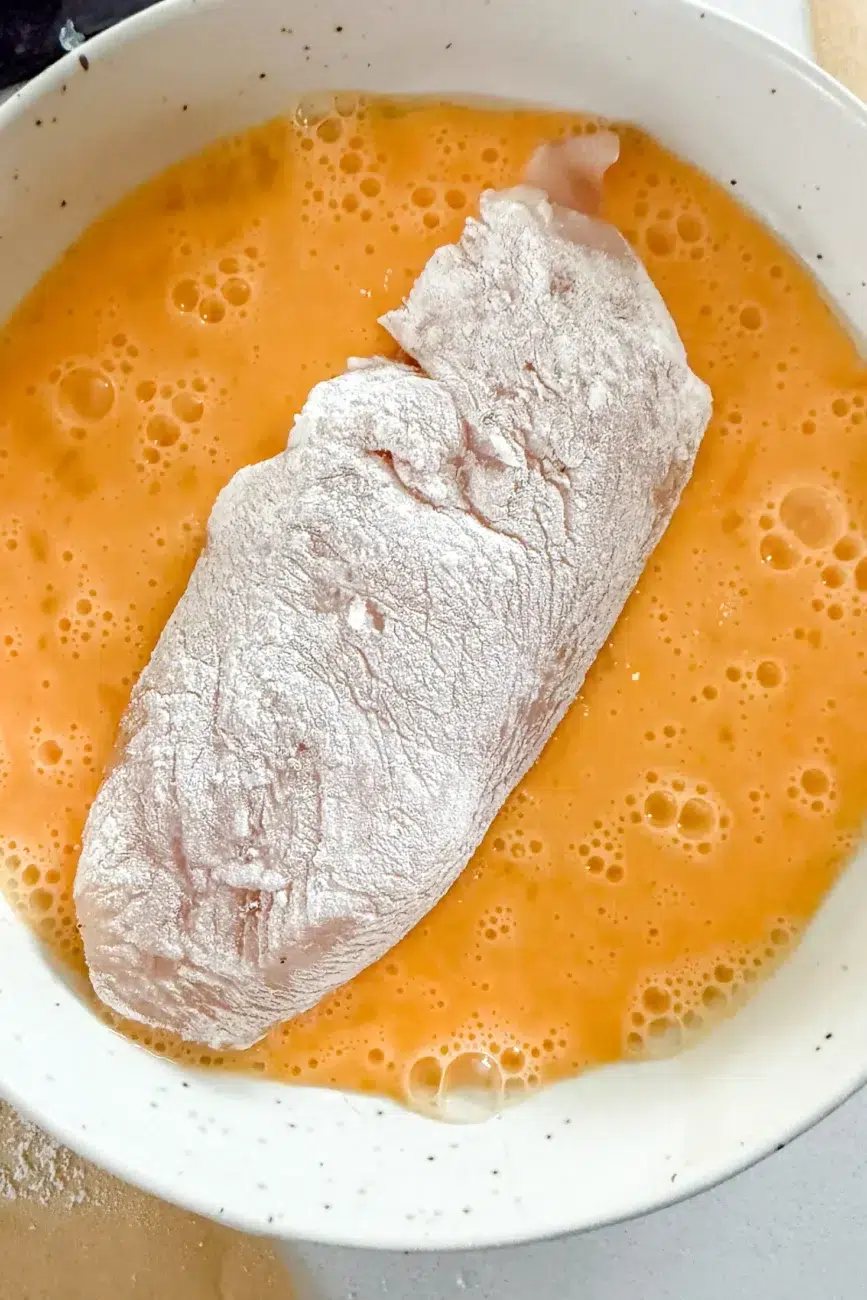
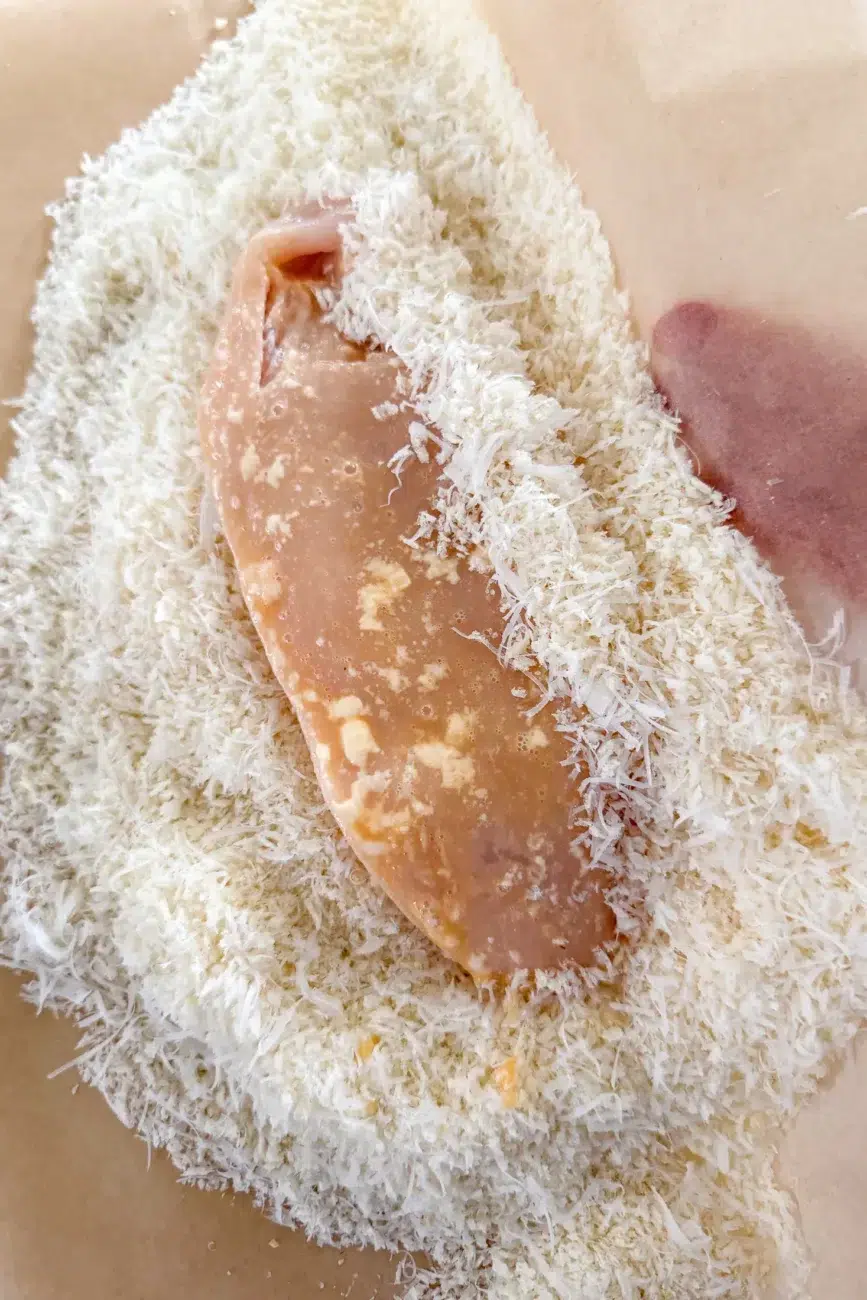
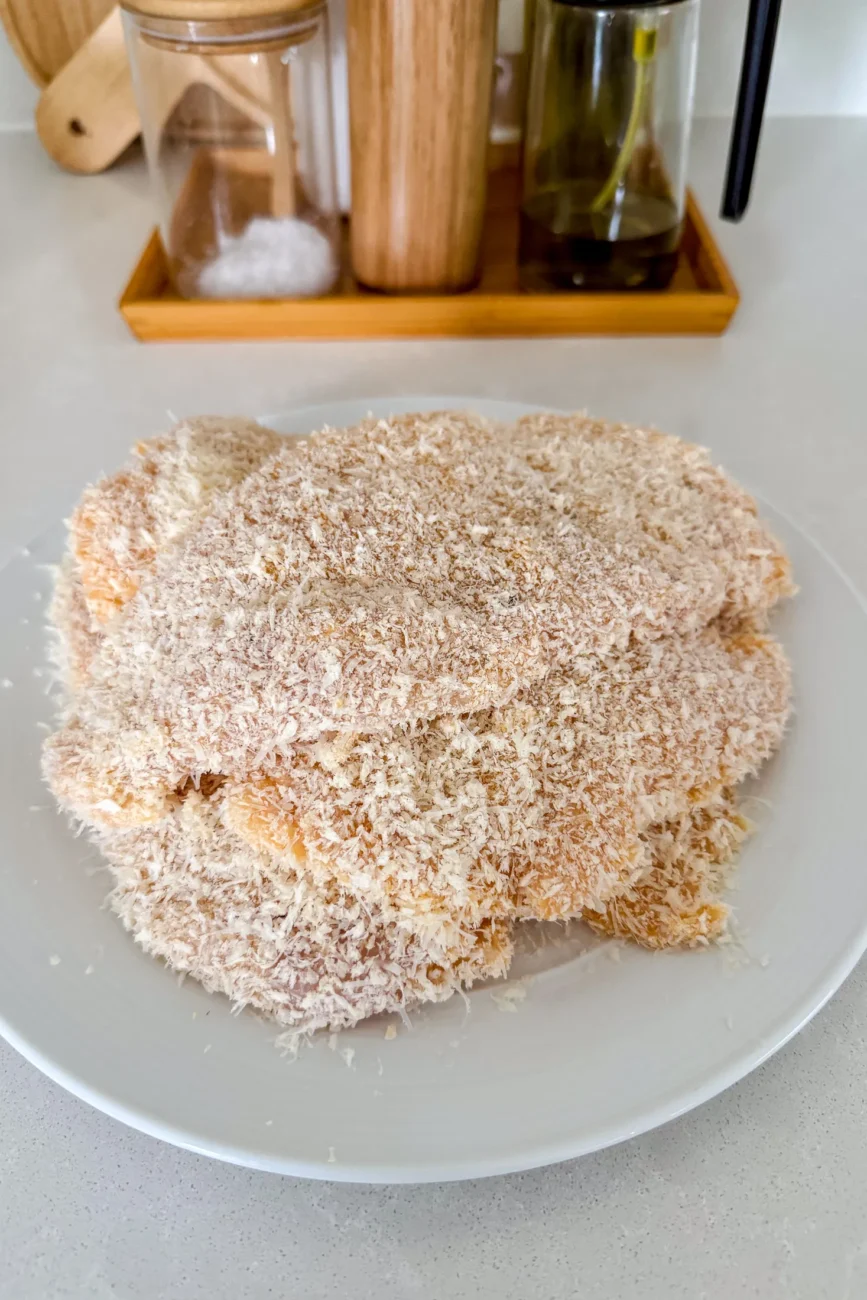
(2) Coat each piece of chicken in flour, (3) then egg, (4 + 5) then press firmly into the breadcrumbs. I find using baking paper makes it much easier to gather the loose crumbs and press them onto the chicken, with fewer dishes to wash afterwards. (6) The finished crumbed chicken.
2
3
4
5
6
Pan-fry or oven-bake the chicken
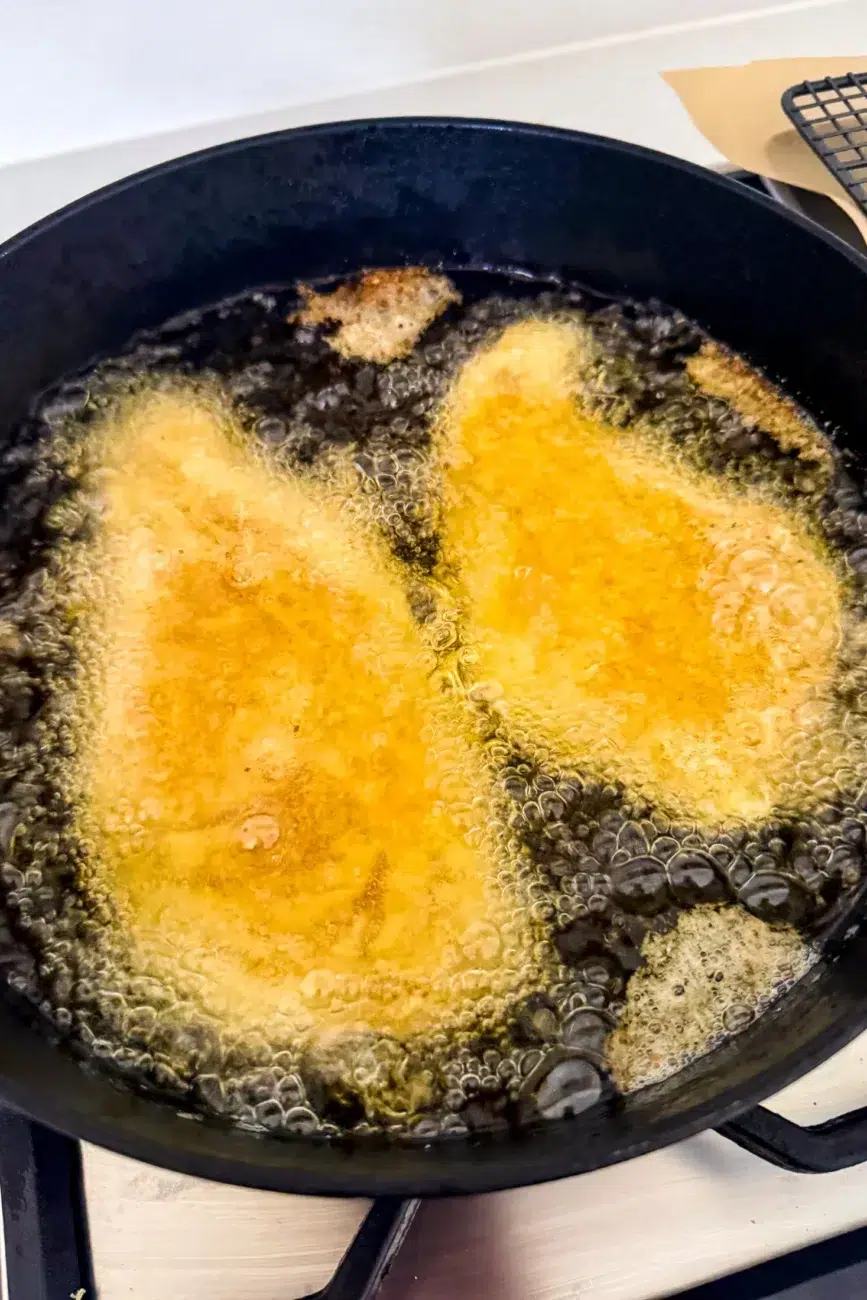
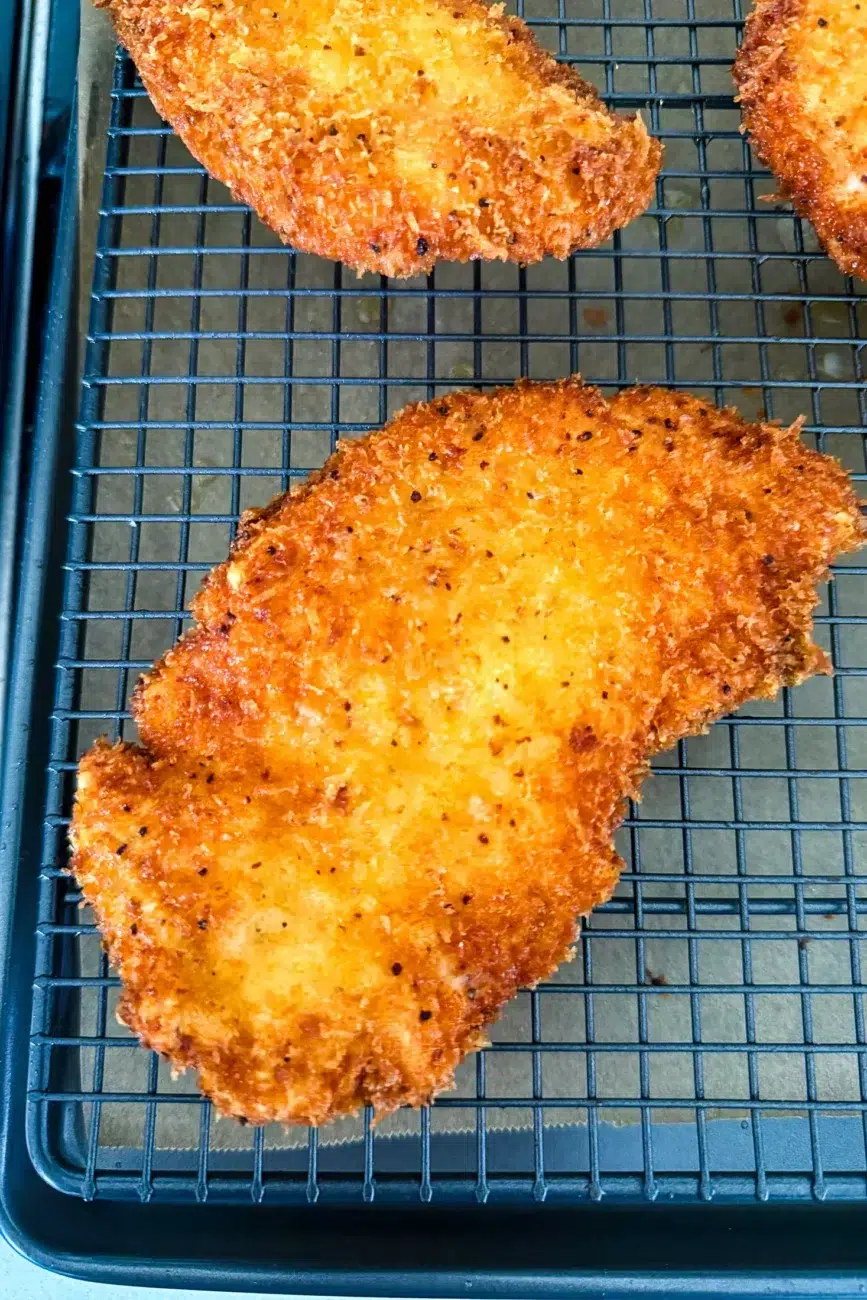
(1) For the crispiest, most golden coating, shallow-fry the chicken in olive oil for approximately 3–4 minutes on each side, working in batches. The chicken should be golden on the outside and cooked through.
(2) Alternatively, bake the crumbed (breaded) chicken in a hot oven until golden and cooked through. I’ve included the full baking temperatures and instructions in the recipe notes below.
1
2
Cook the spaghetti
Cook the spaghetti in generously salted boiling water until just under al dente. Before draining, reserve some of the pasta cooking water.
Timing tip: I always make sure the spaghetti is cooked and drained before adding the tomato sauce and mozzarella to the chicken. This way, the crispy coating isn’t sitting underneath the sauce while you wait for the pasta to finish cooking.
Add the tomato sauce and mozzarella
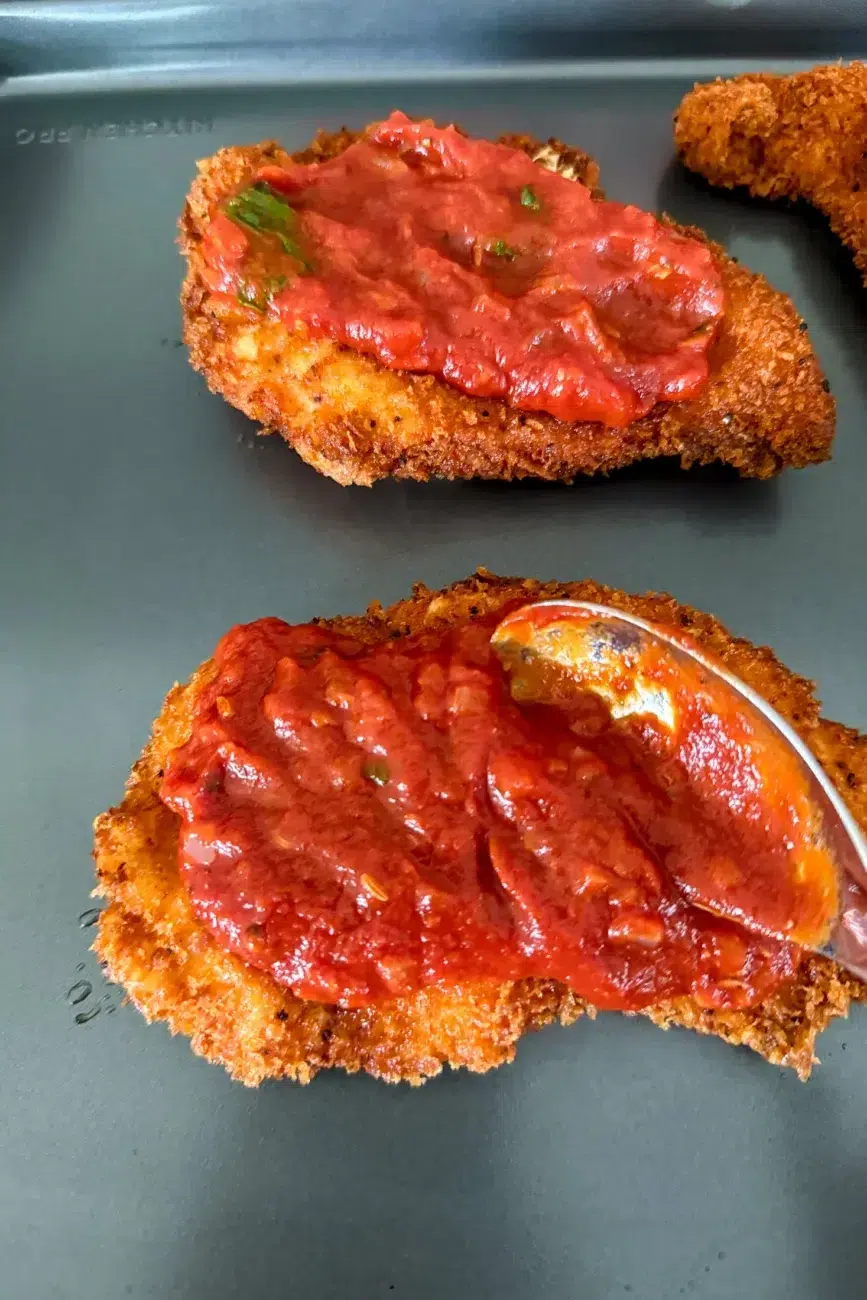
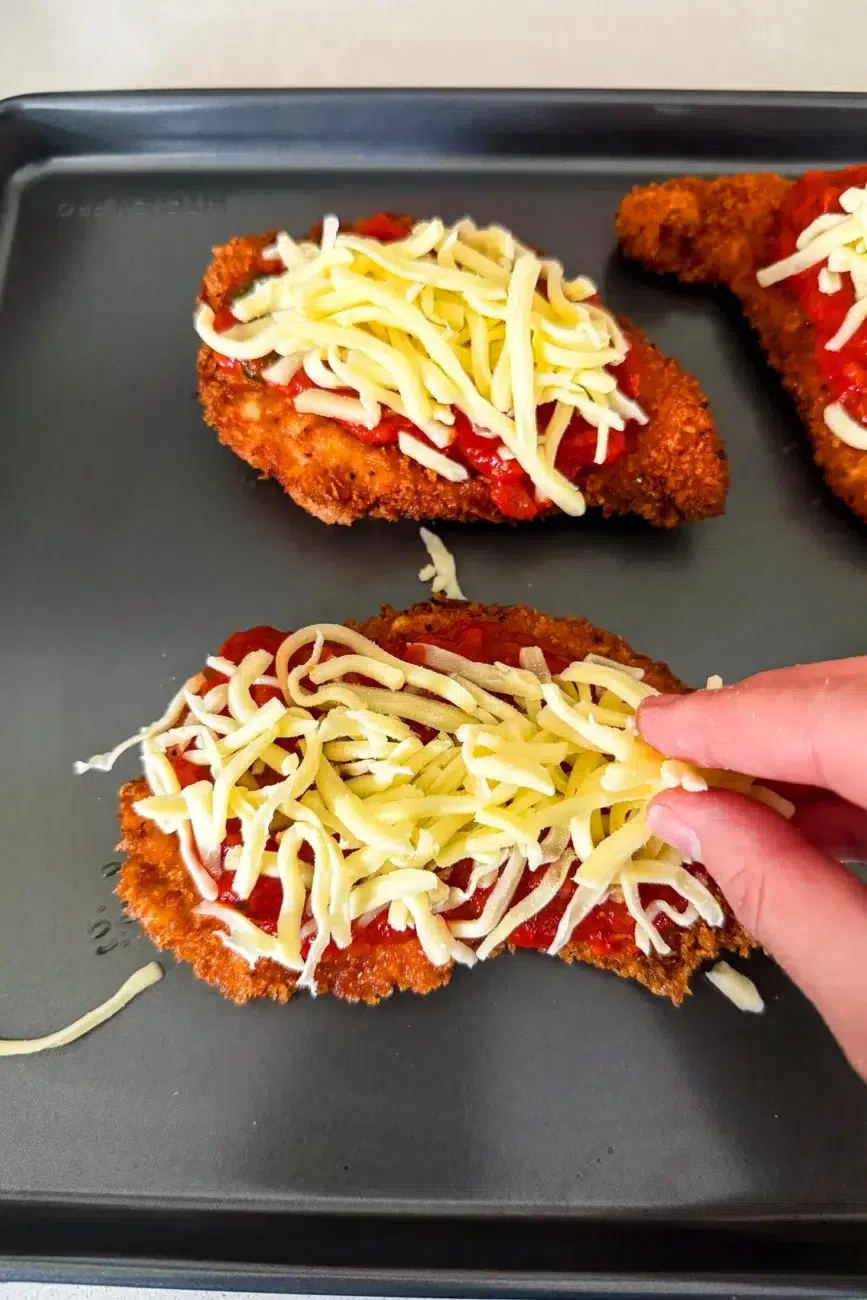
Reserve some of the tomato sauce for the spaghetti, then (1) spoon the remaining sauce over the chicken, leaving a little of the crispy crumb exposed around the edges. (2) Top with mozzarella and place under the oven grill (broiler) for a few minutes until the cheese is melted, bubbling and lightly golden.
1
2
Toss the spaghetti and serve
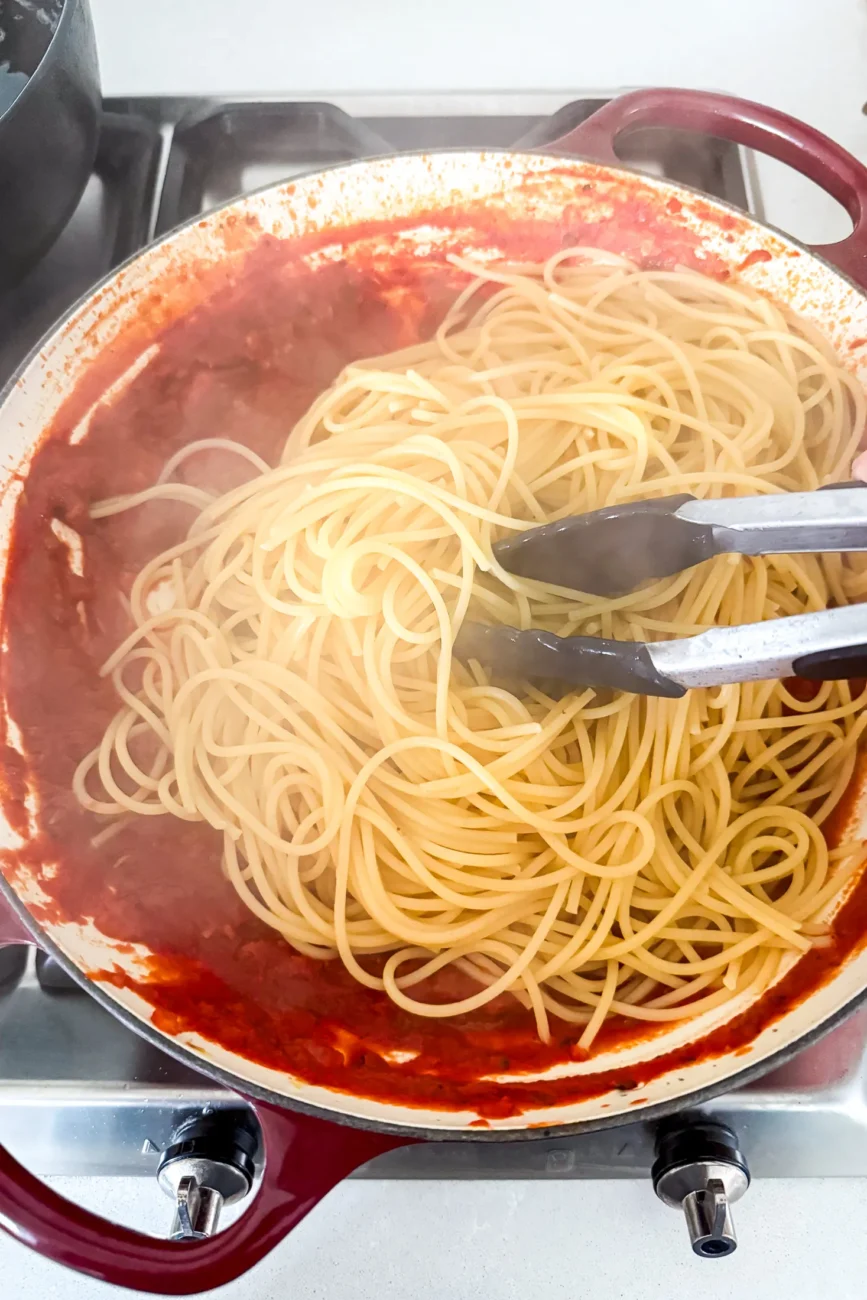
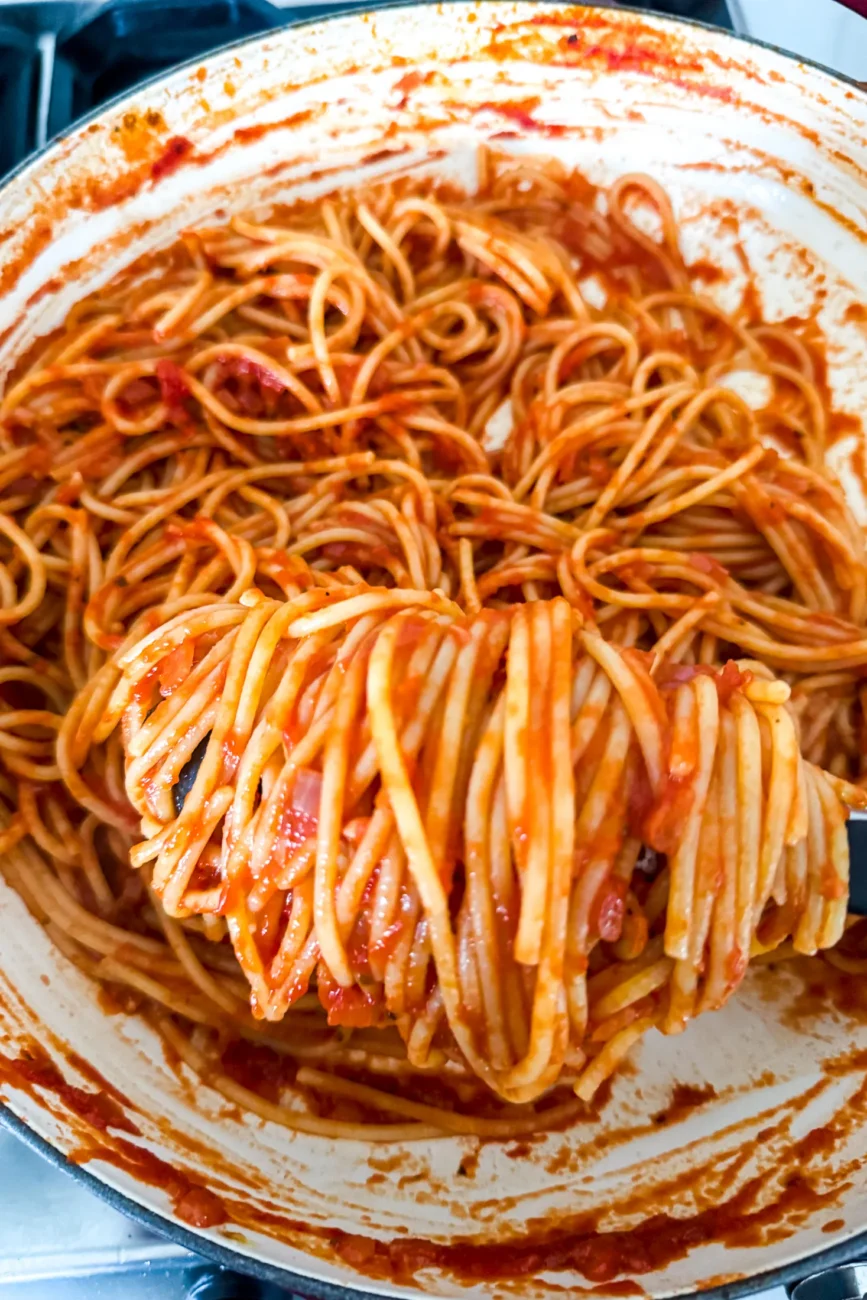
While the cheese melts, (1) toss the spaghetti through the reserved tomato sauce, (2) adding a splash of pasta cooking water as needed to help the sauce coat every strand.
1
2
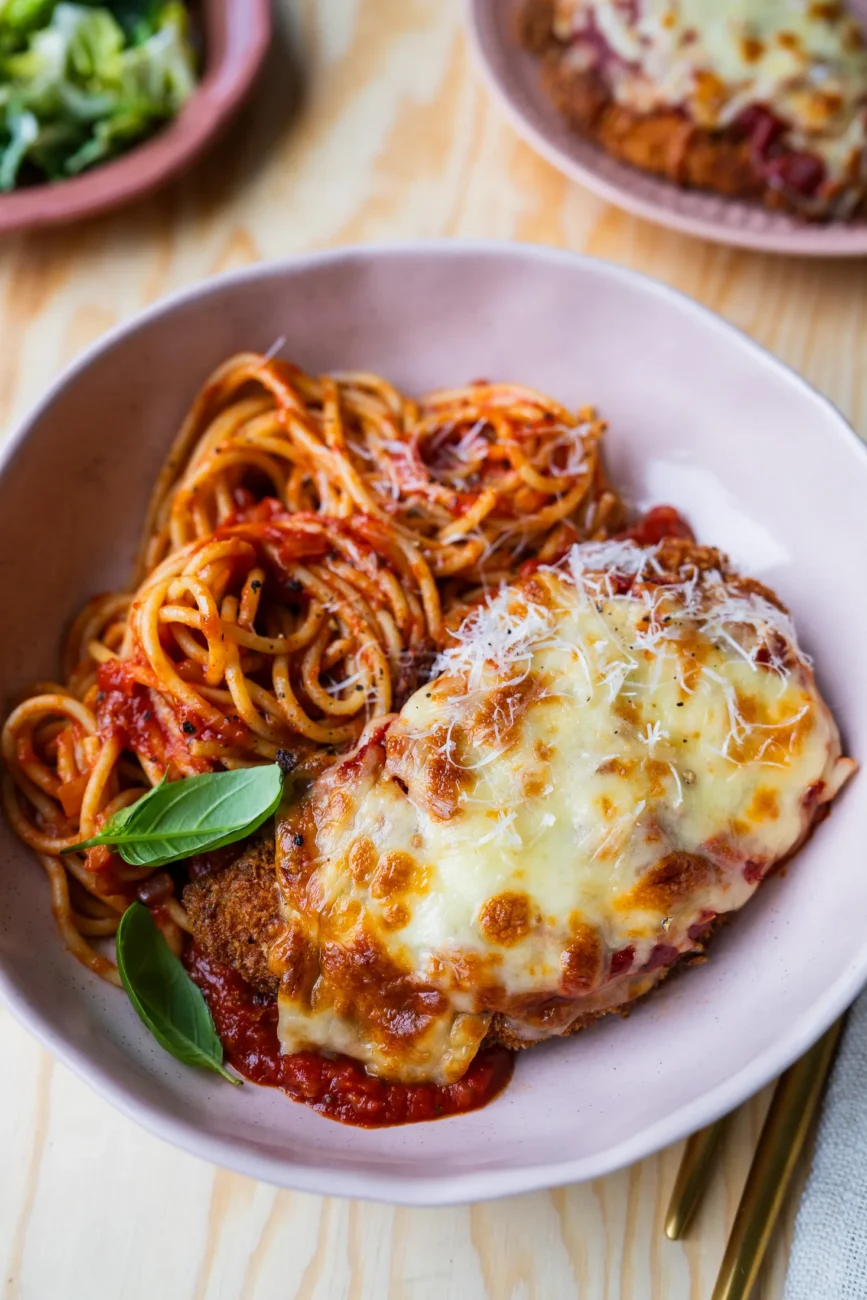
Serve the chicken parmigiana over the spaghetti, finished with fresh basil and finely grated parmesan. A simple caesar salad on the side is lovely too.
My tips for the best Chicken Parmigiana (Chicken Parmesan)
- Don’t skip seasoning the chicken first – This is probably my biggest tip! Seasoning the chicken directly with salt and pepper, then letting it sit briefly while you prepare the other ingredients, makes such a difference to the flavour. The salt also helps the chicken retain moisture during cooking, giving you that beautifully tender result.
- Be generous with the oil when frying – You want enough olive oil in the pan (approximately 5 mm–1 cm/¼–½ inch deep) for the breadcrumbs to cook evenly and develop a golden, crispy coating. If the crumb (breading) is browning too quickly, reduce the heat slightly so the chicken has time to cook through.
- Keep the sauce off the chicken until the very end – Tomato sauce will naturally soften breadcrumbs, so timing matters. Have your spaghetti cooked and drained before topping the chicken with sauce and mozzarella. Leave some of the crumb exposed around the edges and grill (broil) just until the cheese melts.
- Make more than you need – If I’m going to the effort of crumbing chicken and making homemade tomato sauce, I almost always make extra. Freeze the uncooked, crumbed chicken and sauce separately, and you’ve done most of the work for another dinner.
Is it better to fry or bake Chicken Parmigiana (Chicken Parmesan)?
Both methods work beautifully, and I’ve included instructions for each. Shallow-frying gives the chicken a deeper golden colour and a slightly crispier coating, while oven-baking is a convenient alternative with less hands-on cooking. If you’re baking, make sure you’re generous with the olive oil spray or drizzle, as this helps the breadcrumbs become golden and crispy.
What oil is best for frying Chicken Parmigiana (Chicken Parmesan)?
I like using olive oil for shallow-frying because of the flavour it gives the breadcrumbs. Regular or light olive oil works particularly well, although canola (rapeseed) or vegetable oil are also great options. You’ll need approximately 5 mm–1 cm (¼–½ inch) of oil in the pan. Keep the heat at medium–high, adjusting as needed so the breadcrumbs turn golden without burning before the chicken cooks through.
How do you keep Chicken Parmigiana (Chicken Parmesan) crispy and stop it going soggy?
Timing is everything! Tomato sauce naturally softens breadcrumbs, so I always cook and drain my spaghetti before adding the sauce and mozzarella to the chicken. I also leave a little of the crispy coating exposed around the edges rather than covering the entire chicken cutlet. Once the cheese has melted under the grill (broiler), serve immediately.
Does the viral “slip and slide” chicken parmesan method actually work?
Yes and no! I’ve tried this technique several times. It’s where you spread tomato sauce onto a separate tray, top it with mozzarella, grill (broil) until melted, then slide the sauce and cheese onto the crispy chicken.
Technically it works, but I find it a little messy. You need a very specific tray to slide everything off neatly, the sauce still softens the breadcrumbs as soon as it touches the chicken, and you’ve got another pan to wash. Chicken parmigiana already asks enough of us in the washing-up department! 😂
I prefer spooning the sauce directly onto the chicken and grilling (broiling) it briefly. It’s neater, easier to control how much sauce goes onto each piece, and there’s less waste. The chicken only spends a few minutes under the sauce before serving anyway.
Can I make Chicken Parmigiana (Chicken Parmesan) without eggs?
Yes! You can replace the beaten eggs with approximately 125 ml (½ cup) of milk (any type) or an unsweetened dairy-free milk alternative, whisked with 1 tablespoon of plain (all-purpose) flour. Coat the chicken in flour first, dip it into the milk mixture, then press firmly into the breadcrumbs. The coating may be slightly more delicate than when using egg, so handle the chicken carefully while cooking.
Can I make Chicken Parmigiana (Chicken Parmesan) gluten-free, dairy-free or egg-free?
Absolutely, with a few simple substitutions:
For gluten-free – Use gluten-free plain (all-purpose) flour, gluten-free panko breadcrumbs and gluten-free spaghetti. Check that any packaged ingredients are certified gluten-free if you’re cooking for someone with coeliac disease.
For dairy-free – Omit the parmesan from the breadcrumbs or replace it with a suitable dairy-free alternative. Use a dairy-free melting cheese instead of mozzarella and omit the parmesan garnish. Check the breadcrumbs for any added milk ingredients.
For egg-free: Replace the two eggs with approximately 125 ml (½ cup) of milk (any type) or unsweetened dairy-free milk, whisked with 1 tablespoon of plain (all-purpose) flour. Coat the chicken in flour first, dip into the milk mixture, then press firmly into the breadcrumbs. The coating may be slightly more delicate, so handle carefully during cooking.
These are suggested substitutions rather than separately tested variations, so the finished texture may differ slightly.
Can I use store-bought tomato pasta sauce (marinara) or pre-crumbed (pre-breaded) chicken?
Of course! A good-quality jar of tomato and basil pasta sauce (marinara) or pre-crumbed chicken schnitzels can save time. Just make sure the chicken is cooked through before topping it with sauce and cheese.
That said, if you have the time, I really recommend making the sauce and crumbing the chicken yourself. Neither step is particularly difficult, and the difference in flavour and texture is so worth the effort. My favourite shortcut is actually making a double batch and freezing half for another night.
What can I serve with Chicken Parmigiana (Chicken Parmesan)?
I love serving chicken parmigiana with spaghetti tossed through the extra tomato and basil sauce, but there are plenty of other delicious options! Here in Australia, chicken parmis are often served with fries and salad, and it’s a combination that’s hard to beat. Here are some of my favourite sides to serve with chicken parmigiana:
- Oven-baked Crispy Potato Wedges – A great alternative to fries, especially with a little extra parmesan sprinkled over the top.
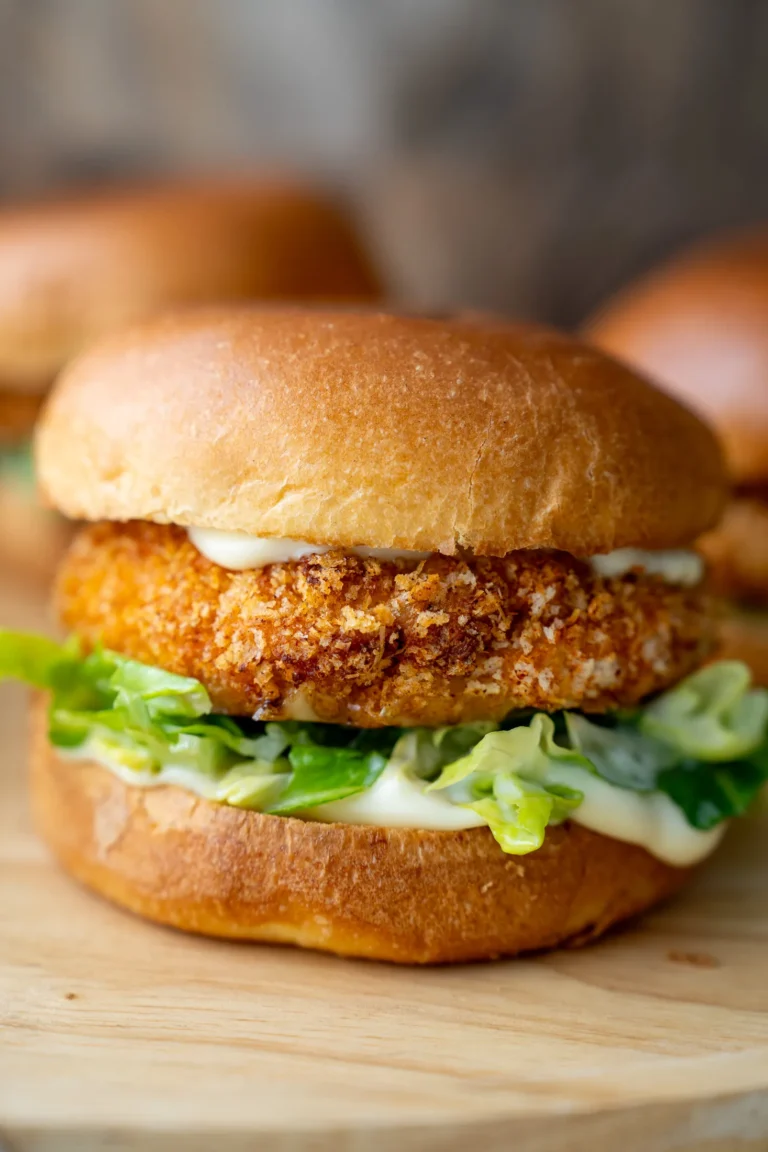
- Cheat’s Caesar Salad – Crisp lettuce and a creamy, tangy dressing are perfect alongside the chicken and tomato sauce.
- Creamy coleslaw – A fresh, crunchy side that works particularly well if you’re skipping the spaghetti.
- Simple green salad – Something light and fresh to balance out the chicken and cheese.
- Garlic bread – Ideal for mopping up any extra homemade tomato and basil sauce.
- Roasted Mediterranean vegetables – An easy option if you’d prefer to serve the chicken without pasta or potatoes.
If you enjoyed Chicken Parmigiana (Chicken Parmesan), I think you’ll love:
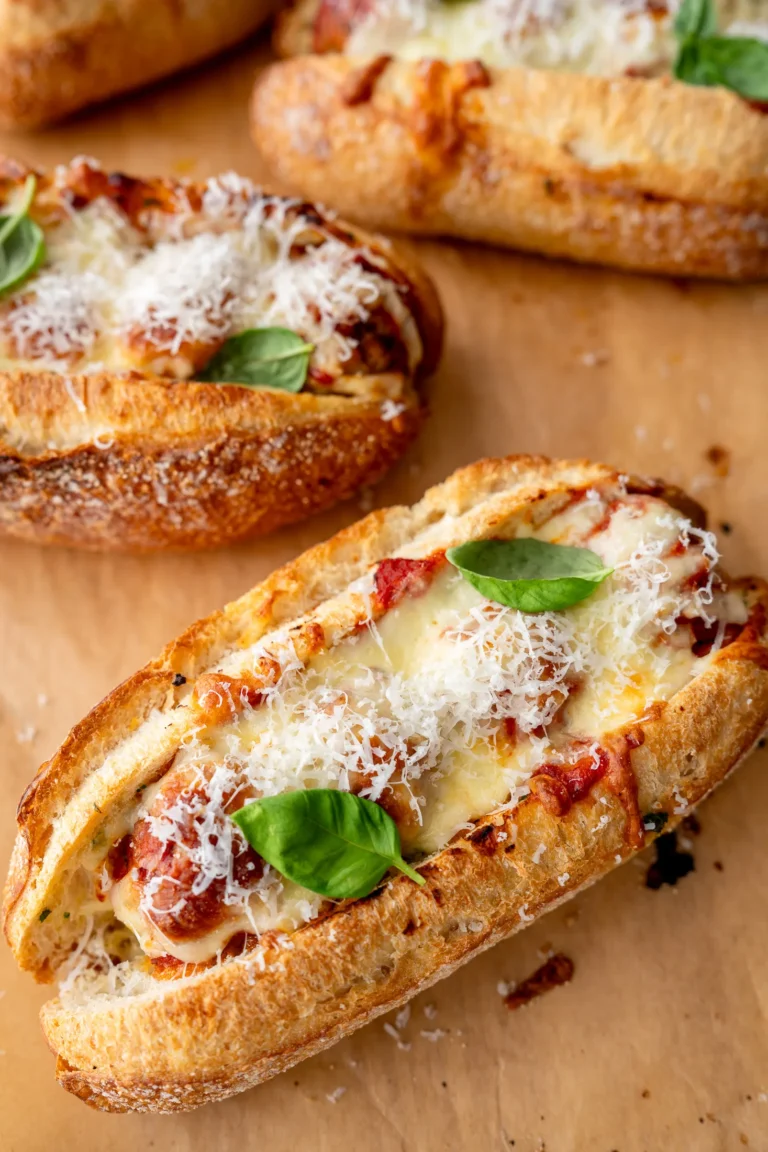
Chicken Meatball Parmigiana Recipe – All the flavours of a classic chicken parmigiana (chicken parmesan), but in meatball form! Juicy chicken meatballs are baked in a rich tomato sauce, then covered with melty cheese and a crispy breadcrumb topping.
Creamy Parmesan Chicken Pasta Recipe – Tender, juicy chicken strips are combined with a creamy, parmesan-laden sauce and pasta, then topped with a crispy panko crumb. Taking less than 30 minutes to make, it’s the ultimate comfort food for a hearty and family-friendly weeknight.
One-pan Garlic Parmesan Chicken and Potatoes Recipe – An easy family dinner featuring golden chicken thigh cutlets and baby potatoes roasted together in a garlic, lemon and herb marinade. Finished with parmesan and served with a creamy lemon parmesan yoghurt sauce, this comforting chicken tray bake (sheet-pan dinner) needs only 15 minutes of prep from you, then the oven does the rest of the work.
Chicken Schnitzel with Creamy Mushroom Sauce Recipe – Golden chicken schnitzels topped with a creamy mushroom sauce you can make in the same pan – what’s not to love? It’s freezer-friendly, weeknight-worthy, and feels like a hug on a plate.
Crispy Chicken Schnitzel Alfredo Recipe – Two of my favourite foods come together to create the ultimate 20-minute meal. Crispy chicken schnitzel + fettuccine Alfredo = pure heaven!
Chicken Parmigiana (Chicken Parmesan)
Share Pin Recipe PrintIngredients
- 2 tbsp olive oil
- 1 red onion, finely diced
- ½ tsp sea salt flakes, or to taste
- 1 tbsp freshly grated garlic
- 1 tsp dried oregano
- 1 tsp fennel seeds (optional, see note 3)
- 700 g (1½ lb) passata (strained tomatoes)
- ¼ tsp freshly cracked black pepper
- 1 tsp caster (superfine) sugar (optional, see note 4)
- Small handful of fresh basil leaves, torn
- 75 g (½ cup) plain (all-purpose) flour
- 2 eggs, whisked
- 120 g (2 cups) panko breadcrumbs
- 75 g (¾ cup) finely grated parmesan
- 1 tsp garlic powder
- 250 g (9 oz) mozzarella, freshly grated or sliced (see note 5)
- Finely grated parmesan
- Fresh basil leaves
- Cheat's Caesar Salad
- See note 6 for gluten-free, dairy-free and egg-free substitutions
Instructions
- Season the chicken – Place the chicken on a large plate or tray. Sprinkle evenly on both sides with the salt and pepper. Set aside for up to 20 minutes while you prepare the tomato and basil sauce, and the rumbing (breading) station. This gives the salt time to season the chicken, helping it retain moisture during cooking.
- Make the tomato and basil sauce (marinara) – Heat the olive oil in a large, deep, heavy-based frying pan over medium heat. Add the onion and salt and cook, stirring, for 3–4 minutes until softened. Add the garlic, oregano and fennel seeds (if using) and cook, stirring, for 30 seconds until fragrant. Add the passata, black pepper and sugar (if using). Bring to a gentle simmer and cook for 10 minutes, stirring occasionally, until slightly thickened. Turn the heat off and stir through the basil.
- Crumb the chicken – While the sauce is simmering, place the flour on a sheet of baking (parchment) paper. Place the whisked eggs in a large, shallow bowl. Combine the panko breadcrumbs, parmesan and garlic powder on a second sheet of baking paper. Working with one piece of chicken at a time, coat it in the flour, shaking off any excess, then dip it into the egg. Press firmly into the breadcrumb mixture, using the baking paper to help gather and press the crumbs onto the chicken. Set aside on a plate and repeat with the remaining chicken.
- Cook the chicken – For oven-baking instructions, see note 2. To pan-fry, preheat the oven grill (broiler) to high. Heat enough olive oil to reach approximately 5 mm–1 cm (¼–½ inch) deep in a large frying pan over medium–high heat. Cook the chicken in batches for 3–4 minutes on each side, or until golden and cooked through. Adjust the heat as needed to prevent the breadcrumbs from burning. Transfer to a large baking tray in a single layer.
- Cook the spaghetti – Meanwhile, bring a large saucepan of salted water to the boil. Cook the spaghetti according to the packet instructions, minus 1 minute. Reserve 125 ml (½ cup) of the pasta cooking water, then drain. Make sure the spaghetti is cooked and drained before moving to the next step. This is important, as you don't want the crispy chicken sitting underneath the tomato sauce while you wait for the pasta.
- Top and grill (broil) – Reserve ⅔ cup of the tomato and basil sauce for the spaghetti. Spoon the remaining sauce over the chicken, leaving some of the golden crumb exposed around the edges. Top each piece evenly with the mozzarella. Grill for 2–5 minutes, watching closely, until the mozzarella is melted, bubbling and lightly golden.
- Finish the spaghetti – While the cheese melts, return the pan containing the reserved tomato sauce to low heat. Add the drained spaghetti and toss to coat, adding the reserved pasta cooking water 1 tablespoon at a time as needed until the sauce coats the spaghetti.
- Serve – Divide the spaghetti among plates and top with the chicken parmigiana. Finish with finely grated parmesan and fresh basil leaves. Serve with caesar salad on the side, if desired.
Nutrition information
Make it lighter
Nutritional information on this site is calculated using Foodworks Professional, the nutrition analysis software trusted by dietitians, researchers and food manufacturers across Australia and New Zealand. Disclaimer re gluten-free and dairy-free recipes.