






Fall-apart beef, tender vegetables and a rich, glossy gravy – this classic oven-braised pot roast is the ultimate low-effort comfort food.
I feel like everyone needs a really good pot roast recipe in their life. It sits in the same category as bolognese and roast chicken for me – once you find ‘the one’, you stop looking. You know exactly what you’re making when you want something cosy, comforting and guaranteed to make everyone very happy.
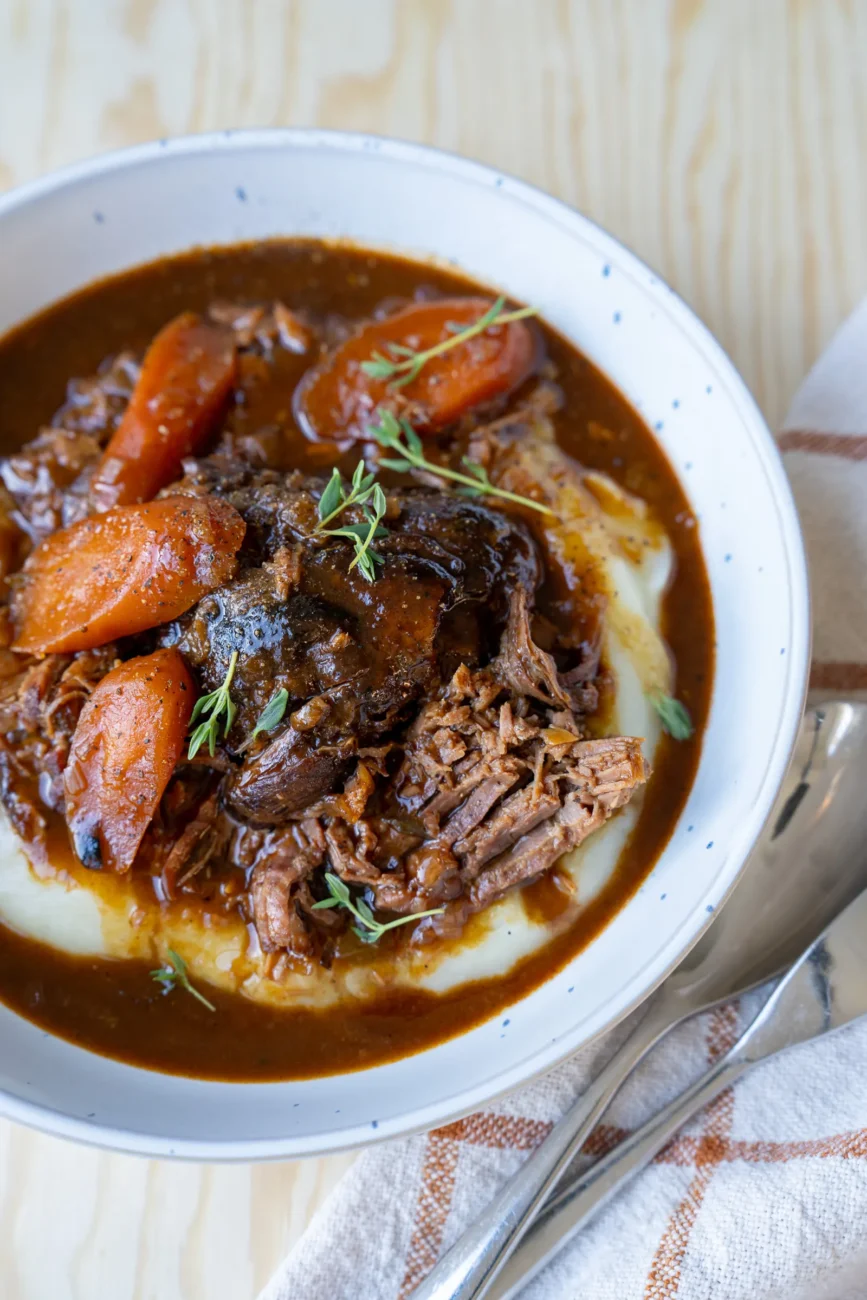
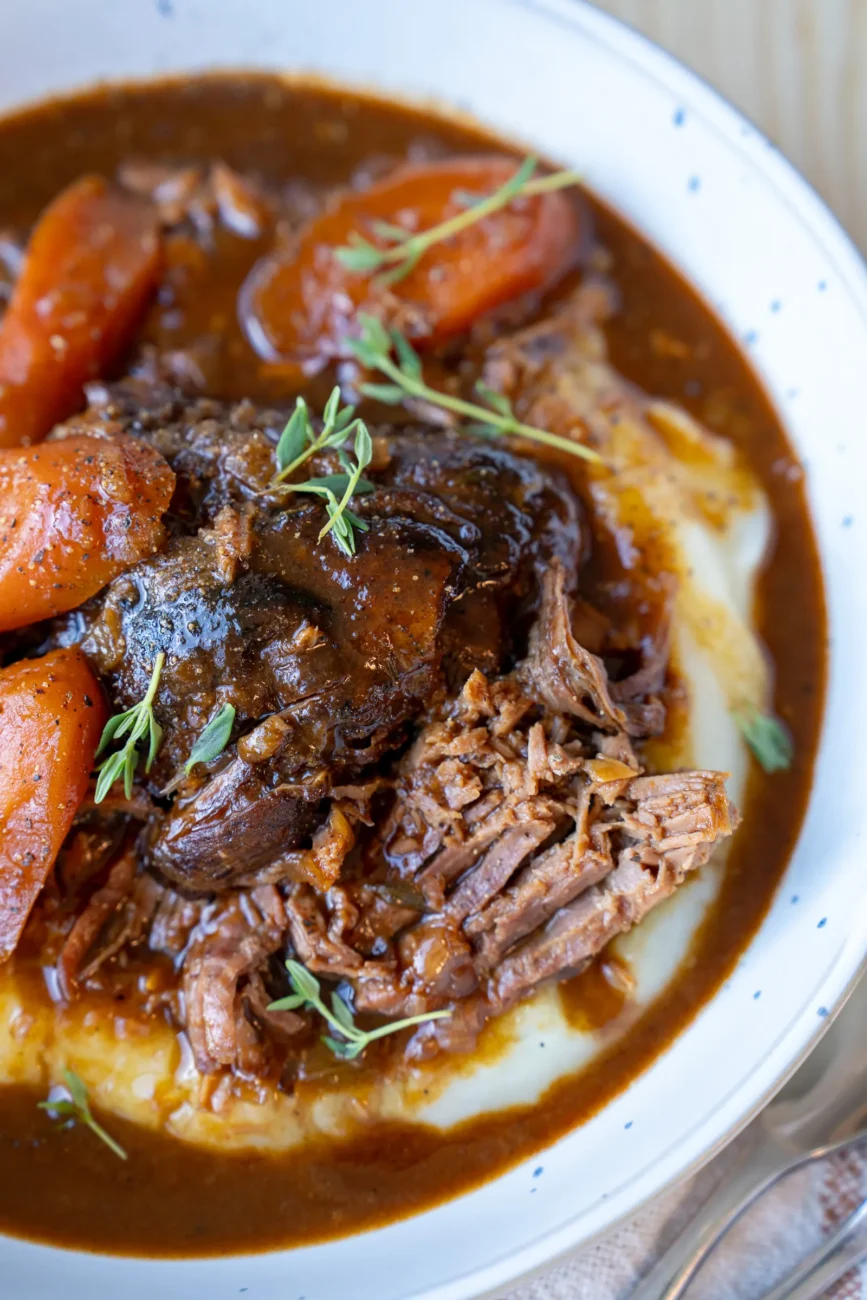
Growing up, there was nearly always some sort of slow-cooked meat bubbling away in our oven, often beef, so I take this category of dinner quite seriously. 😂 I want beef that practically falls apart when you look at it, vegetables that have soaked up all those beautiful pan juices and, most importantly, a proper rich, glossy gravy. No gravy packets with a complicated list of mystery ingredients and no standing at the stove for 3 hours pretending we’re running a restaurant.
The funny thing is, for something that looks this impressive when you put it on the table, pot roast is low effort. There’s a little bit of chopping and browning at the beginning, then the oven takes over. I LOVE this particular genre of cooking – the kind where the house smells incredible for hours and everyone assumes you’ve been working much harder than you actually have.
I was reminded how much I love this dinner when I showed a big piece of chuck roast on my Instagram stories and asked what I should make with it. Pot roast came up and I realised I needed to get my classic version onto the website. This is very much a Sunday dinner at our place. I can get it into the oven, walk away, and by dinner time we have fall-apart beef, soft carrots and celery, and enough beautiful beef gravy to spoon over a mountain of creamy mashed potatoes. My son absolutely loves this recipe, which makes me so happy because it took me YEARS to convince him about slow-cooked meat. His eventual review was, “It’s like steak, Mum, but more tender”. 😂 I mean … yes. Exactly. Welcome aboard.
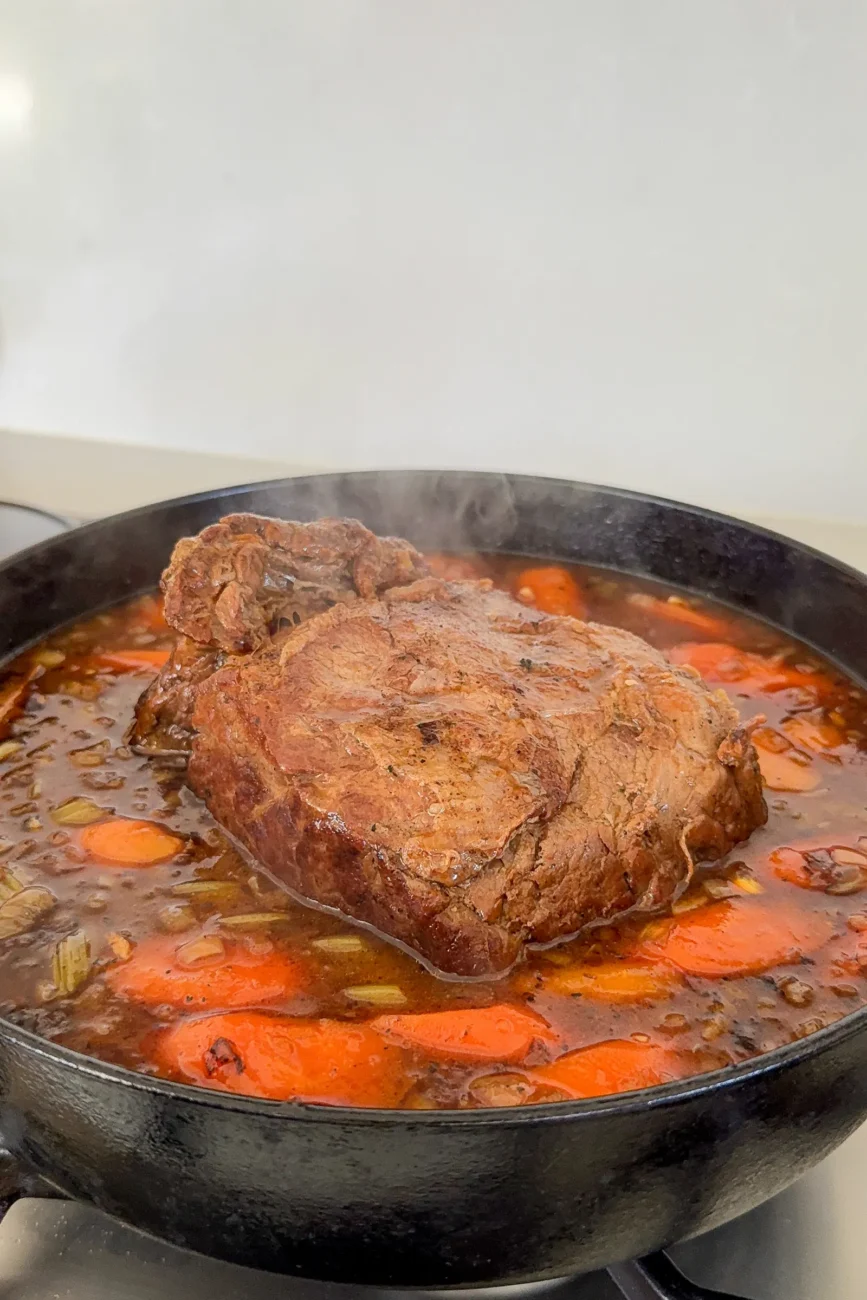
There is one thing I really want you to know before you make this pot roast: do not panic about the cooking time. Chuck roast varies enormously in thickness. Mine was a big, thick piece – around 12 cm (4¾ inches) thick – and needed approximately 4½ hours. If you check yours after the cooking time in the recipe and it’s still firm, nothing has gone wrong. Just put the lid back on and keep cooking (don’t worry, in the recipe I provide all the guidance you’ll need!). Chuck roast becomes beautifully tender when its connective tissue has had enough time to break down, so, if it isn’t tender, it simply isn’t done yet.
Serve it with creamy mashed or roast potatoes and plenty of that glossy gravy, and you’ve got one of those dinners that feels like a proper occasion without actually requiring occasion-level effort. It feeds a crowd, the leftovers are incredible and, if your family is anything like mine, there will be considerably more enthusiasm about sitting down at the dinner table than usual.
What is the best cut of beef for pot roast?
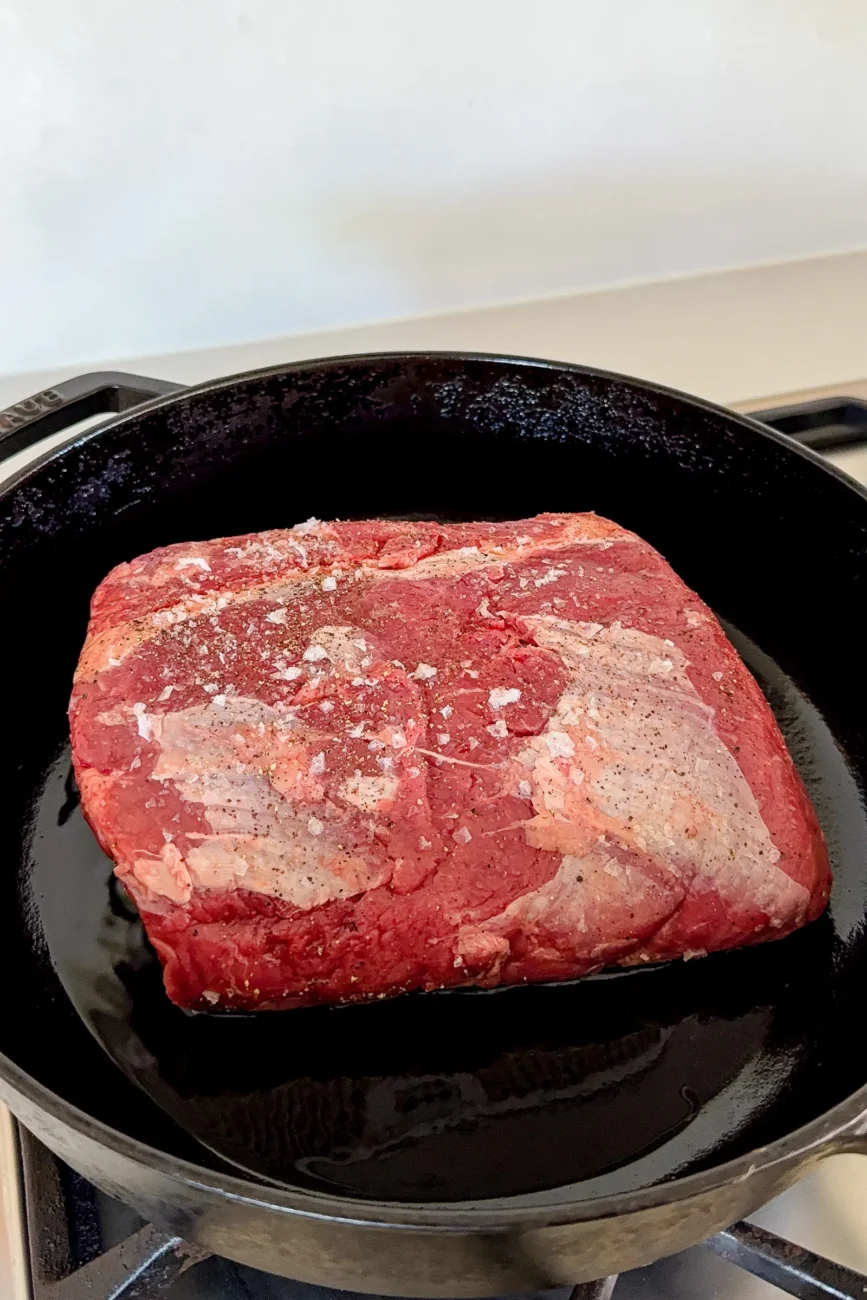
Beef chuck roast is my first choice. It has beautiful marbling and connective tissue that breaks down during the long, slow cook, leaving you with incredibly tender beef and a rich braising liquid. Look for a well-marbled piece rather than very lean beef – the fat and connective tissue are exactly what make this style of cooking work so well. In Australia, US and the UK, this cut is called chuck roast, but in the UK it may be called a blade roast or a chuck and blade joint.
Brisket can also be used, although it may require a longer cooking time. Chuck (braising/casserole) steak is another option if you want to reduce the cooking time, as the individual pieces are thinner than a whole roast.
How long does chuck roast take to become tender?
It depends heavily on the thickness of your beef, not just its weight. My 1.2–1.6 kg (2½–3½ lb) chuck roast was approximately 12 cm (4¾ inches) thick and took around 4½ hours at 160°C (325°F) (140°C/275°F fan-forced).
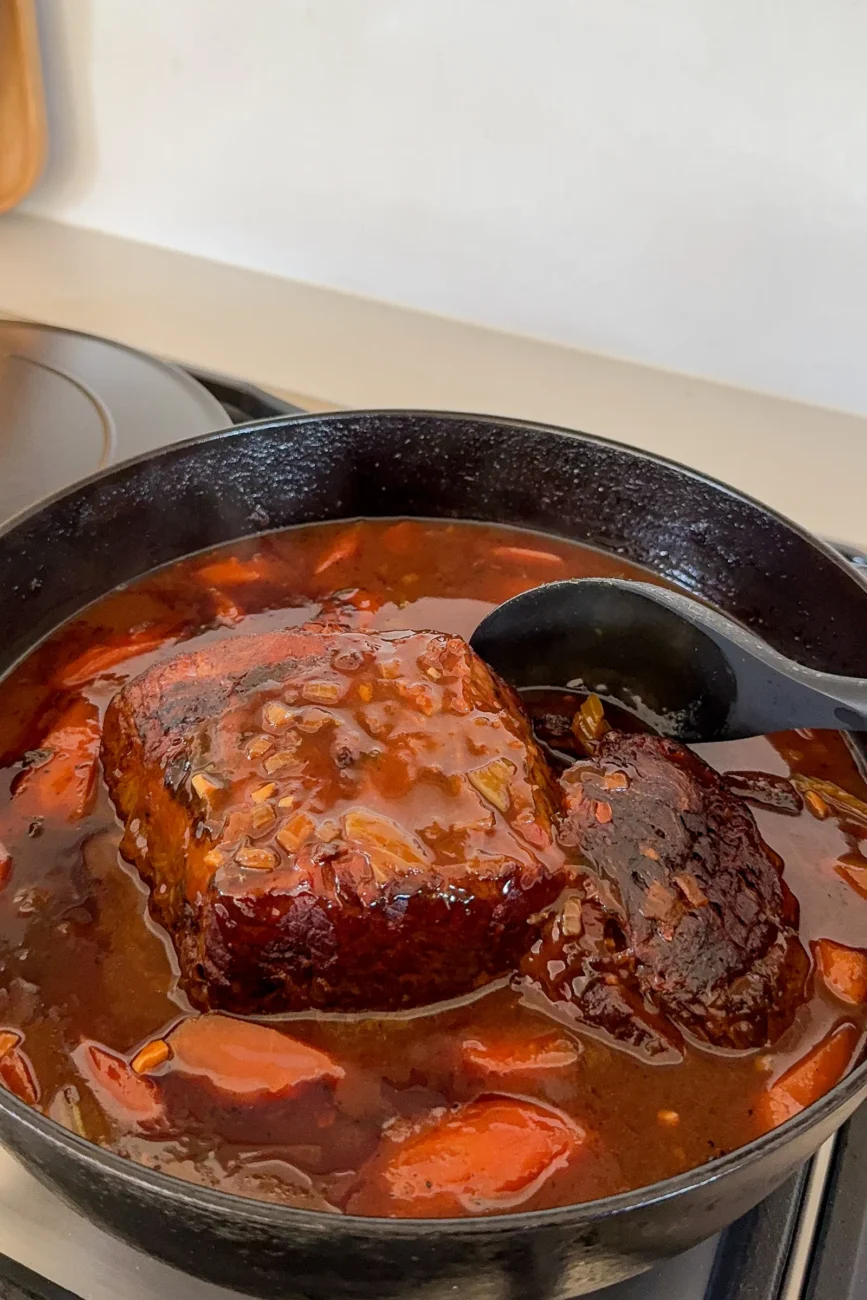
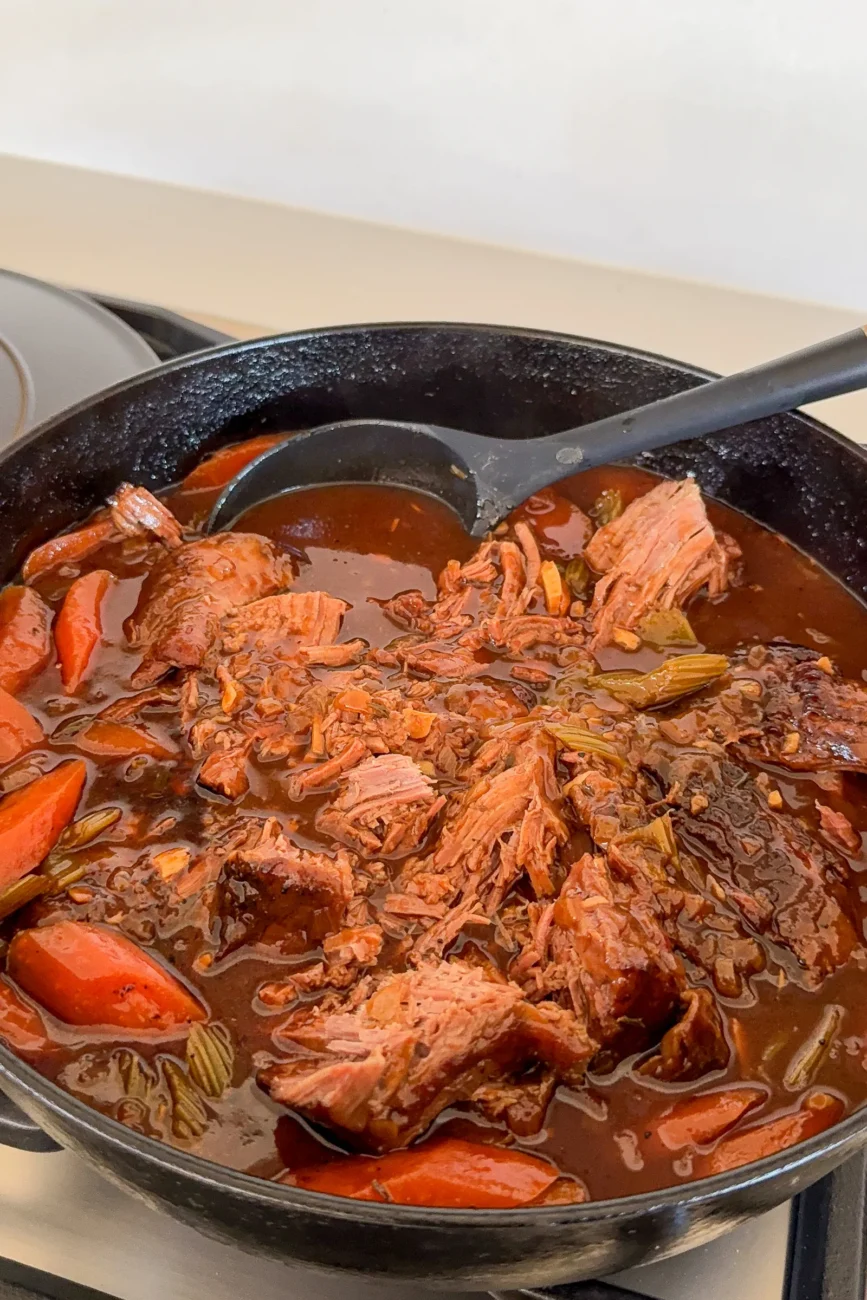
Start checking your beef at the 4-hour mark. Push a fork or small knife into the thickest part. If you feel resistance, cover it again and continue cooking in 30-minute intervals. When it’s ready, the fork should slide in easily and the beef should pull apart with very little effort.
Why is my pot roast still tough after hours of cooking?
It needs more time! This is probably the most important thing to know about pot roast. Tough chuck roast after several hours of cooking doesn’t mean you’ve overcooked it – in most cases, it means the connective tissue hasn’t had enough time to break down yet. Keep the dish tightly covered and continue cooking in 30-minute intervals until the beef is very tender. Don’t let the clock decide when your pot roast is ready; let the beef tell you.
Why does the pot roast need to be tightly covered?
The tight-fitting lid traps steam and moisture inside the casserole dish, creating the moist environment needed to slowly braise the beef. It also prevents the braising liquid from evaporating before the beef is tender. A heavy casserole dish or enamelled cast-iron pot with a tight-fitting lid is ideal. If you’re using a roasting or baking dish instead, cover it very tightly with a double layer of foil, making sure there aren’t gaps around the edges where steam can escape.
Do I need to sear the beef before making pot roast?
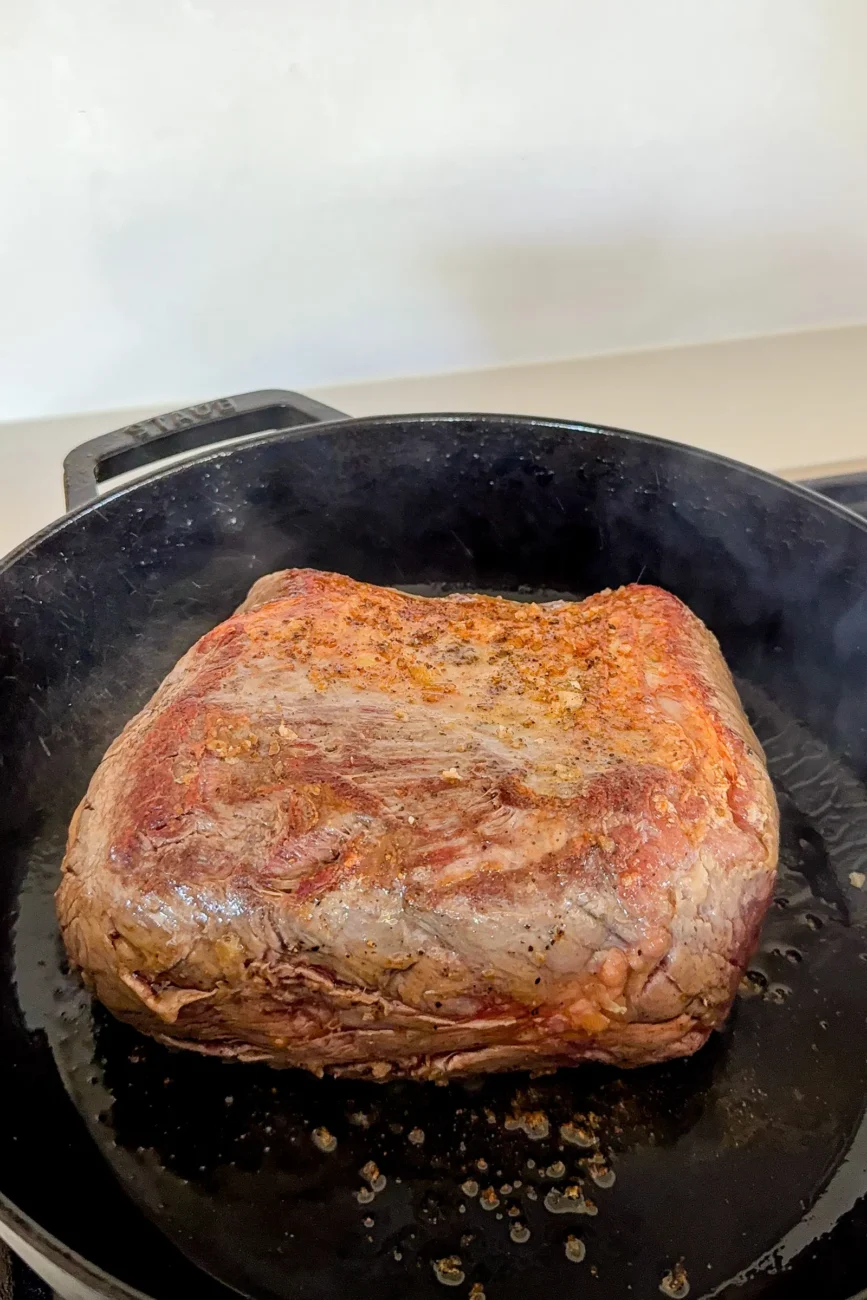
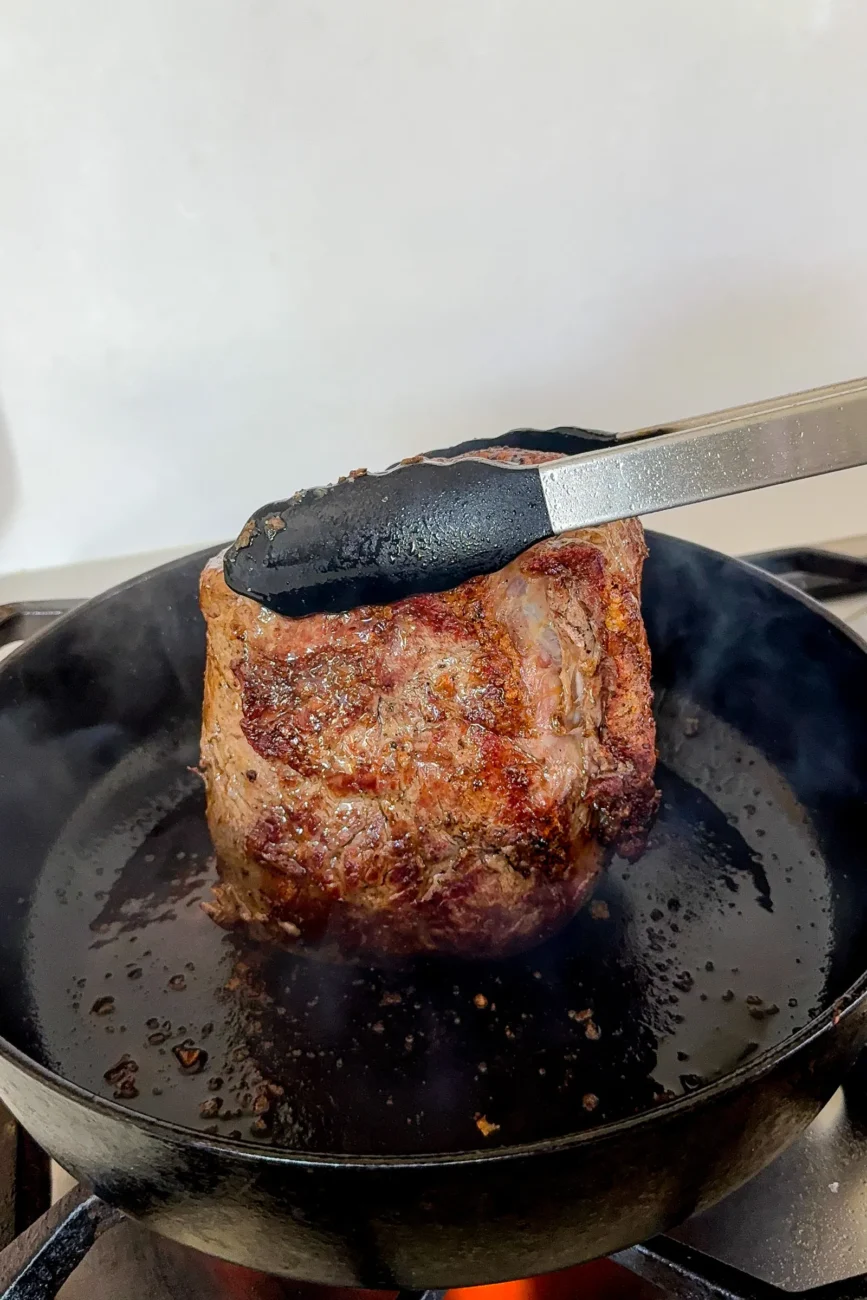
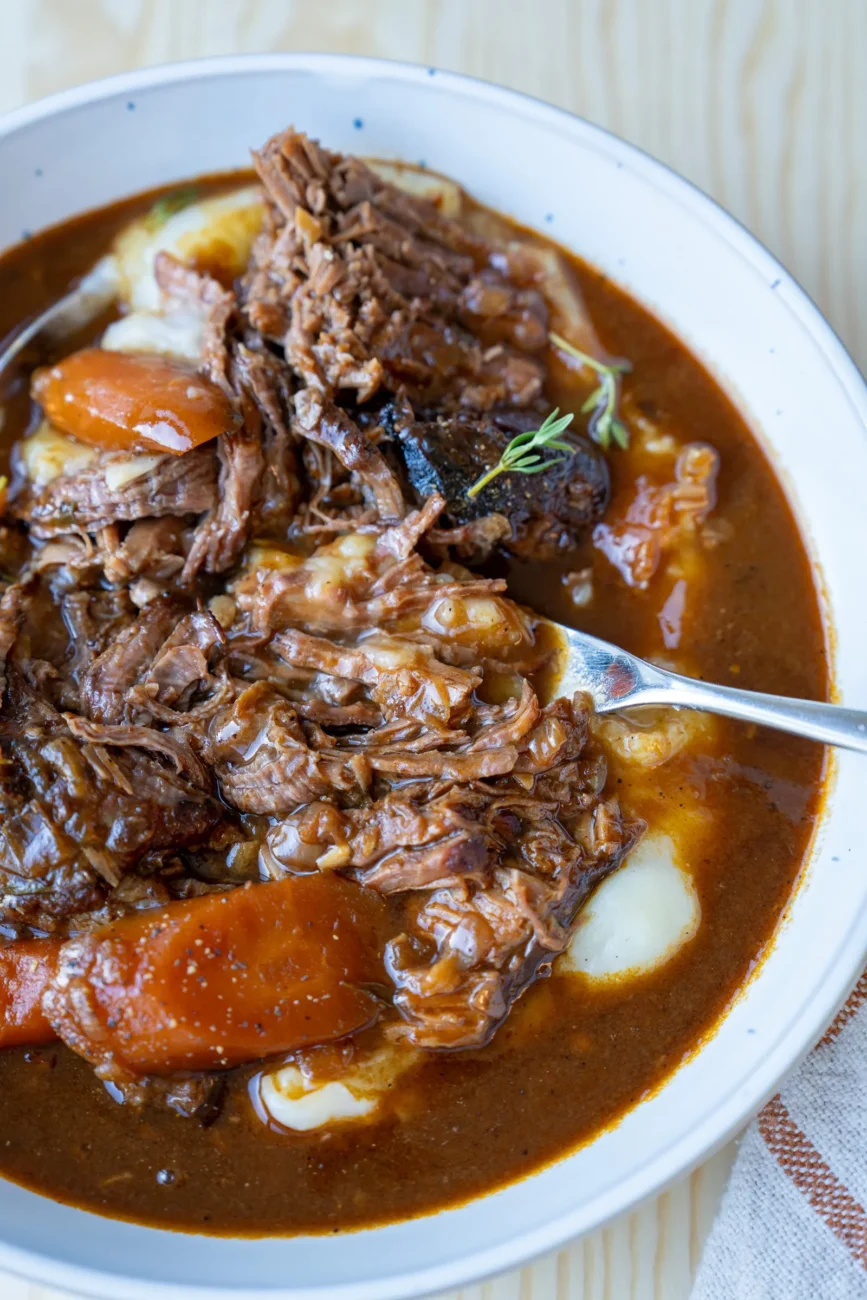
I recommend it. Browning the chuck roast creates a deeply caramelised crust and leaves loads of flavour on the bottom of the pan, which then becomes part of your gravy. It takes an extra 10 minutes or so, but for a recipe with such a simple ingredient list, it’s absolutely worth doing.
Can I slice the pot roast instead of shredding it?
Absolutely. Carefully transfer the cooked beef to a chopping board and slice it across the grain. Just don’t expect perfectly neat slices – properly cooked chuck roast is incredibly tender and may start falling apart as you cut it. But that’s a very good problem to have! For an even easier option, leave it right in the casserole dish and pull it into large, rustic pieces using two forks or spoons.
What should I serve with pot roast?
Pot roast is already loaded with tender beef, carrots, celery and plenty of rich gravy, so I like to keep the sides fairly simple. You definitely want something that can soak up all that gravy (this is not the dinner for leaving gravy behind 😂), plus something green or fresh on the side if you want to balance out the richness.
Here are my favourite sides to serve with pot roast:
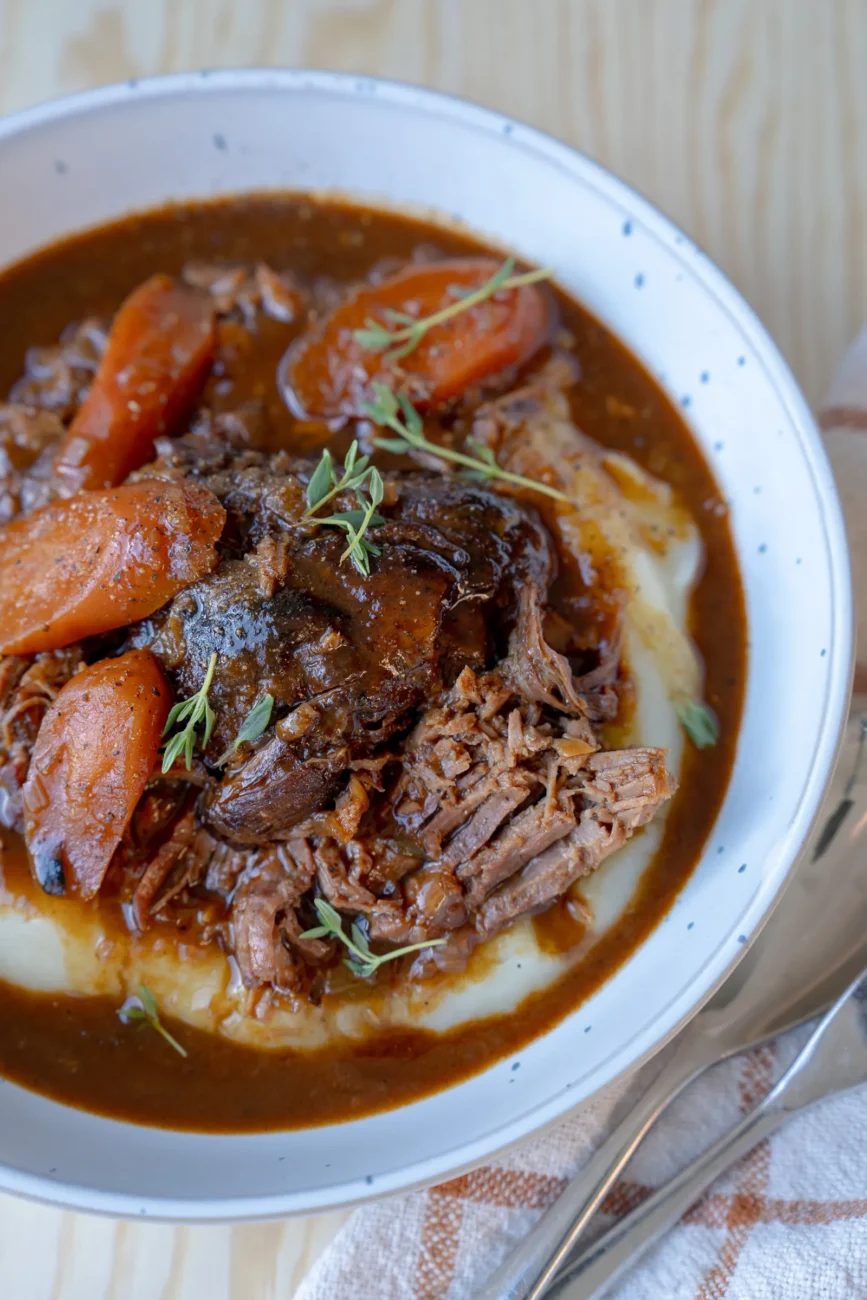
- Creamy mashed potatoes – My number-one choice and what I serve most often. Spoon the pot roast and vegetables over a generous pile of mash and let that beautiful beef gravy run into everything. Perfection.
- Creamy polenta – A fantastic alternative to mashed potatoes. Soft parmesan polenta works particularly well underneath the fall-apart beef and catches every bit of gravy.
- Roasted potatoes – If mash isn’t your thing, crispy roasted potatoes are brilliant. I particularly love the contrast between the crunchy potatoes and tender slow-cooked beef.
- Buttered baby potatoes – An easy option if you don’t want to make mash. Boil or steam baby potatoes until tender, then toss with butter, salt and fresh parsley.
- Green beans – Probably my favourite green vegetable to serve alongside pot roast. Keep them simple – steamed or blanched with a little butter, salt and pepper is all they need.
- Steamed greens – Broccolini (tenderstem broccoli), broccoli, brussels sprouts or peas are all great options. The pot roast is rich, so simply cooked green vegetables help balance the meal.
- Roasted vegetables – Pumpkin, parsnips, sweet potato or brussels sprouts are lovely if you’re feeding a crowd and want to turn this into a bigger Sunday roast-style dinner.
- Crusty bread – If you’re skipping potatoes altogether, serve warm crusty bread alongside for mopping up the gravy. Because again, we are absolutely not wasting the gravy!
- Yorkshire puddings – If you’re going for the full roast-dinner experience, these are made for soaking up rich beef gravy. You can even find ready-made Yorkshire puddings and also Yorkshire pudding mix at the supermarket.
- A simple green salad – This is my pick when I want something fresh alongside. Keep the dressing light and sharp – you don’t need another rich element competing with the pot roast.
For us, it’s almost always creamy mashed potatoes and a simple green vegetable. The carrots and celery are already cooked with the beef, so you really don’t need to make five different sides. The whole point of this dinner is that it looks like you’ve made a massive Sunday roast when, in reality, the oven has done most of the work!
If you enjoyed The BEST Beef Pot Roast Recipe, I think you’ll love:
Slow-cooked Osso Buco Recipe – A flavour-packed, nourishing family-friendly dish, made with simple low-cost ingredients in just one pan. The beef is cooked with vegetables in a tomato-based sauce until fall-apart tender, then topped with a fresh parsley gremolata.
Beef Casserole Recipe – This beef casserole with potatoes and carrots is comfort food at its best, perfect to make ahead for busy weeknights or to indulge in during a cosy weekend.
Slow-cooked Traditional Goulash Recipe – The ultimate winter warmer, this rich and comforting goulash features pork or beef cooked low and slow in a flavoursome tomato-based sauce until melt-in-the-mouth tender.
Slow-cooked Beef Stroganoff Recipe – This slow-cooked stroganoff is hearty, creamy comfort food made easy. With fall-apart, tender beef and a rich, velvety sauce, it’s a no-fuss, one-pot wonder that’s perfect for busy weeknights, cosy weekends or filling the freezer.
Rosemary Garlic Lamb Shoulder with Gravy Recipe – In this stress-free recipe, lamb shoulder is slow-roasted until it’s meltingly tender, then served with a rich homemade gravy made from the roasting juices. No searing needed – just one pan used and the oven does almost all the work.
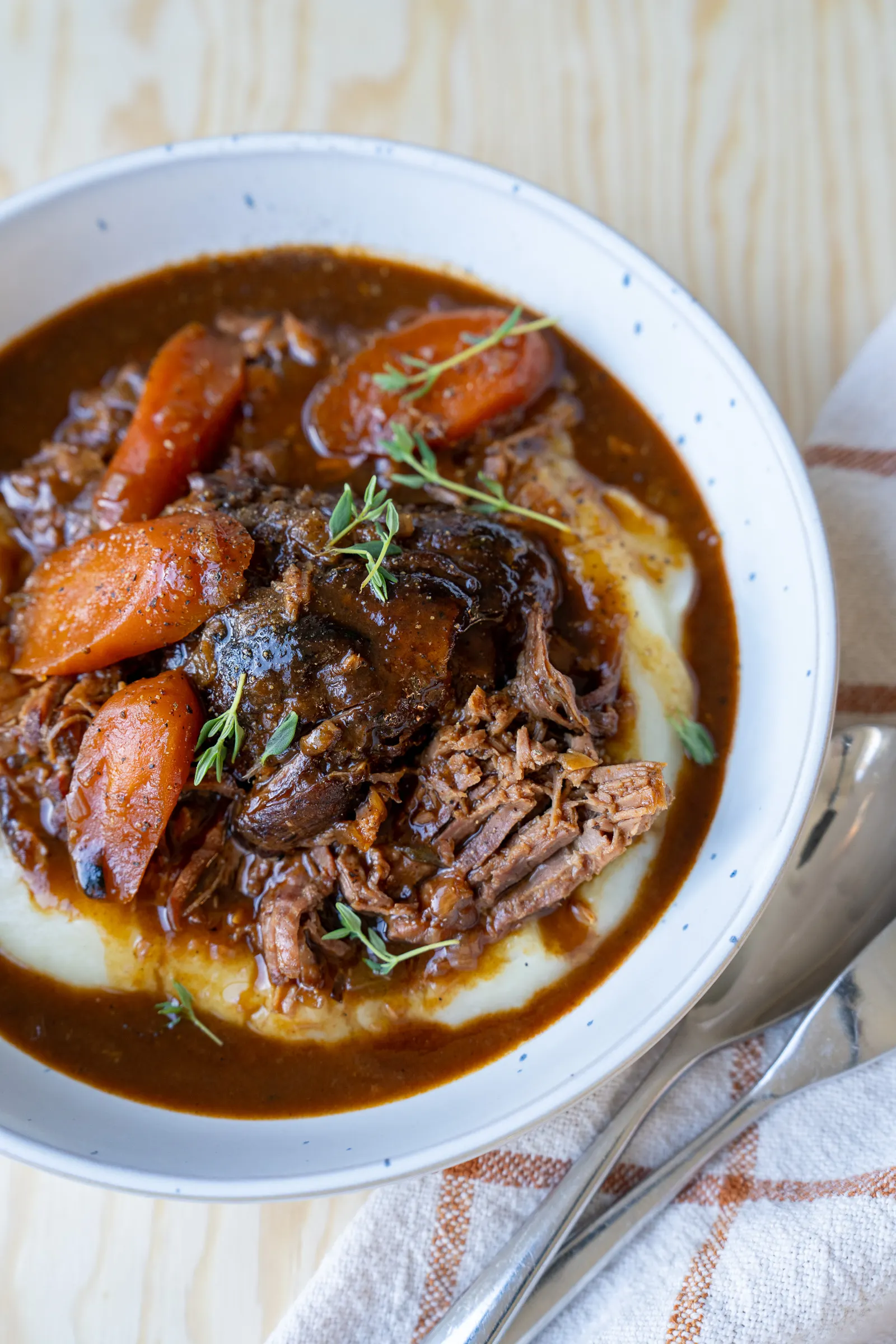
The BEST Beef Pot Roast Recipe
“Made this recipe today. Absolutely the best pot roast. Flavor and tenderness of roast was outstanding.” Share Pin Recipe PrintIngredients
- 1.2–1.6 kg (2½–3½ lb) beef chuck roast (see note 1)
- 2 tsp sea salt flakes, plus extra to finish
- ½ tsp freshly cracked black pepper, plus extra to finish
- 2 tbsp olive oil
- 2 brown onions, finely diced
- 4 carrots, peeled and cut diagonally into large 5–6 cm (2–2½ inch) pieces
- 3 celery stalks, cut diagonally into large 4–5 cm (1½–2 inch) pieces
- 1 tbsp finely chopped garlic (approximately 6 cloves)
- 2 tbsp tomato paste
- 3 tbsp plain (all-purpose) flour
- 1 litre (4 cups) beef stock
- 1 tbsp Worcestershire sauce
- 4 thyme sprigs
- 2 bay leaves
- 40 g (1½ oz) cold unsalted butter (optional)
- Mashed potatoes, to serve
- Fresh thyme leaves, to serve
- 1 tbsp cornflour (cornstarch)
- 2 tbsp cold water
Instructions
- Preheat the oven – Preheat the oven to 160°C (325°F) (140°C/275°F fan-forced).
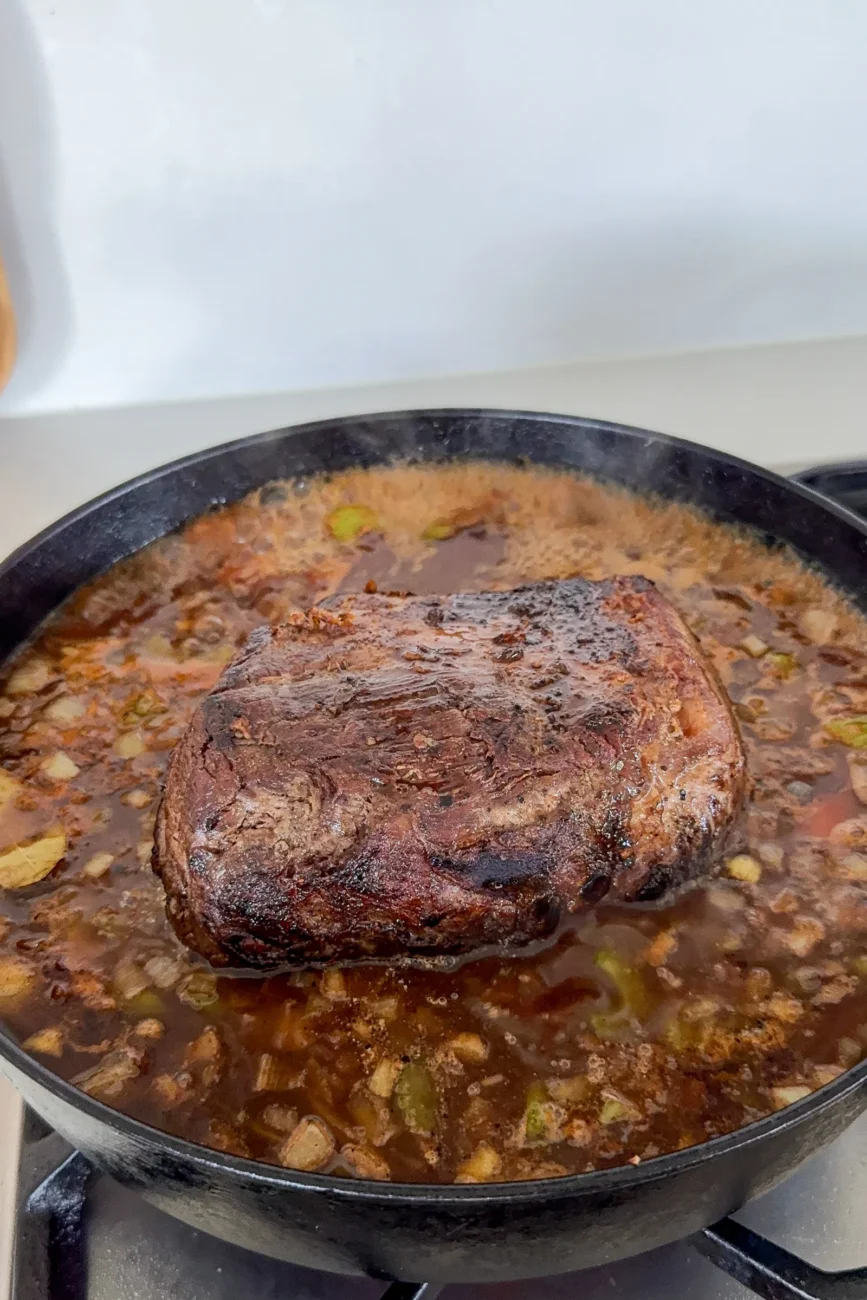
- Brown the beef – Pat the beef dry with a paper towel and season all over with the salt and pepper. Heat the olive oil in a large, heavy-based oven-safe casserole dish (see note 2) over medium–high heat. Add the beef and sear for 4–5 minutes on each broad side, then brown the edges. Transfer to a plate.
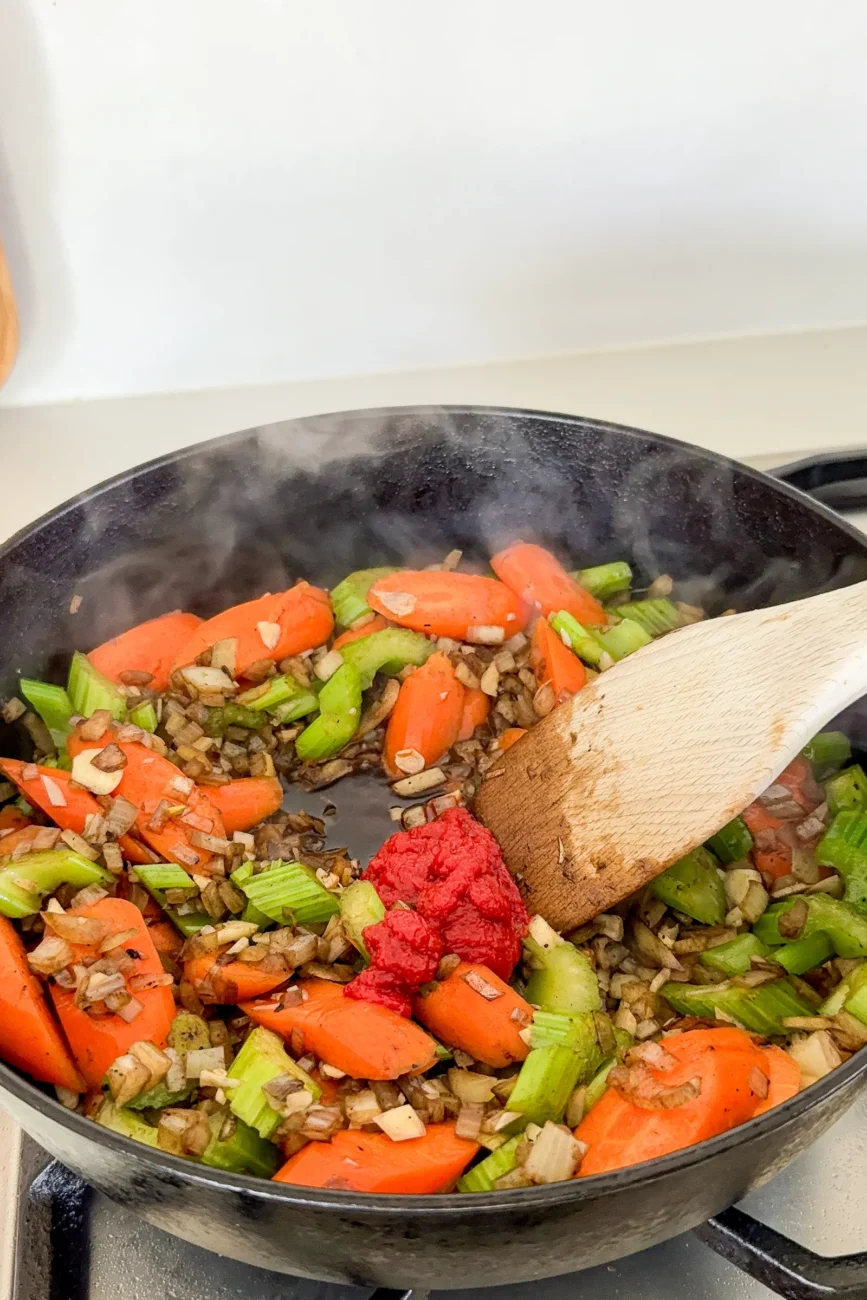
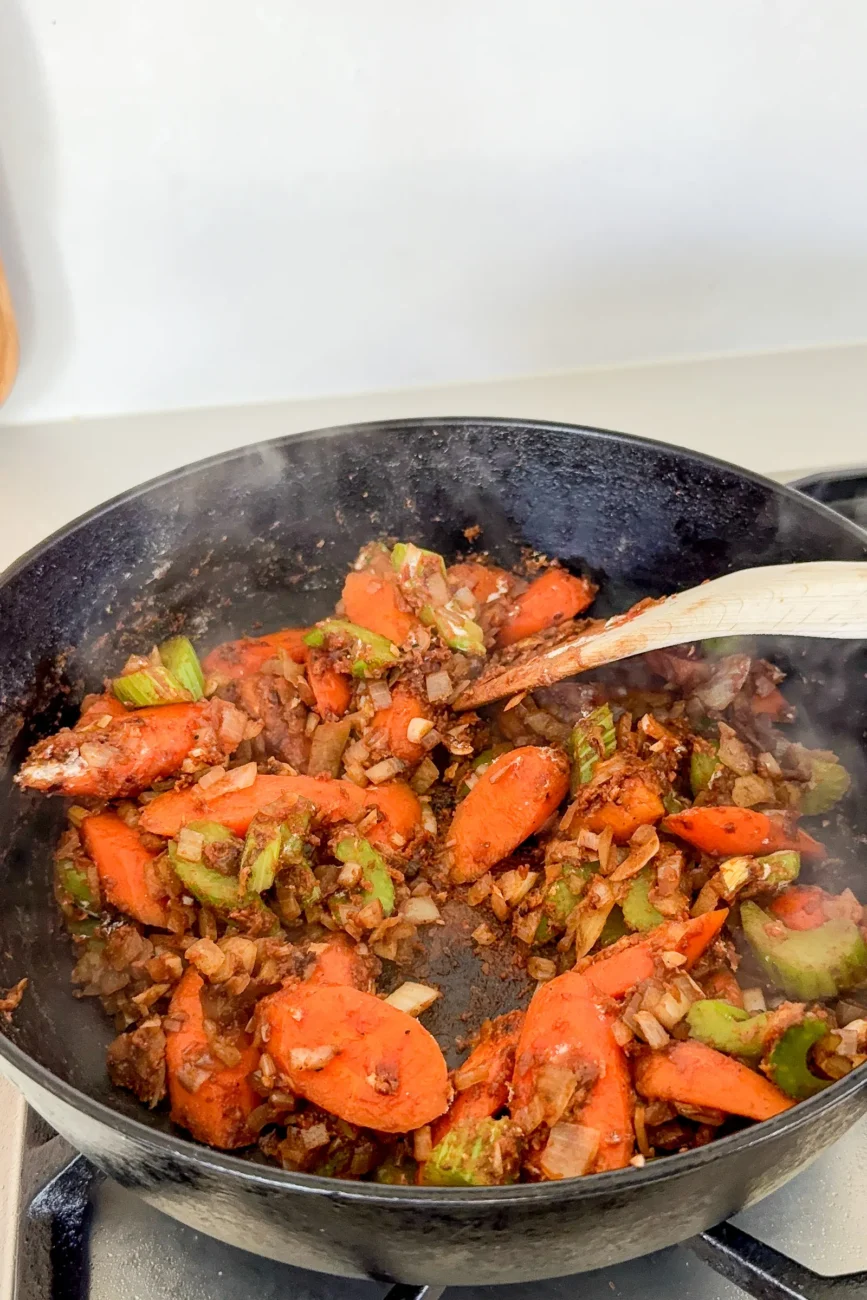
- Cook the vegetables – Reduce the heat to medium. Add the onion and cook for 4–5 minutes, stirring occasionally, until softened. Add the carrot and celery and cook for a further 2–3 minutes, stirring occasionally.
- Add the garlic – Add the garlic and cook, stirring, for 30 seconds.
- Build the gravy base – Add the tomato paste and cook for 1 minute.
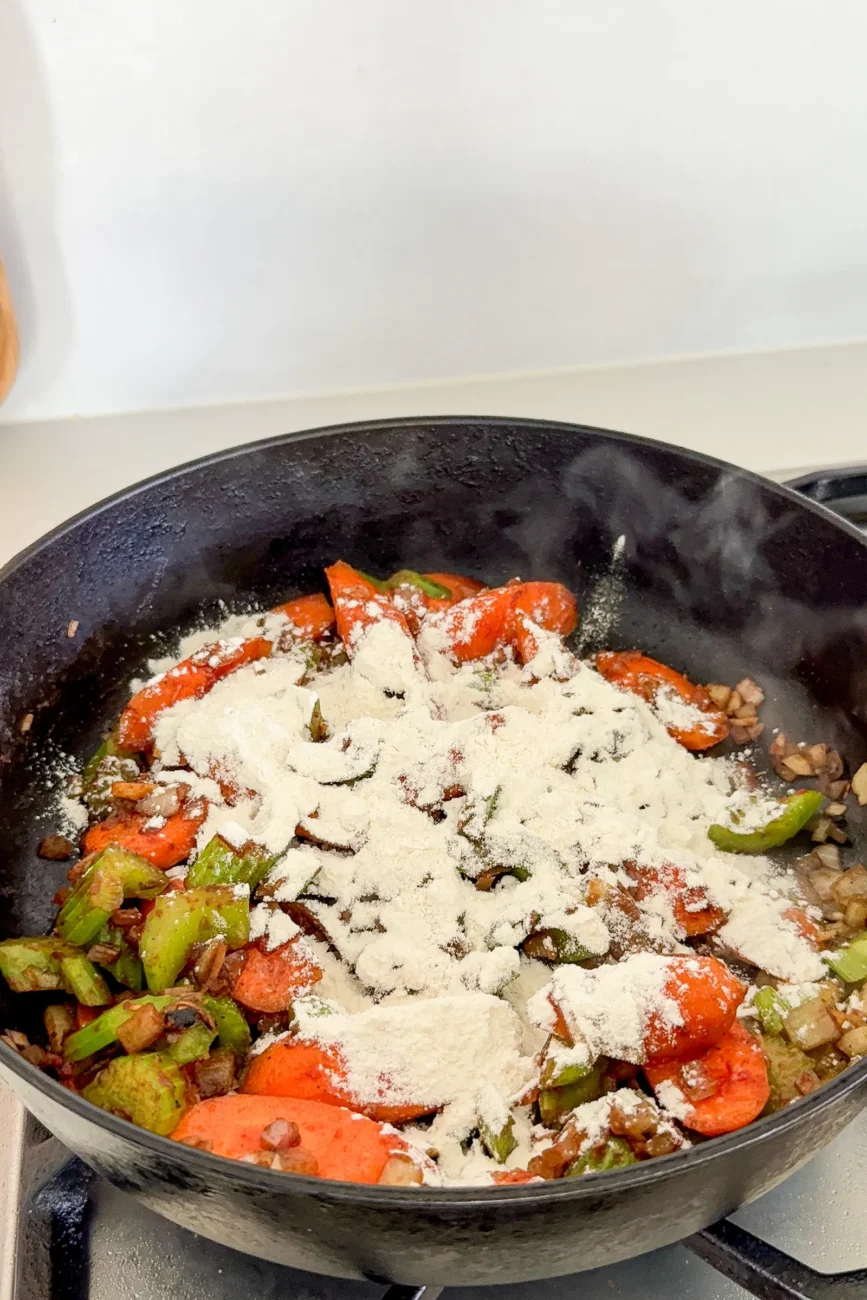
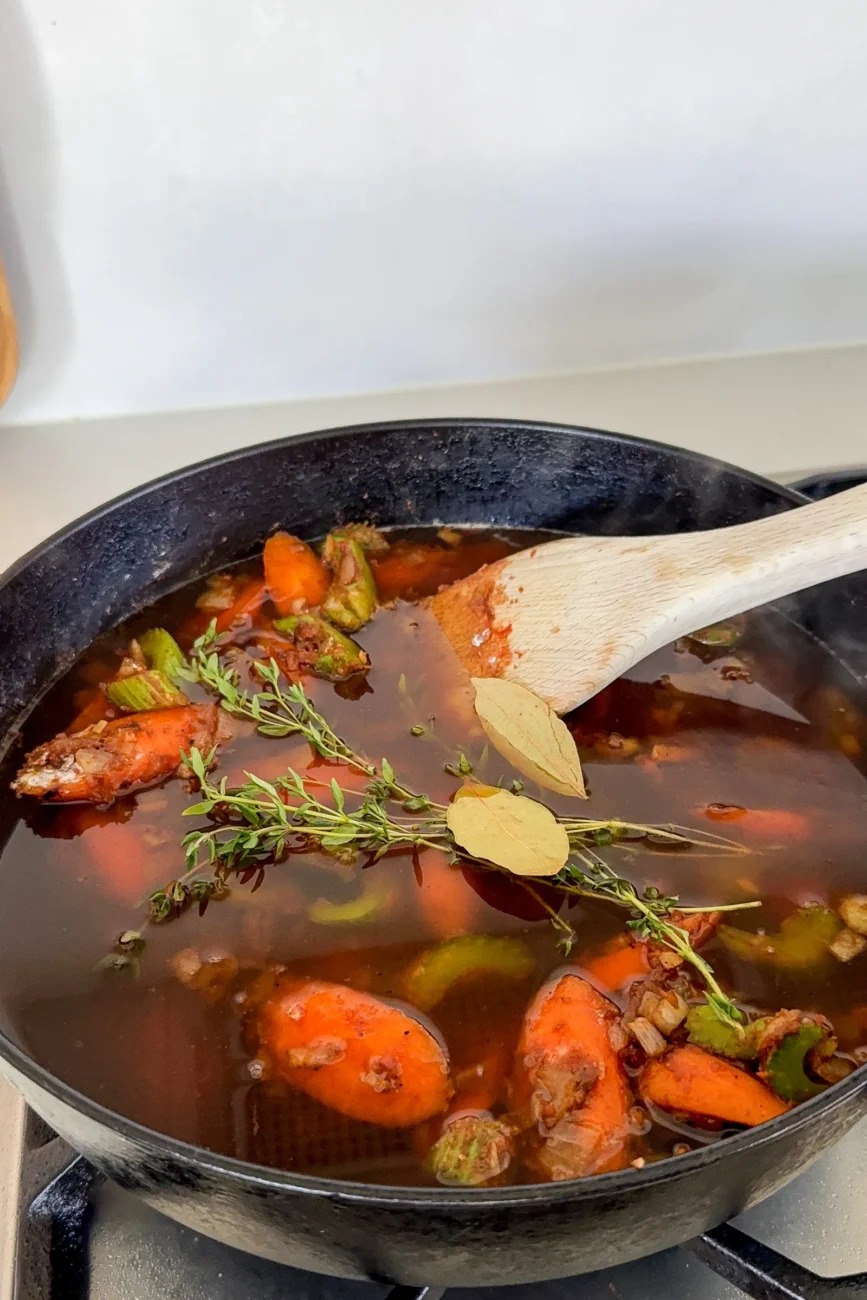
- Add the flour and stock – Sprinkle over the flour and stir for 1 minute. Pour in the beef stock, then add the Worcestershire sauce, thyme and bay leaves. Stir well and bring to a gentle simmer.
- Braise the beef – Return the beef and any resting juices to the dish, nestling it among the vegetables. Cover with a tight-fitting lid (or cover very tightly with a double layer of foil – see note 3) and transfer to the oven. Cook for 2 hours.
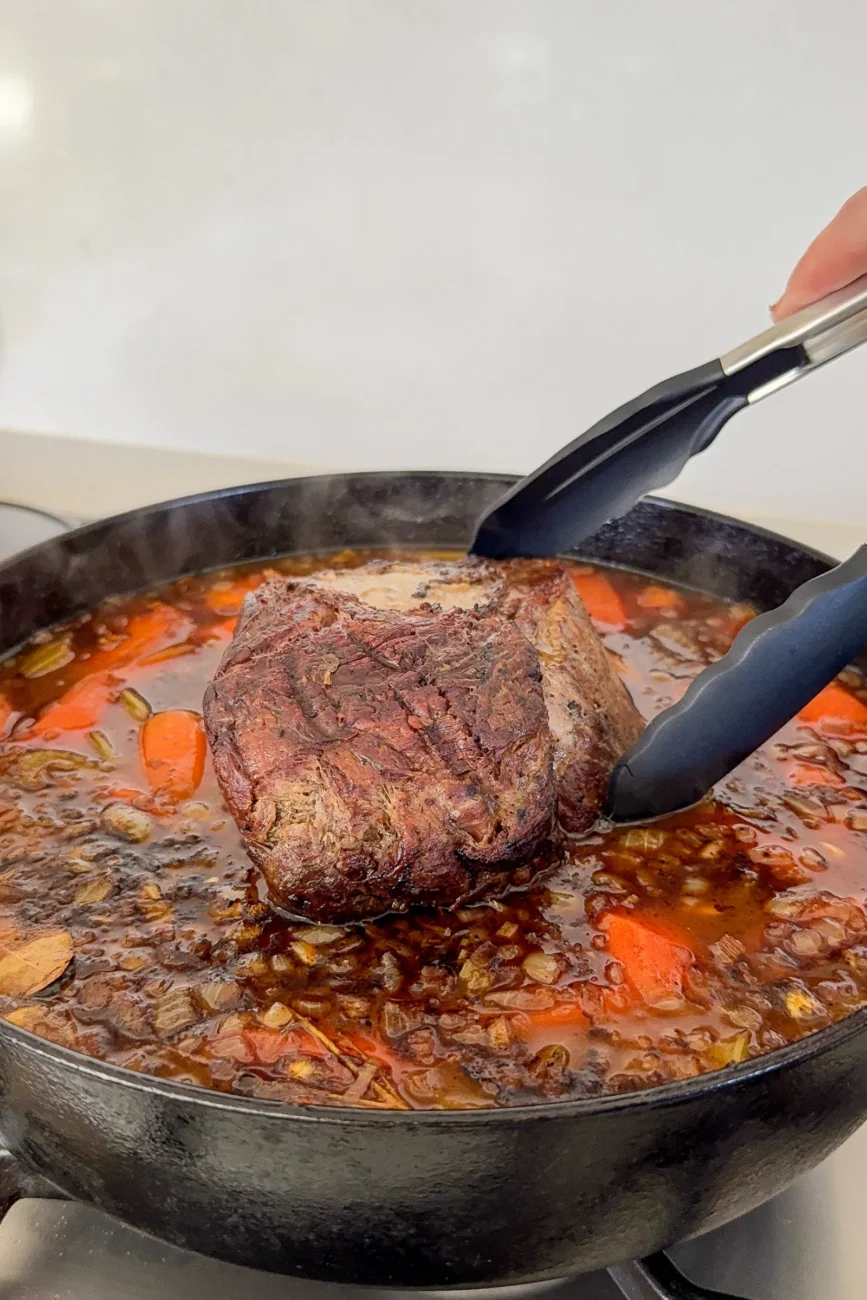
- Turn the beef – Remove the dish from the oven and carefully turn the beef over. Check that there is still plenty of braising liquid in the dish (see note 4). Cover and return to the oven for another 2 hours.
- Check for tenderness – At the 4-hour mark, insert a fork or small knife into the thickest part of the beef. There should be very little resistance and the beef should pull apart easily. If it still feels firm, cover and continue cooking for 30 minutes, then check again. Continue cooking in 30-minute intervals until beautifully tender. For a thick chuck roast, expect approximately 4½ hours total, although the tenderness of the beef is more important than the exact cooking time (see note 5).
- Let it sit – Remove the casserole dish from the oven and leave the beef to sit in the braising liquid with the lid on for 10 minutes. Discard the thyme stalks and bay leaves.
- Finish the gravy – Stir the cold butter through the hot gravy (if using) until melted and glossy. Taste and season with additional salt and pepper if needed. If you'd prefer a thicker gravy (see note 6).
- Serve it pulled or sliced – For a rustic pot roast, leave the beef in the casserole dish and use two large spoons or forks to gently pull it into large pieces. It should come apart very easily. Alternatively, carefully transfer the beef to a chopping board and slice it across the grain. The beef will be extremely tender, so don't expect neat, perfect slices – that's not the goal.
- Serve – Serve the beef with the braised carrots and celery, plenty of creamy mashed potatoes and generous spoonfuls of gravy. Finish with fresh thyme leaves.
Watch how to make it
Nutrition information
Nutritional information on this site is calculated using Foodworks Professional, the nutrition analysis software trusted by dietitians, researchers and food manufacturers across Australia and New Zealand. Disclaimer re gluten-free and dairy-free recipes.




















Maria says:
For gluten free, can a plain gf flour like Bob’s Red Mill in the blue pack, be substituted please?
Simple Home Edit Team says:
Hi Maria, yes, that flour or any other gluten-free flour should be fine. 😊
Kate says:
What else can be used instead of flour to thicken the gravy? I’m GF and would love to make this recipe.
Simple Home Edit Team says:
Hi Kate! 😊 The easiest option would be to use gluten-free flour.
Desi says:
Hi Nicole, what brand pan is that you’re using? I love it, especially the darker coloured interior
Nicole says:
Hi Desi! It’s the 28 cm Staub Chistera! I actually chose it specifically for that beautiful black enamelled interior. It’s such a fantastic pan! I’ve had mine for a few years now and absolutely love it. I bought it off Amazon. I hope that helps. Nic ❤️
Leigh Ann says:
How do I do this recipe in a slow cooker
Simple Home Edit Team says:
Hi Leigh, to adapt this recipe for a slow-cooker: Sear the beef and saute the vegetables on the stove as directed first, as this builds crucial flavour. Then, transfer everything to the slow-cooker and cook on low for 8–10 hours or on high for 5–6 hours. You may need to thicken the gravy with a cornflour (cornstarch) slurry at the end. 😊
Monica says:
Hi,
Can you do this in an instant pot?
Nicole says:
Hi Monica! I haven’t tested this one in the Instant Pot, but if I was adapting it I’d still sear the beef first using the sauté function, then cook the vegetables and tomato paste before adding the flour, stock and seasonings. I’d pressure cook the chuck roast on high for around 60–70 minutes, then allow a natural release for 15–20 minutes. Because this recipe relies on a long braise to break down the chuck and naturally thicken the gravy, you may need to use the sauté function at the end to reduce the sauce a little if needed. This is just how I’d approach it though, as I haven’t tested it myself. 😊 Nic ❤️
Sara says:
This was amazing! So easy to make and really is so delicious. I served it with mashed potatoes and green beans. This will be on repeat in my house.
Rachel R. says:
Made this for dinner tonight and it turned out beautifully! Perfectly tender roast and the gravy was rich and delicious!
KC says:
Delicious. Made this for Sunday family dinner. Was really good!
Dana says:
Looks divine! Have you ever used a slow cooker for this?
Nicole says:
Hi Dana! Yes! I actually have a slow-cooker version coming very soon. 😊 I tested this recipe in the slow cooker and decided it needed a few adjustments to get that same rich flavour and beautiful texture, so I’ve developed a version specifically for the slow cooker instead. Keep an eye out! Nic x
Sharon says:
Can you also cook in the slow cooker?
Nicole says:
Hi Sharon, I have a beef pot roast slow cooker recipe coming soon. Nic x
kelley says:
Delicious!
Alyssia says:
Could I try this in a slow cooker? Any recommendations for the switch?
Nicole says:
Hi Alyssia! I actually tested this exact recipe in the slow cooker because I was curious about the same thing. It definitely worked, but I just didn’t love it quite as much as the oven version — the flavour wasn’t as rich as I wanted it to be. I’m working on a pot roast specifically for the slow cooker, with everything adjusted to suit that style of cooking properly. Watch this space! Nic x