






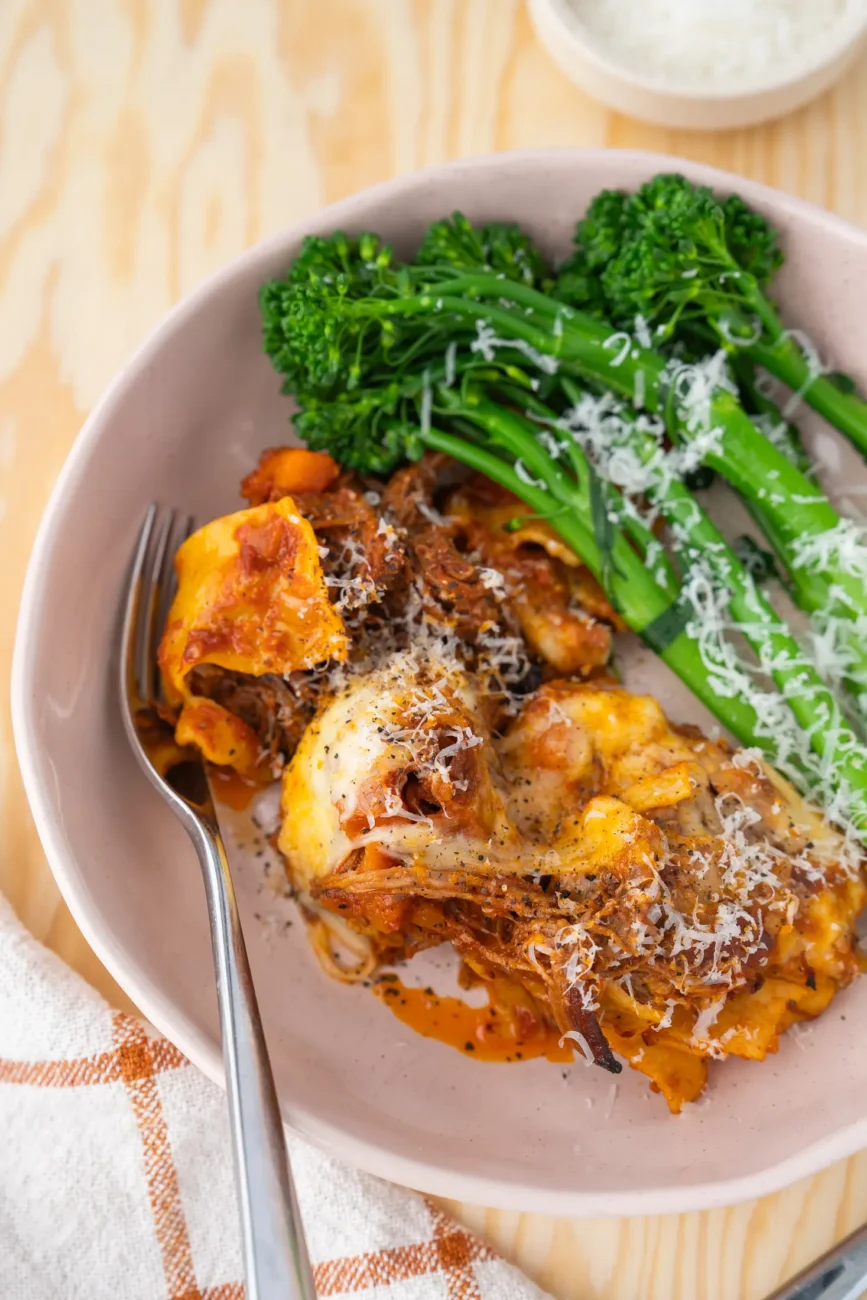
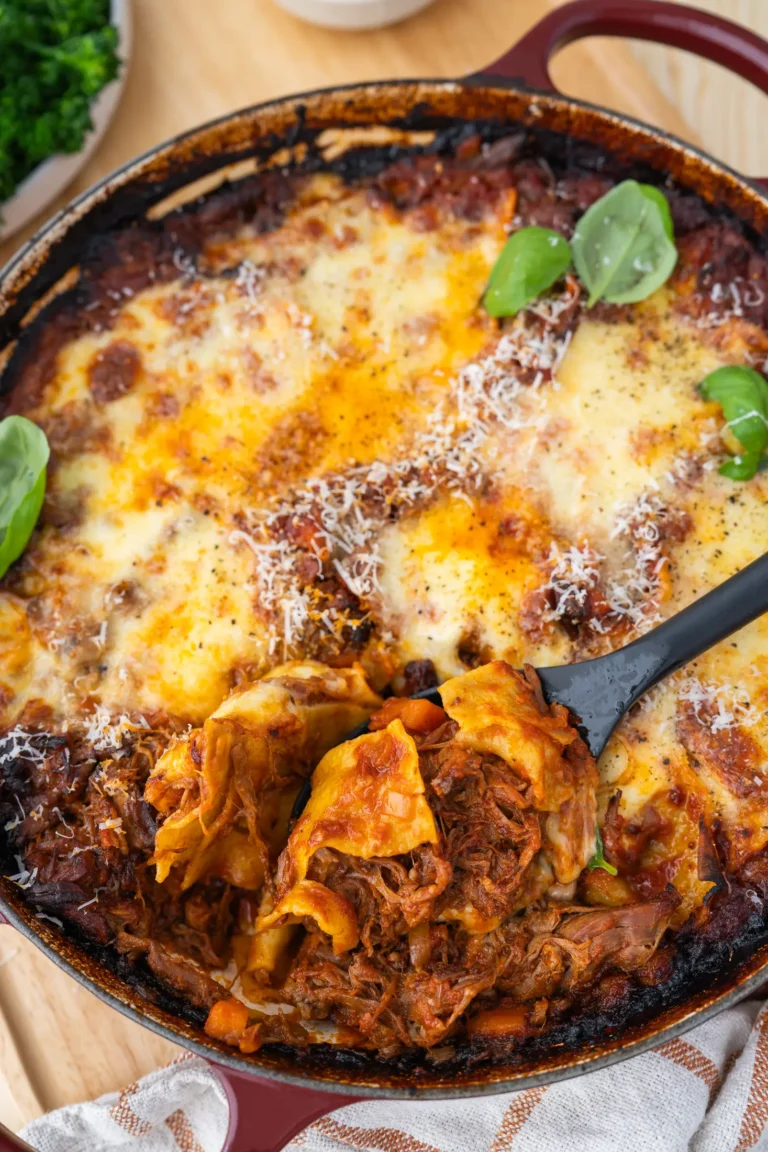
A rich, one-pan, slow-cooked lasagne with fall-apart beef, without all the usual lasagne-making effort.
I love lasagne. My family loves lasagne. What I don’t always love is spending half a day making lasagne. 😂 There are absolutely weekends when I’m happy to potter around in the kitchen, but there are also weekends when I want the pottering, but not around the stove!
This One-pan Beef Ragu Lasagne came about after I watched Adam Hoad make a similar beef shin ragu on Instagram. You can view Adam’s recipe here. He put everything into one dish – no browning the meat, no frying the onion, carrot and celery first – and I remember thinking, “surely that sauce isn’t going to have enough flavour” … I had to try it!
I’ve made my version more times than I can count now, playing around with the cut of beef, the amount of liquid and the cooking time. My first attempt involved putting an enormous piece of beef into the oven, whole, at about 2.30 pm and assuming we’d be eating it for dinner. We did not. 😂 Six-ish hours later it was finally fall-apart tender, by which point I’d already cooked a completely different dinner and fed everyone that instead.
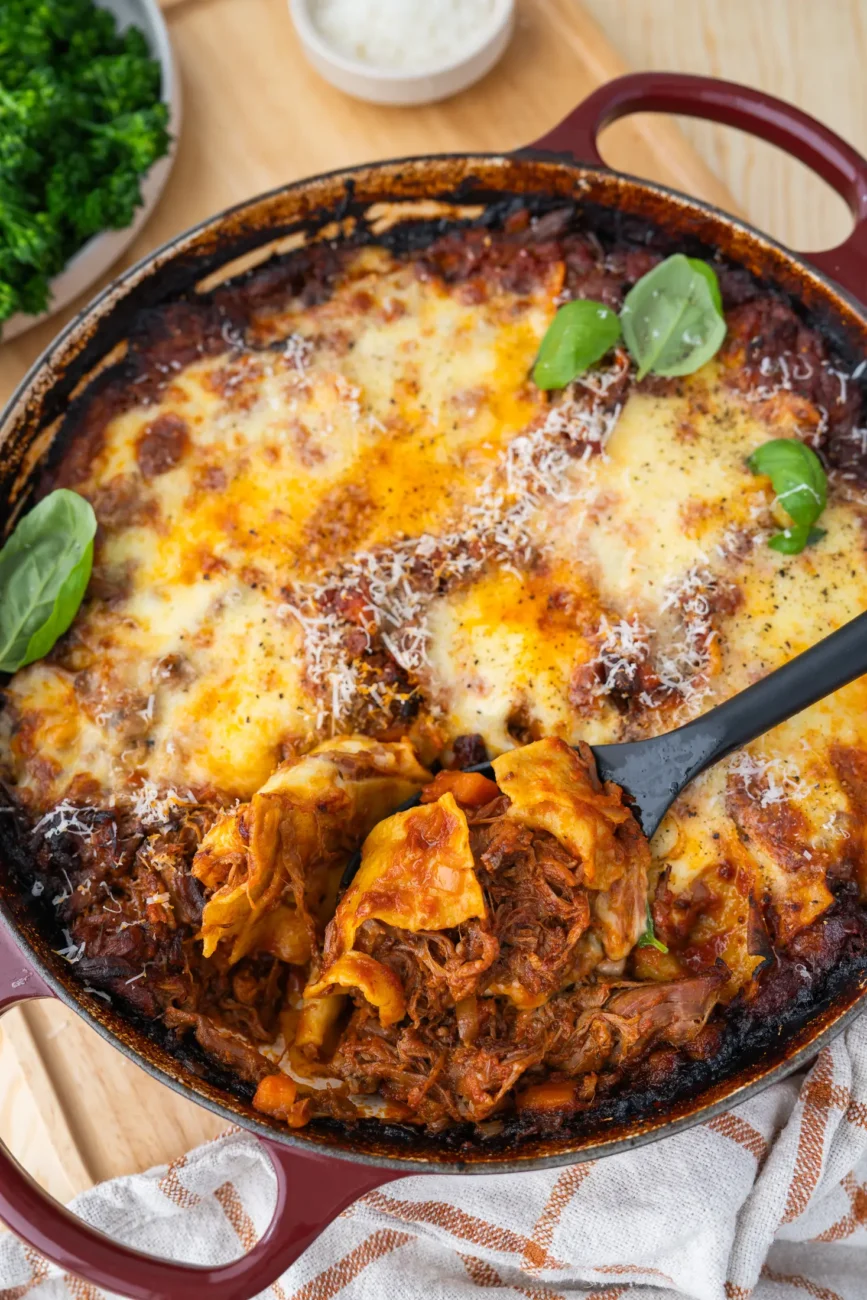
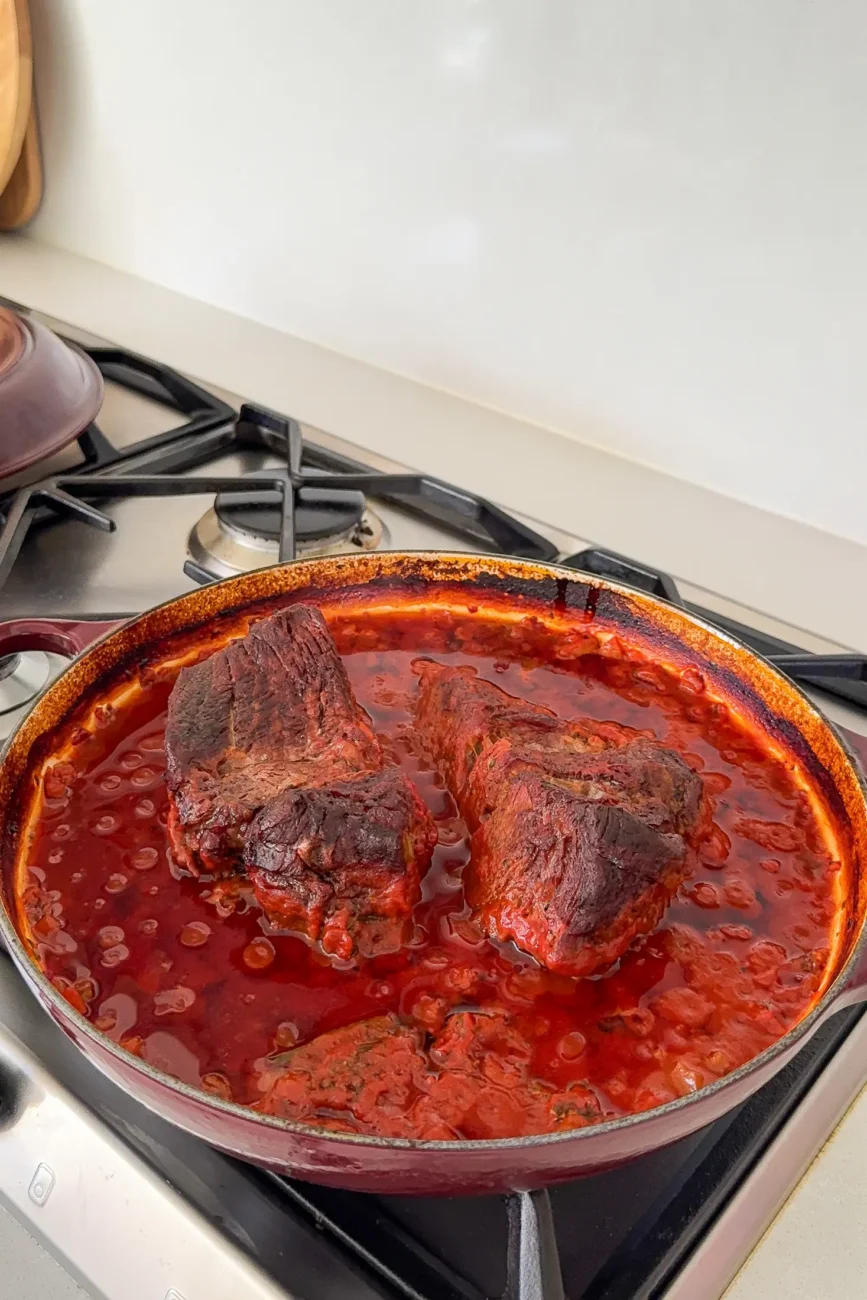
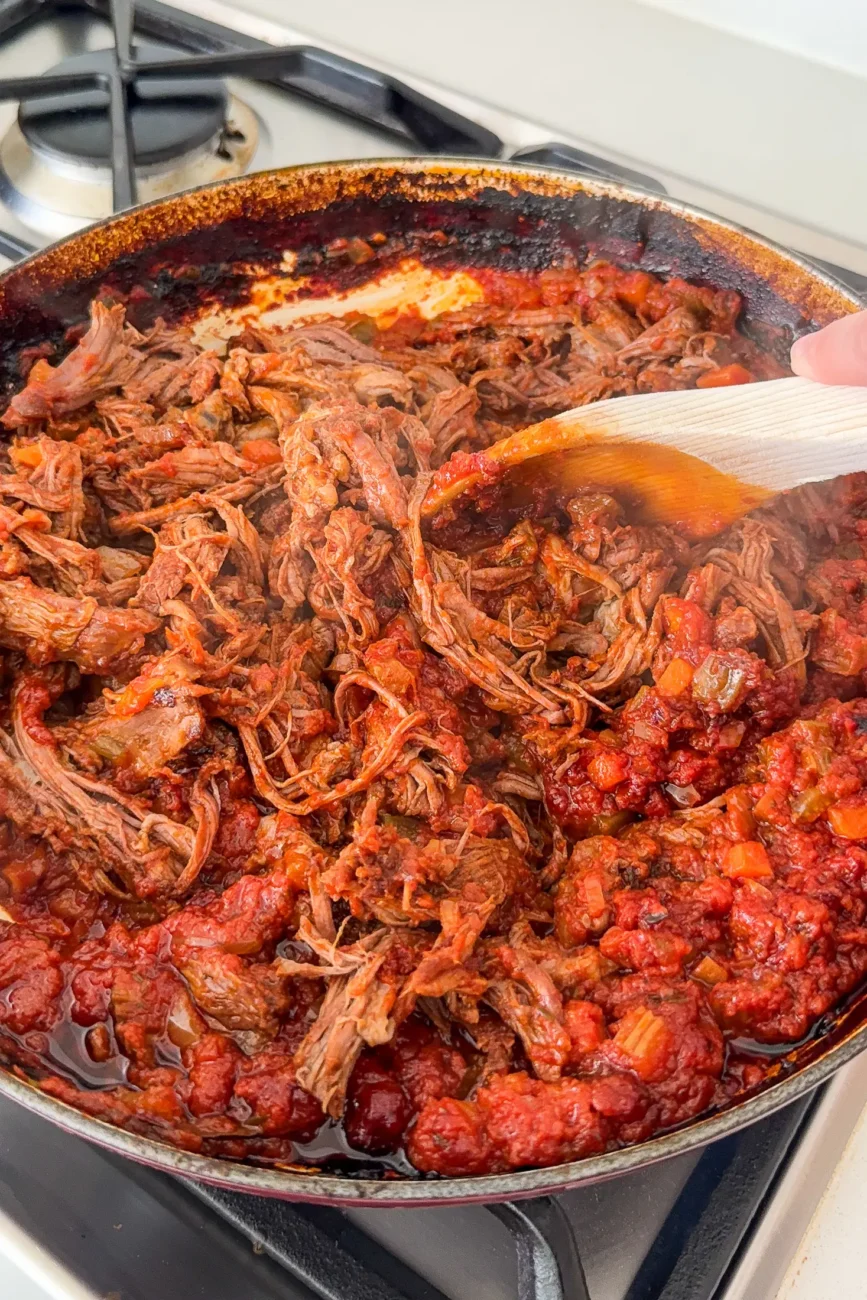
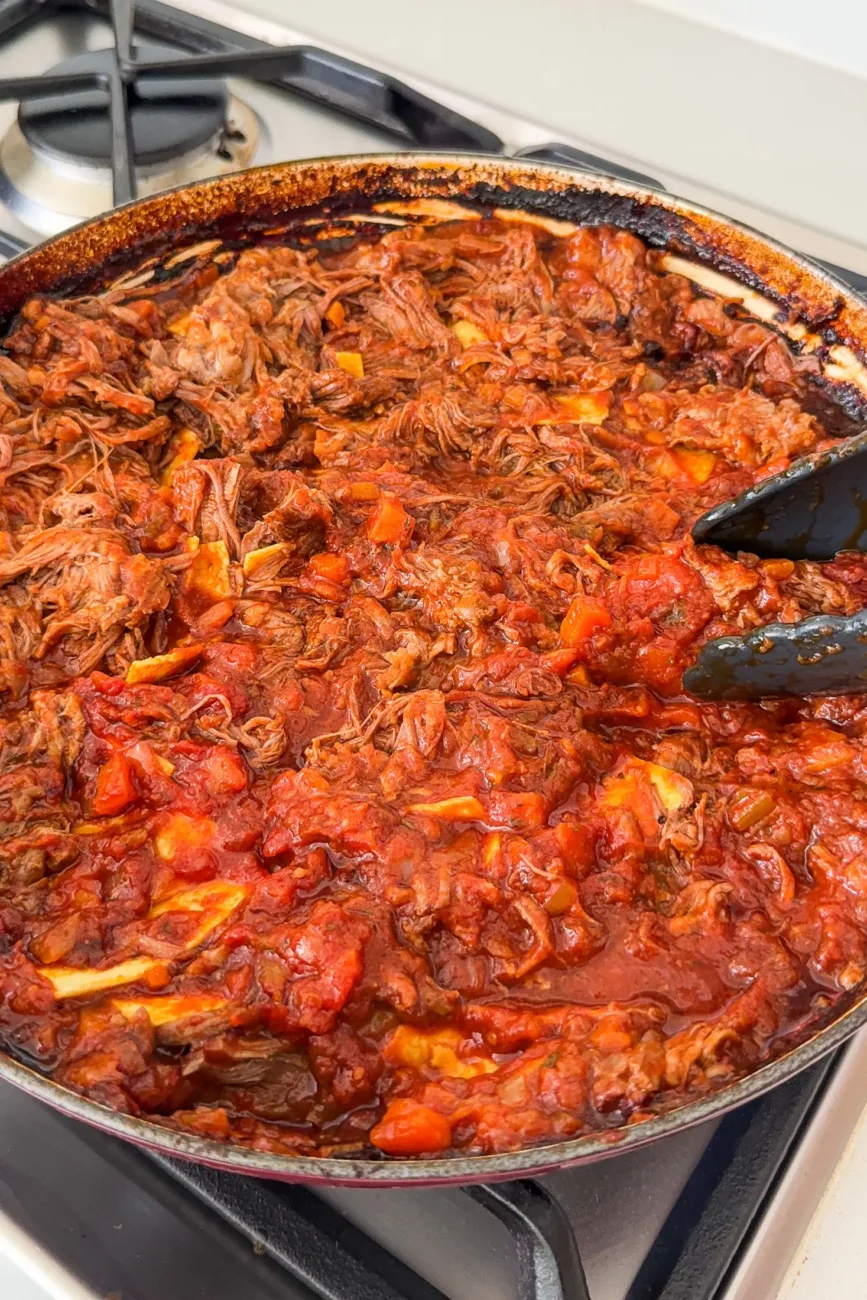
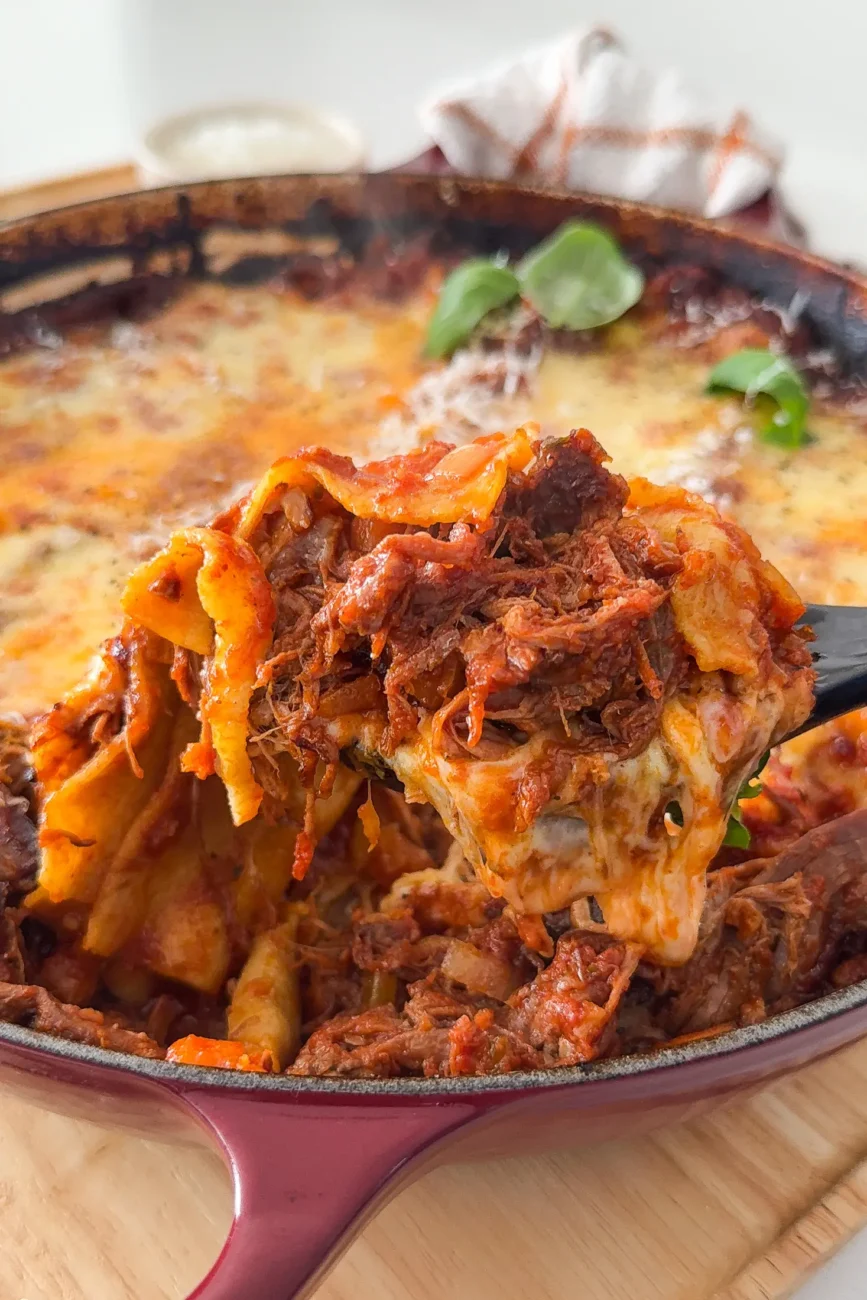
That little disaster did lead me here, though. I now cut the beef into two large pieces so there’s still plenty of exposed surface to become beautifully browned and caramelised, but it cooks in a much more reasonable amount of time. Once it’s fall-apart tender, I shred it straight into that rich tomato sauce, tuck fresh lasagne sheets through it, add cheese, then put the whole thing back into the oven until it’s bubbling and golden.
For me, this is Sunday cooking. Ten minutes getting everything into the dish, then a few hours where the oven is technically making dinner and I can wander off and do something else. I’ll usually serve it with whatever makes sense that day – a leafy salad with balsamic, some steamed broccolini (tenderstem broccoli) with parmesan, or garlic bread if we’re going all in.
And there’s something very satisfying about putting a big bubbling lasagne in the middle of the table when, really, you haven’t done all that much. It’s my favourite kind of weekend cooking.
What is the best beef to use for One-pan Beef Ragu Lasagne?
I use beef chuck roast because it becomes beautifully tender and fall-apart when slow-cooked, but still has enough fat and connective tissue to give the ragu loads of flavour. I buy one large roast and cut it into two big pieces rather than using smaller pieces. This gives me plenty of exposed surface area for the beef to brown and caramelise while it cooks, without it drying out. (In Australia, US and the UK, this cut is called chuck roast, but in the UK it may be called a blade roast or a chuck and blade joint.) Gravy beef (boneless shin) or chuck (braising/casserole) steak also work well. Whatever you use, choose a cut designed for slow-cooking rather than a lean roasting cut.
Why is my slow-cooked beef still tough?
It needs longer! If you’ve cooked it for the suggested time and it’s still difficult to pull apart, it generally doesn’t mean you’ve overcooked it – it means the connective tissue hasn’t had enough time to break down yet. Cover it again and continue cooking in 20–30 minute increments until you can easily shred it with two forks. The exact cooking time can vary depending on the size and thickness of your beef.
What can I use if my casserole dish doesn’t have a lid?
Cover the casserole dish very tightly with a double layer of foil. You want to trap the steam inside the dish so the beef stays moist as it slowly cooks. For even better moisture retention, you can place a piece of baking (parchment) paper directly over the surface of the beef and sauce before covering the dish with its lid or foil. I’ve tested it this way and it works beautifully.
Why do I need to add extra beef stock before adding the lasagne sheets?
After several hours in the oven, the ragu will have reduced and thickened. The fresh lasagne sheets need enough liquid around them to cook properly, so I add another 125–250 ml (½–1 cup) of beef stock before tucking them in. Have a look at your sauce rather than automatically adding the full amount. It should be loose and saucy enough that you can easily tuck the pasta through it, but it shouldn’t be watery.
Do I have to make bechamel sauce for this lasagne?
No – and that’s very deliberate! I wanted this to be a true one-pan lasagne, so my everyday version is simply topped with melty mozzarella and parmesan. However, if you love that creamy layer on a traditional lasagne, I’ve included an optional bechamel in the notes under the recipe. It is delicious, but it also introduces another saucepan to the situation! Choose your own adventure. 😂
What can I serve with One-pan Beef Ragu Lasagne?
Because the lasagne is rich, cheesy and filling, I tend to keep whatever I serve alongside it fresh and simple. You really don’t need much to turn this into a complete dinner – and if I’m serving it to friends or family, I’ll sometimes add garlic bread and a salad and put everything in the middle of the table for everyone to help themselves.
Here are some of my favourite sides to serve with beef ragu lasagne:
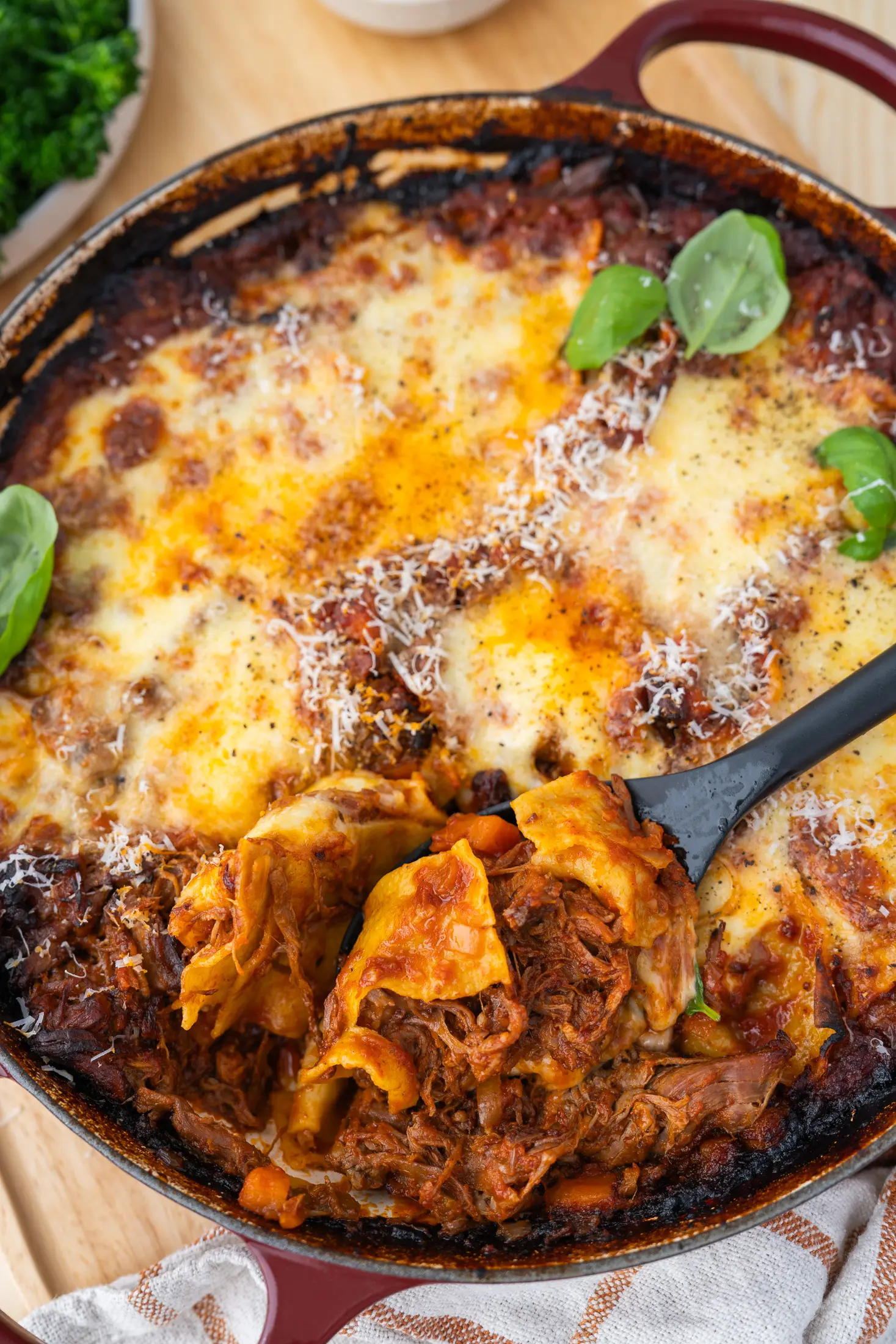
One-pan Beef Ragu Lasagne
“First time I have success with a chuck roast! My husband said he would pay $40 for a dinner like that in a restaurant!” Share Pin Recipe PrintIngredients
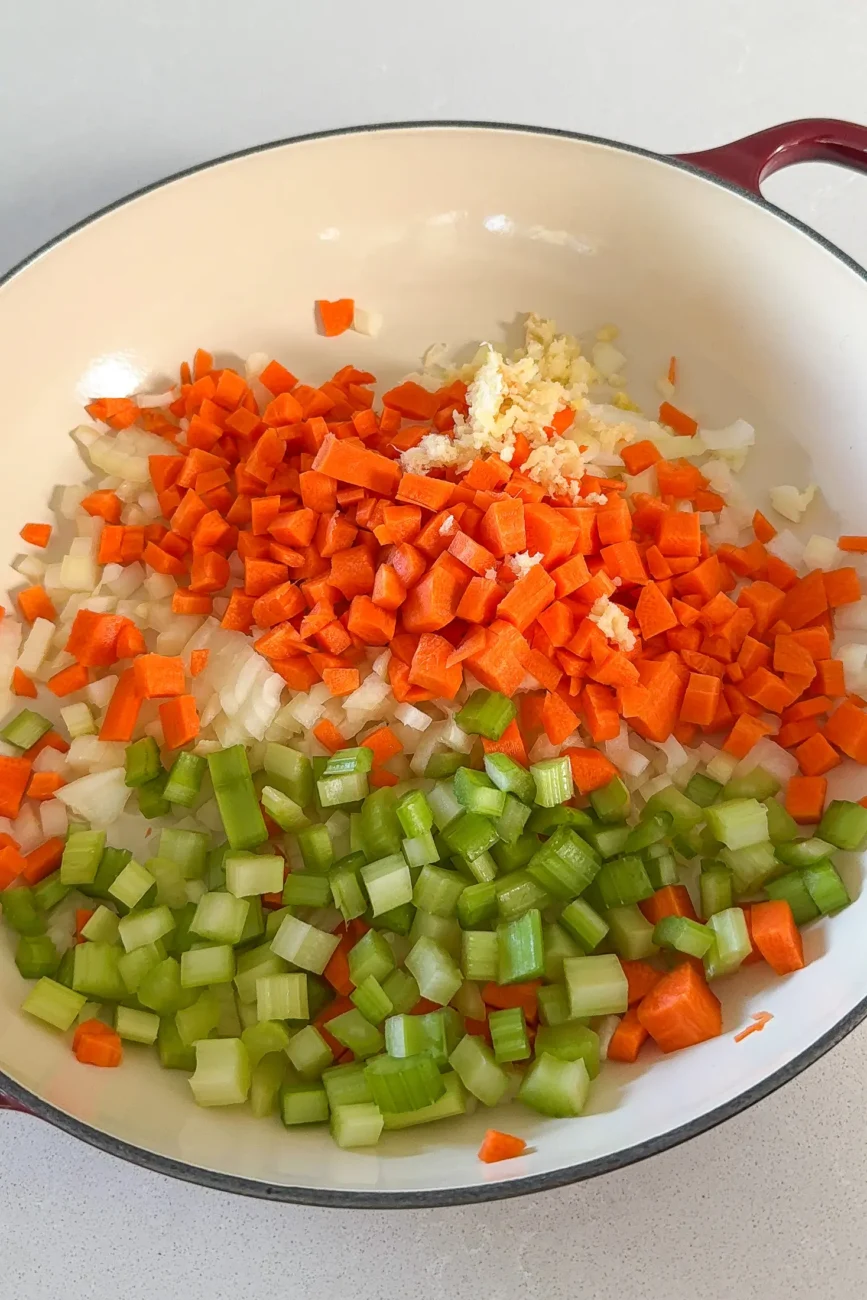
- 1 large brown onion, finely diced
- 2 carrots, finely diced
- 2 celery stalks, finely diced
- 4 garlic cloves, finely chopped
- 2 tablespoons tomato paste
- 700 g (24 oz) passata
- 375 ml (1½ cups) beef stock
- 1 tsp dried oregano
- 1 tsp dried thyme
- 2 bay leaves
- 1.2 kg (2½ lb) beef chuck roast, cut into 2 large pieces (see note 1)
- 1½ tsp sea salt flakes
- ½ tsp freshly cracked black pepper
- 2 tbsp olive oil
Instructions
- Preheat the oven – Preheat the oven to 180°C (350°F) (160°C/325°F fan-forced).
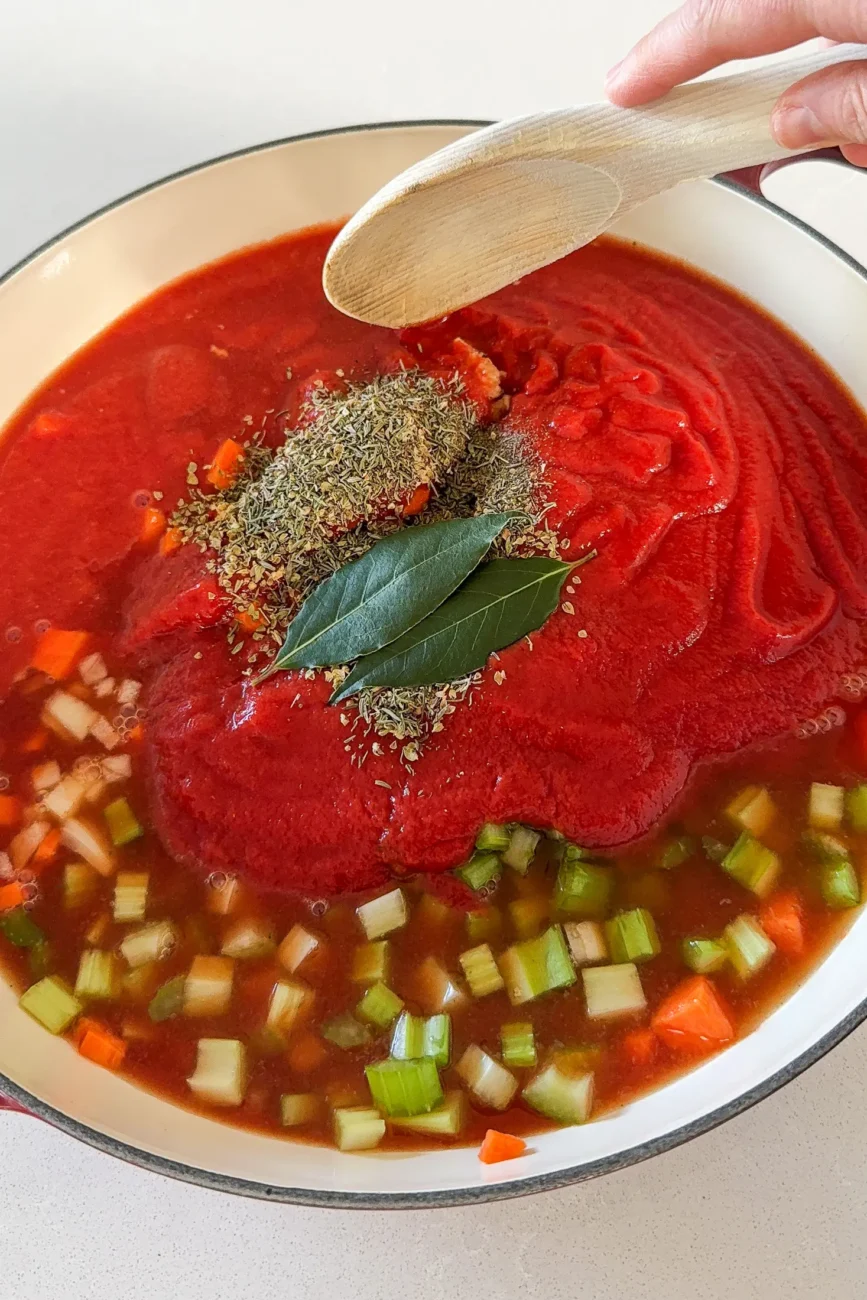
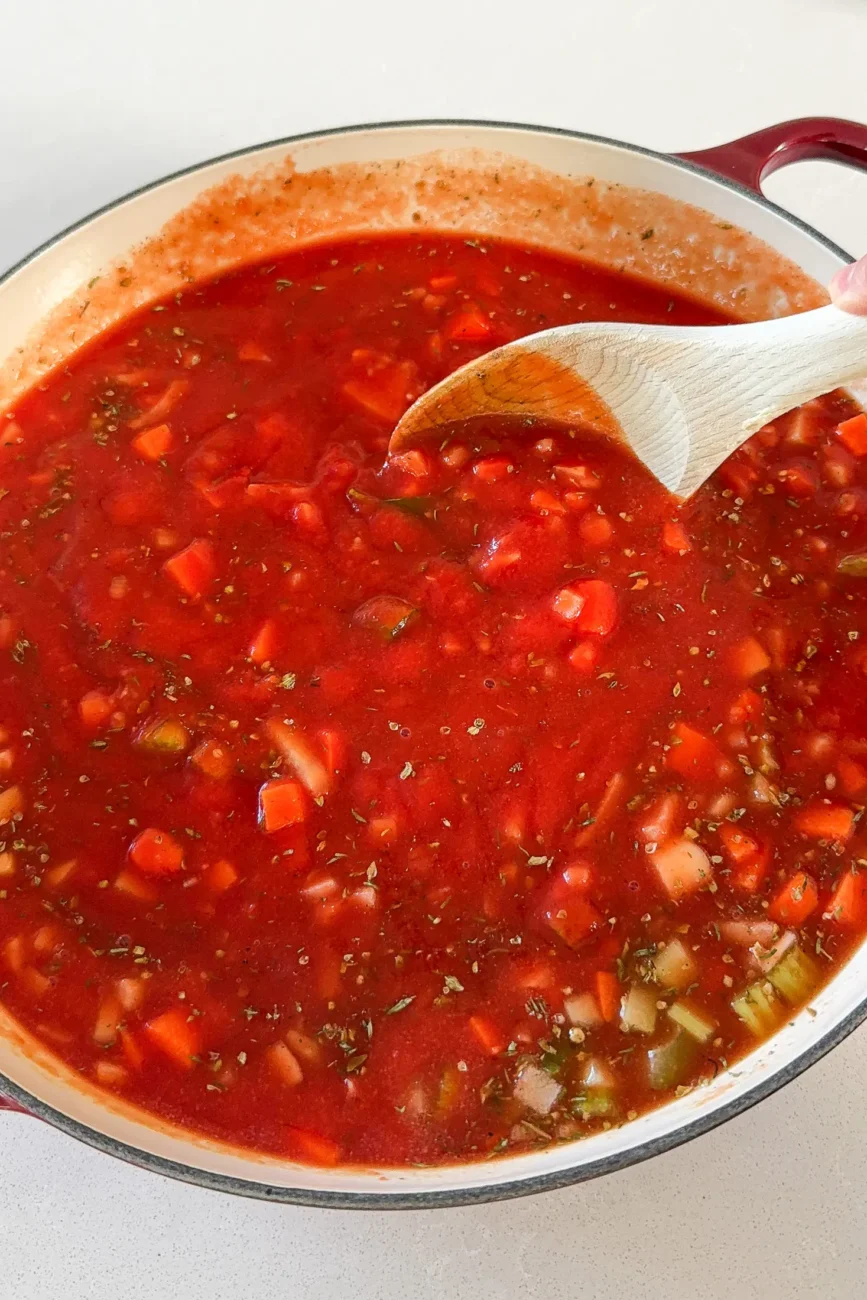
- Make the ragu base – Add the onion, carrot, celery, garlic, tomato paste, passata, beef stock, oregano, thyme and bay leaves directly to a large, deep ovenproof casserole dish with a lid. Stir until well combined.
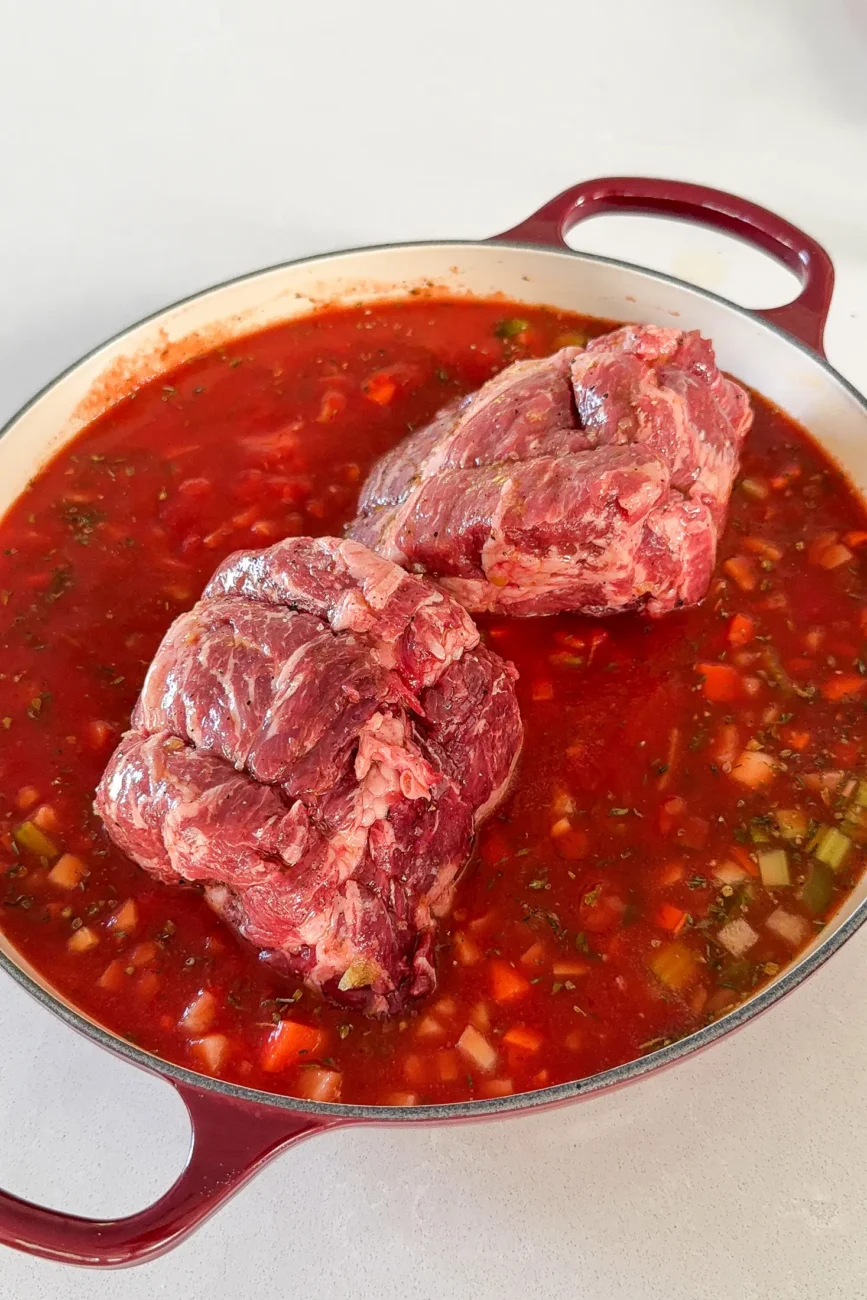
- Add the beef – Season the beef all over with the salt and pepper, then drizzle with the olive oil. Arrange the two pieces of beef on top of the ragu mixture. Don’t push them down into the sauce – ideally, the sauce should come only part-way up the sides of the beef, leaving the tops exposed (see note 1).
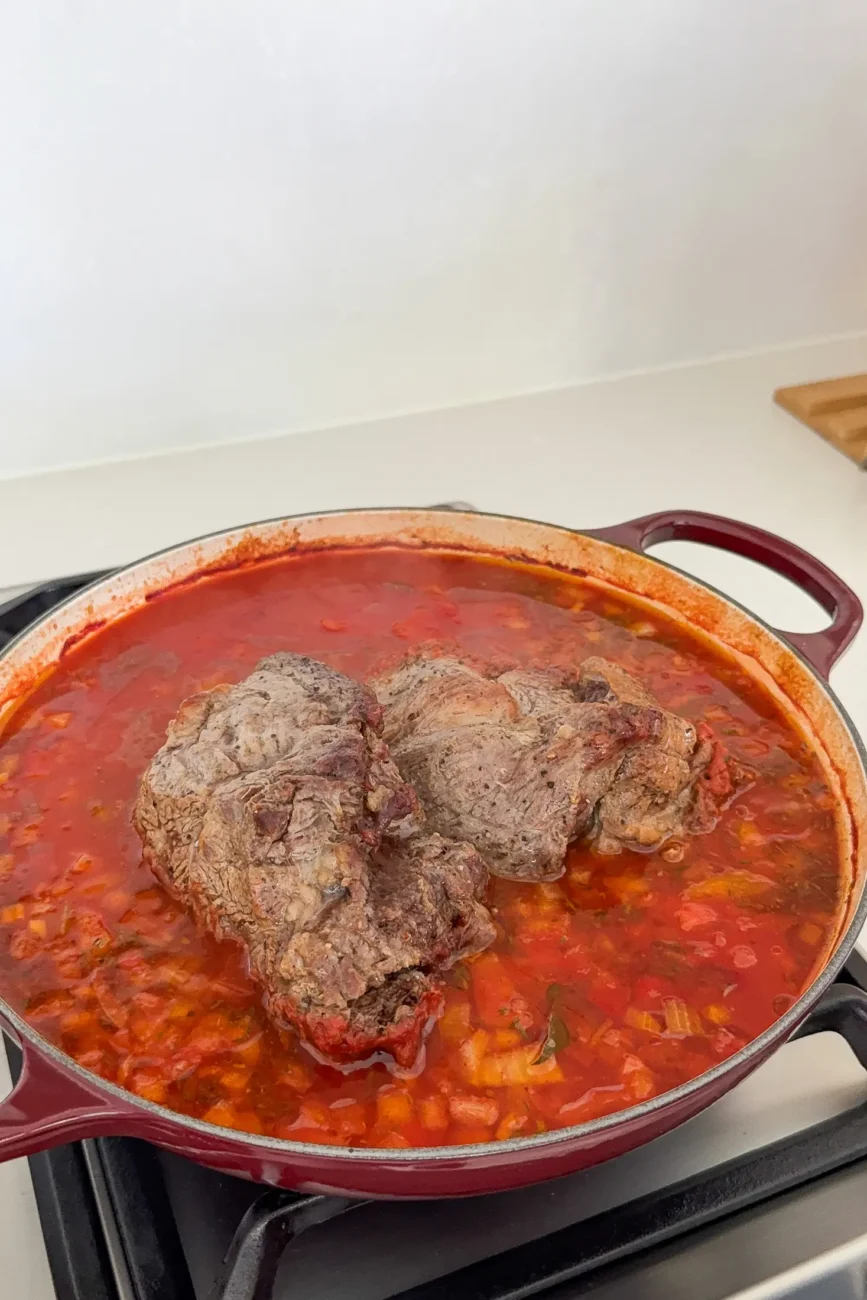
- Cover and slow-cook – Place a sheet of baking (parchment) paper over the beef and sauce (optional, see note 4), pressing it gently down so it sits close to the surface, then cover with the lid (also see note 4 if you don’t have a lid). Bake for 1½ hours. Turn the beef pieces over, replace the baking paper (if using), then cover again with the lid and cook for a further 1½ hours.
- Check the beef – Check whether the beef pulls apart easily with two forks. If it is still firm, cover and continue cooking for another 20–30 minutes at a time, checking after each interval, until completely fall-apart tender.
- Shred the beef – Remove and discard the bay leaves. Shred the beef directly in the casserole dish using two forks, discarding any large pieces of fat, then stir the shredded beef through the vegetables and tomato sauce.
- Loosen the ragu – Add 125 ml (½ cup) of the additional beef stock and stir well. Add more, a little at a time, if needed. The ragu should be loose and saucy enough for the lasagne sheets to be easily tucked through it, but not watery.
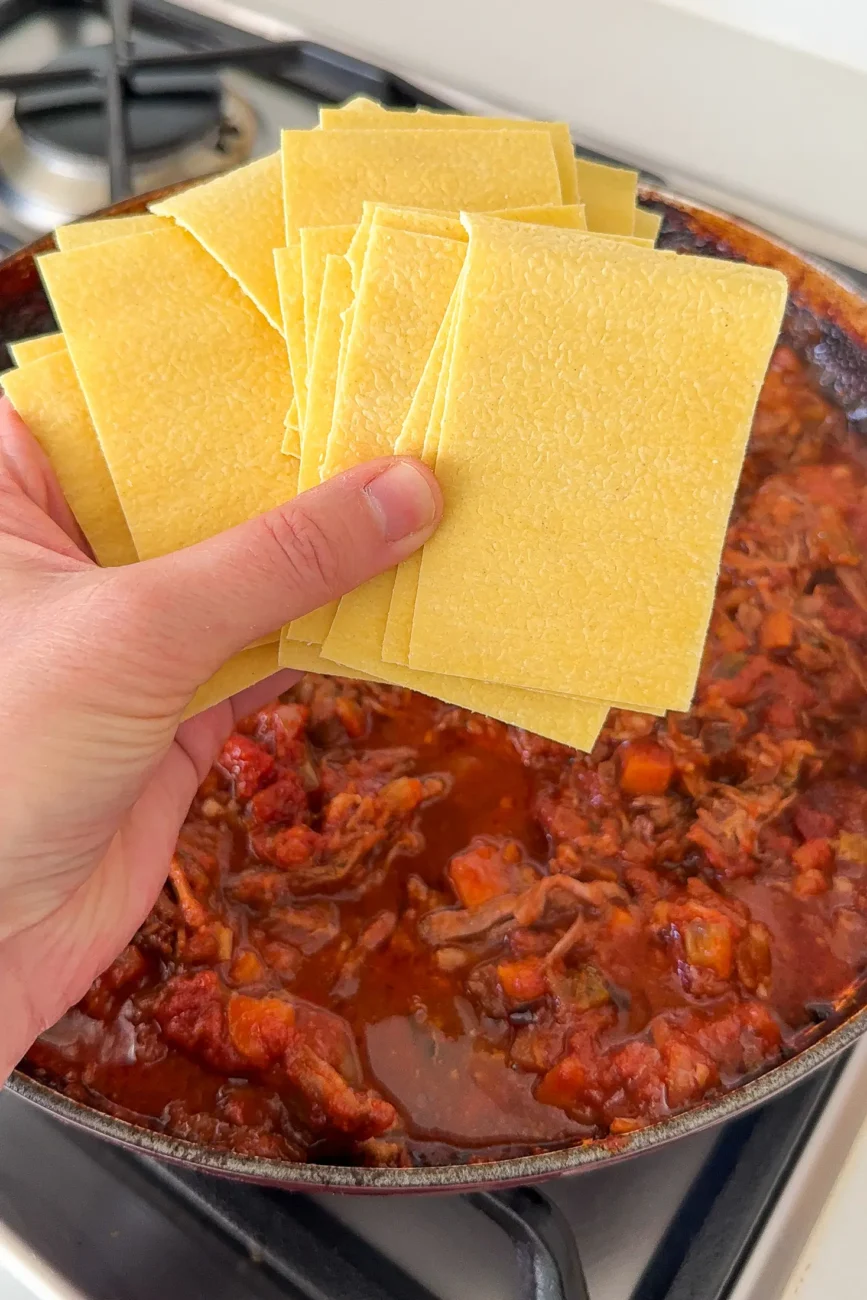
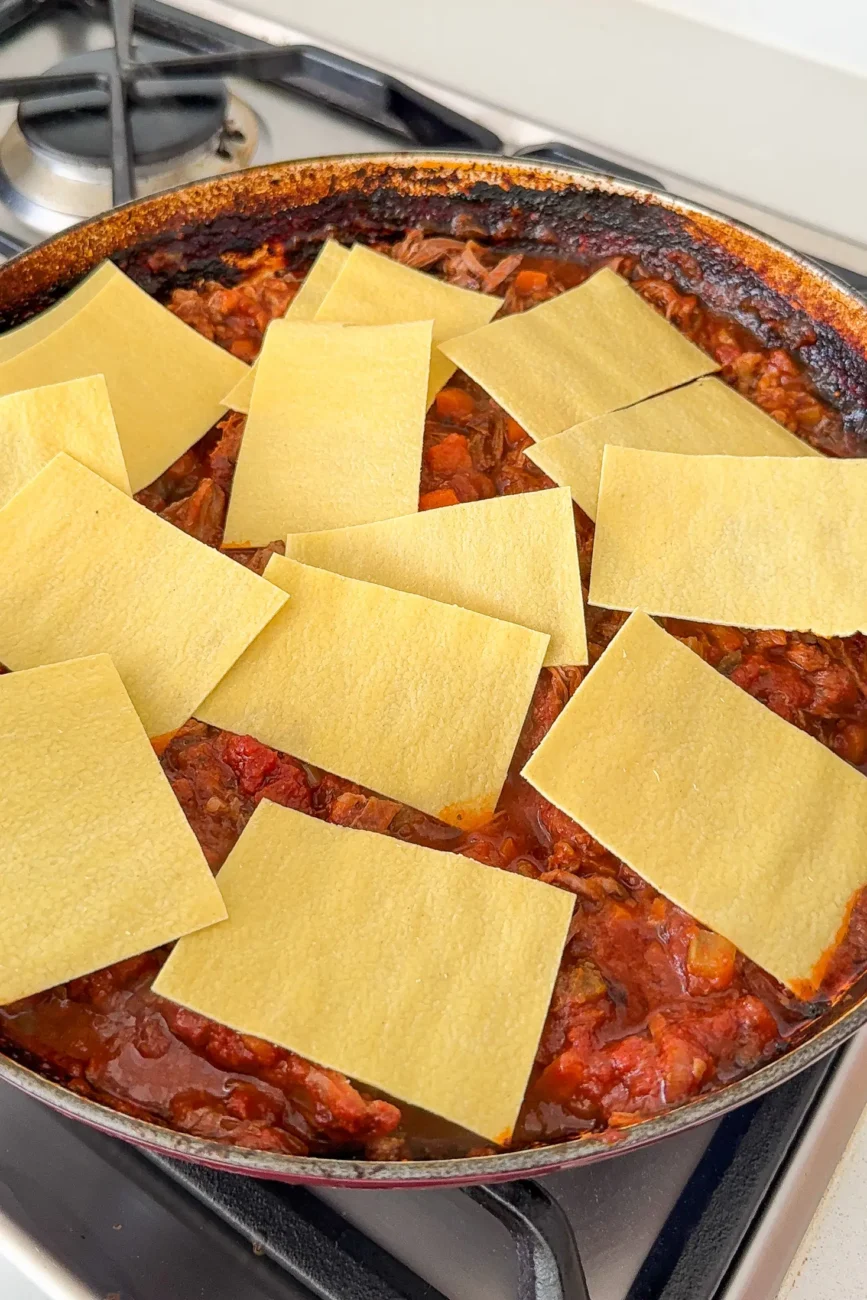
- Add the lasagne sheets – Increase the oven temperature to 200°C (400°F) (180°C/350°F fan-forced). Tear or cut the fresh lasagne sheets into large pieces, roughly 8–10 cm (3¼–4 inches). Using tongs, tuck the pieces randomly throughout the beef ragu, making sure each piece is well surrounded by sauce. There’s no layering required and it doesn’t need to be perfect.
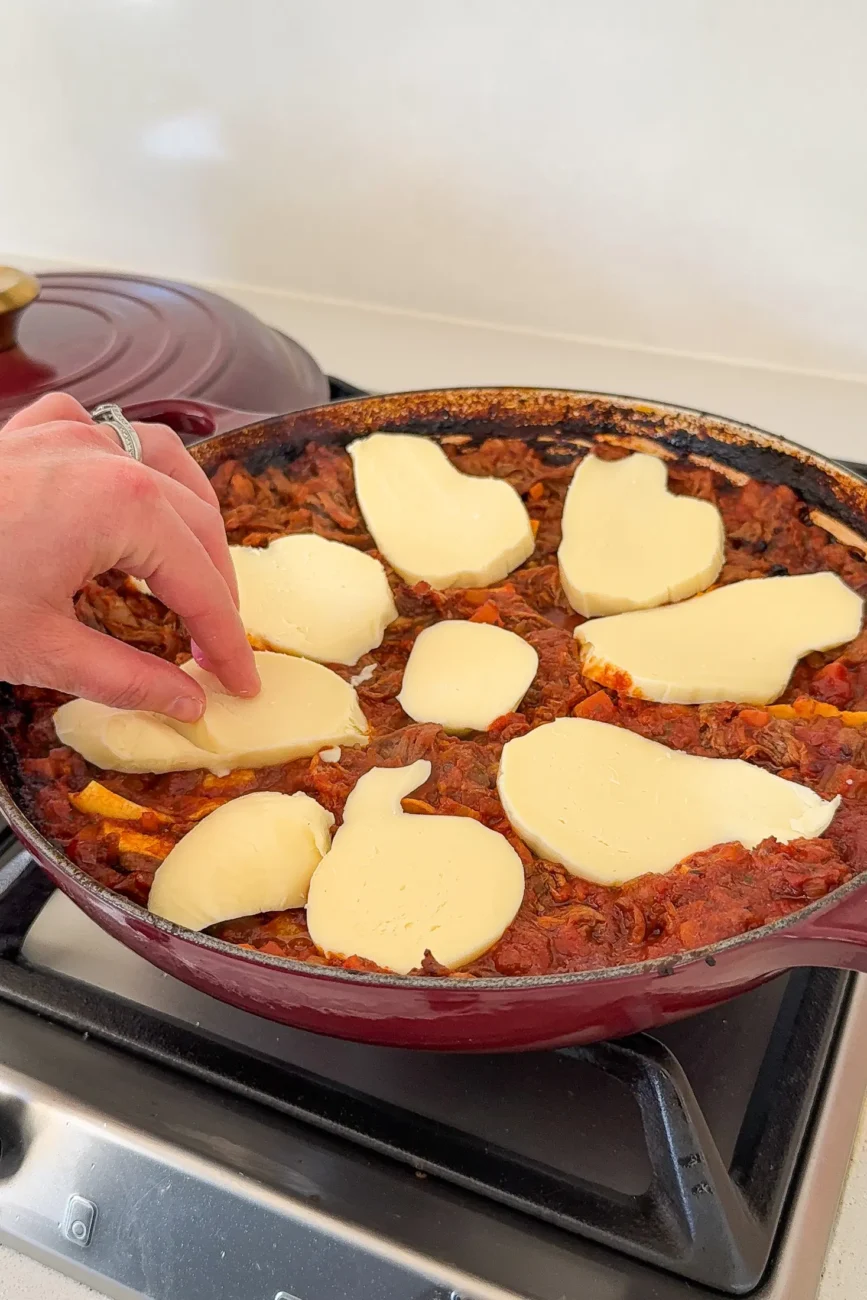
- Top – Scatter the mozzarella evenly over the top. For an optional bechamel topping, see note 5.
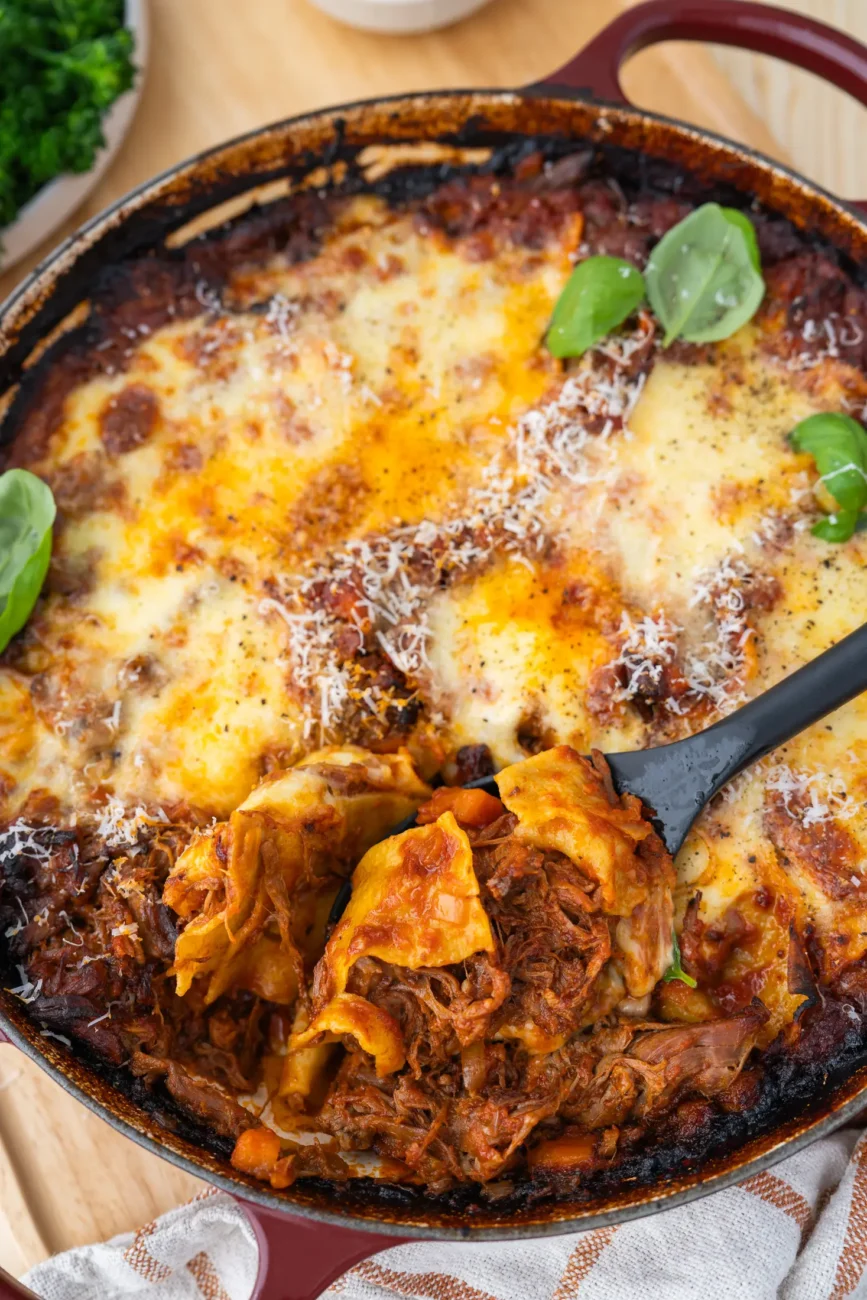
- Bake – Bake, uncovered, for 20–25 minutes, or until the lasagne sheets are tender and the mozzarella is bubbling and golden. For extra colour, turn on the oven grill (broil) on high for 2–3 minutes at the end, if needed.
- Rest and serve – Allow the lasagne to rest for 10 minutes. Finish with the parmesan and fresh basil, then serve.
Watch how to make it
Nutrition information
Nutritional information on this site is calculated using Foodworks Professional, the nutrition analysis software trusted by dietitians, researchers and food manufacturers across Australia and New Zealand. Disclaimer re gluten-free and dairy-free recipes
Recipe notes
If using chuck steak or gravy beef already cut into smaller pieces, start checking the beef earlier as it may cook more quickly. Note 2 – Dried lasagne sheets You can use dried lasagne sheets instead of fresh. Break them into large pieces and make sure they are completely surrounded by the ragu so they have enough moisture to soften. When loosening the ragu, use closer to the full 250 ml (1 cup) of additional beef stock, adding a little more if the sauce is particularly thick. Bake for 30–35 minutes, or until the pasta is completely tender and the cheese is bubbling and golden. If the top is browning too quickly before the pasta is cooked, loosely cover with foil for part of the cooking time. Note 3 – Mozzarella I recommend buying mozzarella in a block and either slicing or finely grating it yourself. Pre-grated mozzarella often contains anti-caking agents, which can affect how smoothly and evenly it melts. For larger, molten pockets of cheese, slice the mozzarella and arrange it over the top. This gives you those beautiful stretchy, cheesy sections, although the coverage will be a little less even (this is what I did in the video). For a more even layer of cheese and a beautifully golden finish across the whole dish, finely grate the mozzarella and sprinkle it evenly over the top. Both work beautifully – it just depends on the finish you prefer. Note 4 – Baking (parchment) paper For especially moist, tender beef, you can place a sheet of baking paper directly over the beef and sauce before adding the lid. This helps retain moisture while the beef slow-cooks. It’s completely optional, though – the recipe will still work beautifully without it as long as your casserole dish is covered with a tight-fitting lid. If your casserole dish doesn’t have a lid, cover it very tightly with a double layer of foil instead. Note 5 – Optional bechamel sauce If you love a classic creamy lasagne topping, you can absolutely add a bechamel. Just keep in mind that you’ll need an extra saucepan, so the recipe will no longer technically be one-pan. 😂 Melt 60 g (2 oz) unsalted butter in a medium saucepan over medium heat. Add 50 g (⅓ cup) of plain (all-purpose) flour and cook, stirring, for 1–2 minutes. Gradually whisk in 750 ml (3 cups) of full-cream (whole) milk until smooth. Cook, stirring, for 4–5 minutes, or until thickened enough to coat the back of a spoon. Season with ½ teaspoon of sea salt flakes, ¼ teaspoon of freshly cracked black pepper and a pinch of freshly grated nutmeg, if you like. Once you’ve tucked the lasagne sheets through the ragu, spoon the bechamel over the top and gently spread it to the edges. Scatter over the mozzarella, then bake as directed.


















Jasmine says:
My whole family absolutely loved it! My one year old was practically stuffing her face full of it 😂 will definitely make again, thank you!
Karen says:
Oh my word! Every single recipe I’ve made of yours has been incredible and this was no exception. Mouth-watering deliciousness; Easy-to-follow instructions; Simple and readily available ingredients. Absolutely scrumptious. Thank you. Thank you!
Lisa says:
Can I use a Dutch oven?
Simple Home Edit Team says:
Hi Lisa! 😊 This specific recipe is designed for the dry heat of the oven, which helps brown the beef. Nicole hasn’t tested a slow-cooker version of this one-pan lasagne yet. The oven method creates a richer flavour as the sauce reduces and the top of the beef caramelises. It’s best to stick to the oven for this particular recipe.
ZoeW says:
Best Sunday night dinner!! It was so easy to through together, pop in the oven and set a timer for 1.5hrs X 2, which meant I could get on with everything else I needed to do to prep for the week ahead. It was so delicious, and easy to prep and clean up (that’s even with making the bechamel sauce). Highly recommend, would definitely work for feeding a crowd. Yum yum yum. Thanks so much 🫶
Valery says:
First time I have success with a chuck roast! My husband said he would pay $40 for a dinner like that in a restaurant!